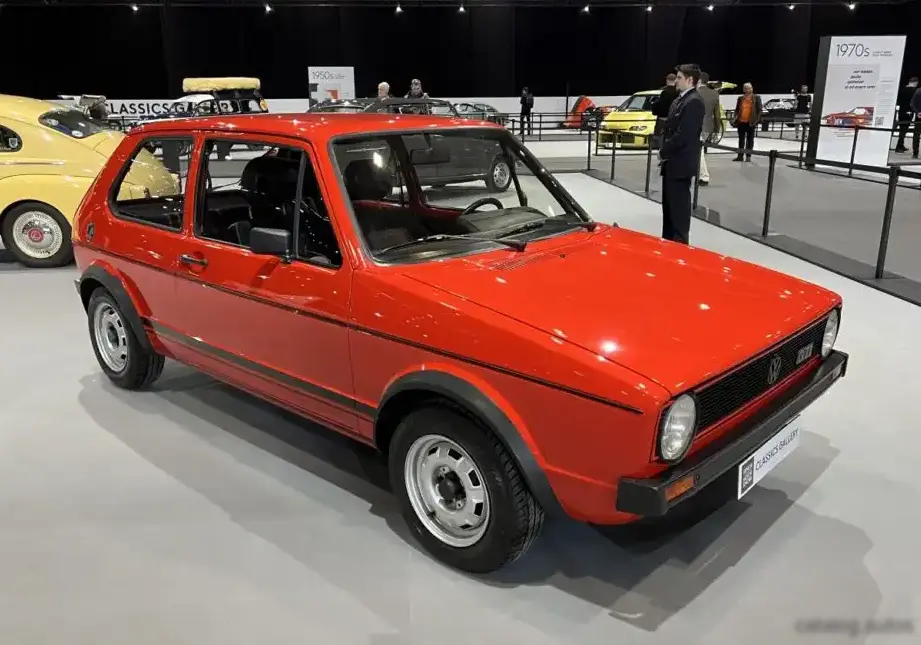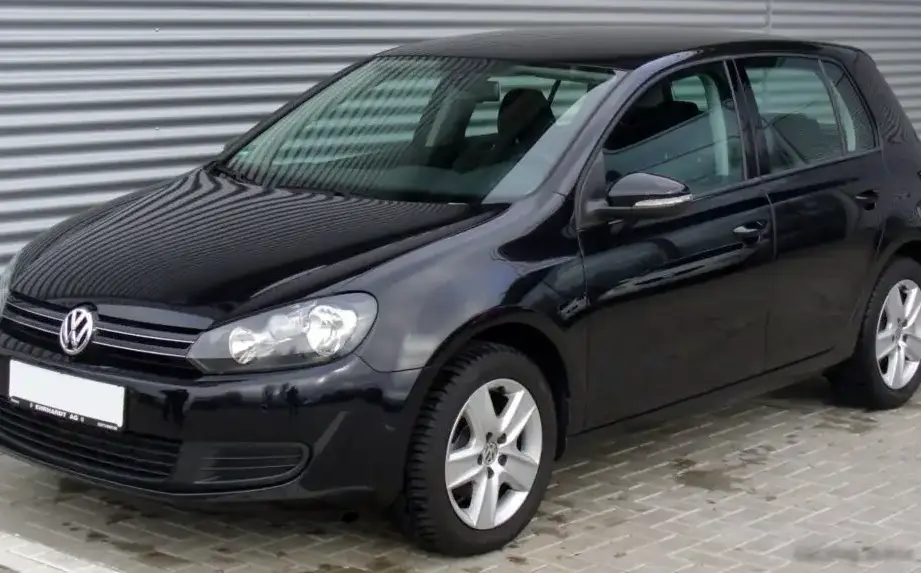
The Volkswagen Golf VI 1.2 TSI (85 hp) represents an entry-level offering within the sixth generation of Volkswagen’s iconic Golf model, produced between 2010 and 2012. Positioned as a fuel-efficient and affordable option, this variant aimed to broaden the Golf’s appeal to a wider customer base, particularly in European markets where smaller displacement engines were favored due to tax incentives and fuel costs. It utilized the Golf Mk6 platform (1HX0/A3) and served as a stepping stone into the Golf range, offering a balance between practicality and economy. This specific configuration was primarily available as a five-door hatchback.
Technical Specifications
| Brand | Volkswagen |
| Model | Golf |
| Generation | Golf VI (5-door) |
| Type (Engine) | 1.2 TSI (85 Hp) |
| Start of production | 2010 |
| End of production | 2012 |
| Powertrain Architecture | Internal Combustion engine |
| Body type | Hatchback |
| Seats | 5 |
| Doors | 5 |
| Fuel consumption (urban) | 7 l/100 km (33.6 US mpg, 40.4 UK mpg, 14.3 km/l) |
| Fuel consumption (extra urban) | 4.6 l/100 km (51.1 US mpg, 61.4 UK mpg, 21.7 km/l) |
| Fuel consumption (combined) | 5.5 l/100 km (42.8 US mpg, 51.4 UK mpg, 18.2 km/l) |
| CO2 emissions | 129 g/km |
| Fuel Type | Petrol (Gasoline) |
| Acceleration 0 – 100 km/h | 12.3 sec |
| Acceleration 0 – 62 mph | 12.3 sec |
| Acceleration 0 – 60 mph | 11.7 sec |
| Maximum speed | 178 km/h (110.6 mph) |
| Emission standard | Euro 5 |
| Weight-to-power ratio | 13.6 kg/Hp, 73.7 Hp/tonne |
| Weight-to-torque ratio | 7.2 kg/Nm, 138.6 Nm/tonne |
| Power | 85 Hp @ 4800 rpm |
| Power per litre | 71 Hp/l |
| Torque | 160 Nm @ 1500-3500 rpm (118.01 lb.-ft. @ 1500-3500 rpm) |
| Engine layout | Front, Transverse |
| Engine Model/Code | CBZA |
| Engine displacement | 1197 cm3 (73.05 cu. in.) |
| Number of cylinders | 4 |
| Engine configuration | Inline |
| Number of valves per cylinder | 2 |
| Fuel injection system | Direct injection |
| Engine aspiration | Turbocharger, Intercooler |
| Valvetrain | SOHC |
| Engine oil capacity | 3.6 l (3.8 US qt | 3.17 UK qt) |
| Kerb Weight | 1154 kg (2544.13 lbs.) |
| Max. weight | 1780 kg (3924.23 lbs.) |
| Max load | 626 kg (1380.09 lbs.) |
| Trunk (boot) space – minimum | 350 l (12.36 cu. ft.) |
| Trunk (boot) space – maximum | 1305 l (46.09 cu. ft.) |
| Fuel tank capacity | 55 l (14.53 US gal | 12.1 UK gal) |
| Max. roof load | 75 kg (165.35 lbs.) |
| Permitted trailer load with brakes (12%) | 1100 kg (2425.08 lbs.) |
| Permitted trailer load without brakes | 610 kg (1344.82 lbs.) |
| Permitted towbar download | 75 kg (165.35 lbs.) |
| Length | 4199 mm (165.31 in.) |
| Width | 1786 mm (70.31 in.) |
| Width including mirrors | 2048 mm (80.63 in.) |
| Height | 1480 mm (58.27 in.) |
| Wheelbase | 2578 mm (101.5 in.) |
| Front track | 1541 mm (60.67 in.) |
| Rear track | 1514 mm (59.61 in.) |
| Ride height (ground clearance) | 150 mm (5.91 in.) |
| Minimum turning circle | 10.9 m (35.76 ft.) |
| Front suspension | Independent type McPherson, Transverse stabilizer |
| Rear suspension | Independent multi-link suspension, Transverse stabilizer |
| Front brakes | Ventilated discs |
| Rear brakes | Disc |
| Steering type | Steering rack and pinion |
| Power steering | Electric Steering |
| Tires size | 195/65 R 15 |
| Wheel rims size | 6 J x 15 |
INTRODUCTION
The Volkswagen Golf VI 1.2 TSI (85 hp) was introduced in 2010 as part of the sixth generation Golf lineup. This variant was designed to offer an economical and accessible entry point into the Golf range, particularly appealing to buyers prioritizing fuel efficiency and lower running costs. It occupied the lower end of the Golf VI spectrum, sitting below the more powerful 1.4 TSI and 2.0 TDI models. The 1.2 TSI engine, part of Volkswagen’s New Engine Family (EA888), represented a shift towards smaller, turbocharged engines designed to deliver comparable performance to larger displacement naturally aspirated engines while significantly improving fuel economy.
Powertrain & Engine Architecture
The heart of this Golf variant is the CBZA engine code, a 1.2-liter turbocharged four-cylinder petrol engine. This engine utilizes direct fuel injection (FSI) and a single overhead camshaft (SOHC) valvetrain. The turbocharger, coupled with an intercooler, helps to boost power and torque despite the engine’s relatively small displacement. The 1.2 TSI engine produces 85 horsepower at 4800 rpm and 160 Nm (118 lb-ft) of torque between 1500 and 3500 rpm. The engine’s electronic engine management system carefully controls fuel injection and ignition timing to optimize performance and efficiency. The engine is transversely mounted at the front of the vehicle. The transmission paired with this engine was typically a 5-speed automatic gearbox, designed for smooth and comfortable driving. This automatic transmission was chosen to enhance the ease of driving, particularly in urban environments, and appeal to a broader range of drivers.
Driving Characteristics
The 1.2 TSI (85 hp) automatic Golf VI delivers adequate, though not exhilarating, performance. Acceleration from 0 to 60 mph takes around 11.7 seconds, and the top speed is approximately 110.6 mph. The automatic transmission, while providing convenience, does impact acceleration compared to the manual version. The engine’s torque is readily available from low revs, making it suitable for everyday driving. However, overtaking maneuvers require careful planning. The gear ratios are tuned for fuel efficiency, meaning the engine can feel strained when pushed hard. Compared to the more powerful Golf variants, such as the 1.4 TSI or the 2.0 TDI, this version feels noticeably less responsive. The focus is on providing a comfortable and economical driving experience rather than sporty performance.
Equipment & Trim Levels
The Golf VI 1.2 TSI (85 hp) typically came with a reasonable level of standard equipment. This included central locking, electric front windows, air conditioning, and an audio system with CD player. Safety features such as ABS, airbags, and electronic stability control were also standard. Interior upholstery was typically cloth, and the dashboard featured a functional, if somewhat understated, design. Optional extras included alloy wheels, parking sensors, a multi-function steering wheel, and upgraded audio systems. Trim levels varied slightly depending on the market, but generally, this variant represented the entry-level specification within the Golf VI range.
Chassis & Braking
The Golf VI 1.2 TSI (85 hp) utilizes an independent McPherson strut suspension at the front and an independent multi-link suspension at the rear. This suspension setup provides a good balance between ride comfort and handling. The front brakes are ventilated discs, while the rear brakes are solid discs. The steering is power-assisted, providing light and precise control. The chassis is designed to accommodate the lower power output and weight of this variant, offering a stable and predictable driving experience. Stabilizer bars are fitted to both the front and rear axles to reduce body roll during cornering.
Market Reception & Comparison
The Golf VI 1.2 TSI (85 hp) was generally well-received by critics as a practical and economical option. It was praised for its fuel efficiency and comfortable ride. However, some reviewers noted its lack of outright performance compared to other Golf variants. Compared to the 1.4 TSI, the 1.2 TSI offered lower running costs but sacrificed some power and responsiveness. The 2.0 TDI, while more expensive, provided significantly more torque and better fuel economy on longer journeys. The 1.2 TSI appealed to buyers who prioritized affordability and fuel efficiency over performance, making it a popular choice for city driving and commuting.
Legacy
The 1.2 TSI engine, while generally reliable, has been known to exhibit some issues with timing chain wear in some instances, particularly with higher mileage examples. Regular oil changes and maintenance are crucial to ensure the longevity of this engine. In the used car market, the Golf VI 1.2 TSI (85 hp) remains an affordable and practical option. Its fuel efficiency and relatively low maintenance costs make it an attractive choice for budget-conscious buyers. However, potential buyers should be aware of the potential timing chain issue and ensure a thorough inspection is carried out before purchase. The Golf VI 1.2 TSI represents a significant step in Volkswagen’s efforts to produce smaller, more efficient engines without compromising on practicality and usability.