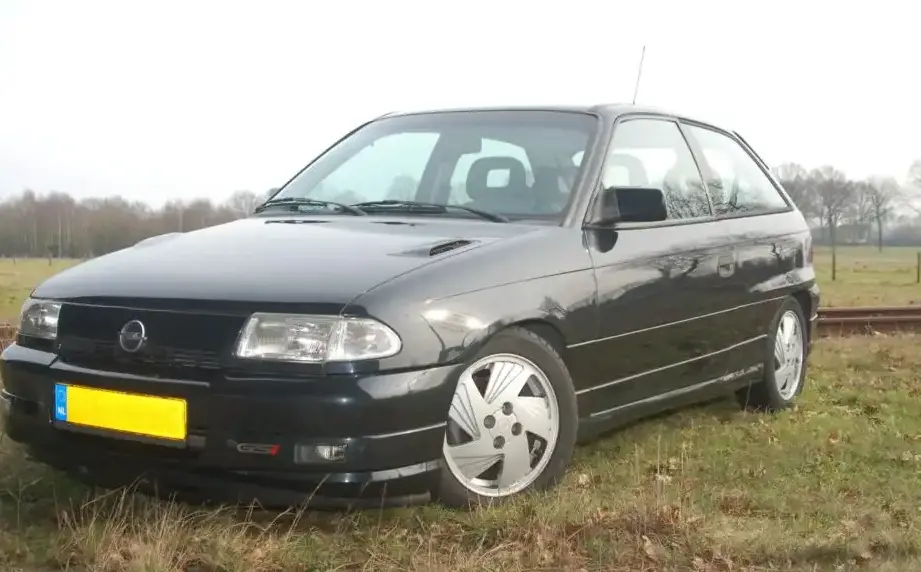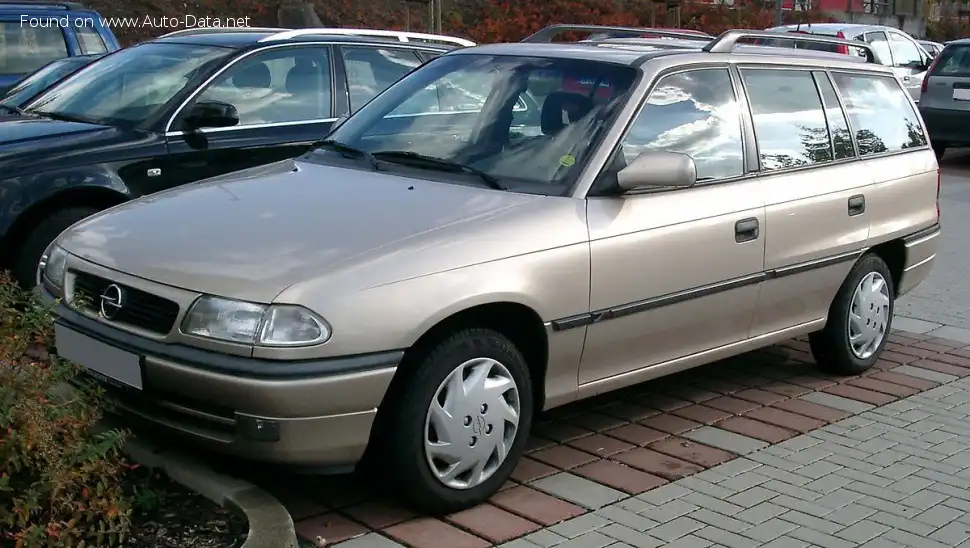
The Opel Astra F Caravan (facelift, 1994) 2.0i Ecotec 16V Automatic, produced from 1995 to December 1997, represented a refined offering within the popular Astra F series. Positioned as a mid-range to upper-mid-range trim level, this variant combined the practicality of the Caravan (estate) body style with a relatively powerful 2.0-liter engine and the convenience of an automatic transmission. It was primarily marketed in Europe, offering a balance between performance, comfort, and cargo capacity for families and individuals needing a versatile vehicle. The facelifted Astra F, introduced in 1994, brought updated styling and mechanical improvements over the original 1991 model.
Technical Specifications
| Brand | Opel |
| Model | Astra |
| Generation | Astra F Caravan (facelift 1994) |
| Type (Engine) | 2.0i Ecotec 16V (136 Hp) Automatic |
| Start of production | 1995 |
| End of production | December, 1997 |
| Powertrain Architecture | Internal Combustion engine |
| Body type | Station wagon (estate) |
| Seats | 5 |
| Doors | 5 |
| Fuel consumption (urban) | 13.7 l/100 km (17.2 US mpg, 20.6 UK mpg, 7.3 km/l) |
| Fuel consumption (extra urban) | 9 l/100 km (26.1 US mpg, 31.4 UK mpg, 11.1 km/l) |
| Fuel consumption (combined) | 9.8 l/100 km (24 US mpg, 28.8 UK mpg, 10.2 km/l) |
| Fuel Type | Petrol (Gasoline) |
| Acceleration 0 – 100 km/h | 11 sec |
| Acceleration 0 – 62 mph | 11 sec |
| Acceleration 0 – 60 mph | 10.5 sec |
| Maximum speed | 195 km/h (121.17 mph) |
| Weight-to-power ratio | 8.8 kg/Hp, 113.8 Hp/tonne |
| Weight-to-torque ratio | 6.5 kg/Nm, 154.8 Nm/tonne |
| Power | 136 Hp @ 6000 rpm |
| Power per litre | 68.1 Hp/l |
| Torque | 185 Nm @ 4000 rpm (136.45 lb.-ft. @ 4000 rpm) |
| Engine layout | Front, Transverse |
| Engine Model/Code | X20XEV |
| Engine displacement | 1998 cm3 (121.93 cu. in.) |
| Number of cylinders | 4 |
| Engine configuration | Inline |
| Cylinder Bore | 86 mm (3.39 in.) |
| Piston Stroke | 86 mm (3.39 in.) |
| Compression ratio | 10.8:1 |
| Number of valves per cylinder | 4 |
| Fuel injection system | Multi-port manifold injection |
| Engine aspiration | Naturally aspirated engine |
| Valvetrain | DOHC |
| Engine oil capacity | 4 l (4.23 US qt | 3.52 UK qt) |
| Coolant capacity | 6.6 l (6.97 US qt | 5.81 UK qt) |
| Kerb Weight | 1195 kg (2634.52 lbs.) |
| Max. weight | 1655 kg (3648.65 lbs.) |
| Max load | 460 kg (1014.13 lbs.) |
| Trunk (boot) space – minimum | 500 l (17.66 cu. ft.) |
| Trunk (boot) space – maximum | 1630 l (57.56 cu. ft.) |
| Fuel tank capacity | 50 l (13.21 US gal | 11 UK gal) |
| Length | 4278 mm (168.43 in.) |
| Width | 1696 mm (66.77 in.) |
| Width including mirrors | 1852 mm (72.91 in.) |
| Height | 1525 mm (60.04 in.) |
| Wheelbase | 2517 mm (99.09 in.) |
| Front track | 1430 mm (56.3 in.) |
| Rear (Back) track | 1423 mm (56.02 in.) |
| Ride height (ground clearance) | 135 mm (5.31 in.) |
| Drag coefficient (Cd) | 0.34 |
| Minimum turning circle | 10.5 m (34.45 ft.) |
| Drivetrain Architecture | ICE, Front wheel drive |
| Number of gears and type of gearbox | 4 gears, automatic transmission |
| Front brakes | Ventilated discs |
| Rear brakes | Disc |
| Steering type | Steering rack and pinion |
| Tires size | 195/55 R15 |
| Wheel rims size | 6.0J x 15 |
Powertrain & Engine Architecture
The heart of this Astra variant was the X20XEV, a 1998cc (121.93 cu. in.) inline-four cylinder engine belonging to Opel’s Ecotec family. This engine featured a dual overhead camshaft (DOHC) valvetrain with four valves per cylinder, contributing to its relatively high output for its displacement. The X20XEV utilized multi-port fuel injection, a common technology at the time, delivering fuel directly into the intake ports. The engine’s 10.8:1 compression ratio was a compromise between performance and the ability to run on readily available 95 octane gasoline. Paired with the engine was a four-speed automatic transmission, designed for smooth and convenient operation. This transmission, while not offering the most modern gear ratios, was known for its durability and relative simplicity.
Driving Characteristics
The 2.0i Ecotec Automatic offered a comfortable and relaxed driving experience. With 136 horsepower and 185 Nm (136.45 lb.-ft.) of torque, acceleration to 60 mph took around 10.5 seconds, and 0-100 km/h in 11 seconds. While not particularly sporty, this was adequate for everyday driving and overtaking maneuvers. The automatic transmission, while providing convenience, did result in some power loss compared to the available five-speed manual gearbox. The gear ratios were tuned for fuel efficiency and smooth cruising rather than outright performance. Compared to the more economical 1.6-liter versions, the 2.0i offered noticeably more power, but at the expense of increased fuel consumption. It also lacked the enthusiast appeal of the more powerful, but less common, GSi models.
Equipment & Trim Levels
The 2.0i Ecotec Automatic Caravan typically came equipped with features considered standard for a mid-range vehicle in the mid-1990s. This included central locking, power windows, power steering, and an adjustable steering column. Interior upholstery was typically cloth, with options for upgraded materials available. Air conditioning was a common optional extra. The dashboard layout was functional and straightforward, with clearly labeled controls. Higher trim levels could add features like alloy wheels, a sunroof, and a more sophisticated audio system.
Chassis & Braking
The Astra F Caravan featured independent suspension at the front, typically utilizing MacPherson struts, and a semi-independent torsion beam suspension at the rear. The braking system consisted of ventilated discs on the front wheels and solid discs on the rear. This configuration provided adequate stopping power for the vehicle’s weight and performance. Stabilizer bars were fitted to both the front and rear axles to reduce body roll during cornering. The suspension tuning prioritized comfort over sporty handling, making it a pleasant vehicle for long journeys.
Market Reception & Comparison
The Astra F Caravan 2.0i Ecotec Automatic was generally well-received by automotive critics as a practical and comfortable family vehicle. However, the automatic transmission was sometimes criticized for feeling slightly dated compared to newer designs. Fuel economy, while acceptable, was not a strong point, particularly in urban driving. Compared to the 1.6-liter versions, the 2.0i offered a significant performance boost, making it a more appealing option for those who frequently carried passengers or cargo. The 1.7 TDI diesel offered superior fuel economy, but with considerably less power. The GSi models, with their more powerful engines and sport-tuned suspensions, catered to a different, more performance-oriented audience.
Legacy
The X20XEV engine, when properly maintained, proved to be a durable and reliable unit. The four-speed automatic transmission, while not the most efficient, also demonstrated good longevity. Today, well-maintained examples of the Astra F Caravan 2.0i Ecotec Automatic are becoming increasingly sought after by classic car enthusiasts. Parts availability is generally good, although some trim-specific components may be difficult to find. The combination of practicality, comfort, and reasonable performance has ensured that this variant retains a loyal following among those who appreciate the charm of 1990s European motoring.