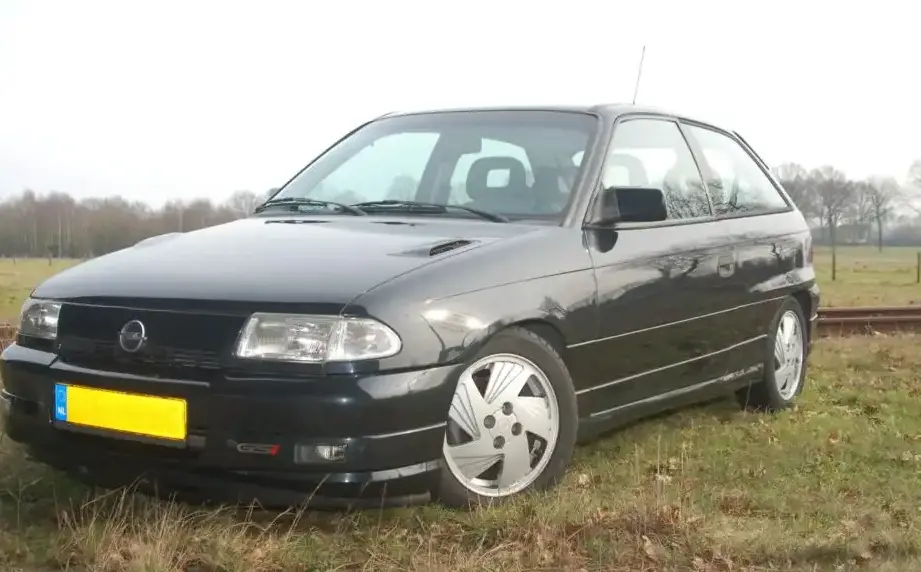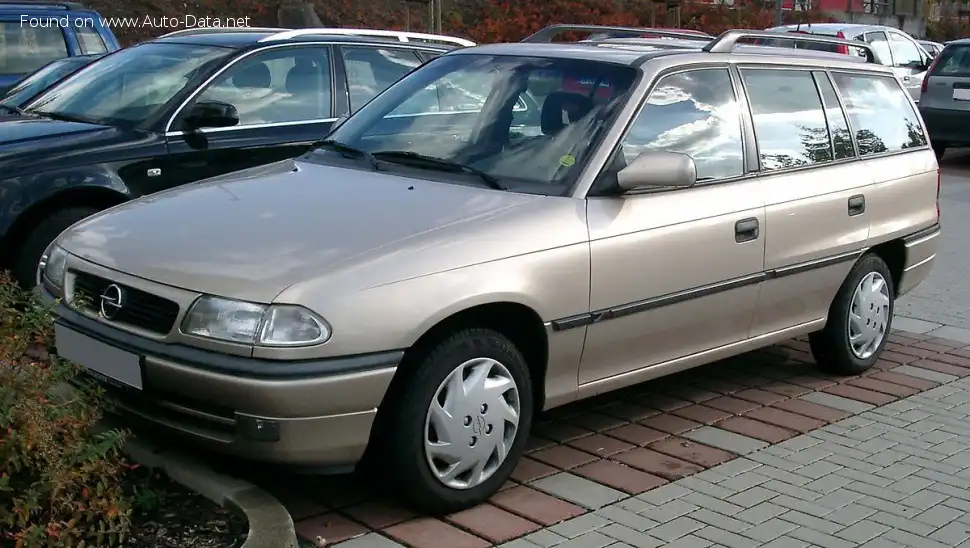
The Opel Astra F Caravan GSi 2.0i 16V, produced from August 1994 to June 1996, represented a performance-oriented variant within the facelifted Astra F Caravan (estate) range. Positioned as a sporty offering, it catered to drivers seeking a blend of practicality and engaging driving dynamics. This model was part of the broader Astra F generation (1991-1998), a significant vehicle for Opel, and a key competitor in the European compact family car segment. The facelift in 1994 brought cosmetic and some mechanical updates, enhancing the Astra F’s appeal.
Technical Specifications
| Brand | Opel |
| Model | Astra |
| Generation | Astra F Caravan (facelift 1994) |
| Type (Engine) | GSi 2.0i 16V (150 Hp) |
| Start of production | August, 1994 |
| End of production | June, 1996 |
| Powertrain Architecture | Internal Combustion engine |
| Body type | Station wagon (estate) |
| Seats | 5 |
| Doors | 5 |
| Fuel consumption (urban) | 12.8 l/100 km (18.4 US mpg, 22.1 UK mpg, 7.8 km/l) |
| Fuel consumption (extra urban) | 7.9 l/100 km (29.8 US mpg, 35.8 UK mpg, 12.7 km/l) |
| Fuel consumption (combined) | 10.7 l/100 km (22 US mpg, 26.4 UK mpg, 9.3 km/l) |
| Fuel Type | Petrol (Gasoline) |
| Acceleration 0 – 100 km/h | 8.5 sec |
| Acceleration 0 – 62 mph | 8.5 sec |
| Acceleration 0 – 60 mph | 8.1 sec |
| Maximum speed | 210 km/h (130.49 mph) |
| Weight-to-power ratio | 7.8 kg/Hp, 127.7 Hp/tonne |
| Weight-to-torque ratio | 6 kg/Nm, 166.8 Nm/tonne |
| Power | 150 Hp @ 6000 rpm |
| Power per litre | 75.1 Hp/l |
| Torque | 196 Nm @ 4600 rpm (144.56 lb.-ft. @ 4600 rpm) |
| Engine layout | Front, Transverse |
| Engine Model/Code | C20XE |
| Engine displacement | 1998 cm3 (121.93 cu. in.) |
| Number of cylinders | 4 |
| Engine configuration | Inline |
| Cylinder Bore | 86 mm (3.39 in.) |
| Piston Stroke | 86 mm (3.39 in.) |
| Compression ratio | 10.5:1 |
| Number of valves per cylinder | 4 |
| Fuel injection system | Multi-port manifold injection |
| Engine aspiration | Naturally aspirated engine |
| Valvetrain | DOHC |
| Engine oil capacity | 4.5 l (4.76 US qt | 3.96 UK qt) |
| Coolant | 6.9 l (7.29 US qt | 6.07 UK qt) |
| Kerb Weight | 1175 kg (2590.43 lbs.) |
| Max. weight | 1660 kg (3659.67 lbs.) |
| Max load | 485 kg (1069.24 lbs.) |
| Trunk (boot) space – minimum | 500 l (17.66 cu. ft.) |
| Trunk (boot) space – maximum | 1630 l (57.56 cu. ft.) |
| Fuel tank capacity | 50 l (13.21 US gal | 11 UK gal) |
| Length | 4278 mm (168.43 in.) |
| Width | 1696 mm (66.77 in.) |
| Width including mirrors | 1852 mm (72.91 in.) |
| Height | 1525 mm (60.04 in.) |
| Wheelbase | 2517 mm (99.09 in.) |
| Front track | 1430 mm (56.3 in.) |
| Rear (Back) track | 1423 mm (56.02 in.) |
| Ride height (ground clearance) | 135 mm (5.31 in.) |
| Drag coefficient (Cd) | 0.34 |
| Minimum turning circle | 10.5 m (34.45 ft.) |
| Drivetrain Architecture | The Internal combustion engine (ICE) drives the front wheels of the vehicle. |
| Drive wheel | Front wheel drive |
| Number of gears and type of gearbox | 5 gears, manual transmission |
| Front brakes | Ventilated discs |
| Rear brakes | Disc |
| Steering type | Steering rack and pinion |
| Tires size | 195/60 R14 V |
| Wheel rims size | 6J x 14 ET49 |
Powertrain & Engine Architecture
The heart of the Astra F Caravan GSi 2.0i 16V was the C20XE engine, a 1998cc inline-four cylinder powerplant. This engine was a mainstay of Opel’s performance models during the 1990s, known for its robust construction and relatively high output. The ‘XE’ designation signified Opel’s higher-performance engine series. The C20XE featured a dual overhead camshaft (DOHC) valvetrain operating four valves per cylinder, contributing to its strong breathing and power delivery. Fuel delivery was handled by a Bosch Motronic multi-port fuel injection system, optimizing air-fuel mixture for efficient combustion. The engine produced 150 horsepower at 6000 rpm and 196 Nm (144.56 lb-ft) of torque at 4600 rpm. The GSi was exclusively offered with a five-speed manual transmission, designed to handle the engine’s output and provide a more engaging driving experience.
Driving Characteristics
The 2.0i 16V GSi offered a noticeable step up in performance compared to lower-spec Astra Caravan models. Acceleration to 62 mph (100 km/h) took approximately 8.5 seconds, and it could achieve a top speed of 130.49 mph (210 km/h). The manual transmission allowed for precise control, and the engine’s torque curve provided usable power throughout the rev range. While not a sports car, the GSi offered a responsive and enjoyable driving experience, particularly on winding roads. The suspension was tuned for a balance between comfort and handling, providing a reasonably compliant ride without excessive body roll. Compared to the base models, the GSi felt significantly more capable and engaging.
Equipment & Trim Levels
The GSi trim level included several features distinguishing it from other Astra Caravan variants. Standard equipment typically included sports seats with upgraded upholstery, a leather-wrapped steering wheel, and a more comprehensive instrument cluster. Exterior enhancements included a body-colored front spoiler, side skirts, and a rear spoiler. Alloy wheels were also standard. Optional extras could include air conditioning, electric windows, and a sunroof. The interior generally featured a darker color scheme and a more focused, driver-oriented layout.
Chassis & Braking
The Astra F Caravan GSi featured a MacPherson strut front suspension and a torsion beam rear suspension. The GSi variant often benefited from slightly stiffer springs and dampers compared to standard models, improving handling. Braking duties were handled by ventilated disc brakes at the front and solid disc brakes at the rear. The braking system provided adequate stopping power for the vehicle’s weight and performance. The steering was a rack-and-pinion system, offering precise and responsive control.
Market Reception & Comparison
The Astra F Caravan GSi 2.0i 16V was generally well-received by automotive critics. It was praised for its strong engine, engaging handling, and practical estate car body style. Compared to rivals like the Ford Mondeo Estate and Volkswagen Passat Variant, the Astra GSi offered a more sporty driving experience. Fuel economy was reasonable for a performance-oriented vehicle of its era, averaging around 22 US mpg combined. Reliability was generally good, although regular maintenance was essential to ensure the longevity of the C20XE engine.
Legacy
The Opel Astra F Caravan GSi 2.0i 16V remains a popular choice among enthusiasts today. The C20XE engine is known for its durability and tunability, making it a favorite for modifications. Well-maintained examples are becoming increasingly collectible. While age and mileage can affect reliability, the GSi’s robust construction and readily available parts supply ensure that it can continue to provide years of enjoyable motoring. The Astra F GSi represents a sweet spot in the Astra lineage, offering a blend of practicality, performance, and affordability that continues to appeal to car enthusiasts.