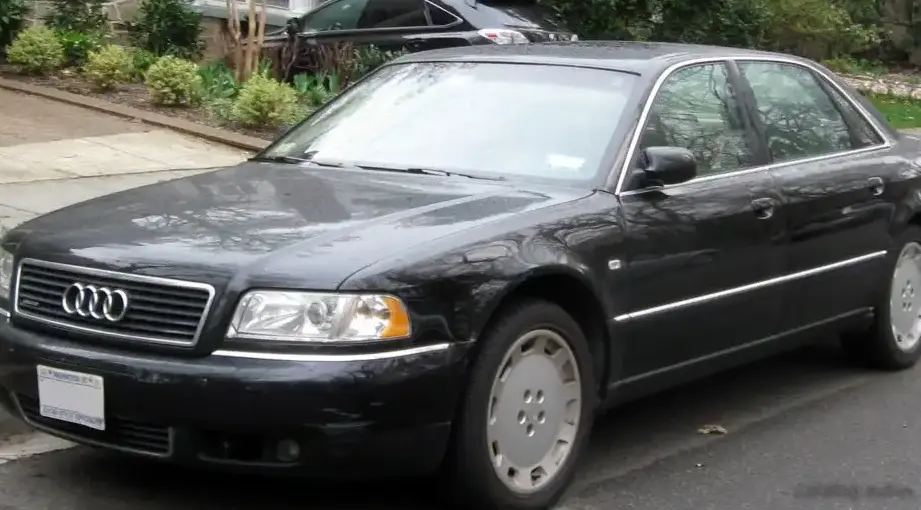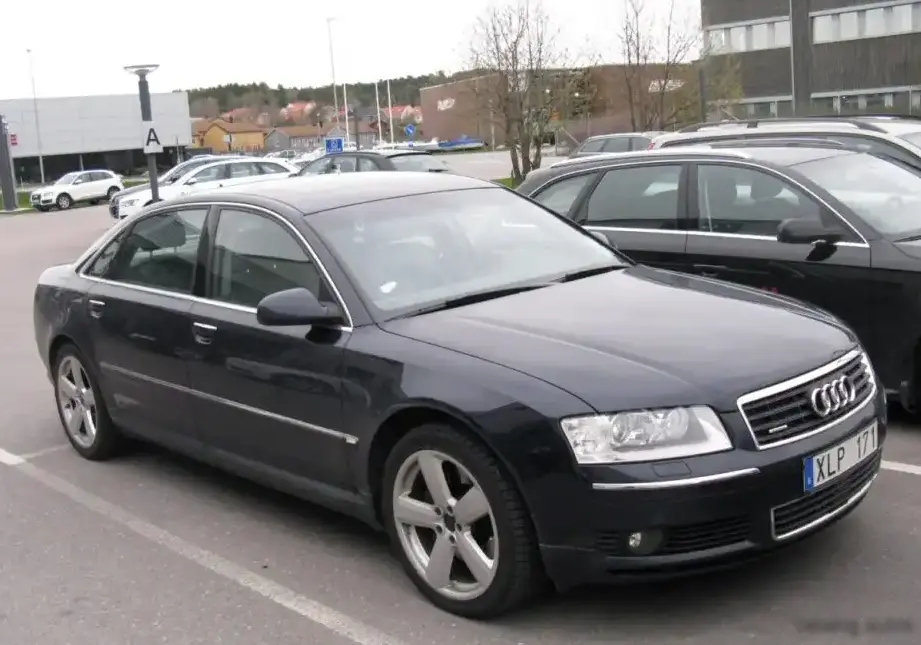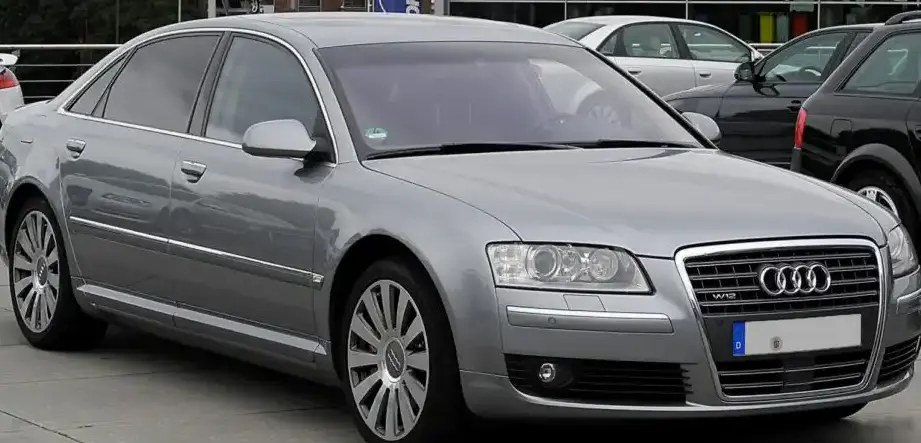
The Audi A8 L (D3, 4E) facelift model, produced from 2005 to 2007, represented a significant evolution of Audi’s flagship luxury sedan. Among the various engine options available, the 4.2 BiTDI V8 with 326 horsepower, coupled with the quattro all-wheel-drive system and a six-speed Tiptronic automatic transmission, occupied a premium position in the lineup. This variant aimed to deliver a blend of high performance, refined comfort, and advanced technology, catering to buyers seeking a top-tier luxury experience. It was positioned as a step up from the more common 3.0 TDI models, offering substantially more power and a more sophisticated driving experience, while remaining below the even more exclusive and costly W12 variant.
Technical Specifications
| Brand | Audi |
| Model | A8 |
| Generation | A8L (D3, 4E, facelift 2005) |
| Type (Engine) | 4.2 BiTDI V8 (326 Hp) quattro DPF Tiptronic |
| Start of production | January, 2005 |
| End of production | 2007 |
| Powertrain Architecture | Internal Combustion engine |
| Body type | Sedan |
| Seats | 5 |
| Doors | 4 |
| Fuel consumption (economy) – urban | 13.4 l/100 km (17.6 US mpg, 21.1 UK mpg, 7.5 km/l) |
| Fuel consumption (economy) – extra urban | 7.5 l/100 km (31.4 US mpg, 37.7 UK mpg, 13.3 km/l) |
| Fuel consumption (economy) – combined | 9.4 l/100 km (25 US mpg, 30.1 UK mpg, 10.6 km/l) |
| Fuel Type | Diesel |
| Acceleration 0 – 100 km/h | 6.1 sec |
| Acceleration 0 – 62 mph | 6.1 sec |
| Acceleration 0 – 60 mph | 5.8 sec |
| Maximum speed | 250 km/h (155.34 mph) |
| Emission standard | Euro 4 |
| Weight-to-power ratio | 6.1 kg/Hp, 163.4 Hp/tonne |
| Weight-to-torque ratio | 3.1 kg/Nm, 325.8 Nm/tonne |
| Power | 326 Hp @ 3750 rpm |
| Power per litre | 78.9 Hp/l |
| Torque | 650 Nm @ 1600-3500 rpm (479.42 lb.-ft. @ 1600-3500 rpm) |
| Engine layout | Front, Longitudinal |
| Engine Model/Code | BVN |
| Engine displacement | 4134 cm3 (252.27 cu. in.) |
| Number of cylinders | 8 |
| Engine configuration | V-engine |
| Cylinder Bore | 83 mm (3.27 in.) |
| Piston Stroke | 95.5 mm (3.76 in.) |
| Compression ratio | 16.5:1 |
| Number of valves per cylinder | 4 |
| Fuel injection system | Diesel Commonrail |
| Engine aspiration | BiTurbo, Intercooler |
| Valvetrain | DOHC |
| Engine oil capacity | 10 l (10.57 US qt | 8.8 UK qt) |
| Coolant | 14.9 l (15.74 US qt | 13.11 UK qt) |
| Kerb Weight | 1995 kg (4398.22 lbs.) |
| Max. weight | 2595 kg (5721 lbs.) |
| Max load | 600 kg (1322.77 lbs.) |
| Trunk (boot) space – minimum | 500 l (17.66 cu. ft.) |
| Fuel tank capacity | 90 l (23.78 US gal | 19.8 UK gal) |
| Length | 5192 mm (204.41 in.) |
| Width | 1894 mm (74.57 in.) |
| Height | 1455 mm (57.28 in.) |
| Wheelbase | 3074 mm (121.02 in.) |
| Front track | 1629 mm (64.13 in.) |
| Rear (Back) track | 1615 mm (63.58 in.) |
| Drag coefficient (Cd) | 0.27 |
| Minimum turning circle (turning diameter) | 12.5 m (41.01 ft.) |
| Drive wheel | All wheel drive (4×4) |
| Number of gears and type of gearbox | 6 gears, automatic transmission Tiptronic |
| Front suspension | Independent multi-link suspension |
| Rear suspension | Independent on trapezoidal lever |
| Front brakes | Ventilated discs |
| Rear brakes | Ventilated discs |
| Assisting systems | ABS (Anti-lock braking system) |
| Steering type | Steering rack and pinion |
| Power steering | Hydraulic Steering |
| Tires size | 235/55 R17 |
| Wheel rims size | 8J x 17 |
INTRODUCTION
The Audi A8 L (D3, 4E) facelift, launched in 2005, represented a mid-cycle refresh of the second-generation A8. Building upon the innovative aluminum space frame construction of the original D3, the facelift brought subtle styling updates, enhanced interior refinement, and improvements to the engine range. The 4.2 BiTDI V8, introduced with this update, was a key component of Audi’s strategy to offer a high-performance diesel option in the luxury segment. This engine, paired with the quattro all-wheel-drive system and a six-speed Tiptronic automatic transmission, provided a compelling alternative to gasoline-powered rivals, offering both impressive performance and relatively good fuel economy. The “L” designation indicated a long-wheelbase version, prioritizing rear passenger space and comfort.
Powertrain & Engine Architecture
The heart of this A8 L variant is the BVN engine code 4.2-liter V8 BiTurbo diesel engine. This engine utilizes a common rail direct injection system, delivering fuel at extremely high pressure for optimized combustion. The BiTurbo setup employs two turbochargers – a smaller, more responsive turbocharger for low-end torque and a larger turbocharger for high-end power. An intercooler helps to cool the compressed intake air, further increasing power output and efficiency. The engine features a double overhead camshaft (DOHC) valvetrain with four valves per cylinder, contributing to its high specific output. The six-speed Tiptronic automatic transmission offers both fully automatic operation and manual gear selection via steering wheel-mounted paddles or the gear selector. This transmission is designed to provide smooth and responsive shifts, complementing the engine’s characteristics.
Driving Characteristics
The 4.2 BiTDI V8 in the A8 L delivered a remarkably smooth and powerful driving experience. The substantial 650 Nm (479 lb-ft) of torque, available from a low 1600 rpm, provided effortless acceleration in virtually any situation. The Tiptronic transmission, while not as sporty as a dual-clutch transmission, offered quick and seamless gear changes. Compared to the 3.0 TDI models, the 4.2 BiTDI offered a noticeable increase in performance, with a 0-60 mph time of around 5.8 seconds. While the W12 offered even more power, the 4.2 BiTDI struck a balance between performance and fuel efficiency. The quattro all-wheel-drive system provided excellent traction and stability, particularly in adverse weather conditions. The long wheelbase and sophisticated suspension setup contributed to a comfortable and composed ride, even on uneven surfaces.
Equipment & Trim Levels
The A8 L 4.2 BiTDI typically came well-equipped as standard. Features included leather upholstery, power-adjustable and heated front seats, a premium audio system, automatic climate control, and a sunroof. The long-wheelbase configuration provided generous rear legroom, making it a particularly appealing option for chauffeured transport. Optional extras included adaptive cruise control, a navigation system, rear seat entertainment, and various trim upgrades. The interior design emphasized luxury and sophistication, with high-quality materials and meticulous attention to detail.
Chassis & Braking
The A8 L’s chassis featured an independent multi-link suspension at the front and an independent trapezoidal lever suspension at the rear. This setup was designed to provide a comfortable ride while maintaining precise handling. Ventilated disc brakes were fitted on all four wheels, providing ample stopping power. The ABS (Anti-lock Braking System) helped to prevent wheel lockup during hard braking, enhancing safety. The steering system utilized a rack and pinion setup with hydraulic power assistance, offering a balanced feel and responsive steering.
Market Reception & Comparison
The Audi A8 L 4.2 BiTDI was generally well-received by automotive critics. It was praised for its powerful engine, refined ride, and luxurious interior. Compared to its competitors, such as the BMW 7 Series and Mercedes-Benz S-Class, the A8 L offered a unique combination of performance, efficiency, and technology. The 4.2 BiTDI variant was often seen as a sweet spot in the A8 L range, offering a significant performance upgrade over the 3.0 TDI models without the added cost and complexity of the W12. Fuel economy was respectable for a vehicle of its size and performance, making it an attractive option for drivers who wanted both power and efficiency.
Legacy
The 4.2 BiTDI engine proved to be a robust and reliable powertrain when properly maintained. While diesel engines, in general, can be more expensive to repair than gasoline engines, the BVN engine has a relatively good reputation for longevity. Today, the A8 L 4.2 BiTDI remains a desirable used car, particularly for those seeking a luxurious and capable grand tourer. Its combination of performance, comfort, and technology continues to appeal to discerning buyers. However, potential buyers should be aware of the potential maintenance costs associated with a high-performance diesel engine and the importance of regular servicing.