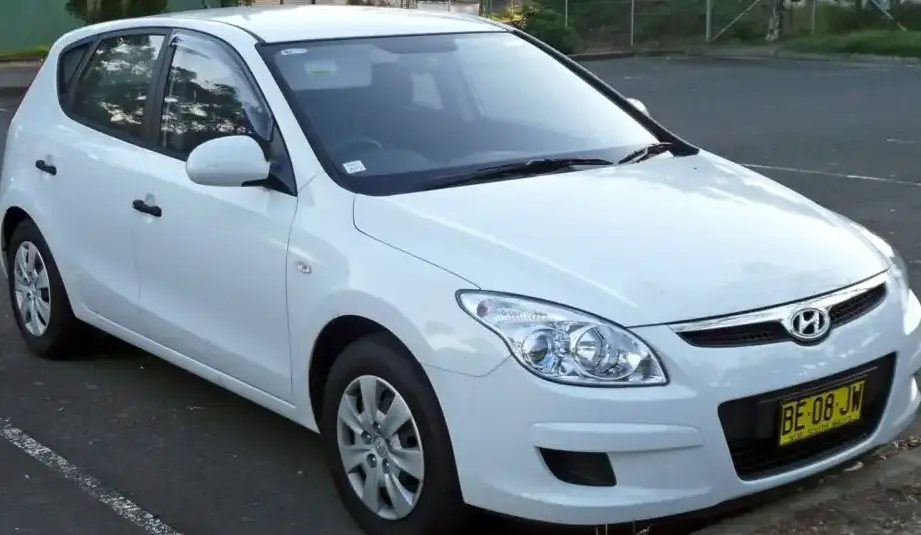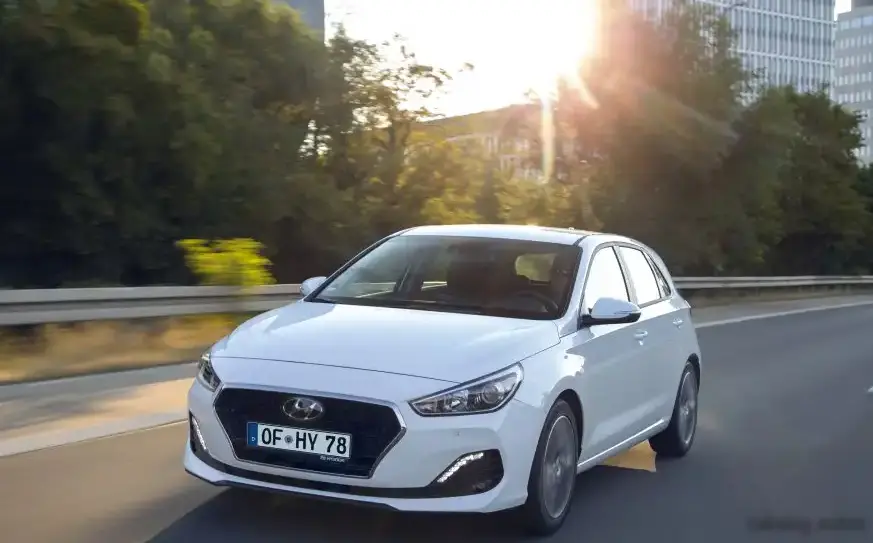
The Hyundai i30 III (facelift, introduced in 2019) 1.0 T-GDI 120 horsepower variant represents an entry point into the third generation of Hyundai’s globally successful compact hatchback. Produced from 2019 through 2020, this model aimed to provide a fuel-efficient and affordable option within the i30 range, appealing to buyers prioritizing economy and practicality. It slots into the lineup below the more powerful 1.4 T-GDI and diesel variants, offering a balance between cost and usability. The i30 III itself is based on the PQ35 platform, shared with other Volkswagen Group vehicles, reflecting Hyundai’s increasing focus on engineering quality and European market appeal.
Technical Specifications
| Brand | Hyundai |
| Model | i30 |
| Generation | i30 III (facelift 2019) |
| Type (Engine) | 1.0 T-GDI (120 Hp) |
| Start of production | 2019 |
| End of production | 2020 |
| Powertrain Architecture | Internal Combustion engine |
| Body type | Hatchback |
| Seats | 5 |
| Doors | 5 |
| Fuel consumption (urban) | 6.5 l/100 km (36.2 US mpg, 43.5 UK mpg, 15.4 km/l) |
| Fuel consumption (extra urban) | 4.9 l/100 km (48 US mpg, 57.6 UK mpg, 20.4 km/l) |
| Fuel consumption (combined) | 5.5 l/100 km (42.8 US mpg, 51.4 UK mpg, 18.2 km/l) |
| CO2 emissions | 126 g/km |
| Fuel Type | Petrol (Gasoline) |
| Acceleration 0 – 100 km/h | 11.1 sec |
| Acceleration 0 – 62 mph | 11.1 sec |
| Acceleration 0 – 60 mph | 10.5 sec |
| Maximum speed | 190 km/h (118.06 mph) |
| Emission standard | Euro 6d – TEMP |
| Weight-to-power ratio | 10.2 kg/Hp, 98.4 Hp/tonne |
| Weight-to-torque ratio | 7.1 kg/Nm, 140.2 Nm/tonne |
| Power | 120 Hp @ 6000 rpm |
| Power per litre | 120.2 Hp/l |
| Torque | 171 Nm @ 1500-4000 rpm (126.12 lb.-ft. @ 1500-4000 rpm) |
| Engine layout | Front, Transverse |
| Engine Model/Code | Kappa II / G3LC |
| Engine displacement | 998 cm3 (60.9 cu. in.) |
| Number of cylinders | 3 |
| Engine configuration | Inline |
| Cylinder Bore | 71 mm (2.8 in.) |
| Piston Stroke | 84 mm (3.31 in.) |
| Number of valves per cylinder | 4 |
| Fuel injection system | Direct injection |
| Engine aspiration | Turbocharger, Intercooler |
| Engine oil capacity | 3.6 l (3.8 US qt | 3.17 UK qt) |
| Coolant | 6 l (6.34 US qt | 5.28 UK qt) |
| Kerb Weight | 1220-1368 kg (2689.64 – 3015.92 lbs.) |
| Max. weight | 1800 kg (3968.32 lbs.) |
| Max load | 432-580 kg (952.4 – 1278.68 lbs.) |
| Trunk (boot) space – minimum | 395 l (13.95 cu. ft.) |
| Trunk (boot) space – maximum | 1301 l (45.94 cu. ft.) |
| Fuel tank capacity | 50 l (13.21 US gal | 11 UK gal) |
| Max. roof load | 80 kg (176.37 lbs.) |
| Permitted trailer load with brakes (12%) | 1200 kg (2645.55 lbs.) |
| Permitted trailer load without brakes | 600 kg (1322.77 lbs.) |
| Permitted towbar download | 80 kg (176.37 lbs.) |
| Length | 4340 mm (170.87 in.) |
| Width | 1795 mm (70.67 in.) |
| Height | 1455 mm (57.28 in.) |
| Wheelbase | 2650 mm (104.33 in.) |
| Front track | 1559-1573 mm (61.38 – 61.93 in.) |
| Rear (Back) track | 1567-1581 mm (61.69 – 62.24 in.) |
| Front overhang | 905 mm (35.63 in.) |
| Rear overhang | 785 mm (30.91 in.) |
| Ride height (ground clearance) | 140 mm (5.51 in.) |
| Drivetrain Architecture | The Internal combustion engine (ICE) drives the front wheels of the vehicle. |
| Drive wheel | Front wheel drive |
| Number of gears and type of gearbox | 6 gears, manual transmission |
| Front brakes | Ventilated discs |
| Rear brakes | Disc |
| Assisting systems | ABS (Anti-lock braking system) |
| Steering type | Steering rack and pinion |
| Power steering | Electric Steering |
Powertrain & Engine Architecture
The heart of this i30 variant is the Hyundai Kappa II 1.0 T-GDI engine, designated G3LC. This is a three-cylinder, 998cc turbocharged gasoline engine. It utilizes direct fuel injection, a key technology for maximizing fuel efficiency and reducing emissions. The engine employs a single scroll turbocharger with an intercooler to boost power output. The Kappa II engine family is known for its lightweight construction, contributing to the i30’s overall efficiency. The engine’s valvetrain features dual continuously variable valve timing (CVVT) on both intake and exhaust camshafts, optimizing performance across the rev range. The engine is transversely mounted in the front of the vehicle. The 6-speed manual transmission was standard, providing a relatively direct connection between the engine and the front wheels.
Driving Characteristics
The 1.0 T-GDI 120 hp i30 offers a practical and economical driving experience. Acceleration from 0-60 mph takes around 10.5 seconds, making it adequate for everyday driving but not particularly sporty. The turbocharger provides a noticeable boost in power, particularly in the mid-range, but the engine can feel somewhat strained at higher RPMs. The 6-speed manual transmission is well-matched to the engine’s characteristics, offering precise shifts. Compared to the more powerful 1.4 T-GDI, the 1.0 T-GDI feels less responsive, but it compensates with significantly better fuel economy. The gear ratios are tuned for efficiency, prioritizing fuel savings over outright performance.
Equipment & Trim Levels
The 1.0 T-GDI typically came equipped as a base or mid-range trim level, depending on the specific market. Standard features generally included air conditioning, a touchscreen infotainment system with Apple CarPlay and Android Auto compatibility, Bluetooth connectivity, and a suite of safety features such as ABS, ESC (Electronic Stability Control), and multiple airbags. Higher trim levels added features like alloy wheels, a larger touchscreen display, a reversing camera, and parking sensors. Interior upholstery was typically cloth, with options for upgraded materials on higher trims.
Chassis & Braking
The i30 III utilizes a MacPherson strut front suspension and a coupled torsion beam rear suspension. This setup provides a good balance between ride comfort and handling. The front brakes are ventilated discs, while the rear brakes are solid discs. ABS (Anti-lock Braking System) is standard, enhancing braking performance and safety. The steering is electrically assisted, providing a light and responsive feel. Stabilizer bars are fitted to both the front and rear axles to reduce body roll during cornering.
Market Reception & Comparison
The 1.0 T-GDI i30 was generally well-received by critics as a sensible and economical choice. It was praised for its fuel efficiency and comfortable ride. However, some reviewers noted that the engine could feel underpowered, especially when fully loaded or driving uphill. Compared to the 1.4 T-GDI, the 1.0 T-GDI offered better fuel economy but less performance. The diesel variants provided even greater fuel efficiency but came with a higher purchase price and potential concerns about diesel emissions regulations.
Legacy
The Kappa II 1.0 T-GDI engine has proven to be a relatively reliable unit, with few widespread issues reported. The i30 III 1.0 T-GDI remains a popular choice in the used car market, particularly for buyers seeking an affordable and fuel-efficient compact hatchback. Its simple engine design and readily available parts contribute to relatively low maintenance costs. While not a performance standout, it represents a solid and practical option for everyday transportation.