
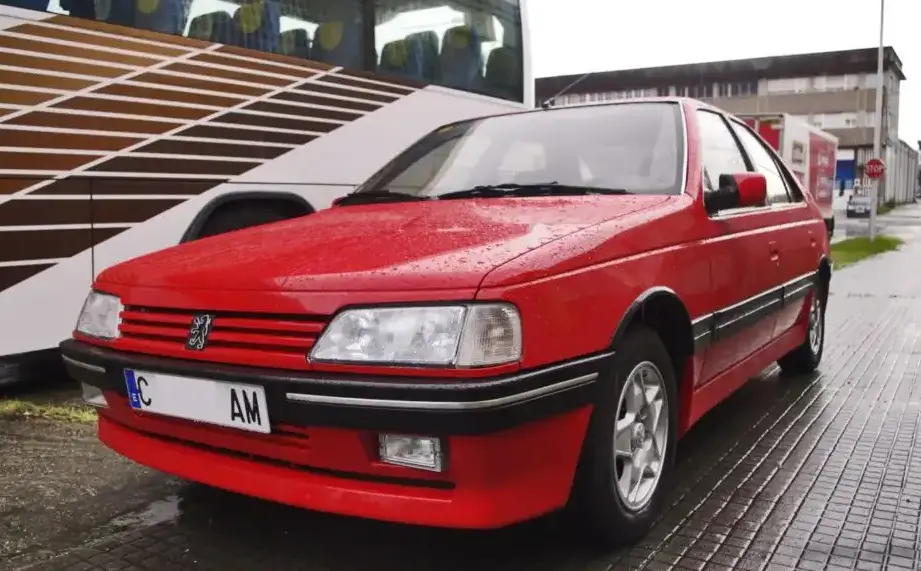
The Peugeot 405 1.9, produced between 1988 and 1992, represented a significant step forward for Peugeot in the mid-size sedan segment. Part of the 405 I (15B) generation, this variant occupied a middle ground in the lineup, offering a balance between performance and economy. It was positioned as a more refined and powerful alternative to the base 1.6-liter models, while remaining more accessible than the flagship 2.0-liter and V6 options. The 405, as a whole, was Peugeot’s replacement for the aging 505, aiming to provide a modern, reliable, and stylish vehicle for European families and business users.
Technical Specifications
| Brand | Peugeot |
| Model | 405 |
| Generation | 405 I (15B) |
| Type (Engine) | 1.9 (120 Hp) |
| Start of production | 1988 |
| End of production | 1992 |
| Powertrain Architecture | Internal Combustion engine |
| Body type | Sedan |
| Seats | 5 |
| Doors | 4 |
| Fuel consumption (urban) | 10.6 l/100 km (22.2 US mpg) |
| Fuel consumption (extra urban) | 6.4 l/100 km (36.8 US mpg) |
| Fuel Type | Petrol (Gasoline) |
| Acceleration 0 – 100 km/h | 12.5 sec |
| Acceleration 0 – 62 mph | 12.5 sec |
| Acceleration 0 – 60 mph | 11.9 sec |
| Maximum speed | 192 km/h (119.3 mph) |
| Weight-to-power ratio | 8.7 kg/Hp |
| Weight-to-torque ratio | 6.8 kg/Nm |
| Power | 120 Hp @ 6000 rpm |
| Power per litre | 63 Hp/l |
| Torque | 153 Nm @ 3000 rpm (112.85 lb.-ft. @ 3000 rpm) |
| Engine layout | Front, Transverse |
| Engine Model/Code | DKZ XU9JAZ |
| Engine displacement | 1905 cm3 (116.25 cu. in.) |
| Number of cylinders | 4 |
| Engine configuration | Inline |
| Cylinder Bore | 83 mm (3.27 in.) |
| Piston Stroke | 88 mm (3.46 in.) |
| Compression ratio | 9.2:1 |
| Number of valves per cylinder | 2 |
| Fuel injection system | Multi-port manifold injection |
| Engine aspiration | Naturally aspirated engine |
| Valvetrain | OHC |
| Engine oil capacity | 4.8 l (5.07 US qt | 4.22 UK qt) |
| Coolant capacity | 6.6 l (6.97 US qt | 5.81 UK qt) |
| Kerb Weight | 1045 kg (2303.83 lbs.) |
| Max. weight | 1550 kg (3417.17 lbs.) |
| Max load | 505 kg (1113.33 lbs.) |
| Trunk (boot) space – minimum | 470 l (16.6 cu. ft.) |
| Fuel tank capacity | 70 l (18.49 US gal | 15.4 UK gal) |
| Permitted trailer load with brakes (12%) | 1200 kg (2645.55 lbs.) |
| Length | 4408 mm (173.54 in.) |
| Width | 1714 mm (67.48 in.) |
| Height | 1406 mm (55.35 in.) |
| Wheelbase | 2669 mm (105.08 in.) |
| Front track | 1450 mm (57.09 in.) |
| Rear (Back) track | 1443 mm (56.81 in.) |
| Front overhang | 817 mm (32.17 in.) |
| Rear overhang | 922 mm (36.3 in.) |
| Drag coefficient (Cd) | 0.31 |
| Minimum turning circle | 10.55 m (34.61 ft.) |
| Drivetrain Architecture | Front wheel drive |
| Number of gears and type of gearbox | 5 gears, manual transmission |
| Front suspension | Independent, type McPherson with coil spring and anti-roll bar |
| Rear suspension | Torsion |
| Front brakes | Ventilated discs |
| Rear brakes | Disc |
| Steering type | Steering rack and pinion |
| Tires size | 185/65 R14 |
| Wheel rims size | 14 |
Powertrain & Engine Architecture
The heart of the 405 1.9 was the XU9JAZ engine, a 1.9-liter inline-four cylinder petrol engine. This engine was part of Peugeot’s XU series, known for its robustness and relatively simple design. The XU9JAZ featured a single overhead camshaft (OHC) operating two valves per cylinder. Fuel delivery was handled by a multi-port fuel injection system, providing improved efficiency and responsiveness compared to earlier carbureted designs. The engine produced 120 horsepower at 6000 rpm and 153 Nm (113 lb-ft) of torque at 3000 rpm. This power was delivered to the front wheels through a five-speed manual transmission, which was the standard offering for this variant. The engine’s transverse mounting contributed to a more compact engine bay and improved front-wheel drive packaging.
Driving Characteristics
The 405 1.9 offered a comfortable and capable driving experience. While not a sports car, the 120 hp engine provided adequate power for everyday driving and even some spirited acceleration. The five-speed manual transmission allowed drivers to keep the engine in its optimal power band, resulting in responsive performance. Compared to the lower-powered 1.6-liter models, the 1.9 felt noticeably more refined and capable, particularly when carrying passengers or luggage. The gear ratios were well-chosen for both city driving and highway cruising. It wasn’t as quick as the 2.0-liter or V6 versions, but it offered a better balance of performance and fuel economy. The steering was light and precise, making the car easy to maneuver.
Equipment & Trim Levels
The 405 1.9 typically came with a reasonable level of standard equipment. This included central locking, power steering, and a basic stereo system. Interior upholstery was typically cloth, with a durable and practical design. Higher trim levels offered options such as electric windows, a sunroof, and upgraded audio systems. The dashboard layout was functional and ergonomically designed, with easy-to-read gauges and controls. The 405 prioritized practicality and comfort over outright luxury, but it still offered a pleasant and well-equipped interior for its time.
Chassis & Braking
The 405 1.9 utilized an independent McPherson strut suspension at the front, providing good handling and ride comfort. The rear suspension employed a torsion beam setup, which was a cost-effective and space-saving solution. Braking duties were handled by ventilated discs at the front and solid discs at the rear, providing adequate stopping power for the vehicle’s weight and performance. The steering system was a rack and pinion type, offering precise and responsive steering feel. The 185/65 R14 tires provided a good balance of grip and ride comfort.
Market Reception & Comparison
The Peugeot 405 1.9 was generally well-received by automotive critics. It was praised for its comfortable ride, refined engine, and practical interior. Compared to its rivals, such as the Ford Sierra and Vauxhall/Opel Vectra, the 405 offered a more stylish and sophisticated design. Fuel economy was considered good for its class, and the engine proved to be reliable. However, some critics noted that the interior trim quality could have been improved. The 1.9 variant struck a good balance between price, performance, and economy, making it a popular choice for families and business users.
Legacy
The Peugeot 405 1.9 has proven to be a durable and reliable vehicle over the long term. The XU9JAZ engine is known for its longevity, and many examples are still on the road today. While parts availability can be a challenge, the engine’s simple design makes it relatively easy to maintain and repair. The 405 1.9 has gained a following among classic car enthusiasts who appreciate its stylish design, comfortable ride, and robust mechanicals. In the used car market, well-maintained examples command a reasonable price, reflecting the car’s enduring appeal and reputation for reliability.
