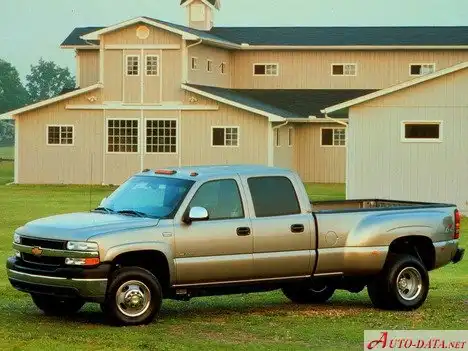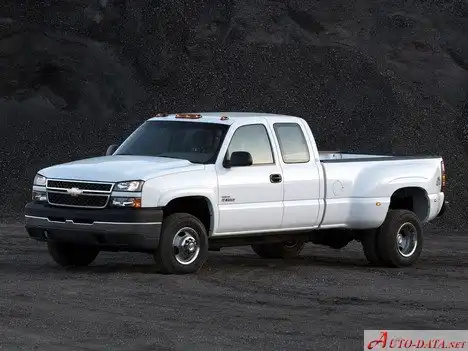
The Chevrolet Silverado 1500, particularly the facelifted first generation produced from 2003 to 2006, represented a significant evolution in Chevrolet’s full-size pickup truck offerings. The Crew Cab configuration, paired with the 5.3-liter V8 engine producing 285 horsepower, occupied a sweet spot in the lineup, offering a blend of capability, space, and relative affordability. This variant aimed to appeal to buyers needing both passenger room and substantial towing/hauling capacity, bridging the gap between work-focused regular cab models and more luxurious, higher-trim level trucks. The 2003 facelift brought updated styling cues and minor mechanical refinements to the Silverado, solidifying its position in a highly competitive segment.
Technical Specifications
| Brand | Chevrolet |
| Model | Silverado 1500 |
| Generation | Silverado 1500 I (facelift 2003) Crew Cab |
| Type (Engine) | 5.3 (285 Hp) |
| Start of production | 2003 |
| End of production | 2006 |
| Powertrain Architecture | Internal Combustion engine |
| Body type | Pick-up |
| Seats | 4 |
| Doors | 5 |
| Fuel consumption (urban) | 14.7 l/100 km (16 US mpg, 19.2 UK mpg) |
| Fuel consumption (extra urban) | 11.8 l/100 km (19.9 US mpg, 23.9 UK mpg) |
| Fuel Type | Petrol (Gasoline) |
| Power | 285 Hp @ 5200 rpm |
| Power per litre | 53.2 Hp/l |
| Torque | 335 Nm @ 4000 rpm (247.08 lb.-ft. @ 4000 rpm) |
| Engine layout | Front, Longitudinal |
| Engine displacement | 5360 cm3 (327.09 cu. in.) |
| Number of cylinders | 8 |
| Engine configuration | V-engine |
| Fuel injection system | Multi-port manifold injection |
| Engine aspiration | Naturally aspirated engine |
| Engine oil capacity | 5.7 l (6.02 US qt | 5.02 UK qt) |
| Length | 5738 mm (225.91 in.) |
| Width | 1994 mm (78.5 in.) |
| Height | 1844 mm (72.6 in.) |
| Wheelbase | 3645 mm (143.5 in.) |
| Drivetrain | Rear wheel drive |
| Number of gears and type of gearbox | 5 gears, manual transmission |
| Front suspension | Torsion |
| Rear suspension | Leaf spring |
Powertrain & Engine Architecture
The heart of this Silverado variant is the 5.3-liter (327 cubic inch) Small-Block Chevrolet V8 engine, specifically the LM7 engine code. This engine is a member of the Vortec 5300 family, known for its robust construction and relatively simple design. It features a cast iron block and aluminum cylinder heads. The LM7 utilizes a multi-port fuel injection system, delivering fuel to each cylinder individually for optimized combustion. The engine employs a two-valve per cylinder configuration, with a single overhead camshaft controlling valve operation. The 5-speed manual transmission (likely a New Venture Gear NV3500) was the standard transmission offering, providing a direct mechanical connection between the engine and the rear wheels. This transmission was chosen for its durability and suitability for truck applications.
Driving Characteristics
The 285 horsepower and 335 Nm (247 lb-ft) of torque provided by the 5.3L V8 and 5-speed manual transmission offered a balanced driving experience. While not as quick as the available 6.0L V8, the 5.3L provided ample power for everyday driving and towing. The manual transmission allowed for greater driver control and engagement, particularly when navigating challenging terrain or hauling heavy loads. The gear ratios were tuned for a combination of low-end torque and reasonable highway cruising. Compared to the automatic transmission equipped models, the manual offered slightly improved fuel economy and a more direct feel. The Silverado’s leaf spring rear suspension, while providing excellent load-carrying capacity, could result in a somewhat firm ride when unladen.
Equipment & Trim Levels
The Crew Cab configuration was a significant upgrade in terms of interior space and comfort. The 2003-2006 Silverado 1500 Crew Cab 5.3L typically included standard features such as air conditioning, power windows and locks, and an AM/FM stereo. The interior trim was generally utilitarian, with durable cloth upholstery. Optional extras included upgraded audio systems, power seats, alloy wheels, and a towing package. The Silverado 1500 offered various trim levels, with the 5.3L Crew Cab often found in the LT trim, which added features like chrome exterior accents and upgraded interior materials.
Chassis & Braking
The Silverado 1500 utilized a body-on-frame construction, providing a robust and durable platform. The front suspension consisted of independent torsion bars, while the rear suspension employed leaf springs. This setup was designed to handle heavy loads and provide a stable ride. Braking duties were handled by disc brakes up front and drum brakes in the rear. Anti-lock brakes (ABS) were typically standard equipment. The steering system was a traditional recirculating ball setup, offering a solid and predictable feel. Stabilizer bars were included to reduce body roll during cornering.
Market Reception & Comparison
The Silverado 1500 Crew Cab 5.3L was generally well-received by critics and consumers alike. It was praised for its spacious interior, strong engine, and capable towing capacity. Fuel economy, however, was a common criticism, typical for a full-size pickup truck of that era. Compared to the 4.8L V8 models, the 5.3L offered a noticeable performance improvement. Against the 6.0L V8, it represented a more affordable option with slightly less power. The Ford F-150 and Dodge Ram 1500 were the Silverado’s primary competitors, each offering similar configurations and features. The Silverado often stood out for its comfortable ride and well-designed interior.
Legacy
The 2003-2006 Chevrolet Silverado 1500, particularly the 5.3L V8-equipped models, have proven to be relatively reliable vehicles. The LM7 engine is known for its longevity, and with proper maintenance, can easily exceed 200,000 miles. The 5-speed manual transmission is also considered durable. Today, these Silverados are readily available on the used car market at affordable prices. They remain popular choices for those seeking a capable and reliable pickup truck for work or personal use. Common issues include corrosion in areas prone to salt exposure and potential oil leaks from the engine. However, parts availability is excellent, and the relatively simple design makes them relatively easy to repair and maintain.