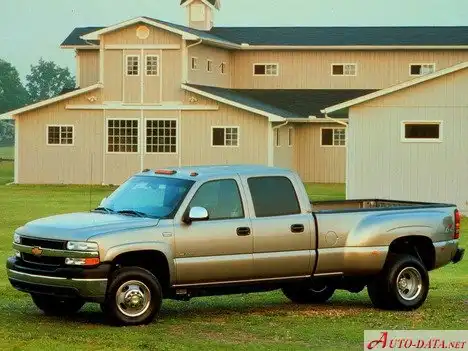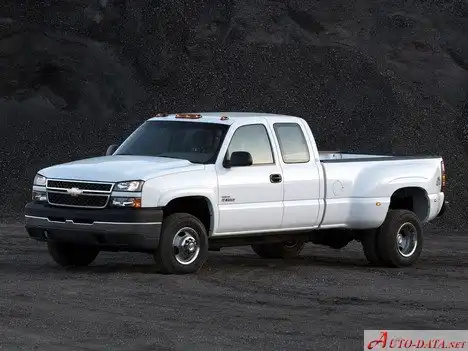
The Chevrolet Silverado 1500, particularly the facelifted first generation produced from 2003 to 2006, represented a significant evolution in Chevrolet’s full-size pickup truck offerings. The Crew Cab configuration, paired with the 5.3-liter V8 engine and a four-speed automatic transmission, occupied a key position in the Silverado lineup, offering a balance of capability, comfort, and affordability. This variant aimed to appeal to buyers needing both passenger space and substantial towing/hauling capacity, bridging the gap between work-focused regular cab models and more luxurious trims.
Technical Specifications
| Brand | Chevrolet |
| Model | Silverado 1500 |
| Generation | Silverado 1500 I (facelift 2003) Crew Cab |
| Type (Engine) | 5.3 (288 Hp) Automatic |
| Start of production | 2003 |
| End of production | 2006 |
| Powertrain Architecture | Internal Combustion engine |
| Body type | Pick-up |
| Seats | 4 |
| Doors | 5 |
| Fuel consumption (urban) | 14.7 l/100 km (16 US mpg, 19.2 UK mpg) |
| Fuel consumption (extra urban) | 11.8 l/100 km (19.9 US mpg, 23.9 UK mpg) |
| Fuel Type | Petrol (Gasoline) |
| Power | 288 Hp @ 5200 rpm |
| Torque | 335 Nm @ 4000 rpm (247.08 lb.-ft. @ 4000 rpm) |
| Engine layout | Front, Longitudinal |
| Engine displacement | 5360 cm3 (327.09 cu. in.) |
| Number of cylinders | 8 |
| Engine configuration | V-engine |
| Fuel injection system | Multi-port manifold injection |
| Engine oil capacity | 5.7 l (6.02 US qt, 5.02 UK qt) |
| Coolant capacity | 13 l (13.74 US qt, 11.44 UK qt) |
| Length | 5738 mm (225.91 in.) |
| Width | 1994 mm (78.5 in.) |
| Height | 1844 mm (72.6 in.) |
| Wheelbase | 3645 mm (143.5 in.) |
| Drivetrain | Rear wheel drive |
| Number of gears | 4 |
| Gearbox type | Automatic transmission |
| Front suspension | Torsion |
| Rear suspension | Leaf spring |
Powertrain & Engine Architecture
The heart of this Silverado variant was the 5.3-liter (327 cubic inch) Small-Block Chevrolet V8 engine, specifically the LM7 engine code. This engine was a member of the Vortec family, known for its robust construction and relatively simple design. The LM7 featured cast iron block and cylinder heads, a two-bolt main bearing cap design, and a hydraulic roller camshaft. Fuel delivery was handled by a multi-port fuel injection system, providing precise fuel metering for improved efficiency and performance. The engine produced 288 horsepower at 5200 rpm and 335 Newton-meters (247 lb-ft) of torque at 4000 rpm. The four-speed 4L60E automatic transmission was the standard pairing. This transmission was electronically controlled, offering smooth shifts and a torque converter lock-up feature for improved fuel economy at highway speeds. While not the most advanced transmission available at the time, the 4L60E was known for its durability when properly maintained.
Driving Characteristics
The 5.3-liter V8 and 4L60E automatic combination delivered adequate, though not exhilarating, performance. Acceleration was sufficient for everyday driving and towing moderate loads. The automatic transmission’s gear ratios were optimized for towing and hauling, resulting in a slightly less responsive feel compared to the available manual transmission or the higher-output 6.0-liter V8. The 4L60E’s shift points were programmed for fuel efficiency, which sometimes meant the engine felt slightly strained during quick acceleration. However, for the intended audience – buyers prioritizing comfort and practicality – the driving experience was generally smooth and predictable. The rear-wheel-drive configuration provided a traditional truck feel, with good traction in most conditions, though it could struggle in slippery environments without proper weight distribution or tire selection.
Equipment & Trim Levels
The Crew Cab configuration was the defining feature of this variant, offering significantly more rear-seat legroom than the extended cab models. Standard equipment typically included air conditioning, power windows and locks, an AM/FM stereo, and cloth upholstery. The Silverado 1500 offered several trim levels, with the base model providing essential features, while higher trims like LT and Z71 added amenities such as leather upholstery, upgraded audio systems, alloy wheels, and off-road-focused suspension components. Optional extras for the 5.3L Crew Cab included a towing package, sunroof, and navigation system. The interior design was functional and durable, prioritizing practicality over luxury, though the Crew Cab offered a more spacious and comfortable cabin than other Silverado configurations.
Chassis & Braking
The Silverado 1500 utilized a body-on-frame construction, providing a robust and durable platform for hauling and towing. The front suspension consisted of torsion bars, while the rear suspension employed leaf springs. This setup provided a comfortable ride quality, though it wasn’t as refined as independent rear suspension systems found in some competing trucks. Braking duties were handled by disc brakes up front and drum brakes in the rear. Anti-lock brakes (ABS) were typically standard equipment. The braking system was adequate for the truck’s weight and intended use, but it lacked the stopping power of more modern braking systems. Stabilizer bars were included to reduce body roll during cornering, improving handling stability.
Market Reception & Comparison
The 2003-2006 Silverado 1500 Crew Cab with the 5.3-liter V8 and automatic transmission was well-received by the market. Critics praised its spacious interior, comfortable ride, and strong towing capacity. However, some reviewers noted that the 5.3-liter engine felt underpowered when fully loaded or towing heavy trailers, and the four-speed automatic transmission was beginning to show its age compared to newer transmissions with more gears. Compared to the 4.8-liter V8, the 5.3L offered a noticeable power increase, making it a more popular choice for those needing extra capability. Compared to the 6.0-liter V8, the 5.3L offered better fuel economy but sacrificed some performance. The 5.3L also proved to be more reliable than the 6.0L, which was prone to oil consumption issues.
Legacy
The LM7 5.3-liter V8 engine proved to be exceptionally durable and reliable, earning a reputation as a workhorse powerplant. The 4L60E transmission, while not without its weaknesses, was also generally reliable when properly maintained. Today, these Silverado 1500s are readily available on the used car market at affordable prices. They remain popular choices for those seeking a capable and dependable full-size pickup truck. Common maintenance items include regular oil changes, transmission fluid flushes, and inspection of the suspension components. While these trucks are aging, their robust construction and readily available parts supply ensure they will continue to be a common sight on American roads for years to come. The combination of a spacious Crew Cab, a reliable V8 engine, and a reasonable price point cemented this Silverado variant as a popular and enduring choice for truck buyers.