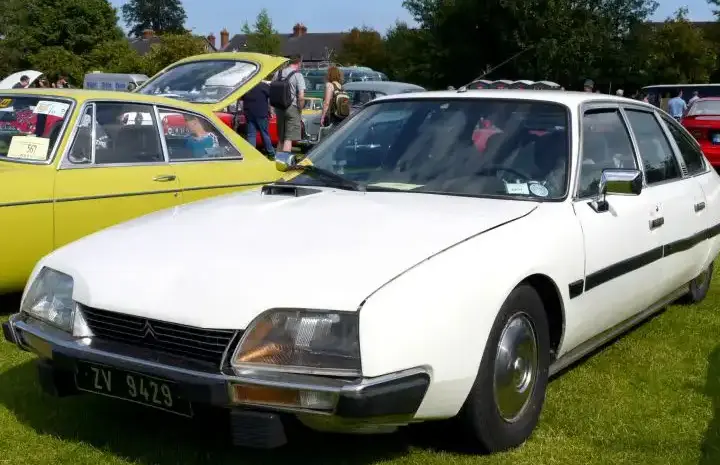
The Citroën CX 25 D, specifically the Phase I variant produced from 1983 to 1985, represented a significant offering in Citroën’s luxury executive car lineup. Positioned as a diesel-powered alternative within the CX range, it aimed to provide a blend of comfort, fuel efficiency, and practicality for buyers seeking a large, sophisticated hatchback. The CX, succeeding the iconic DS, continued Citroën’s tradition of innovative engineering and distinctive styling. This 25 D model, with its 75 horsepower output, served as a more economical entry point into the CX family, appealing to those prioritizing fuel costs over outright performance. It was built on the platform designated as the CX I, the initial iteration of the model.
Technical Specifications
| Brand | Citroën |
| Model | CX |
| Generation | CX I (Phase I, 1982) |
| Type (Engine) | 25 D (75 Hp) |
| Start of production | 1983 |
| End of production | 1985 |
| Powertrain Architecture | Internal Combustion engine |
| Body type | Hatchback |
| Seats | 5 |
| Doors | 5 |
| Fuel Type | Diesel |
| Acceleration 0 – 100 km/h | 16.8 sec |
| Acceleration 0 – 62 mph | 16.8 sec |
| Acceleration 0 – 60 mph | 16 sec |
| Maximum speed | 156 km/h (96.93 mph) |
| Weight-to-power ratio | 18.3 kg/Hp, 54.7 Hp/tonne |
| Weight-to-torque ratio | 9.1 kg/Nm, 109.5 Nm/tonne |
| Power | 75 Hp @ 4250 rpm |
| Power per litre | 30 Hp/l |
| Torque | 150 Nm @ 2000 rpm (110.63 lb.-ft. @ 2000 rpm) |
| Engine layout | Front, Transverse |
| Engine Model/Code | M25-629 |
| Engine displacement | 2499 cm3 (152.5 cu. in.) |
| Number of cylinders | 4 |
| Engine configuration | Inline |
| Cylinder Bore | 93 mm (3.66 in.) |
| Piston Stroke | 92 mm (3.62 in.) |
| Compression ratio | 22.25:1 |
| Number of valves per cylinder | 2 |
| Fuel injection system | Precombustion chamber injection |
| Engine aspiration | Naturally aspirated |
| Engine oil capacity | 5.3 l (5.6 US qt | 4.66 UK qt) |
| Coolant | 12.3 l (13 US qt | 10.82 UK qt) |
| Kerb Weight | 1370 kg (3020.33 lbs) |
| Max. weight | 1890 kg (4166.74 lbs) |
| Max load | 520 kg (1146.4 lbs) |
| Trunk (boot) space – minimum | 325 l (11.48 cu. ft.) |
| Fuel tank capacity | 68 l (17.96 US gal | 14.96 UK gal) |
| Length | 4659 mm (183.43 in.) |
| Width | 1770 mm (69.69 in.) |
| Height | 1360 mm (53.54 in.) |
| Wheelbase | 2845 mm (112.01 in.) |
| Front track | 1514 mm (59.61 in.) |
| Rear track | 1360 mm (53.54 in.) |
| Front overhang | 1050 mm (41.34 in.) |
| Rear overhang | 764 mm (30.08 in.) |
| Drag coefficient (Cd) | 0.36 |
| Minimum turning circle | 11.70 m (38.39 ft.) |
| Drivetrain Architecture | Front wheel drive |
| Number of gears | 5 |
| Gearbox type | Manual transmission |
| Front brakes | Ventilated discs |
| Rear brakes | Disc |
| Steering type | Steering rack and pinion |
Powertrain & Engine Architecture
The Citroën CX 25 D utilized the M25-629 engine, a 2.5-liter inline-four diesel engine. This engine was a naturally aspirated design employing precombustion chamber injection, a system common in European diesel engines of the era. This system involved a small precombustion chamber connected to the main cylinder, where fuel was initially ignited before being transferred to the main chamber for complete combustion. This design aided in smoother, more complete burning of the diesel fuel, reducing noise and emissions compared to direct injection systems. The engine produced 75 horsepower at 4250 rpm and 150 Nm (110.63 lb-ft) of torque at 2000 rpm. The five-speed manual transmission was the standard offering for this variant, providing a relatively long-legged gearing setup suited to the engine’s torque characteristics.
Driving Characteristics
The CX 25 D, with its 75 hp and manual transmission, offered a driving experience focused on relaxed cruising and fuel economy rather than spirited performance. Acceleration was modest, taking approximately 16.8 seconds to reach 62 mph (100 km/h). The engine’s torque, however, provided adequate pulling power for highway driving and overtaking, although it required downshifting for more urgent maneuvers. Compared to the more powerful gasoline-powered CX variants, such as the 2.0 or 2.2, the 25 D felt significantly slower. However, it offered a noticeable improvement in fuel economy, making it a practical choice for high-mileage drivers. The CX’s renowned hydropneumatic suspension, regardless of engine choice, provided an exceptionally comfortable ride, absorbing bumps and imperfections in the road with ease.
Equipment & Trim Levels
The CX 25 D, being positioned as a more accessible model, typically came with a standard equipment level that prioritized comfort and practicality. Standard features included cloth upholstery, a basic stereo system, and power steering. Optional extras, such as leather upholstery, air conditioning, and a more advanced stereo, were available to enhance the vehicle’s luxury and convenience. The dashboard layout was typical of Citroëns of the period, featuring a combination of analog gauges and switches. The CX’s unique steering wheel design, with its multiple spokes and satellite controls, was a distinctive feature of the interior.
Chassis & Braking
The CX featured an independent suspension system on all four wheels, utilizing Citroën’s innovative hydropneumatic technology. This system employed self-leveling spheres and hydraulic fluid to provide a remarkably smooth and controlled ride. The front suspension utilized double wishbones, while the rear suspension employed trailing arms. Braking was accomplished via ventilated discs on the front wheels and solid discs on the rear. The steering system was a rack and pinion setup, providing precise and responsive steering feel. The CX’s chassis was designed to prioritize ride comfort and handling stability, rather than outright sportiness.
Market Reception & Comparison
The CX 25 D was generally well-received by critics as a practical and comfortable family car. Its fuel efficiency was a major selling point, particularly in Europe where diesel fuel was often cheaper than gasoline. However, its relatively low power output was a common criticism, with some reviewers finding it underpowered for highway driving. Compared to other CX variants, the 25 D offered the most affordable entry point into the model range, making it appealing to budget-conscious buyers. It competed with other large European hatchbacks, such as the Ford Granada and Opel/Vauxhall Senator, but distinguished itself with its unique hydropneumatic suspension and distinctive styling.
Legacy
The Citroën CX 25 D, while not the most powerful or sought-after variant of the CX, remains a respected and fondly remembered vehicle. The M25-629 diesel engine proved to be relatively durable and reliable, although maintenance can be complex due to the engine’s precombustion chamber injection system. Today, the CX 25 D is a relatively rare sight on the road, and well-maintained examples are becoming increasingly collectible. Its unique blend of comfort, practicality, and distinctive styling continues to appeal to enthusiasts who appreciate Citroën’s innovative engineering and design heritage. The hydropneumatic suspension, while requiring specialized maintenance, remains a defining feature of the CX and a testament to Citroën’s engineering prowess.