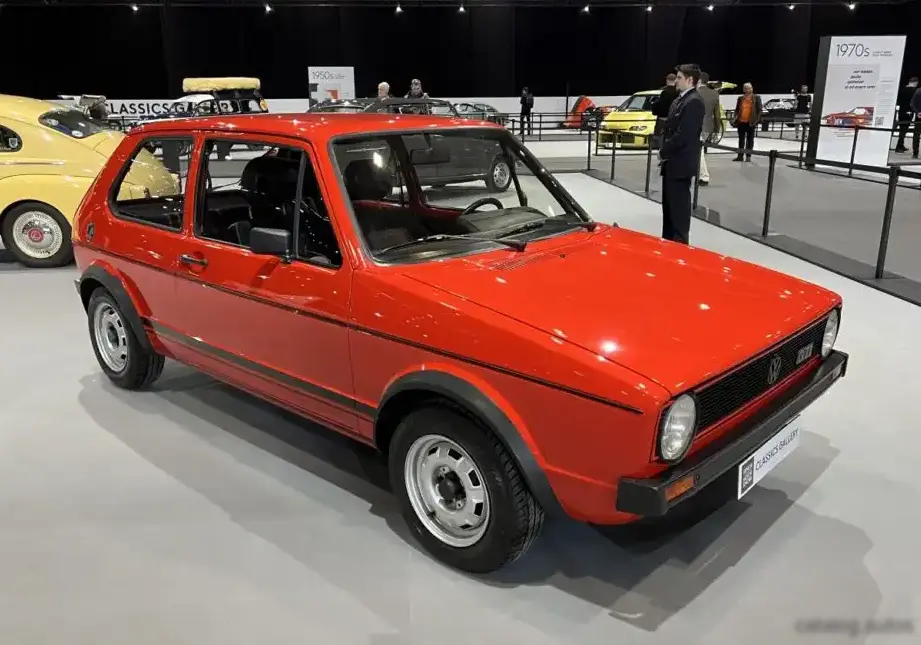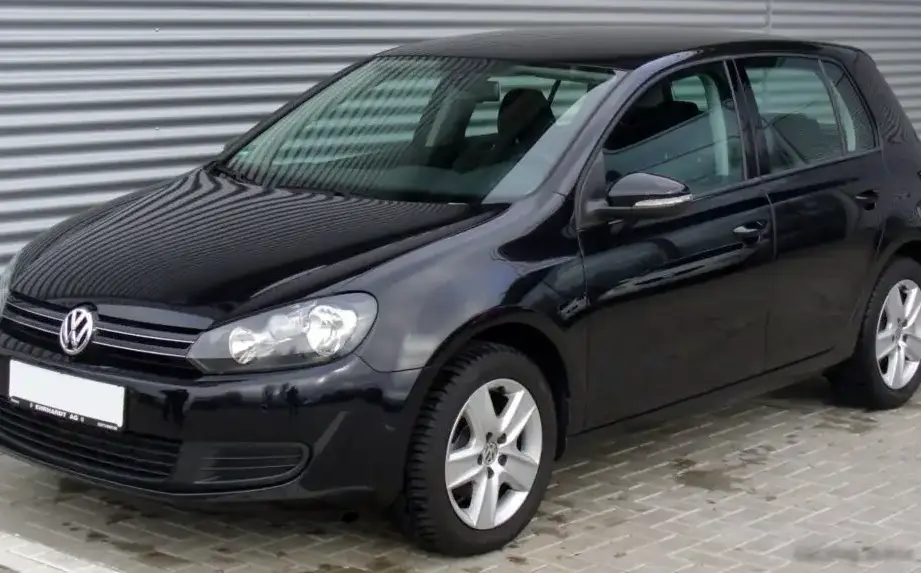
The Volkswagen Golf VI 1.6 (102 hp) represents a significant iteration in the Golf lineage, produced between 2008 and 2010. Positioned as an entry-level offering within the sixth-generation Golf (Mk6) range, this variant aimed to provide accessible and economical transportation within the highly competitive European C-segment hatchback market. It was a key model for attracting buyers prioritizing fuel efficiency and affordability, while still benefiting from the Golf’s reputation for build quality and practicality. The Golf VI, built on the A5 (PQ35) platform, represented an evolution rather than a revolution compared to its predecessor, focusing on refinement and improved technology.
Technical Specifications
| Brand | Volkswagen |
| Model | Golf |
| Generation | Golf VI (5-door) |
| Type (Engine) | 1.6 (102 Hp) |
| Start of production | 2008 |
| End of production | 2010 |
| Powertrain Architecture | Internal Combustion engine |
| Body type | Hatchback |
| Seats | 5 |
| Doors | 5 |
| Fuel consumption (economy) – urban (NEDC) | 9.7 l/100 km (24.2 US mpg, 29.1 UK mpg, 10.3 km/l) |
| Fuel consumption (economy) – extra urban (NEDC) | 5.6 l/100 km (42 US mpg, 50.4 UK mpg, 17.9 km/l) |
| Fuel consumption (economy) – combined (NEDC) | 7.1 l/100 km (33.1 US mpg, 39.8 UK mpg, 14.1 km/l) |
| CO2 emissions (NEDC) | 166 g/km |
| Fuel Type | Petrol (Gasoline) |
| Acceleration 0 – 100 km/h | 11.3 sec |
| Acceleration 0 – 62 mph | 11.3 sec |
| Acceleration 0 – 60 mph | 10.7 sec |
| Maximum speed | 188 km/h (116.82 mph) |
| Emission standard | Euro 5 |
| Weight-to-power ratio | 11.3 kg/Hp, 88.2 Hp/tonne |
| Weight-to-torque ratio | 7.8 kg/Nm, 127.9 Nm/tonne |
| Power | 102 Hp @ 5600 rpm |
| Power per litre | 63.9 Hp/l |
| Torque | 148 Nm @ 3800 rpm (109.16 lb.-ft. @ 3800 rpm) |
| Engine layout | Front, Transverse |
| Engine Model/Code | BSE, BSF |
| Engine displacement | 1595 cm3 (97.33 cu. in.) |
| Number of cylinders | 4 |
| Engine configuration | Inline |
| Number of valves per cylinder | 2 |
| Fuel injection system | Multi-port manifold injection |
| Engine aspiration | Naturally aspirated engine |
| Valvetrain | SOHC |
| Engine oil capacity | 4.5 l (4.76 US qt | 3.96 UK qt) |
| Kerb Weight | 1157 kg (2550.75 lbs.) |
| Max. weight | 1780 kg (3924.23 lbs.) |
| Max load | 623 kg (1373.48 lbs.) |
| Trunk (boot) space – minimum | 350 l (12.36 cu. ft.) |
| Trunk (boot) space – maximum | 1305 l (46.09 cu. ft.) |
| Fuel tank capacity | 55 l (14.53 US gal | 12.1 UK gal) |
| Max. roof load | 75 kg (165.35 lbs.) |
| Permitted trailer load with brakes (12%) | 1200 kg (2645.55 lbs.) |
| Permitted trailer load without brakes | 610 kg (1344.82 lbs.) |
| Permitted towbar download | 75 kg (165.35 lbs.) |
| Length | 4199 mm (165.31 in.) |
| Width | 1786 mm (70.31 in.) |
| Width including mirrors | 2048 mm (80.63 in.) |
| Height | 1480 mm (58.27 in.) |
| Wheelbase | 2578 mm (101.5 in.) |
| Front track | 1541 mm (60.67 in.) |
| Rear (Back) track | 1514 mm (59.61 in.) |
| Ride height (ground clearance) | 150 mm (5.91 in.) |
| Minimum turning circle (turning diameter) | 10.9 m (35.76 ft.) |
| Front suspension | Independent type McPherson, Transverse stabilizer |
| Rear suspension | Independent multi-link suspension, Transverse stabilizer |
| Front brakes | Ventilated discs |
| Rear brakes | Disc |
| Assisting systems | ABS (Anti-lock braking system) |
| Steering type | Steering rack and pinion |
| Power steering | Electric Steering |
| Tires size | 195/65 R 15 |
| Wheel rims size | 6 J x 15 |
Powertrain & Engine Architecture
The Golf VI 1.6 utilized the BSE or BSF engine code, representing a naturally aspirated, 1.6-liter inline-four cylinder gasoline engine. This engine was a mainstay in Volkswagen’s lineup for many years, known for its simplicity and reliability. The engine featured a single overhead camshaft (SOHC) valvetrain with two valves per cylinder. Fuel delivery was managed by a multi-port fuel injection system, a common setup for engines of this era. The 102 hp output was achieved at 5600 rpm, with a peak torque of 148 Nm (109 lb-ft) delivered at 3800 rpm. The engine’s relatively low compression ratio and simple design prioritized fuel economy over outright performance. The transmission paired with this engine was typically a five-speed automatic gearbox, designed for smooth and comfortable operation. This automatic transmission, while offering convenience, was not known for its sportiness or rapid shifting.
Driving Characteristics
The 1.6-liter engine with the five-speed automatic transmission delivered a driving experience focused on practicality and ease of use. Acceleration was modest, taking around 11.3 seconds to reach 62 mph (100 km/h). The automatic gearbox, while smooth, lacked the responsiveness of a manual transmission or more modern automatic systems. Gear ratios were optimized for fuel efficiency rather than performance, resulting in a somewhat leisurely driving experience. Compared to the more powerful Golf variants, such as those equipped with the 1.4 TSI or 2.0 TDI engines, the 1.6 felt noticeably slower, particularly when overtaking or climbing hills. However, for urban driving and everyday commuting, the engine provided sufficient power and torque. The automatic transmission did contribute to a more relaxed driving experience, especially in stop-and-go traffic.
Equipment & Trim Levels
The Golf VI 1.6 typically came with a base level of equipment, reflecting its position as an entry-level model. Standard features generally included power windows, central locking, air conditioning, and an audio system. Interior upholstery was typically cloth, and the dashboard featured a functional but relatively basic design. Optional extras included alloy wheels, upgraded audio systems, parking sensors, and climate control. Higher trim levels, such as Trendline or Comfortline, added more features as standard, but the 1.6 engine remained a consistent offering across these trims for buyers prioritizing economy. Safety features such as ABS and airbags were standard across the range.
Chassis & Braking
The Golf VI 1.6 utilized a McPherson strut front suspension and a multi-link rear suspension, providing a comfortable and controlled ride. The suspension setup was tuned for everyday driving conditions, prioritizing comfort over sporty handling. Braking duties were handled by ventilated discs at the front and solid discs at the rear. ABS (Anti-lock Braking System) was standard, enhancing braking performance and safety. The relatively lightweight nature of the 1.6 model, compared to higher-spec variants, contributed to its manageable handling characteristics. Stabilizer bars were fitted to both the front and rear axles to reduce body roll during cornering.
Market Reception & Comparison
The Golf VI 1.6 was generally well-received as an affordable and practical hatchback. Critics praised its fuel efficiency and comfortable ride, but noted its lack of outright performance. Compared to other engines in the Golf VI lineup, the 1.6 offered the lowest running costs but also the slowest acceleration. The 1.4 TSI engine, for example, provided significantly more power and torque while maintaining reasonable fuel economy. The 2.0 TDI diesel engine offered even better fuel economy and strong performance, but at a higher purchase price. The 1.6 appealed to buyers who prioritized economy and reliability over driving excitement.
Legacy
The Volkswagen Golf VI 1.6, while not the most exciting variant in the range, proved to be a reliable and economical option for many drivers. The BSE/BSF engine is known for its durability, and with proper maintenance, can provide many years of service. In the used car market, these models remain relatively affordable and represent a good value proposition for buyers seeking a practical and dependable hatchback. However, potential buyers should be aware of the limitations of the automatic transmission and the engine’s modest performance. The Golf VI 1.6 continues to be a common sight on European roads, a testament to its enduring popularity and build quality.