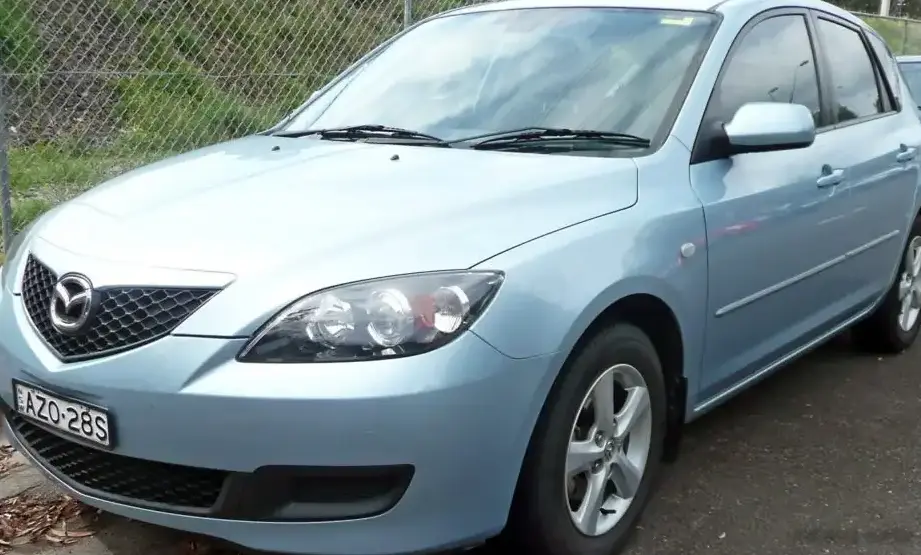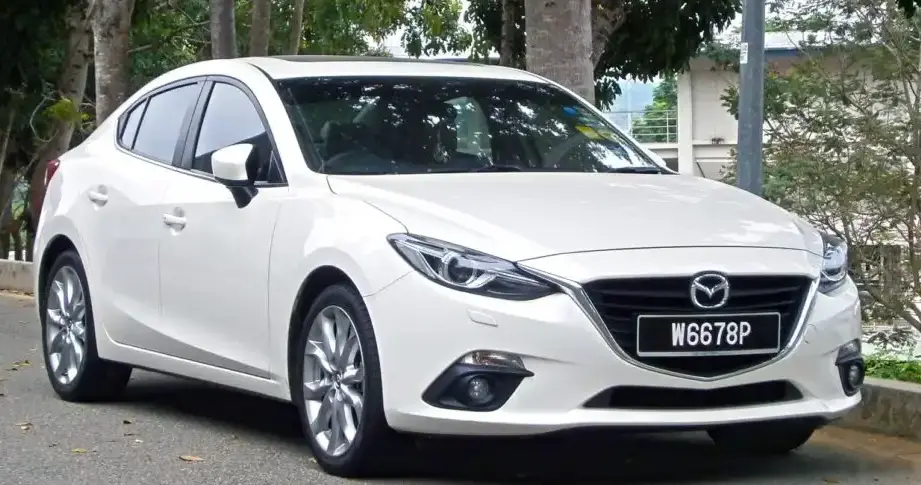
The Mazda 3 III Sedan (BM) 2.0 SkyActiv-G, producing 120 horsepower, was a key variant in Mazda’s third-generation Mazda 3 lineup, produced from 2014 to 2016. Positioned as a mainstream offering within the range, it aimed to balance fuel efficiency with acceptable performance for everyday driving. This model represented Mazda’s continued commitment to the compact sedan segment, building upon the success of its predecessors and incorporating the innovative SkyActiv technology suite. It was primarily marketed in North America, Europe, and Asia-Pacific regions, offering a compelling alternative to established competitors like the Honda Civic, Toyota Corolla, and Volkswagen Golf.
Technical Specifications
| Brand | Mazda |
| Model | 3 |
| Generation | 3 III Sedan (BM) |
| Type (Engine) | 2.0 SkyActiv-G (120 Hp) |
| Start of production | 2014 |
| End of production | 2016 |
| Powertrain Architecture | Internal Combustion engine |
| Body type | Sedan |
| Seats | 5 |
| Doors | 4 |
| Fuel consumption (urban) | 6.5 l/100 km (36.2 US mpg, 43.5 UK mpg, 15.4 km/l) |
| Fuel consumption (extra urban) | 4.3 l/100 km (54.7 US mpg, 65.7 UK mpg, 23.3 km/l) |
| Fuel consumption (combined) | 5.1 l/100 km (46.1 US mpg, 55.4 UK mpg, 19.6 km/l) |
| CO2 emissions | 119 g/km |
| Fuel Type | Petrol (Gasoline) |
| Acceleration 0 – 100 km/h | 8.8 sec |
| Acceleration 0 – 62 mph | 8.8 sec |
| Acceleration 0 – 60 mph | 8.4 sec |
| Maximum speed | 198 km/h (123.03 mph) |
| Emission standard | Euro 5 |
| Weight-to-power ratio | 10 kg/Hp, 100 Hp/tonne |
| Weight-to-torque ratio | 5.7 kg/Nm, 175 Nm/tonne |
| Power | 120 Hp @ 6000 rpm |
| Power per litre | 60.1 Hp/l |
| Torque | 210 Nm @ 4000 rpm (154.89 lb.-ft. @ 4000 rpm) |
| Engine layout | Front, Transverse |
| Engine displacement | 1998 cm3 (121.93 cu. in.) |
| Number of cylinders | 4 |
| Engine configuration | Inline |
| Cylinder Bore | 83.5 mm (3.29 in.) |
| Piston Stroke | 91.2 mm (3.59 in.) |
| Compression ratio | 14:1 |
| Number of valves per cylinder | 4 |
| Fuel injection system | Direct injection |
| Engine aspiration | Naturally aspirated engine |
| Valvetrain | DOHC |
| Engine oil capacity | 4.2 l (4.44 US qt | 3.7 UK qt) |
| Coolant | 6.5 l (6.87 US qt | 5.72 UK qt) |
| Kerb Weight | 1200 kg (2645.55 lbs.) |
| Max. weight | 1815 kg (4001.39 lbs.) |
| Max load | 615 kg (1355.84 lbs.) |
| Trunk (boot) space – minimum | 419 l (14.8 cu. ft.) |
| Fuel tank capacity | 51 l (13.47 US gal | 11.22 UK gal) |
| Permitted trailer load with brakes (12%) | 1600 kg (3527.4 lbs.) |
| Permitted trailer load without brakes | 600 kg (1322.77 lbs.) |
| Length | 4580 mm (180.31 in.) |
| Width | 1795 mm (70.67 in.) |
| Width including mirrors | 2053 mm (80.83 in.) |
| Height | 1450 mm (57.09 in.) |
| Wheelbase | 2700 mm (106.3 in.) |
| Front track | 1555 mm (61.22 in.) |
| Rear (Back) track | 1560 mm (61.42 in.) |
| Ride height (ground clearance) | 155 mm (6.1 in.) |
| Drag coefficient (Cd) | 0.26 |
| Minimum turning circle (turning diameter) | 10.6 m (34.78 ft.) |
| Drivetrain Architecture | The Internal combustion engine (ICE) drives the front wheels of the vehicle. |
| Drive wheel | Front wheel drive |
| Number of gears and type of gearbox | 6 gears, manual transmission |
| Front brakes | Ventilated discs |
| Rear brakes | Disc |
| Assisting systems | ABS (Anti-lock braking system) |
| Steering type | Steering rack and pinion |
| Power steering | Electric Steering |
| Tires size | 205/60 R16 |
| Wheel rims size | 16 |
Powertrain & Engine Architecture
At the heart of the Mazda 3 2.0 SkyActiv-G was the PE-VPH engine, a 1998cc inline-four cylinder gasoline engine. This engine was a cornerstone of Mazda’s SkyActiv technology, designed to maximize efficiency without sacrificing drivability. Key features included a high compression ratio of 14:1 – unusually high for a gasoline engine at the time – achieved through careful engine design and precise fuel injection control. The engine utilized direct injection, optimizing fuel atomization and combustion efficiency. The valvetrain employed a dual overhead camshaft (DOHC) configuration with four valves per cylinder, enhancing volumetric efficiency and power output. The 120 hp and 210 Nm (155 lb-ft) of torque were respectable figures for a naturally aspirated 2.0-liter engine, but not class-leading. The engine was paired with a six-speed manual transmission, offering precise gear changes and a more engaging driving experience.
Driving Characteristics
The 2.0-liter SkyActiv-G with the six-speed manual transmission provided a balanced driving experience. Acceleration from 0-60 mph took approximately 8.4 seconds, making it competitive within its class. While not a sports car, the engine delivered adequate power for everyday driving situations, including highway merging and overtaking. The six-speed gearbox allowed for efficient cruising at highway speeds, keeping engine revs relatively low. Compared to higher-output versions of the Mazda 3, such as those equipped with the 2.5-liter engine, the 2.0-liter model felt less powerful, particularly during hard acceleration. However, it offered superior fuel economy and a lighter feel. The manual transmission provided a more connected driving experience than the optional automatic, offering greater control and responsiveness.
Equipment & Trim Levels
The 2.0 SkyActiv-G variant of the Mazda 3 typically came standard with features such as air conditioning, power windows and locks, a basic audio system with auxiliary input, and steel wheels with wheel covers. Higher trim levels, such as the Touring and Grand Touring, added features like alloy wheels, a touchscreen infotainment system, Bluetooth connectivity, and advanced safety features like blind-spot monitoring and rear cross-traffic alert. Interior upholstery was typically cloth, with leather options available on higher trims. Optional extras included a sunroof, navigation system, and premium audio system.
Chassis & Braking
The Mazda 3 III Sedan featured a MacPherson strut front suspension and a multi-link rear suspension, providing a comfortable ride and responsive handling. The suspension was tuned to balance ride comfort with handling precision. Braking duties were handled by ventilated discs at the front and solid discs at the rear. Anti-lock braking system (ABS) was standard. The chassis was designed to be lightweight, contributing to the car’s overall efficiency and agility. The steering was a rack-and-pinion system with electric power steering, providing precise and responsive steering feel.
Market Reception & Comparison
The Mazda 3 2.0 SkyActiv-G was generally well-received by automotive critics. It was praised for its fuel efficiency, responsive handling, and stylish design. However, some critics noted that the engine lacked the outright power of some of its competitors. Compared to the higher-output 2.5-liter engine option, the 2.0-liter model offered better fuel economy but less performance. Against rivals like the Honda Civic and Toyota Corolla, the Mazda 3 offered a more engaging driving experience and a more premium interior. The 2.0-liter engine provided a good balance of fuel economy and performance for drivers who prioritized efficiency over outright speed.
Legacy
The PE-VPH SkyActiv-G engine proved to be a reliable and durable powertrain. While not known for any major inherent flaws, regular maintenance, including oil changes and timing chain inspections, is crucial for long-term reliability. In the used car market, the Mazda 3 2.0 SkyActiv-G remains a popular choice due to its fuel efficiency, reliability, and affordability. The SkyActiv technology introduced in this generation of Mazda 3 helped establish Mazda as a leader in fuel efficiency and driving dynamics, paving the way for future generations of SkyActiv engines and vehicles.