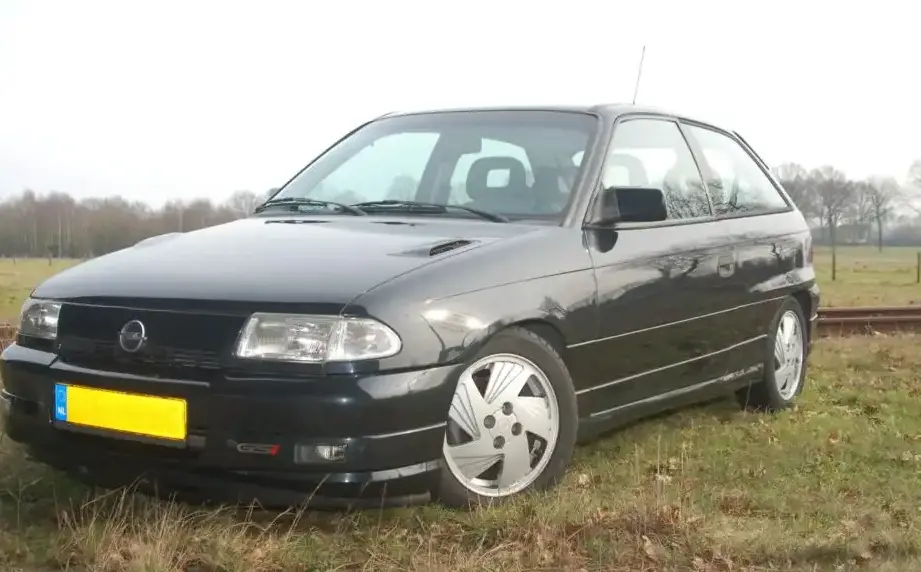
The Opel Astra F Classic 1.7 D, produced from October 1991 to July 1992, represented an entry-level offering within the broader Astra F range. This variant, powered by a naturally aspirated 1.7-liter diesel engine producing 57 horsepower, was primarily aimed at budget-conscious buyers in European markets. It served as a practical and economical transportation solution, prioritizing fuel efficiency over outright performance. The “Classic” designation denoted a simplified trim level, focusing on essential features and affordability. This model occupied the lower end of the Astra F spectrum, sitting below the more powerful gasoline variants and the later, more refined diesel options.
Technical Specifications
| Brand | Opel |
| Model | Astra |
| Generation | Astra F Classic |
| Type (Engine) | 1.7 D (57 Hp) |
| Start of production | October, 1991 |
| End of production | July, 1992 |
| Powertrain Architecture | Internal Combustion engine |
| Body type | Sedan |
| Seats | 5 |
| Doors | 4 |
| Fuel consumption (urban) | 6.8 l/100 km (34.6 US mpg, 41.5 UK mpg, 14.7 km/l) |
| Fuel consumption (extra urban) | 5.5 l/100 km (42.8 US mpg, 51.4 UK mpg, 18.2 km/l) |
| Fuel consumption (combined) | 6.6 l/100 km (35.6 US mpg, 42.8 UK mpg, 15.2 km/l) |
| Fuel Type | Diesel |
| Acceleration 0 – 100 km/h | 18.5 sec |
| Acceleration 0 – 62 mph | 18.5 sec |
| Acceleration 0 – 60 mph | 17.6 sec |
| Maximum speed | 153 km/h (95.07 mph) |
| Weight-to-power ratio | 18.2 kg/Hp, 55.1 Hp/tonne |
| Weight-to-torque ratio | 9.9 kg/Nm, 101.4 Nm/tonne |
| Power | 57 Hp @ 4600 rpm |
| Power per litre | 33.5 Hp/l |
| Torque | 105 Nm @ 2400 rpm (77.44 lb.-ft. @ 2400 rpm) |
| Engine layout | Front, Transverse |
| Engine Model/Code | 17D |
| Engine displacement | 1699 cm3 (103.68 cu. in.) |
| Number of cylinders | 4 |
| Engine configuration | Inline |
| Cylinder Bore | 82.5 mm (3.25 in.) |
| Piston Stroke | 79.5 mm (3.13 in.) |
| Compression ratio | 23:1 |
| Number of valves per cylinder | 2 |
| Fuel injection system | Precombustion chamber injection |
| Engine aspiration | Naturally aspirated engine |
| Valvetrain | SOHC |
| Engine oil capacity | 5 l (5.28 US qt | 4.4 UK qt) |
| Coolant capacity | 7.8 l (8.24 US qt | 6.86 UK qt) |
| Kerb Weight | 1035 kg (2281.78 lbs.) |
| Max. weight | 1515 kg (3340 lbs.) |
| Max load | 480 kg (1058.22 lbs.) |
| Trunk (boot) space – minimum | 500 l (17.66 cu. ft.) |
| Trunk (boot) space – maximum | 1200 l (42.38 cu. ft.) |
| Fuel tank capacity | 52 l (13.74 US gal | 11.44 UK gal) |
| Length | 4239 mm (166.89 in.) |
| Width | 1688 mm (66.46 in.) |
| Width including mirrors | 1795 mm (70.67 in.) |
| Height | 1410 mm (55.51 in.) |
| Wheelbase | 2517 mm (99.09 in.) |
| Front track | 1430 mm (56.3 in.) |
| Rear (Back) track | 1429 mm (56.26 in.) |
| Ride height (ground clearance) | 135 mm (5.31 in.) |
| Drag coefficient (Cd) | 0.31 |
| Minimum turning circle | 10.5 m (34.45 ft.) |
| Drivetrain Architecture | The Internal combustion engine (ICE) drives the front wheels of the vehicle. |
| Drive wheel | Front wheel drive |
| Number of gears and type of gearbox | 5 gears, manual transmission |
| Front suspension | Wishbone |
| Rear suspension | Suspension with traction connecting levers |
| Front brakes | Ventilated discs |
| Rear brakes | Drum |
| Assisting systems | ABS (Anti-lock braking system) |
| Steering type | Steering rack and pinion |
| Tires size | 175/70 R13 82T |
| Wheel rims size | 5.5J x 13 ET49 |
Powertrain & Engine Architecture
The heart of the Astra F Classic 1.7 D is the 17D engine, a 1.7-liter inline-four diesel. This engine utilized a precombustion chamber injection system, a common technology for diesel engines of the era. This system involved injecting fuel into a precombustion chamber, where it partially ignited before entering the main combustion chamber, promoting more complete combustion. The engine featured a single overhead camshaft (SOHC) valvetrain, operating two valves per cylinder. The 17D engine was known for its robustness and relatively simple design, contributing to its longevity. The five-speed manual transmission was the only gearbox option available with this engine, geared towards maximizing fuel economy rather than providing sporty acceleration. The transmission’s ratios were relatively tall, emphasizing efficiency at cruising speeds.
Driving Characteristics
The 1.7 D-powered Astra F Classic offered modest performance. With only 57 horsepower, acceleration was slow, taking approximately 18.5 seconds to reach 62 mph (100 km/h). The engine’s torque of 105 Nm (77.44 lb-ft) was available at 2400 rpm, providing adequate pulling power for everyday driving, but overtaking required careful planning. Compared to the gasoline-powered Astra F variants, the 1.7 D felt significantly slower. Even compared to other diesel options within the Astra F range, such as the later 1.7 TDI, the 1.7 D lacked the refinement and power of more modern diesel technology. The tall gearing of the five-speed manual transmission further emphasized fuel economy at the expense of responsiveness.
Equipment & Trim Levels
The “Classic” trim level was the base specification for the Astra F. Standard equipment was minimal, focusing on essential features. This typically included basic steel wheels, cloth upholstery, and a simple dashboard layout. Power steering and central locking were often optional extras. Air conditioning was rarely fitted to this base model. The interior was functional and durable, prioritizing practicality over luxury. The exterior featured minimal brightwork, reflecting its budget-oriented positioning.
Chassis & Braking
The Astra F Classic 1.7 D utilized a relatively simple chassis setup. The front suspension employed a wishbone configuration, while the rear suspension featured a torsion beam setup with traction connecting levers. Braking was accomplished via ventilated discs on the front wheels and drum brakes on the rear. ABS (Anti-lock Braking System) was available as an option, enhancing safety. The suspension was tuned for comfort rather than sporty handling, providing a reasonably compliant ride on typical road surfaces. The relatively light weight of the vehicle (1035 kg / 2281.78 lbs) helped to mitigate the effects of the low power output.
Market Reception & Comparison
The Astra F Classic 1.7 D was well-received in markets where fuel economy and affordability were paramount. Critics acknowledged its practicality and low running costs, but often criticized its lack of performance and refinement. Compared to the gasoline-powered Astra F models, the 1.7 D offered significantly better fuel economy, but at the cost of driving enjoyment. Against competitors like the Ford Escort Diesel and Volkswagen Golf Diesel, the Astra F 1.7 D offered a comparable level of economy and practicality, often at a slightly lower price point. Reliability was generally good, owing to the engine’s robust design.
Legacy
The Opel Astra F Classic 1.7 D, while not a performance icon, remains a testament to practical and economical motoring. The 17D engine proved to be durable and relatively trouble-free, and many examples are still on the road today. In the used car market, these vehicles are valued for their simplicity and low maintenance costs. However, finding well-maintained examples can be challenging, as many were used as workhorses and subjected to heavy use. The Astra F 1.7 D represents a significant chapter in Opel’s history, demonstrating the brand’s commitment to providing affordable transportation to a wide range of customers.