Technical Specifications
| Brand | Volkswagen |
| Model | Golf |
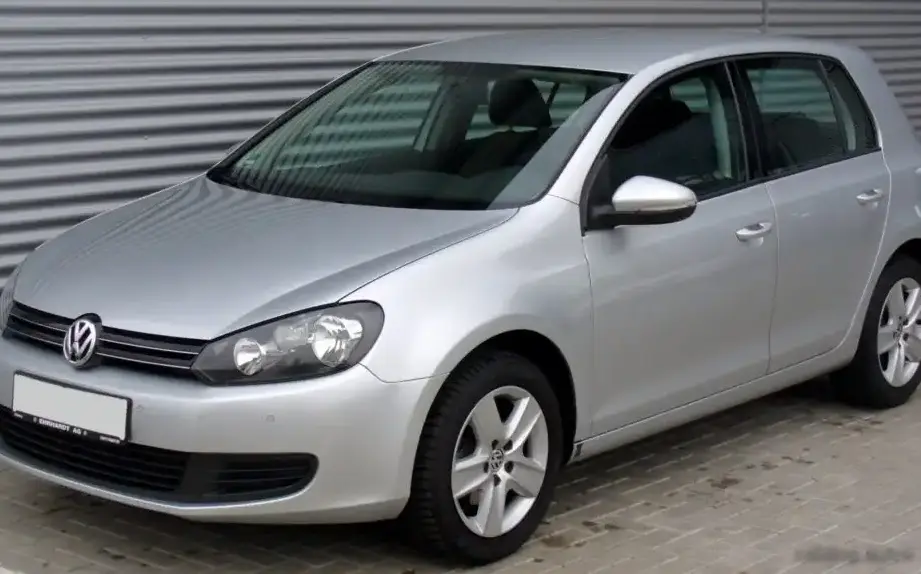
| Generation | Golf VI (5-door) |
| Type (Engine) | 1.6 TDI (105 Hp) DSG |
| Start of production | 2009 |
| End of production | 2012 |
| Powertrain Architecture | Internal Combustion engine |
| Body type | Hatchback |
| Seats | 5 |
| Doors | 5 |
| Fuel consumption (urban) | 5.6 l/100 km (42 US mpg, 50.4 UK mpg, 17.9 km/l) |
| Fuel consumption (extra urban) | 4.2 l/100 km (56 US mpg, 67.3 UK mpg, 23.8 km/l) |
| Fuel consumption (combined) | 4.7 l/100 km (50 US mpg, 60.1 UK mpg, 21.3 km/l) |
| CO2 emissions | 123 g/km |
| Fuel Type | Diesel |
| Acceleration 0 – 100 km/h | 11.2 sec |
| Acceleration 0 – 62 mph | 11.2 sec |
| Acceleration 0 – 60 mph | 10.6 sec |
| Maximum speed | 189 km/h (117.44 mph) |
| Emission standard | Euro 5 |
| Weight-to-power ratio | 12 kg/Hp, 83.2 Hp/tonne |
| Weight-to-torque ratio | 5 kg/Nm, 198.1 Nm/tonne |
| Power | 105 Hp @ 4400 rpm |
| Power per litre | 65.7 Hp/l |
| Torque | 250 Nm @ 1500-2500 rpm (184.39 lb.-ft. @ 1500-2500 rpm) |
| Engine layout | Front, Transverse |
| Engine Model/Code | CAYC |
| Engine displacement | 1598 cm3 (97.52 cu. in.) |
| Number of cylinders | 4 |
| Engine configuration | Inline |
| Number of valves per cylinder | 4 |
| Fuel injection system | Diesel Commonrail |
| Engine aspiration | Turbocharger, Intercooler |
| Valvetrain | DOHC |
| Engine oil capacity | 4.3 l (4.54 US qt | 3.78 UK qt) |
| Kerb Weight | 1262 kg (2782.23 lbs.) |
| Max. weight | 1890 kg (4166.74 lbs.) |
| Max load | 628 kg (1384.5 lbs.) |
| Trunk (boot) space – minimum | 350 l (12.36 cu. ft.) |
| Trunk (boot) space – maximum | 1305 l (46.09 cu. ft.) |
| Fuel tank capacity | 55 l (14.53 US gal | 12.1 UK gal) |
| Max. roof load | 75 kg (165.35 lbs.) |
| Permitted trailer load with brakes (12%) | 1400 kg (3086.47 lbs.) |
| Permitted trailer load without brakes | 660 kg (1455.05 lbs.) |
| Permitted towbar download | 75 kg (165.35 lbs.) |
| Length | 4199 mm (165.31 in.) |
| Width | 1786 mm (70.31 in.) |
| Width including mirrors | 2048 mm (80.63 in.) |
| Height | 1480 mm (58.27 in.) |
| Wheelbase | 2578 mm (101.5 in.) |
| Front track | 1541 mm (60.67 in.) |
| Rear track | 1514 mm (59.61 in.) |
| Ride height (ground clearance) | 150 mm (5.91 in.) |
| Minimum turning circle | 10.9 m (35.76 ft.) |
| Drivetrain Architecture | Front wheel drive |
| Number of gears and type of gearbox | 7 gears, automatic transmission DSG |
| Front suspension | Independent type McPherson, Transverse stabilizer |
| Rear suspension | Independent multi-link suspension, Transverse stabilizer |
| Front brakes | Ventilated discs |
| Rear brakes | Disc |
| Assisting systems | ABS (Anti-lock braking system) |
| Steering type | Steering rack and pinion |
| Power steering | Electric Steering |
| Tires size | 195/65 R 15 |
| Wheel rims size | 6 J x 15 |
The Volkswagen Golf VI 1.6 TDI DSG, launched in 2009, represented a key offering in the Golf range, particularly in Europe. It was designed to appeal to buyers seeking a balance between fuel economy, practicality, and affordability. The 1.6 TDI engine, coupled with the 7-speed DSG transmission, provided a comfortable and efficient driving experience. This variant sat below the more powerful 2.0 TDI models and the petrol-powered Golfs in terms of performance, but offered a compelling package for those prioritizing running costs. The Golf VI itself was a significant evolution of the Mk V, with improvements made to interior quality, technology, and overall refinement.
Powertrain & Engine Architecture
The heart of this Golf variant is the 1.6-liter inline-four cylinder diesel engine, designated CAYC. This engine utilizes a common rail direct injection system, delivering fuel directly into the combustion chamber at extremely high pressure. This technology, combined with a turbocharger and intercooler, optimizes combustion for improved power and efficiency. The engine features a double overhead camshaft (DOHC) valvetrain with four valves per cylinder, further enhancing its breathing and performance. The 1.6 TDI produces 105 horsepower at 4400 rpm and 250 Nm (184 lb-ft) of torque between 1500 and 2500 rpm. The DSG (Direct-Shift Gearbox) is a 7-speed dual-clutch transmission. It operates similarly to a manual gearbox but offers automated shifting, providing quicker gear changes and improved fuel economy compared to a traditional automatic transmission. The DSG features two separate clutches, one for odd-numbered gears and one for even-numbered gears, allowing for seamless transitions between shifts.
Driving Characteristics
The Golf VI 1.6 TDI DSG offers a comfortable and refined driving experience. While not particularly sporty, the engine provides adequate power for everyday driving situations. Acceleration from 0 to 62 mph takes around 11.2 seconds, and the top speed is 189 km/h (117 mph). The DSG transmission contributes to smooth and responsive gear changes, enhancing the overall driving feel. The gear ratios are tuned for fuel efficiency, with higher gears engaged at lower speeds to minimize engine revs. Compared to the more powerful 2.0 TDI variants, the 1.6 TDI feels less eager to accelerate, but it offers a more relaxed and economical driving experience. The manual transmission versions of the 1.6 TDI offered slightly better fuel economy but required more driver involvement.
Equipment & Trim Levels
The Golf VI 1.6 TDI DSG typically came equipped with a reasonable level of standard features. These included air conditioning, electric front windows, central locking, a CD stereo system, and alloy wheels. Safety features such as ABS, ESP (Electronic Stability Program), and multiple airbags were also standard. Higher trim levels, such as Trendline and Comfortline, added features like automatic climate control, a multi-function steering wheel, and upgraded upholstery. Optional extras included a sunroof, parking sensors, and a navigation system. Interior upholstery was typically cloth, with leather options available on higher trims.
Chassis & Braking
The Golf VI 1.6 TDI DSG utilizes an independent suspension system on both the front and rear axles. The front suspension features McPherson struts with a transverse stabilizer bar, while the rear suspension employs a multi-link setup, also with a stabilizer bar. This configuration provides a good balance between ride comfort and handling. The braking system consists of ventilated discs on the front wheels and solid discs on the rear wheels. ABS (Anti-lock Braking System) is standard, providing enhanced braking performance and stability. The suspension setup was generally tuned for comfort, prioritizing a smooth ride over sporty handling.
Market Reception & Comparison
The Golf VI 1.6 TDI DSG was well-received by critics and consumers alike. It was praised for its fuel efficiency, comfortable ride, and practical interior. However, some reviewers noted that the engine could feel underpowered, particularly when fully loaded or driving uphill. Compared to the 2.0 TDI models, the 1.6 TDI offered lower running costs but sacrificed some performance. The 1.6 TDI also proved to be more reliable than some of the more complex engine options in the Golf VI range, with fewer reported issues related to the turbocharger or fuel injection system. Its fuel economy, averaging around 50 US mpg combined, was a major selling point.
Legacy
The Volkswagen Golf VI 1.6 TDI DSG remains a popular choice in the used car market today. Its reputation for reliability and fuel efficiency makes it an attractive option for buyers seeking an affordable and practical hatchback. While the engine may not be the most powerful, it is generally considered to be durable and relatively inexpensive to maintain. The DSG transmission, if properly maintained with regular fluid changes, is also known for its longevity. However, potential buyers should be aware of the possibility of issues with the diesel particulate filter (DPF), particularly if the vehicle has primarily been used for short journeys. Overall, the Golf VI 1.6 TDI DSG represents a well-rounded and dependable vehicle that continues to offer good value for money.