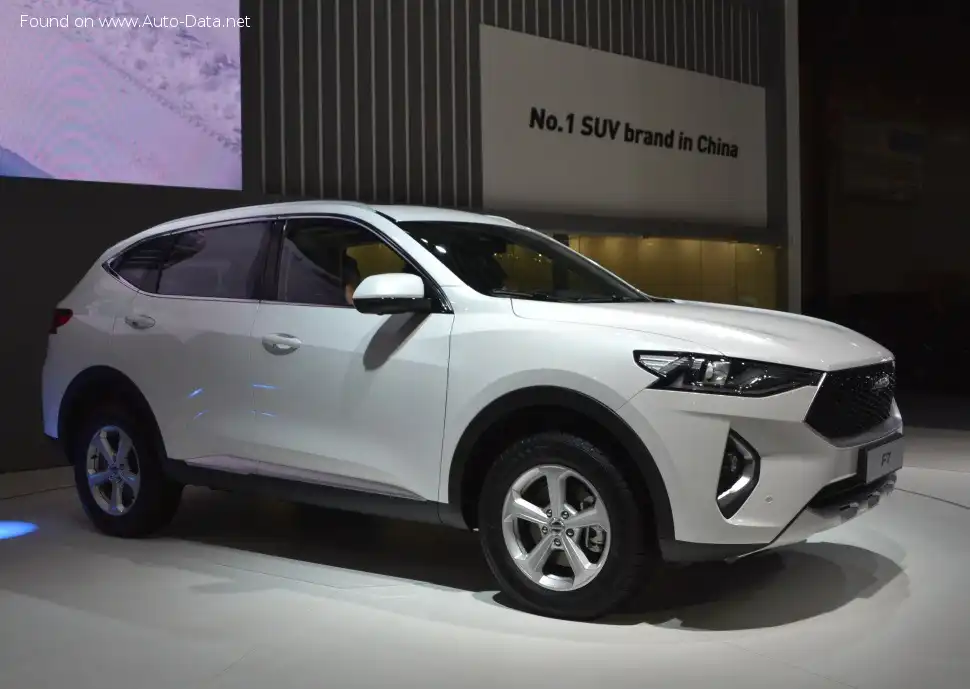
The Haval F7 II 2.0 GDIT (192 Hp) 4WD DCT is a compact SUV produced by the Chinese manufacturer Haval, beginning in August 2024. Representing the second generation of the F7 model, the F7 II builds upon the success of its predecessor, aiming to offer a more refined and technologically advanced package within the competitive compact SUV segment. This particular variant, equipped with a 2.0-liter turbocharged gasoline direct injection engine paired with a 7-speed dual-clutch transmission (DCT) and all-wheel drive, positions itself as a mid-range offering within the F7 II lineup, balancing performance, fuel efficiency, and all-weather capability. The F7 II is primarily marketed towards families and individuals seeking a spacious, well-equipped, and modern SUV.
Technical Specifications
| Brand | Haval |
| Model | F7 II |
| Type (Engine) | 2.0 GDIT (192 Hp) 4WD DCT |
| Start of production | August, 2024 |
| Powertrain Architecture | Internal Combustion engine |
| Body type | SUV |
| Seats | 5 |
| Doors | 5 |
| Fuel consumption (combined) | 8.6 l/100 km (27.4 US mpg, 32.8 UK mpg, 11.6 km/l) |
| Fuel Type | Petrol (Gasoline) |
| Acceleration 0 – 100 km/h | 9.4 sec |
| Acceleration 0 – 62 mph | 9.4 sec |
| Acceleration 0 – 60 mph | 8.9 sec |
| Maximum speed | 194 km/h (120.55 mph) |
| Weight-to-power ratio | 9.3 kg/Hp, 107 Hp/tonne |
| Weight-to-torque ratio | 5.6 kg/Nm, 178.3 Nm/tonne |
| Power | 192 Hp @ 5600-6300 rpm |
| Power per litre | 96.1 Hp/l |
| Torque | 320 Nm @ 1500-4000 rpm (236.02 lb.-ft. @ 1500-4000 rpm) |
| Engine layout | Front, Transverse |
| Engine Model/Code | GW4N20 |
| Engine displacement | 1998 cm3 (121.93 cu. in.) |
| Number of cylinders | 4 |
| Engine configuration | Inline |
| Cylinder Bore | 82 mm (3.23 in.) |
| Piston Stroke | 94.6 mm (3.72 in.) |
| Compression ratio | 12:1 |
| Number of valves per cylinder | 4 |
| Fuel injection system | Direct injection |
| Engine aspiration | Turbocharger, Intercooler |
| Valvetrain | DOHC |
| Kerb Weight | 1795-1830 kg (3957.3 – 4034.46 lbs.) |
| Trunk (boot) space – minimum | 376 l (13.28 cu. ft.) |
| Trunk (boot) space – maximum | 1328 l (46.9 cu. ft.) |
| Fuel tank capacity | 60 l (15.85 US gal | 13.2 UK gal) |
| Permitted trailer load with brakes (12%) | 1500 kg (3306.93 lbs.) |
| Permitted trailer load without brakes | 750 kg (1653.47 lbs.) |
| Length | 4780 mm (188.19 in.) |
| Width | 1890 mm (74.41 in.) |
| Height | 1675 mm (65.94 in.) |
| Wheelbase | 2800 mm (110.24 in.) |
| Ride height (ground clearance) | 183-191 mm (7.2 – 7.52 in.) |
| Drivetrain Architecture | All wheel drive (4×4). ICE drives front wheels, rear wheels engaged via clutch. |
| Number of gears and type of gearbox | 7 gears, automatic transmission DCT |
| Front suspension | Independent, McPherson with coil spring and anti-roll bar |
| Rear suspension | Independent multi-link spring suspension with stabilizer |
| Front brakes | Ventilated discs |
| Rear brakes | Disc |
| Assisting systems | ABS (Anti-lock braking system) |
| Steering type | Steering rack and pinion |
| Power steering | Electric Steering |
| Tires size | 225/60 R18; 235/55 R19 |
| Wheel rims size | 18; 19 |
Powertrain & Engine Architecture
The heart of the Haval F7 II 2.0 GDIT 4WD DCT is the GW4N20 engine, a 1.998-liter inline-four cylinder gasoline engine. This engine utilizes direct fuel injection and is coupled with a single turbocharger and intercooler to enhance power and efficiency. The engine produces 192 horsepower at 5600-6300 rpm and 320 Nm (236 lb-ft) of torque between 1500 and 4000 rpm. The engine features a double overhead camshaft (DOHC) valvetrain with four valves per cylinder, optimizing airflow for improved performance. The engine also incorporates a Start & Stop system to further improve fuel economy. The engine is mated to a 7-speed dual-clutch transmission (DCT), offering quick and smooth gear changes. The DCT contributes to both performance and fuel efficiency, providing a more engaging driving experience compared to a traditional automatic transmission. The all-wheel-drive system operates by primarily driving the front wheels, with the rear wheels engaging automatically via an electronically controlled clutch when traction is needed.
Driving Characteristics
The F7 II 2.0 GDIT 4WD DCT delivers a respectable driving experience. Acceleration from 0 to 60 mph takes approximately 8.9 seconds, and the vehicle has a top speed of 194 km/h (120.55 mph). The DCT provides responsive shifts, and the turbocharger provides a noticeable boost in power during acceleration. Compared to lower-powered versions of the F7 II, this variant offers significantly more performance. While not a sports SUV, it provides ample power for everyday driving and highway merging. The all-wheel-drive system enhances stability and traction, particularly in inclement weather conditions. The gear ratios are tuned to balance acceleration and fuel economy, with the DCT effectively managing power delivery across the rev range.
Equipment & Trim Levels
The F7 II 2.0 GDIT 4WD DCT typically comes standard with a comprehensive suite of features. These include automatic climate control, a touchscreen infotainment system with smartphone integration (Apple CarPlay and Android Auto), a rearview camera, and a range of safety features such as ABS, electronic stability control, and multiple airbags. Interior upholstery is typically cloth or leatherette, depending on the specific trim level. Optional extras often include a panoramic sunroof, heated and ventilated front seats, a premium sound system, and advanced driver-assistance systems (ADAS) like adaptive cruise control and lane departure warning.
Chassis & Braking
The F7 II utilizes an independent suspension setup at both the front and rear. The front suspension employs a McPherson strut design with coil springs and an anti-roll bar, while the rear suspension features a multi-link setup with a stabilizer bar. This configuration provides a comfortable ride quality and good handling characteristics. The braking system consists of ventilated discs at the front and solid discs at the rear, providing adequate stopping power. The electric power steering offers a light and precise feel.
Market Reception & Comparison
The Haval F7 II has been generally well-received in the Chinese market, where it competes with established domestic and international brands. Critics have praised its spacious interior, modern design, and comprehensive feature list. The 2.0 GDIT 4WD DCT variant is often seen as a sweet spot in the lineup, offering a good balance of performance, fuel economy, and all-weather capability. Compared to lower-powered versions, the 2.0 GDIT provides a more engaging driving experience. Fuel economy is rated at 8.6 l/100 km (27.4 US mpg), which is competitive within its class. Reliability reports are still emerging, but early indications suggest that the F7 II is a reasonably reliable vehicle.
Legacy
As a relatively new model, the long-term reliability of the Haval F7 II 2.0 GDIT 4WD DCT remains to be fully assessed. However, Haval has been steadily improving its build quality and reliability in recent years. The GW4N20 engine is a modern design with direct injection and turbocharging, which can potentially lead to higher maintenance costs compared to naturally aspirated engines. The DCT transmission, while offering performance benefits, may also require more frequent servicing than a traditional automatic. In the used car market, the F7 II is expected to hold its value reasonably well, particularly the 2.0 GDIT 4WD DCT variant, due to its desirable combination of features and performance.