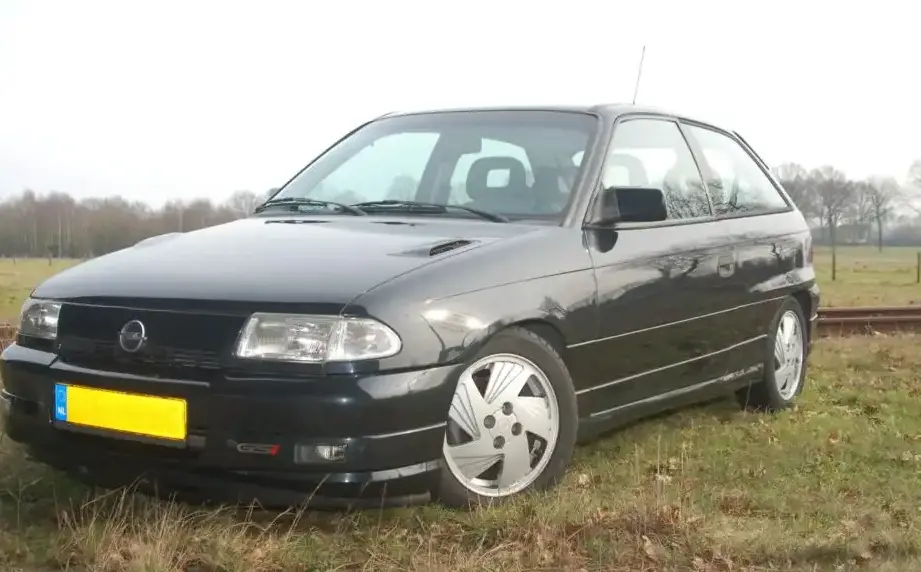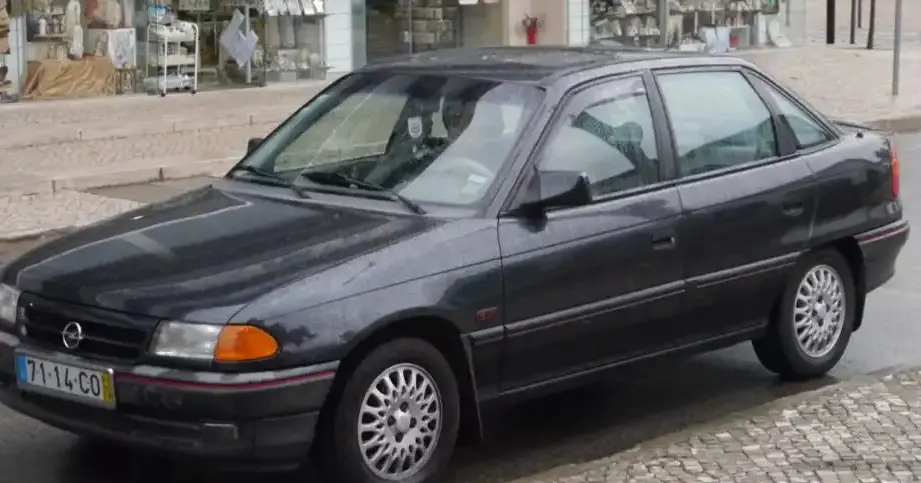
The Opel Astra F Classic 1.8i (90 hp) Automatic, produced between October 1991 and July 1994, represented a key entry point into the Astra F range for buyers prioritizing comfort and ease of use. Positioned as a more accessible alternative to the sportier and more expensive variants, it offered a balance of practicality and affordability within the compact sedan segment. This model was primarily aimed at the European market, where the Astra F was a significant competitor to vehicles like the Ford Escort, Volkswagen Golf, and Peugeot 305. It formed part of the first generation of the Astra F Classic, built on the GM T-platform (internally known as 1HX0/A3). The “Classic” designation denoted a more traditional, notchback sedan body style, differentiating it from the hatchback versions also available.
Technical Specifications
| Brand | Opel |
| Model | Astra |
| Generation | Astra F Classic |
| Type (Engine) | 1.8i (90 Hp) Automatic |
| Start of production | October, 1991 |
| End of production | July, 1994 |
| Powertrain Architecture | Internal Combustion engine |
| Body type | Sedan |
| Seats | 5 |
| Doors | 4 |
| Fuel consumption (urban) | 10.5 l/100 km (22.4 US mpg, 26.9 UK mpg, 9.5 km/l) |
| Fuel consumption (extra urban) | 7.1 l/100 km (33.1 US mpg, 39.8 UK mpg, 14.1 km/l) |
| Fuel consumption (combined) | 9.2 l/100 km (25.6 US mpg, 30.7 UK mpg, 10.9 km/l) |
| Fuel Type | Petrol (Gasoline) |
| Acceleration 0 – 100 km/h | 14.5 sec |
| Acceleration 0 – 62 mph | 14.5 sec |
| Acceleration 0 – 60 mph | 13.8 sec |
| Maximum speed | 175 km/h (108.74 mph) |
| Weight-to-power ratio | 12 kg/Hp, 83.3 Hp/tonne |
| Weight-to-torque ratio | 7.4 kg/Nm, 134.3 Nm/tonne |
| Power | 90 Hp @ 5400 rpm |
| Power per litre | 50.1 Hp/l |
| Torque | 145 Nm @ 3000 rpm (106.95 lb.-ft. @ 3000 rpm) |
| Engine layout | Front, Transverse |
| Engine Model/Code | C18NZ |
| Engine displacement | 1796 cm3 (109.6 cu. in.) |
| Number of cylinders | 4 |
| Engine configuration | Inline |
| Cylinder Bore | 84.8 mm (3.34 in.) |
| Piston Stroke | 79.5 mm (3.13 in.) |
| Compression ratio | 9.2:1 |
| Number of valves per cylinder | 2 |
| Fuel injection system | Single-point injection |
| Engine aspiration | Naturally aspirated engine |
| Valvetrain | SOHC |
| Engine oil capacity | 4 l (4.23 US qt | 3.52 UK qt) |
| Coolant | 6.9 l (7.29 US qt | 6.07 UK qt) |
| Kerb Weight | 1080 kg (2380.99 lbs.) |
| Max. weight | 1550 kg (3417.17 lbs.) |
| Max load | 470 kg (1036.17 lbs.) |
| Trunk (boot) space – minimum | 500 l (17.66 cu. ft.) |
| Trunk (boot) space – maximum | 1200 l (42.38 cu. ft.) |
| Fuel tank capacity | 52 l (13.74 US gal | 11.44 UK gal) |
| Length | 4239 mm (166.89 in.) |
| Width | 1688 mm (66.46 in.) |
| Width including mirrors | 1795 mm (70.67 in.) |
| Height | 1410 mm (55.51 in.) |
| Wheelbase | 2517 mm (99.09 in.) |
| Front track | 1424 mm (56.06 in.) |
| Rear (Back) track | 1423 mm (56.02 in.) |
| Ride height (ground clearance) | 135 mm (5.31 in.) |
| Drag coefficient (Cd) | 0.31 |
| Minimum turning circle | 10.5 m (34.45 ft.) |
| Drivetrain Architecture | ICE to Front Wheels |
| Drive wheel | Front wheel drive |
| Number of gears | 4 |
| Gearbox type | automatic transmission |
| Front suspension | Wishbone |
| Rear suspension | Several levers and rods |
| Front brakes | Ventilated discs |
| Rear brakes | Drum |
| Steering type | Steering rack and pinion |
| Tires size | 175/65 R14 82T |
| Wheel rims size | 5.5J x 14 |
Powertrain & Engine Architecture
The Astra F Classic 1.8i Automatic was powered by the Opel C18NZ engine, an inline four-cylinder, naturally aspirated gasoline engine displacing 1796 cc (109.6 cubic inches). This engine featured a single-point fuel injection system, a relatively simple setup for the early 1990s. The cylinder head employed a single overhead camshaft (SOHC) valvetrain, operating two valves per cylinder. The C18NZ was known for its durability and relative simplicity, making it a cost-effective choice for Opel. The engine produced 90 horsepower at 5400 rpm and 145 Nm (106.95 lb-ft) of torque at 3000 rpm. Paired with a four-speed automatic transmission, the powertrain was designed for smooth, comfortable operation rather than outright performance. The automatic transmission was a standard GM unit, known for its reliability but not particularly for its responsiveness or fuel efficiency compared to later designs.
Driving Characteristics
The 1.8i Automatic Astra F Classic offered a comfortable, if uninspiring, driving experience. Acceleration from 0-60 mph took approximately 13.8 seconds, and top speed was around 108.74 mph. The automatic transmission, while providing convenience, resulted in noticeable power loss compared to the available five-speed manual transmission. Gear ratios were optimized for fuel economy and smooth cruising, rather than quick acceleration. The engine felt somewhat strained during hard acceleration, and the transmission could be hesitant to downshift. Compared to the more powerful 1.8 16V or 2.0-liter versions, the 90 hp variant lacked the punch needed for spirited driving. However, for everyday commuting and general transportation, it proved adequate and reliable.
Equipment & Trim Levels
The Astra F Classic 1.8i Automatic typically came equipped with basic amenities. Standard features included power steering, central locking, and a basic stereo system. Interior upholstery was typically cloth, with a simple dashboard layout. Optional extras included air conditioning, electric windows, and upgraded audio systems. The trim level was generally considered entry-level to mid-range within the Astra F Classic lineup. It was positioned above the base models with smaller engines but below the more luxurious and performance-oriented trims.
Chassis & Braking
The Astra F Classic featured a front-wheel-drive layout with independent wishbone suspension at the front and a multi-link rear suspension. The braking system consisted of ventilated disc brakes at the front and drum brakes at the rear. The suspension was tuned for comfort, providing a relatively soft ride. Stabilizer bars were fitted to both the front and rear axles to reduce body roll during cornering. The chassis was designed to provide a stable and predictable handling experience, prioritizing safety and comfort over sporty handling.
Market Reception & Comparison
The Astra F Classic 1.8i Automatic was generally well-received as a practical and affordable family car. Critics praised its comfortable ride and spacious interior, but noted its lack of performance compared to rivals. Fuel economy was considered average for the time, with combined figures around 25.6 US mpg. Compared to the 1.6-liter versions, the 1.8i offered a noticeable improvement in performance, while the 2.0-liter models provided significantly more power. The 1.9 TDI diesel version offered superior fuel economy but lacked the refinement of the gasoline engine. Reliability was generally good, although the single-point fuel injection system could require occasional maintenance.
Legacy
The Opel Astra F Classic 1.8i Automatic remains a relatively common sight on European roads today, testament to its durability and affordability. The C18NZ engine is known for its longevity, and parts availability remains reasonable. While not a particularly sought-after model by enthusiasts, it represents a solid and dependable choice for those seeking a classic, affordable family car. The powertrain, while dated by modern standards, continues to provide reliable transportation for many owners. Its simplicity makes it relatively easy to maintain and repair, contributing to its enduring popularity in the used car market.