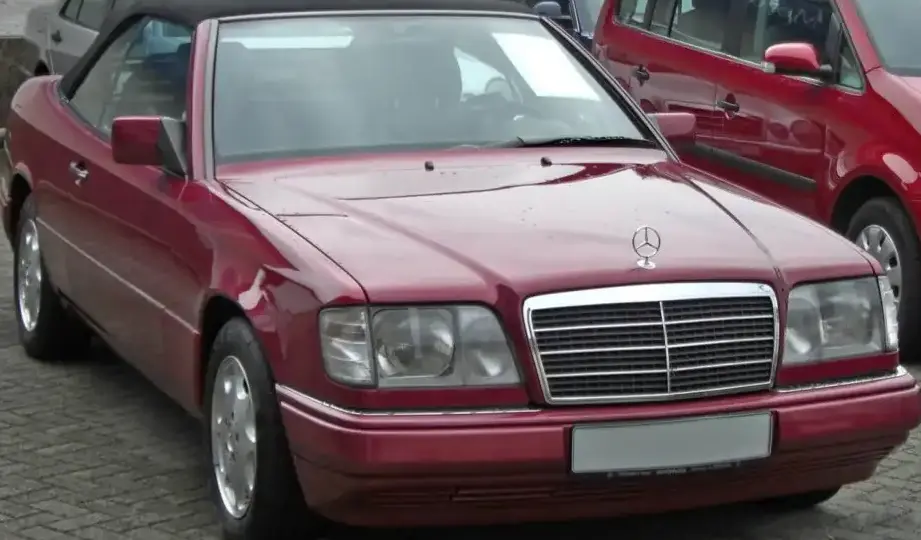
The Mercedes-Benz E-Class Cabriolet (A124) AMG E 36, produced between September 1993 and June 1997, represented a high-performance variant of the popular W124-series convertible. Positioned as a premium offering within the E-Class Cabriolet range, the E 36 was developed by Mercedes-AMG to deliver a more engaging driving experience than the standard inline-six and V6 models. It occupied the top performance tier of the A124 Cabriolet lineup, appealing to buyers seeking a blend of open-air luxury and spirited performance. The A124 platform itself was a significant evolution of the W123, offering improved safety, comfort, and technology.
Technical Specifications
| Brand | Mercedes-Benz |
| Model | E-Class |
| Generation | E-Class Cabrio (A124) |
| Type | AMG E 36 (272 Hp) 4G-TRONIC |
| Start of production | September, 1993 |
| End of production | June, 1997 |
| Powertrain Architecture | Internal Combustion engine |
| Body type | Cabriolet |
| Seats | 4 |
| Doors | 2 |
| Fuel consumption (urban) | 13.8 l/100 km (17 US mpg, 20.5 UK mpg) |
| Fuel consumption (extra urban) | 8.5 l/100 km (27.7 US mpg, 33.2 UK mpg) |
| Fuel Type | Petrol (Gasoline) |
| Acceleration 0 – 100 km/h | 7.2 sec |
| Acceleration 0 – 62 mph | 7.2 sec |
| Acceleration 0 – 60 mph | 6.8 sec |
| Maximum speed | 250 km/h (155.34 mph) |
| Weight-to-power ratio | 5.7 kg/Hp |
| Weight-to-torque ratio | 4 kg/Nm |
| Power | 272 Hp @ 5750 rpm |
| Power per litre | 75.5 Hp/l |
| Torque | 385 Nm @ 3750-4500 rpm (283.96 lb.-ft. @ 3750-4500 rpm) |
| Engine layout | Front, Longitudinal |
| Engine Model/Code | M 104 E 36 AMG / 104.9936 |
| Engine displacement | 3604 cm3 (219.93 cu. in.) |
| Number of cylinders | 6 |
| Engine configuration | Inline |
| Cylinder Bore | 91 mm (3.58 in.) |
| Piston Stroke | 92.4 mm (3.64 in.) |
| Compression ratio | 10.5:1 |
| Number of valves per cylinder | 4 |
| Fuel injection system | Multi-port manifold injection |
| Engine aspiration | Naturally aspirated engine |
| Valvetrain | DOHC |
| Kerb Weight | 1540 kg (3395.12 lbs.) |
| Max. weight | 2210 kg (4872.22 lbs.) |
| Max load | 670 kg (1477.1 lbs.) |
| Fuel tank capacity | 70 l (18.49 US gal | 15.4 UK gal) |
| Length | 4655 mm (183.27 in.) |
| Width | 1740 mm (68.5 in.) |
| Height | 1383 mm (54.45 in.) |
| Wheelbase | 2715 mm (106.89 in.) |
| Front track | 1518 mm (59.76 in.) |
| Rear track | 1507 mm (59.33 in.) |
| Drivetrain Architecture | Rear wheel drive |
| Drive wheel | Rear wheel drive |
| Number of gears | 4 |
| Gearbox type | automatic transmission G-TRONIC |
| Front suspension | Wishbone, Torsion |
| Rear suspension | Independent multi-link suspension, Torsion |
| Front brakes | Ventilated discs |
| Rear brakes | Ventilated discs |
| Steering type | Cone worm with recirculation balls |
| Power steering | Hydraulic Steering |
| Tires size | Front: 225/45 ZR 17, Rear: 225/45 ZR 17 |
| Wheel rims size | Front: 7.5J x 17, Rear: 7.5J x 17 |
Powertrain & Engine Architecture
The heart of the E 36 Cabriolet was the M104.9936 engine, a 3.6-liter inline-six cylinder powerplant. This engine was based on the standard M104 engine family, but significantly upgraded by AMG. Key modifications included a higher compression ratio (10.5:1), larger intake ports, and a revised camshaft profile. The engine utilized Bosch Motronic fuel injection and a dual overhead camshaft (DOHC) valvetrain with four valves per cylinder, contributing to its high specific output. The engine’s robust bottom end was crucial for handling the increased power. The 4G-TRONIC automatic transmission, a four-speed unit, was specifically calibrated to work with the engine’s power characteristics. While not as quick-shifting as modern automatics, it provided smooth and reliable operation.
Driving Characteristics
The AMG E 36 Cabriolet offered a noticeable performance upgrade over the standard E-Class Cabriolets. The 272 horsepower and 284 lb-ft of torque allowed for brisk acceleration, with 0-60 mph times around 6.8 seconds and a governed top speed of 155 mph. The 4G-TRONIC transmission, while smooth, did result in some power loss compared to a manual transmission. The gear ratios were tuned for a balance of acceleration and cruising efficiency. The car felt planted and stable, thanks to its well-tuned suspension and rear-wheel-drive layout. Compared to the 1.8L or 2.2L models, the E 36 offered a significantly more engaging and powerful driving experience, but at the cost of increased fuel consumption.
Equipment & Trim Levels
The E 36 Cabriolet came standard with a generous array of features, befitting its premium positioning. Interior appointments included leather upholstery, burled wood trim, and power-adjustable front seats. Standard equipment also included automatic climate control, a high-end audio system, and power windows and locks. Optional extras included a CD changer, upgraded leather options, and a rear-window wind deflector. The exterior featured AMG-specific body styling, including unique front and rear bumpers, side skirts, and five-spoke alloy wheels.
Chassis & Braking
The E 36 Cabriolet utilized a robust chassis with independent suspension all around. The front suspension featured a wishbone design with torsion bars, while the rear employed a multi-link setup, also with torsion bars. This configuration provided a comfortable ride while maintaining good handling characteristics. Braking duties were handled by ventilated disc brakes on all four wheels, providing ample stopping power. The steering system was a recirculating ball type with hydraulic power assistance, offering a good balance of feel and ease of use.
Market Reception & Comparison
The AMG E 36 Cabriolet was generally well-received by automotive critics. It was praised for its powerful engine, comfortable ride, and luxurious interior. However, some critics noted that the 4G-TRONIC transmission could feel somewhat dated compared to newer automatic transmissions. Compared to the standard E-Class Cabriolets, the E 36 offered a significant performance advantage, but also came with a higher price tag and increased running costs. The E 36 was often compared to other high-performance convertibles of the era, such as the BMW 3 Series Convertible and the Porsche 911 Cabriolet.
Legacy
The Mercedes-Benz E-Class Cabriolet (A124) AMG E 36 remains a desirable classic car today. The M104 engine is known for its durability and reliability, provided it is properly maintained. The 4G-TRONIC transmission, while not as sophisticated as modern automatics, is also generally reliable. Values for well-maintained examples have been steadily increasing in recent years, reflecting the car’s rarity and desirability. The E 36 represents a significant chapter in Mercedes-AMG’s history, showcasing the company’s ability to blend luxury, performance, and open-air driving enjoyment.