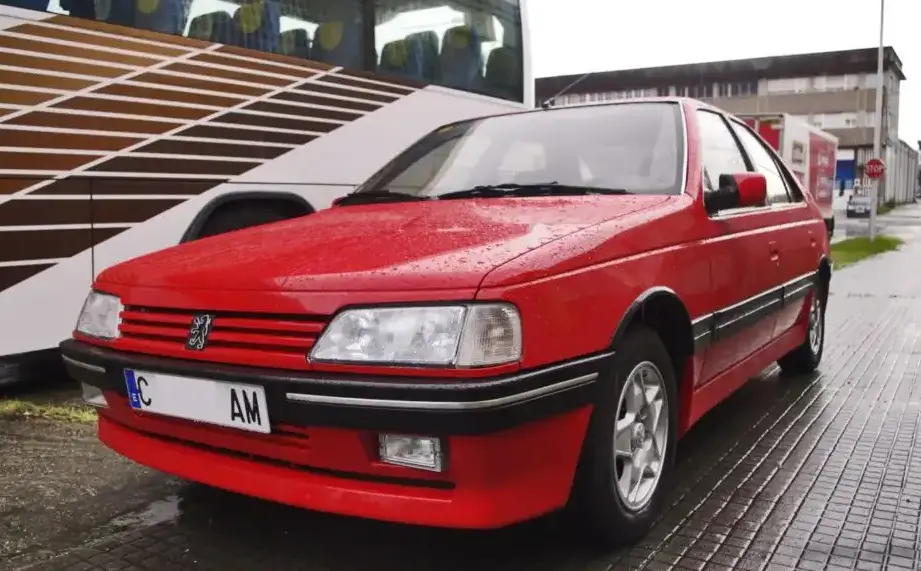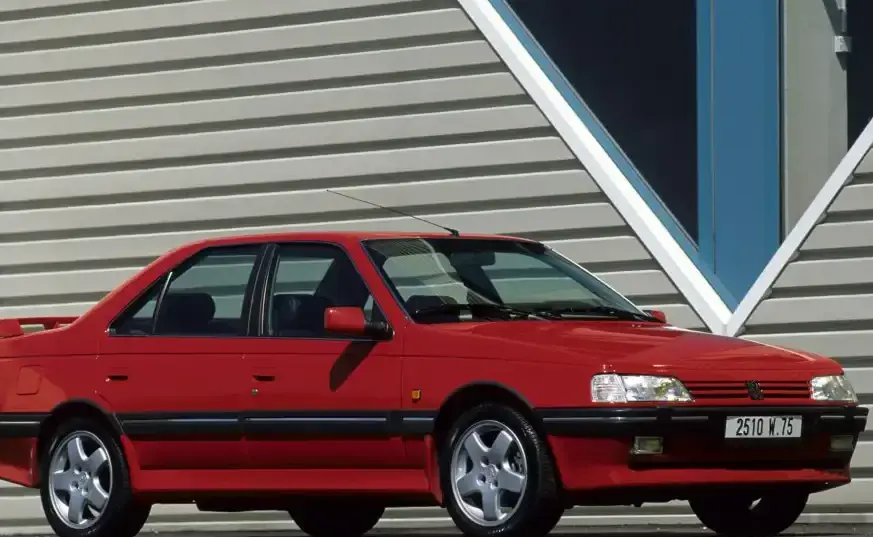
The Peugeot 405 1.8 Automatic, produced between 1992 and 1995, represented a key variant within the 405 I (15B) facelift range. Positioned as a comfortable and practical mid-range option, it catered to buyers seeking a balance between affordability, fuel efficiency, and ease of driving. This model occupied a space between the base-level engine options and the more performance-oriented trims, offering a refined driving experience for everyday use. The 405 itself was Peugeot’s replacement for the successful 505, aiming to provide a modern, spacious, and reliable family saloon.
Technical Specifications
| Brand | Peugeot |
| Model | 405 |
| Generation | 405 I (15B, facelift 1992) |
| Type (Engine) | 1.8 (101 Hp) Automatic |
| Start of production | 1992 |
| End of production | 1995 |
| Powertrain Architecture | Internal Combustion engine |
| Body type | Sedan |
| Seats | 5 |
| Doors | 4 |
| Fuel consumption (combined) | 7.5 l/100 km (31.4 US mpg, 37.7 UK mpg, 13.3 km/l) |
| Fuel Type | Petrol (Gasoline) |
| Maximum speed | 185 km/h (114.95 mph) |
| Weight-to-power ratio | 10.9 kg/Hp, 91.8 Hp/tonne |
| Weight-to-torque ratio | 7.2 kg/Nm, 139.1 Nm/tonne |
| Power | 101 Hp @ 6000 rpm |
| Power per litre | 57.3 Hp/l |
| Torque | 153 Nm @ 3000 rpm (112.85 lb.-ft. @ 3000 rpm) |
| Engine layout | Front, Transverse |
| Engine Model/Code | LFZ XU7JP |
| Engine displacement | 1762 cm3 (107.52 cu. in.) |
| Number of cylinders | 4 |
| Engine configuration | Inline |
| Cylinder Bore | 83 mm (3.27 in.) |
| Piston Stroke | 81.4 mm (3.2 in.) |
| Compression ratio | 9.3:1 |
| Number of valves per cylinder | 2 |
| Fuel injection system | Multi-port manifold injection |
| Engine aspiration | Naturally aspirated engine |
| Valvetrain | OHC |
| Engine oil capacity | 4.3 l (4.54 US qt | 3.78 UK qt) |
| Coolant | 7 l (7.4 US qt | 6.16 UK qt) |
| Kerb Weight | 1100 kg (2425.08 lbs.) |
| Max. weight | 1580 kg (3483.3 lbs.) |
| Max load | 480 kg (1058.22 lbs.) |
| Trunk (boot) space – minimum | 470 l (16.6 cu. ft.) |
| Fuel tank capacity | 70 l (18.49 US gal | 15.4 UK gal) |
| Length | 4408 mm (173.54 in.) |
| Width | 1714 mm (67.48 in.) |
| Height | 1406 mm (55.35 in.) |
| Wheelbase | 2669 mm (105.08 in.) |
| Front track | 1440 mm (56.69 in.) |
| Rear (Back) track | 1443 mm (56.81 in.) |
| Drivetrain Architecture | The Internal combustion engine (ICE) drives the front wheels of the vehicle. |
| Drive wheel | Front wheel drive |
| Number of gears and type of gearbox | 4 gears, automatic transmission |
| Front suspension | Wishbone |
| Rear suspension | Trailing arm |
| Front brakes | Ventilated discs |
| Rear brakes | Drum |
| Assisting systems | ABS (Anti-lock braking system) |
| Steering type | Steering rack and pinion |
| Power steering | Hydraulic Steering |
| Tires size | 175/75 R14 |
| Wheel rims size | 14 |
Powertrain & Engine Architecture
The heart of the 405 1.8 Automatic is the XU7JP engine, a 1762cc inline-four cylinder petrol engine. This engine, commonly found in various Peugeot and Citroën models of the era, is known for its relative simplicity and durability. The ‘LFZ’ designation indicates a specific variant within the XU7 family. It features a single overhead camshaft (OHC) operating two valves per cylinder. Fuel delivery is managed by a multi-port fuel injection system, providing a balance between efficiency and performance. The engine produces 101 horsepower at 6000 rpm and 153 Nm (113 lb-ft) of torque at 3000 rpm. The automatic transmission is a four-speed unit, designed to provide smooth and effortless gear changes. While not a particularly advanced transmission by modern standards, it was well-suited to the engine’s power characteristics and the intended use case of the vehicle.
Driving Characteristics
The 405 1.8 Automatic offers a comfortable and relaxed driving experience. The automatic transmission eliminates the need for manual gear changes, making it ideal for city driving and long journeys. However, the 101 horsepower output and the inherent efficiency losses of the automatic transmission mean that acceleration is not particularly brisk. Compared to the manual transmission versions of the 1.8, or the more powerful 2.0-liter variants, the automatic feels noticeably slower. The four-speed gearbox, while smooth, has relatively widely spaced gear ratios, which can sometimes result in the engine feeling strained during overtaking maneuvers. The power delivery is linear, with a usable amount of torque available from low to mid-range revs. Overall, the driving experience is geared towards comfort and convenience rather than outright performance.
Equipment & Trim Levels
The 1.8 Automatic trim level typically included features such as central locking, electric front windows, and a basic stereo system. Interior upholstery was usually cloth, with a relatively simple dashboard layout. Optional extras included air conditioning, a sunroof, and upgraded audio systems. The level of equipment was generally considered adequate for a mid-range family saloon of the early 1990s. The interior design prioritized functionality and durability over luxury, with hard-wearing materials used throughout the cabin.
Chassis & Braking
The 405 1.8 Automatic utilizes a front-wheel-drive layout with independent wishbone suspension at the front and a trailing arm suspension at the rear. This suspension setup provides a comfortable ride quality, absorbing bumps and imperfections in the road surface effectively. The front brakes are ventilated discs, offering good stopping power, while the rear brakes are drums. An anti-lock braking system (ABS) was often included as standard equipment, enhancing safety by preventing wheel lockup during hard braking. The steering is rack and pinion, providing precise and responsive handling.
Market Reception & Comparison
The Peugeot 405 1.8 Automatic was generally well-received by automotive critics as a practical and affordable family saloon. It was praised for its comfortable ride, spacious interior, and fuel efficiency. However, some critics noted that the engine lacked outright power, particularly when paired with the automatic transmission. Compared to the manual transmission versions, the automatic offered a less engaging driving experience. In terms of fuel economy, the 1.8 Automatic performed respectably, achieving around 31.4 US mpg on combined cycles. Reliability was generally good, although routine maintenance was essential to ensure long-term durability.
Legacy
The Peugeot 405 1.8 Automatic has proven to be a relatively reliable and durable vehicle, with many examples still on the road today. The XU7JP engine is known for its longevity, provided it is properly maintained. The automatic transmission, while not the most sophisticated, has also proven to be reasonably robust. In the used car market, the 405 1.8 Automatic is often sought after by enthusiasts and collectors who appreciate its classic styling and simple mechanicals. It represents a significant piece of Peugeot’s history, embodying the brand’s commitment to building practical, reliable, and comfortable family cars.