Technical Specifications
| Brand | Volkswagen |
| Model | Golf |
| Generation | Golf VI (5-door) |
| Type (Engine) | 2.0 TDI (140 Hp) 4MOTION |
| Start of production | 2008 |
| End of production | 2012 |
| Powertrain Architecture | Internal Combustion engine |
| Body type | Hatchback |
| Seats | 5 |
| Doors | 5 |
| Fuel consumption (economy) – urban (NEDC) | 6.9 l/100 km (34.1 US mpg, 40.9 UK mpg, 14.5 km/l) |
| Fuel consumption (economy) – extra urban (NEDC) | 4.7 l/100 km (50 US mpg, 60.1 UK mpg, 21.3 km/l) |
| Fuel consumption (economy) – combined (NEDC) | 5.5 l/100 km (42.8 US mpg, 51.4 UK mpg, 18.2 km/l) |
| CO2 emissions (NEDC) | 143 g/km |
| Fuel Type | Diesel |
| Acceleration 0 – 100 km/h | 9.4 sec |
| Acceleration 0 – 62 mph | 9.4 sec |
| Acceleration 0 – 60 mph | 8.9 sec |
| Maximum speed | 206 km/h (128 mph) |
| Emission standard | Euro 5 |
| Weight-to-power ratio | 9.8 kg/Hp, 101.7 Hp/tonne |
| Weight-to-torque ratio | 4.3 kg/Nm, 232.6 Nm/tonne |
| Power | 140 Hp @ 4200 rpm |
| Power per litre | 71.1 Hp/l |
| Torque | 320 Nm @ 1750-2500 rpm (236.02 lb.-ft. @ 1750-2500 rpm) |
| Engine layout | Front, Transverse |
| Engine Model/Code | CBAB, CFFB |
| Engine displacement | 1968 cm3 (120.09 cu. in.) |
| Number of cylinders | 4 |
| Engine configuration | Inline |
| Cylinder Bore | 81 mm (3.19 in.) |
| Piston Stroke | 95.5 mm (3.76 in.) |
| Compression ratio | 16.5:1 |
| Number of valves per cylinder | 4 |
| Fuel injection system | Diesel Commonrail |
| Engine aspiration | Turbocharger, Intercooler |
| Valvetrain | DOHC |
| Engine oil capacity | 4 l (4.23 US qt | 3.52 UK qt) |
| Coolant | 8 l (8.45 US qt | 7.04 UK qt) |
| Kerb Weight | 1376 kg (3033.56 lbs.) |
| Max. weight | 2020 kg (4453.34 lbs.) |
| Max load | 644 kg (1419.78 lbs.) |
| Trunk (boot) space – minimum | 275 l (9.71 cu. ft.) |
| Trunk (boot) space – maximum | 1230 l (43.44 cu. ft.) |
| Fuel tank capacity | 60 l (15.85 US gal | 13.2 UK gal) |
| Max. roof load | 75 kg (165.35 lbs.) |
| Permitted trailer load with brakes (12%) | 1600 kg (3527.4 lbs.) |
| Permitted trailer load without brakes | 730 kg (1609.37 lbs.) |
| Permitted towbar download | 75 kg (165.35 lbs.) |
| Length | 4199 mm (165.31 in.) |
| Width | 1786 mm (70.31 in.) |
| Width including mirrors | 2048 mm (80.63 in.) |
| Height | 1480 mm (58.27 in.) |
| Wheelbase | 2578 mm (101.5 in.) |
| Front track | 1541 mm (60.67 in.) |
| Rear (Back) track | 1514 mm (59.61 in.) |
| Ride height (ground clearance) | 150 mm (5.91 in.) |
| Minimum turning circle (turning diameter) | 10.9 m (35.76 ft.) |
| Front suspension | Independent type McPherson, Transverse stabilizer |
| Rear suspension | Independent multi-link suspension, Transverse stabilizer |
| Front brakes | Ventilated discs |
| Rear brakes | Disc |
| Assisting systems | ABS (Anti-lock braking system) |
| Steering type | Steering rack and pinion |
| Power steering | Electric Steering |
| Tires size | 205/55 R 16 |
| Wheel rims size | 6.5 J x 16 |
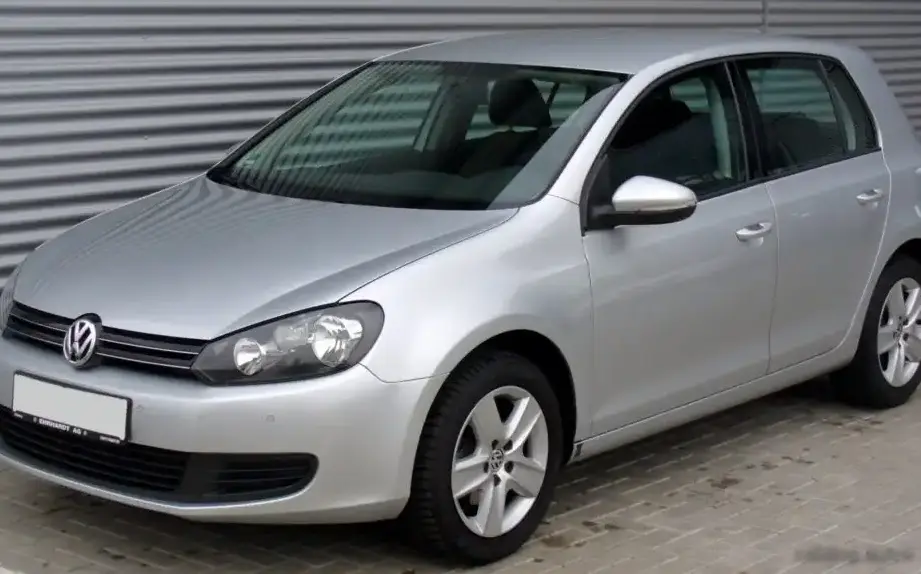
The Volkswagen Golf VI 2.0 TDI 4MOTION, produced from 2008 to 2012, represents a significant evolution of Volkswagen’s iconic hatchback. This five-door variant, part of the Mk6 Golf generation (designated the 1K platform), offered a blend of fuel efficiency, performance, and all-weather capability thanks to its four-wheel-drive system. Positioned as a mid-range offering within the Golf VI lineup, it catered to drivers seeking a practical and refined daily driver with enhanced traction. It sat above the base 1.6L TDI models and below the performance-oriented GTI and R variants.
Powertrain & Engine Architecture
At the heart of the Golf VI 2.0 TDI 4MOTION lies the common rail direct injection diesel engine, typically identified by engine codes CBAB or CFFB. This 1968cc, four-cylinder engine utilizes a turbocharger with an intercooler to produce 140 horsepower at 4200 rpm and 320 Nm (236 lb-ft) of torque between 1750 and 2500 rpm. The common rail system, operating at extremely high pressures, allows for precise fuel delivery and optimized combustion. The engine features a double overhead camshaft (DOHC) valvetrain with four valves per cylinder. The 4MOTION system employs a Haldex multi-plate clutch, automatically distributing torque between the front and rear axles as needed. This system is typically front-wheel drive biased, engaging the rear wheels only when slip is detected. The transmission offered was a six-speed automatic, providing smooth and efficient gear changes. This automatic transmission was chosen for its convenience and ease of use, appealing to a broader range of drivers.
Driving Characteristics
The 2.0 TDI 140 hp 4MOTION offered a balanced driving experience. While not as overtly sporty as the GTI, it provided ample power for everyday driving and confident overtaking. The automatic transmission, while smooth, did slightly diminish the sense of driver engagement compared to the available manual gearbox. The 4MOTION system significantly enhanced traction, particularly on slippery surfaces, providing a surefooted feel and increased stability. The gear ratios were tuned for fuel efficiency and relaxed cruising, with a focus on maximizing torque in the mid-range. Acceleration from 0-60 mph took approximately 8.9 seconds, and the car could reach a top speed of 128 mph. Compared to the lower-powered 1.6 TDI models, the 2.0 TDI offered a noticeable improvement in performance, while remaining more economical than the higher-output variants.
Equipment & Trim Levels
The Golf VI 2.0 TDI 4MOTION typically came equipped with a respectable level of standard features. These included air conditioning, power windows, power mirrors, a CD stereo system, and alloy wheels. Higher trim levels, such as Trendline or Comfortline, added features like automatic climate control, a multi-function steering wheel, and upgraded upholstery. Optional extras included a sunroof, navigation system, parking sensors, and leather seats. Interior upholstery was typically cloth, with the option of leather upgrades. The dashboard layout was clean and functional, with a focus on ergonomics and ease of use.
Chassis & Braking
The Golf VI utilized an independent McPherson strut suspension at the front and a multi-link suspension at the rear, providing a comfortable and controlled ride. Stabilizer bars were fitted to both axles to reduce body roll during cornering. The 4MOTION system added some weight, necessitating slightly stiffer spring rates to maintain handling balance. Braking duties were handled by ventilated discs at the front and solid discs at the rear, equipped with ABS (Anti-lock Braking System). The braking system provided adequate stopping power for everyday driving, although performance variants featured larger brakes.
Market Reception & Comparison
The Golf VI 2.0 TDI 4MOTION was generally well-received by automotive critics. It was praised for its refined ride, fuel efficiency, and all-weather capability. However, some reviewers noted that the automatic transmission could feel slightly sluggish at times. Compared to the front-wheel-drive 2.0 TDI models, the 4MOTION variant offered superior traction and handling, but at a slightly higher price point and with a minor fuel economy penalty. Against competitors like the Audi A3 quattro and BMW 1 Series xDrive, the Golf VI 4MOTION offered a compelling value proposition, combining practicality, performance, and a premium feel.
Legacy
The 2.0 TDI engine, in various iterations, proved to be a reliable and durable powerplant. The 4MOTION system also demonstrated its robustness over time. However, like many modern diesel engines, these models can be susceptible to issues with the diesel particulate filter (DPF) if not properly maintained. In the used car market, the Golf VI 2.0 TDI 4MOTION remains a popular choice, offering a good balance of practicality, fuel efficiency, and all-weather capability. Well-maintained examples continue to command reasonable prices, reflecting their enduring appeal and reputation for reliability.