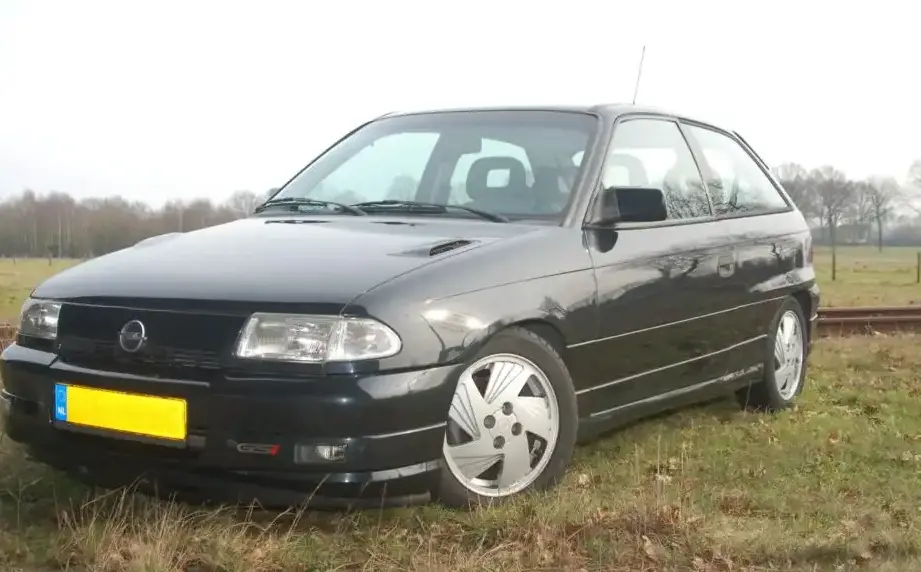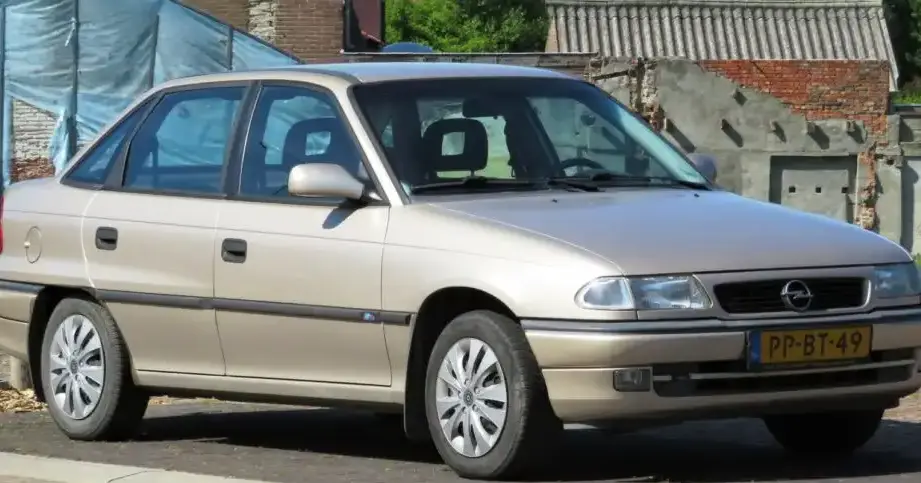
The Opel Astra F Classic 1.4i 16V, produced from 1996 to 1998, represented an entry-level offering within the facelifted Astra F range (introduced in 1994). Positioned as a practical and affordable family sedan, this variant aimed to provide economical transportation with a reasonable level of equipment. It was a key model for Opel in the European market, competing with vehicles like the Ford Escort, Volkswagen Golf, and Peugeot 306. The “Classic” designation denoted a more traditional, no-frills approach compared to some of the more modernly styled Astra variants. This particular engine and transmission combination was popular for buyers prioritizing fuel efficiency and lower purchase price over outright performance.
Technical Specifications
| Brand | Opel |
| Model | Astra |
| Generation | Astra F Classic (facelift 1994) |
| Type (Engine) | 1.4i 16V (90 Hp) |
| Start of production | 1996 |
| End of production | 1998 |
| Powertrain Architecture | Internal Combustion engine |
| Body type | Sedan |
| Seats | 5 |
| Doors | 4 |
| Fuel consumption (urban) | 9.8 l/100 km (24 US mpg, 28.8 UK mpg, 10.2 km/l) |
| Fuel consumption (extra urban) | 5.9 l/100 km (39.9 US mpg, 47.9 UK mpg, 16.9 km/l) |
| Fuel consumption (combined) | 7.9 l/100 km (29.8 US mpg, 35.8 UK mpg, 12.7 km/l) |
| Fuel Type | Petrol (Gasoline) |
| Acceleration 0 – 100 km/h | 12.5 sec |
| Acceleration 0 – 62 mph | 12.5 sec |
| Acceleration 0 – 60 mph | 11.9 sec |
| Maximum speed | 180 km/h (111.85 mph) |
| Weight-to-power ratio | 10.9 kg/Hp, 91.4 Hp/tonne |
| Weight-to-torque ratio | 7.9 kg/Nm, 126.9 Nm/tonne |
| Power | 90 Hp @ 5600 rpm |
| Power per litre | 64.8 Hp/l |
| Torque | 125 Nm @ 4000 rpm (92.2 lb.-ft. @ 4000 rpm) |
| Engine layout | Front, Transverse |
| Engine Model/Code | X14XE |
| Engine displacement | 1389 cm3 (84.76 cu. in.) |
| Number of cylinders | 4 |
| Engine configuration | Inline |
| Cylinder Bore | 77.6 mm (3.06 in.) |
| Piston Stroke | 73.4 mm (2.89 in.) |
| Compression ratio | 9.4:1 |
| Number of valves per cylinder | 4 |
| Fuel injection system | Multi-port manifold injection |
| Engine aspiration | Naturally aspirated engine |
| Valvetrain | DOHC |
| Engine oil capacity | 3.5 l (3.7 US qt | 3.08 UK qt) |
| Coolant capacity | 5.6 l (5.92 US qt | 4.93 UK qt) |
| Kerb Weight | 985 kg (2171.55 lbs.) |
| Max. weight | 1475 kg (3251.82 lbs.) |
| Max load | 490 kg (1080.27 lbs.) |
| Trunk (boot) space – minimum | 500 l (17.66 cu. ft.) |
| Trunk (boot) space – maximum | 1200 l (42.38 cu. ft.) |
| Fuel tank capacity | 52 l (13.74 US gal | 11.44 UK gal) |
| Length | 4239 mm (166.89 in.) |
| Width | 1688 mm (66.46 in.) |
| Height | 1410 mm (55.51 in.) |
| Wheelbase | 2517 mm (99.09 in.) |
| Front track | 1430 mm (56.3 in.) |
| Rear track | 1429 mm (56.26 in.) |
| Ride height (ground clearance) | 135 mm (5.31 in.) |
| Drag coefficient (Cd) | 0.31 |
| Drivetrain Architecture | The Internal combustion engine (ICE) drives the front wheels of the vehicle. |
| Drive wheel | Front wheel drive |
| Number of gears and type of gearbox | 5 gears, manual transmission |
| Front suspension | Independent, type McPherson with coil spring and anti-roll bar |
| Rear suspension | Spring Strut, Coil spring, Torsion |
| Front brakes | Ventilated discs |
| Rear brakes | Drum |
| Assisting systems | ABS (Anti-lock braking system) |
| Steering type | Steering rack and pinion |
| Power steering | Hydraulic Steering |
| Tires size | 175/70 R13 |
| Wheel rims size | 13 |
INTRODUCTION
The Opel Astra F Classic 1.4i 16V, launched in 1996 as part of the Astra F’s facelift, was a mainstay of Opel’s lineup. The facelift, designated internally as the 1HX0/A3 platform update, brought subtle styling revisions and improvements to the interior. This 1.4-liter variant was specifically designed to offer a balance between affordability and usability, targeting buyers who prioritized fuel economy and lower running costs. It served as the entry point into the Astra F range, sitting below the more powerful 1.6 and 1.8-liter models, as well as the sportier GSi variants. The sedan body style was particularly popular in many European markets, offering a practical alternative to the hatchback.
Powertrain & Engine Architecture
At the heart of the Astra F Classic 1.4i 16V lies the X14XE engine, a 1389cc inline-four cylinder powerplant. This engine featured a multi-port fuel injection system, providing precise fuel delivery for improved efficiency and reduced emissions. The ‘16V’ designation indicates the engine’s four valves per cylinder, a design choice that enhanced breathing and contributed to its modest power output. The X14XE engine is known for its relative simplicity and durability. The engine utilized a double overhead camshaft (DOHC) valvetrain, further optimizing valve timing and engine performance. The standard transmission for this model was a five-speed manual gearbox, although a four-speed automatic transmission was also available, albeit less common. The automatic transmission, while offering convenience, did impact acceleration and fuel economy.
Driving Characteristics
The 1.4i 16V Astra F Classic, with its 90 horsepower, wasn’t designed for blistering performance. Acceleration from 0-60 mph took around 11.9 seconds, and top speed was limited to 111.85 mph. However, it provided adequate power for everyday driving, particularly in urban and suburban environments. The five-speed manual transmission allowed drivers to keep the engine in its optimal power band, while the optional automatic transmission offered a smoother, more relaxed driving experience. The gear ratios were tuned for fuel efficiency rather than outright acceleration. Compared to the 1.6 or 1.8-liter versions, the 1.4 felt noticeably less responsive, especially when fully loaded or tackling steep inclines. However, the lighter engine weight contributed to slightly better handling and a more nimble feel.
Equipment & Trim Levels
The Astra F Classic 1.4i 16V typically came equipped with basic but essential features. Standard equipment included power steering, central locking, and a basic stereo system. Interior upholstery was typically cloth, with a relatively simple dashboard layout. Optional extras included air conditioning, electric windows, and alloy wheels. Higher trim levels, though rare on this engine variant, could add features like upgraded upholstery and a more sophisticated audio system. The focus was on providing a functional and affordable vehicle, so luxury features were generally kept to a minimum.
Chassis & Braking
The Astra F Classic utilized a McPherson strut front suspension and a torsion beam rear suspension. This setup provided a comfortable ride quality, although it wasn’t particularly sporty. The front brakes were ventilated discs, offering adequate stopping power, while the rear brakes were drums, a cost-saving measure common in this segment. Anti-lock Braking System (ABS) was available as an option, enhancing safety by preventing wheel lockup during hard braking. The chassis was designed to provide a balance between handling and ride comfort, prioritizing stability and predictability over outright agility.
Market Reception & Comparison
The Astra F Classic 1.4i 16V was generally well-received as a practical and economical family car. Critics praised its fuel efficiency and affordability, but noted its lack of outright performance. Compared to the 1.6 and 1.8-liter versions, the 1.4 offered significantly lower running costs but at the expense of acceleration and refinement. The 1.6-liter engine provided a noticeable performance boost, while the 1.8-liter offered a more refined driving experience. However, these higher-powered variants came with a higher price tag and increased fuel consumption. The 1.4i 16V was often seen as a sensible choice for budget-conscious buyers and those who primarily used their cars for commuting or short trips.
Legacy
The Opel Astra F Classic 1.4i 16V has proven to be a relatively reliable vehicle, with the X14XE engine known for its durability. While age and mileage inevitably take their toll, many examples are still on the road today. The availability of spare parts remains good, making maintenance relatively straightforward and affordable. In the used car market, these Astras are typically valued for their low purchase price and fuel efficiency. They represent a simple, honest, and practical choice for those seeking an affordable and reliable mode of transportation. However, potential buyers should be aware of common issues such as corrosion and wear and tear on suspension components.