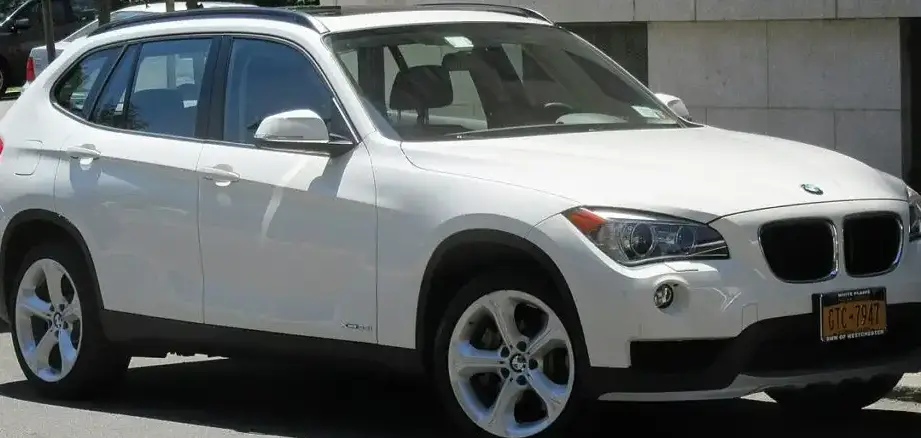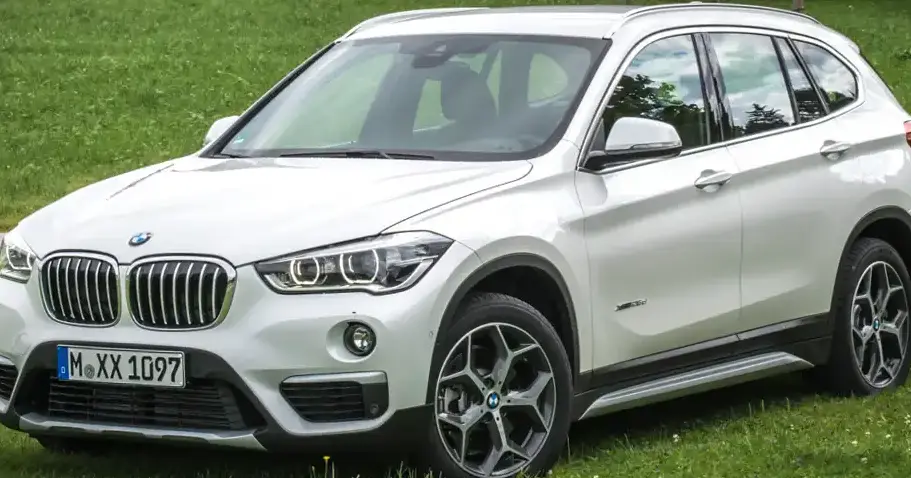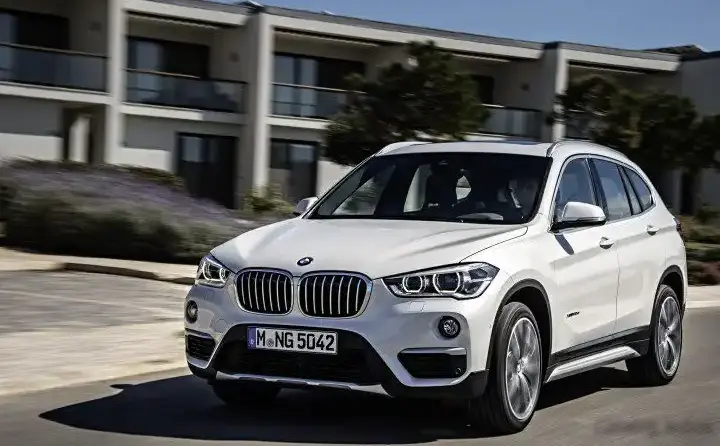
The BMW X1 (F48) 20d sDrive, produced from 2016 to 2018, represents BMW’s entry into the compact luxury crossover segment. This variant, powered by a 2.0-liter turbocharged diesel engine producing 190 horsepower, was a key offering in the F48 X1 lineup, positioned as a fuel-efficient and practical option for buyers prioritizing economy and everyday usability. It served as a bridge between the base models and the more performance-oriented or higher-trim level X1s. The F48 generation marked a significant shift for the X1, moving from a rear-wheel-drive based platform to a front-wheel-drive UKL1 platform shared with Mini, impacting its driving dynamics and interior packaging.
Technical Specifications
| Brand | BMW |
| Model | X1 |
| Generation | X1 (F48) |
| Type (Engine) | 20d (190 Hp) sDrive |
| Start of production | 2016 |
| End of production | 2018 |
| Powertrain Architecture | Internal Combustion engine |
| Body type | SUV |
| Seats | 5 |
| Doors | 5 |
| Fuel consumption (urban) | 5.3-5.5 l/100 km (44.4 – 42.8 US mpg) |
| Fuel consumption (extra urban) | 4.0-4.2 l/100 km (58.8 – 56 US mpg) |
| Fuel consumption (combined) | 4.5-4.7 l/100 km (52.3 – 50 US mpg) |
| CO2 emissions | 118-123 g/km |
| Fuel Type | Diesel |
| Acceleration 0 – 100 km/h | 7.9 sec |
| Acceleration 0 – 62 mph | 7.9 sec |
| Acceleration 0 – 60 mph | 7.5 sec |
| Maximum speed | 225 km/h (139.81 mph) |
| Emission standard | Euro 6 |
| Weight-to-power ratio | 7.8 kg/Hp, 128.4 Hp/tonne |
| Weight-to-torque ratio | 3.7 kg/Nm, 270.3 Nm/tonne |
| Power | 190 Hp @ 4000 rpm |
| Torque | 400 Nm @ 1750-2500 rpm (295.02 lb.-ft. @ 1750-2500 rpm) |
| Engine layout | Front, Transverse |
| Engine Model/Code | B47C20B |
| Engine displacement | 1995 cm3 (121.74 cu. in.) |
| Number of cylinders | 4 |
| Engine configuration | Inline |
| Cylinder Bore | 84 mm (3.31 in.) |
| Piston Stroke | 90 mm (3.54 in.) |
| Compression ratio | 16.5:1 |
| Number of valves per cylinder | 4 |
| Fuel injection system | Diesel Commonrail |
| Engine aspiration | Twin-power turbo, Intercooler |
| Engine oil capacity | 5 l (5.28 US qt | 4.4 UK qt) |
| Coolant | 6.7 l (7.08 US qt | 5.9 UK qt) |
| Kerb Weight | 1480 kg (3262.84 lbs.) |
| Max. weight | 2055 kg (4530.5 lbs.) |
| Max load | 575 kg (1267.66 lbs.) |
| Trunk (boot) space – minimum | 505 l (17.83 cu. ft.) |
| Trunk (boot) space – maximum | 1550 l (54.74 cu. ft.) |
| Fuel tank capacity | 51 l (13.47 US gal | 11.22 UK gal) |
| Max. roof load | 75 kg (165.35 lbs.) |
| Permitted trailer load with brakes (12%) | 1800 kg (3968.32 lbs.) |
| Permitted trailer load without brakes | 750 kg (1653.47 lbs.) |
| Permitted towbar download | 80 kg (176.37 lbs.) |
| Length | 4439 mm (174.76 in.) |
| Width | 1821 mm (71.69 in.) |
| Height | 1598 mm (62.91 in.) |
| Wheelbase | 2670 mm (105.12 in.) |
| Front track | 1561 mm (61.46 in.) |
| Rear (Back) track | 1562 mm (61.5 in.) |
| Ride height (ground clearance) | 183 mm (7.2 in.) |
| Drag coefficient (Cd) | 0.29 |
| Minimum turning circle (turning diameter) | 11.4 m (37.4 ft.) |
| Wading depth | 250 mm (9.84 in.) |
| Drivetrain Architecture | The Internal combustion engine (ICE) drives the front wheels of the vehicle. |
| Drive wheel | Front wheel drive |
| Number of gears and type of gearbox | 6 gears, manual transmission |
| Front suspension | Independent coil spring |
| Rear suspension | Independent multi-link suspension |
| Front brakes | Ventilated discs |
| Rear brakes | Ventilated discs |
| Assisting systems | ABS (Anti-lock braking system) |
| Steering type | Steering rack and pinion |
| Power steering | Electric Steering |
| Tires size | 225/55 R17; 225/45 R19 |
| Wheel rims size | 7.5J x 17; 8J x 19 |
INTRODUCTION
The BMW X1 (F48) 20d sDrive, launched in 2016, marked a significant departure for the X1 model line. Moving away from the rear-wheel-drive bias of its predecessor, the F48 adopted a front-wheel-drive platform (UKL1), offering increased interior space and improved fuel efficiency. The 20d variant, equipped with the B47C20B engine, was a popular choice in European markets, where diesel engines held a substantial market share. In the US, the X1 was initially offered with a gasoline engine, but the diesel variant found a niche among buyers prioritizing fuel economy and long-distance cruising. This specific configuration aimed to balance performance with practicality, appealing to families and individuals seeking a versatile and economical compact SUV.
Powertrain & Engine Architecture
At the heart of the X1 20d sDrive lies the BMW B47C20B, a 2.0-liter inline-four cylinder diesel engine. This engine is a member of BMW’s modular engine family, known for its efficiency and refinement. The B47 utilizes a common-rail direct injection system, delivering fuel at extremely high pressures for optimized combustion. A single twin-scroll turbocharger, coupled with an intercooler, provides forced induction, boosting power and torque. The engine also features variable valve timing (VANOS) and variable turbine geometry (VTG) on the turbocharger, further enhancing responsiveness and efficiency. The 20d typically paired with a six-speed manual transmission, although an eight-speed automatic transmission was also available as an option. The automatic transmission offered smoother shifts and enhanced convenience, but at a slight cost to fuel economy. The engine’s transverse mounting and front-wheel-drive configuration contribute to its compact footprint and efficient packaging.
Driving Characteristics
The X1 20d sDrive, with its 190 horsepower and 400 Nm (295 lb-ft) of torque, offered a respectable level of performance. Acceleration from 0 to 60 mph took around 7.5-7.9 seconds, making it competitive within its class. However, the front-wheel-drive configuration and the relatively modest power output meant it wasn’t as engaging to drive as some of its rear-wheel-drive rivals. The torque delivery was strong from low RPMs, providing ample pulling power for everyday driving and overtaking maneuvers. The six-speed manual transmission offered precise shifts, while the optional eight-speed automatic provided seamless gear changes. Compared to the more powerful X1 xDrive28i (gasoline) or the higher-output diesel variants, the 20d prioritized fuel efficiency and comfort over outright performance. The steering was light and accurate, but lacked the feedback of more performance-focused BMWs.
Equipment & Trim Levels
The X1 20d sDrive came standard with a comprehensive list of features, including automatic climate control, a 6.5-inch infotainment system with iDrive controller, Bluetooth connectivity, and a suite of safety features such as ABS, stability control, and multiple airbags. Higher trim levels offered upgrades such as larger infotainment screens, navigation, premium audio systems, leather upholstery, and a panoramic sunroof. Optional extras included parking sensors, a rearview camera, and advanced driver-assistance systems like lane departure warning and collision warning. Interior upholstery typically consisted of cloth or a combination of cloth and leatherette. The dashboard layout was modern and functional, with a focus on ergonomics and ease of use.
Chassis & Braking
The F48 X1’s chassis featured an independent coil spring suspension at the front and an independent multi-link suspension at the rear, providing a comfortable and controlled ride. The suspension was tuned to prioritize comfort over sporty handling. Ventilated disc brakes were fitted on all four wheels, providing ample stopping power. The electronic stability control (ESC) system helped to maintain control in challenging driving conditions. The front-wheel-drive configuration resulted in a slightly higher center of gravity compared to rear-wheel-drive vehicles, but the X1’s relatively low weight helped to mitigate this effect. The steering system utilized electric power assistance, providing light and precise steering feel.
Market Reception & Comparison
The BMW X1 20d sDrive was generally well-received by automotive critics, who praised its fuel efficiency, spacious interior, and comfortable ride. However, some critics noted that the front-wheel-drive platform lacked the driving engagement of its predecessor. Compared to other compact SUVs in its class, the X1 20d offered a compelling combination of luxury, practicality, and economy. Its fuel economy figures of 4.5-4.7 l/100 km (52.3-50 US mpg) were particularly impressive, making it an attractive option for buyers seeking to minimize their fuel costs. The 20d variant was often compared to the X1 xDrive28i, with the 20d appealing to those prioritizing fuel economy and the xDrive28i appealing to those prioritizing performance.
Legacy
The B47 engine, found in the X1 20d sDrive, has proven to be a reliable and durable powertrain, although some early models experienced issues with timing chain wear. Proper maintenance, including regular oil changes and timely replacement of wear items, is crucial for ensuring long-term reliability. On the used car market, the X1 20d sDrive remains a popular choice, offering a good balance of value, fuel efficiency, and practicality. Its relatively low running costs and comfortable ride make it an appealing option for buyers seeking a versatile and economical compact SUV. The shift to a front-wheel-drive platform for the F48 generation broadened the X1’s appeal, attracting a wider range of buyers and establishing it as a key player in the competitive compact crossover segment.