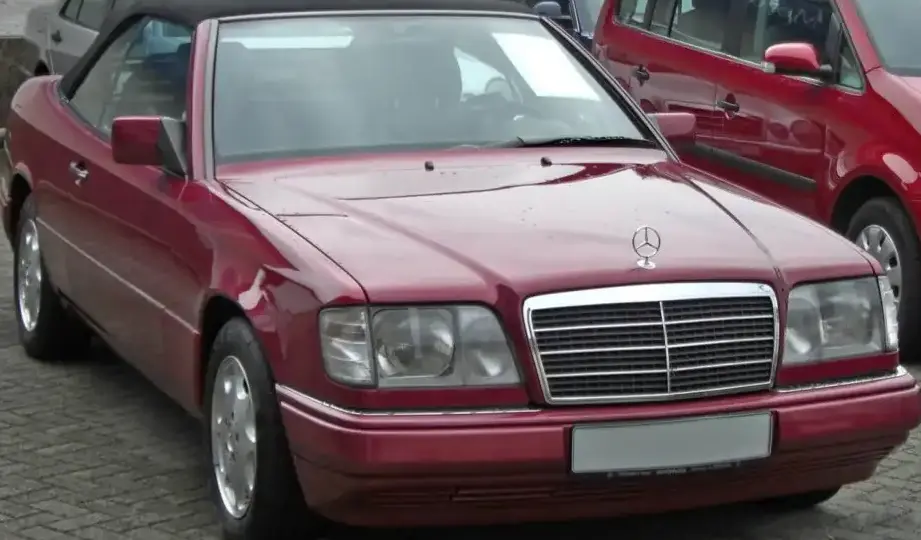
The Mercedes-Benz E-Class Cabriolet (A124) E 320, produced between July 1992 and June 1997, represented a sophisticated blend of open-air motoring and luxury performance within the W124 series. Positioned as a premium offering within the Cabriolet range, the E 320 boasted a larger, more powerful engine than its four-cylinder siblings, appealing to buyers seeking a more refined driving experience. It was a key model in establishing Mercedes-Benz’s reputation for quality and engineering in the mid-size luxury segment, particularly in European markets where convertibles enjoyed significant popularity. The A124 chassis, known for its robust construction and advanced engineering, provided a solid foundation for the E 320’s performance and comfort.
Technical Specifications
| Brand | Mercedes-Benz |
| Model | E-class |
| Generation | E-class Cabrio (A124) |
| Type (Engine) | E 320 (220 Hp) |
| Start of production | July, 1992 |
| End of production | June, 1997 |
| Powertrain Architecture | Internal Combustion engine |
| Body type | Cabriolet |
| Seats | 4 |
| Doors | 2 |
| Fuel consumption (urban) | 15.4 l/100 km (15.3 US mpg, 18.3 UK mpg, 6.5 km/l) |
| Fuel consumption (extra urban) | 8.6 l/100 km (27.4 US mpg, 32.8 UK mpg, 11.6 km/l) |
| Fuel consumption (combined) | 11.5 l/100 km (20.5 US mpg, 24.6 UK mpg, 8.7 km/l) |
| Fuel Type | Petrol (Gasoline) |
| Acceleration 0 – 100 km/h | 9.2 sec |
| Acceleration 0 – 62 mph | 9.2 sec |
| Acceleration 0 – 60 mph | 8.7 sec |
| Maximum speed | 235 km/h (146.02 mph) |
| Weight-to-power ratio | 7.8 kg/Hp, 128.7 Hp/tonne |
| Weight-to-torque ratio | 5.4 kg/Nm, 184.2 Nm/tonne |
| Power | 220 Hp @ 5500 rpm |
| Power per litre | 68.8 Hp/l |
| Torque | 315 Nm @ 3850 rpm (232.33 lb.-ft. @ 3850 rpm) |
| Engine layout | Front, Longitudinal |
| Engine Model/Code | M 104 E 32 / 104.992 |
| Engine displacement | 3199 cm3 (195.21 cu. in.) |
| Number of cylinders | 6 |
| Engine configuration | Inline |
| Cylinder Bore | 89.9 mm (3.54 in.) |
| Piston Stroke | 84 mm (3.31 in.) |
| Compression ratio | 10:1 |
| Number of valves per cylinder | 4 |
| Fuel injection system | Multi-port manifold injection |
| Engine aspiration | Naturally aspirated engine |
| Valvetrain | DOHC |
| Engine oil capacity | 7.5 l (7.93 US qt | 6.6 UK qt) |
| Coolant | 9 l (9.51 US qt | 7.92 UK qt) |
| Kerb Weight | 1710 kg (3769.9 lbs.) |
| Max. weight | 2200 kg (4850.17 lbs.) |
| Max load | 490 kg (1080.27 lbs.) |
| Trunk (boot) space – minimum | 300 l (10.59 cu. ft.) |
| Fuel tank capacity | 70 l (18.49 US gal | 15.4 UK gal) |
| Length | 4655 mm (183.27 in.) |
| Width | 1740 mm (68.5 in.) |
| Height | 1371 mm (53.98 in.) |
| Wheelbase | 2715 mm (106.89 in.) |
| Front track | 1501 mm (59.09 in.) |
| Rear (Back) track | 1491 mm (58.7 in.) |
| Drivetrain Architecture | The Internal combustion engine (ICE) drives the rear wheels of the vehicle. |
| Drive wheel | Rear wheel drive |
| Number of gears and type of gearbox | 5 gears, manual transmission |
| Front suspension | Wishbone |
| Rear suspension | Independent multi-link suspension |
| Front brakes | Ventilated discs |
| Rear brakes | Disc |
| Assisting systems | ABS (Anti-lock braking system) |
| Steering type | Cone worm with recirculation balls |
| Power steering | Hydraulic Steering |
| Tires size | Front wheel tires: 195/65 R15Rear wheel tires: 195/65 R15 |
| Wheel rims size | Front wheel rims: 6.5J x 15Rear wheel rims: 6.5J x 15 |
Powertrain & Engine Architecture
The heart of the E 320 Cabriolet was the M104.992 3.2-liter inline-six engine. This engine was a significant upgrade from the smaller engines offered in other E-Class Cabriolet models. The M104 featured a cast iron block with aluminum cylinder heads, a design chosen for its balance of durability and weight reduction. It employed multi-port fuel injection and a double overhead camshaft (DOHC) valvetrain, contributing to its smooth power delivery and relatively high specific output. The engine’s 10:1 compression ratio further enhanced its performance. The five-speed manual transmission was standard, providing drivers with precise control over the engine’s power. While an automatic transmission was available, the manual was favored by enthusiasts for its more engaging driving experience.
Driving Characteristics
The E 320 Cabriolet offered a distinctly more spirited driving experience than its lower-powered counterparts. The 3.2-liter engine delivered 220 horsepower and 232 lb-ft of torque, enabling a 0-60 mph time of approximately 8.7 seconds and a top speed of 146 mph. The manual transmission’s gear ratios were well-matched to the engine’s powerband, providing strong acceleration in all gears. Compared to the four-cylinder models, the E 320 felt significantly more relaxed at highway speeds, with ample power for overtaking maneuvers. The rear-wheel drive configuration contributed to a balanced chassis and predictable handling. While not a sports car, the E 320 offered a satisfying blend of performance and comfort.
Equipment & Trim Levels
The E 320 Cabriolet was well-equipped as standard, reflecting its position as a premium model. Typical features included leather upholstery, power windows and locks, a premium sound system, and automatic climate control. Optional extras included heated seats, a sunroof, and upgraded audio systems. Interior trim options allowed buyers to personalize their vehicles, with a range of wood veneers and leather colors available. The dashboard layout was typical of Mercedes-Benz at the time, emphasizing functionality and understated elegance.
Chassis & Braking
The A124 Cabriolet chassis was designed to provide a comfortable and secure driving experience. The front suspension utilized wishbones, while the rear featured an independent multi-link setup, offering a good balance of ride quality and handling. The E 320 was equipped with ventilated disc brakes at the front and solid discs at the rear, providing ample stopping power. Anti-lock braking system (ABS) was standard, enhancing safety in emergency braking situations. The steering was a recirculating ball system with hydraulic power assistance, offering a good balance of feel and ease of use.
Market Reception & Comparison
The E 320 Cabriolet was generally well-received by automotive critics, who praised its powerful engine, comfortable ride, and luxurious interior. It was often compared favorably to other premium convertibles of the era, such as the BMW 3 Series Cabriolet and the Audi Cabriolet. Compared to the smaller-engined E-Class Cabriolets, the E 320 offered a significant performance advantage, but at a higher price point. Fuel economy was reasonable for a vehicle of its size and performance, but not exceptional. Reliability was generally good, consistent with Mercedes-Benz’s reputation at the time.
Legacy
The Mercedes-Benz E-Class Cabriolet (A124) E 320 remains a desirable classic car today. The M104 engine is known for its durability and relatively straightforward maintenance, making it a popular choice among enthusiasts. Well-maintained examples command a premium in the used car market. The A124 chassis is also highly regarded for its robust construction and timeless design. The E 320 represents a high point in Mercedes-Benz’s open-top motoring history, offering a compelling combination of luxury, performance, and engineering excellence.