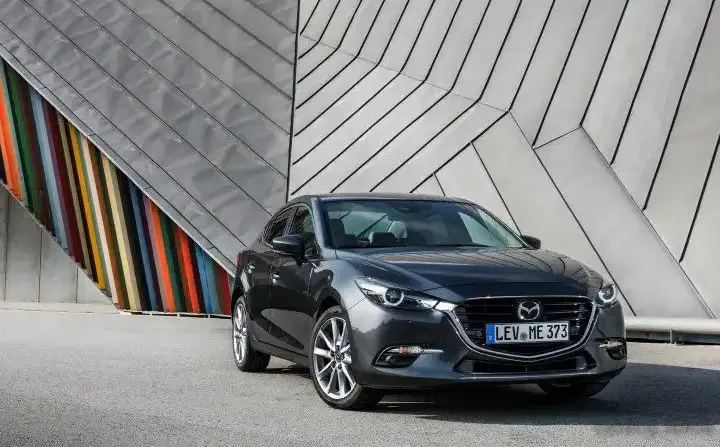
The Mazda 3 III Sedan (BM), specifically the facelifted version introduced in 2017, represented a significant evolution of Mazda’s compact offering. The 2.5 SkyActiv-G variant, producing 184 horsepower, was a key component of the lineup from 2018 onwards. This model year saw a continuation of the third generation, building upon the successes of the initial BM platform launch. Positioned as a mid-range to upper-mid-range trim, it offered a balance of performance, fuel efficiency, and features, appealing to buyers seeking a more engaging driving experience than the base engine options provided. This particular configuration was primarily sold in North America and select international markets.
Technical Specifications
| Brand | Mazda |
| Model | 3 |
| Generation | 3 III Sedan (BM, facelift 2017) |
| Type (Engine) | 2.5 SkyActiv-G (184 Hp) |
| Start of production | 2018 |
| End of production | 2018 |
| Powertrain Architecture | Internal Combustion engine |
| Body type | Sedan |
| Seats | 5 |
| Doors | 4 |
| Fuel consumption (urban) | 9.4 l/100 km (25 US mpg) |
| Fuel consumption (extra urban) | 6.9 l/100 km (34.1 US mpg) |
| Fuel consumption (combined) | 8.1 l/100 km (29 US mpg) |
| Fuel Type | Petrol (Gasoline) |
| Weight-to-power ratio | 7.4 kg/Hp |
| Weight-to-torque ratio | 5.4 kg/Nm |
| Power | 184 Hp @ 5700 rpm |
| Power per litre | 74 Hp/l |
| Torque | 251 Nm @ 3250 rpm (185.13 lb.-ft. @ 3250 rpm) |
| Maximum engine speed | 6500 rpm |
| Engine layout | Front, Transverse |
| Engine Model/Code | PY-VPS |
| Engine displacement | 2488 cm3 (151.83 cu. in.) |
| Number of cylinders | 4 |
| Engine configuration | Inline |
| Cylinder Bore | 89 mm (3.5 in.) |
| Piston Stroke | 100 mm (3.94 in.) |
| Compression ratio | 13:1 |
| Number of valves per cylinder | 4 |
| Fuel injection system | Direct injection |
| Engine aspiration | Naturally aspirated engine |
| Valvetrain | DOHC-VVT |
| Engine oil capacity | 4.5 l (4.76 US qt | 3.96 UK qt) |
| Coolant | 6.5 l (6.87 US qt | 5.72 UK qt) |
| Kerb Weight | 1367 kg (3013.72 lbs.) |
| Trunk (boot) space (minimum) | 351 l (12.4 cu. ft.) |
| Fuel tank capacity | 50 l (13.21 US gal | 11 UK gal) |
| Length | 4580 mm (180.31 in.) |
| Width | 1796 mm (70.71 in.) |
| Height | 1455 mm (57.28 in.) |
| Wheelbase | 2700 mm (106.3 in.) |
| Front track | 1554 mm (61.18 in.) |
| Rear track | 1560 mm (61.42 in.) |
| Ride height (ground clearance) | 155 mm (6.1 in.) |
| Minimum turning circle | 10.6 m (34.78 ft.) |
| Drivetrain Architecture | Front wheel drive |
| Number of gears and type of gearbox | 6 gears, manual transmission |
| Front suspension | Independent, type McPherson with coil spring and anti-roll bar |
| Rear suspension | Independent multi-link spring suspension with stabilizer |
| Front brakes | Ventilated discs |
| Rear brakes | Disc |
| Assisting systems | ABS (Anti-lock braking system) |
| Steering type | Steering rack and pinion |
| Power steering | Electric Steering |
| Tires size | 215/45 R18 |
| Wheel rims size | 7.0J x 18 |
Introduction
The 2018 Mazda 3 Sedan 2.5 SkyActiv-G (184 Hp) was a significant step up from the base engine options available in the BM series. It represented a sweet spot in the lineup, offering a noticeable performance increase without the added cost of the more premium trims. Built on the 1HX0/A3 platform, this variant aimed to deliver a refined and engaging driving experience, characteristic of Mazda’s “Zoom-Zoom” philosophy. It was designed to compete with other compact sedans like the Honda Civic, Toyota Corolla, and Hyundai Elantra, offering a more driver-focused alternative.
Powertrain & Engine Architecture
At the heart of this Mazda 3 variant lies the PY-VPS 2.5-liter inline-four cylinder engine, a cornerstone of Mazda’s SkyActiv technology. This engine is characterized by its high compression ratio of 13:1, achieved through meticulous engineering and optimized combustion processes. It utilizes direct injection, enhancing fuel efficiency and power output. The DOHC-VVT (Dual Overhead Camshaft with Variable Valve Timing) system further optimizes engine performance across the rev range. The engine produces 184 horsepower at 5700 rpm and 251 Nm (185.13 lb.-ft.) of torque at 3250 rpm. This engine was paired with a 6-speed manual transmission, providing drivers with a direct connection to the powertrain. The SkyActiv-G engine is known for its responsiveness and willingness to rev, offering a more engaging driving experience than many competitors.
Driving Characteristics
The 2.5-liter engine and 6-speed manual transmission combination delivered a noticeably more spirited driving experience compared to the 2.0-liter base engine. Acceleration was brisk, and the engine provided ample power for highway merging and overtaking. The 6-speed manual gearbox offered precise shifts and a satisfying mechanical feel. While not a sports car, the Mazda 3 2.5 SkyActiv-G provided a level of driver engagement that was rare in the compact sedan segment. The gear ratios were well-matched to the engine’s powerband, ensuring that the engine remained in its optimal torque range during everyday driving. Compared to higher-output versions (not offered in the US market), this variant prioritized a balance of performance and fuel economy.
Equipment & Trim Levels
The 2.5 SkyActiv-G trim typically included standard features such as power windows and locks, air conditioning, a basic infotainment system with a touchscreen display, and Bluetooth connectivity. Higher trim levels, often denoted by “Touring” or “Grand Touring” designations, added features like leather upholstery, a premium sound system, automatic climate control, and advanced safety technologies such as blind-spot monitoring and rear cross-traffic alert. Optional extras included a sunroof, navigation system, and adaptive front lighting. Interior upholstery was typically cloth on the base 2.5 SkyActiv-G models, with leather options available on higher trims. The dashboard layout was clean and functional, with a focus on driver ergonomics.
Chassis & Braking
The Mazda 3 III Sedan featured an independent suspension system at all four corners. The front suspension utilized a McPherson strut design with coil springs and an anti-roll bar, while the rear suspension employed a multi-link setup with a stabilizer bar. This suspension configuration provided a comfortable ride while maintaining good handling characteristics. The braking system consisted of ventilated discs at the front and solid discs at the rear. ABS (Anti-lock Braking System) was standard equipment. The chassis was designed to be lightweight and rigid, contributing to the car’s responsive handling. Steering was provided by a rack and pinion system with electric power steering.
Market Reception & Comparison
The Mazda 3 2.5 SkyActiv-G was generally well-received by automotive critics. It was praised for its engaging driving dynamics, refined interior, and fuel efficiency. Compared to the base 2.0-liter engine, the 2.5-liter offered a significant performance improvement without a substantial increase in fuel consumption. While the 2.5-liter wasn’t as fuel-efficient as some of its competitors, it offered a more rewarding driving experience. Reliability was generally good, with few reported issues specific to the powertrain. Owners appreciated the car’s overall build quality and its sporty handling characteristics.
Legacy
The PY-VPS 2.5-liter SkyActiv-G engine has proven to be a durable and reliable powertrain. In the used car market, Mazda 3 models equipped with this engine are generally sought after due to their performance and fuel efficiency. While routine maintenance is essential, the engine is known for its longevity. The 2018 Mazda 3 2.5 SkyActiv-G represents a high point in Mazda’s compact sedan offerings, combining a refined driving experience with a practical and well-equipped package. It continues to be a popular choice among used car buyers seeking a reliable and engaging compact sedan.