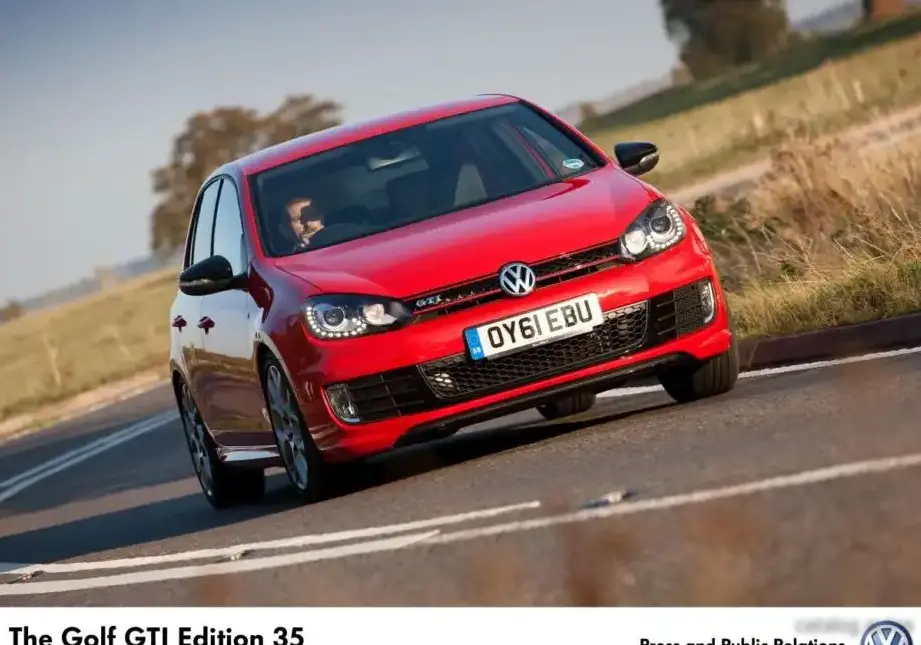
The Volkswagen Golf VI, produced from 2009 to 2013, represented a significant evolution of the iconic Golf lineage. Within the sixth generation, the 2.5-liter (170 hp) five-door hatchback occupied a middle ground in the North American market, offering a balance between performance and affordability. This variant, powered by the CBTA or CBUA engine code, was specifically tailored to appeal to buyers seeking a more powerful engine option than the base 1.6L, but without the added cost and complexity of the GTI or diesel models. It was a key offering for Volkswagen in the US and Canada, bridging the gap between economy and sportiness.
Technical Specifications
| Brand | Volkswagen |
| Model | Golf |
| Generation | Golf VI (5-door) |
| Type (Engine) | 2.5 (170 Hp) |
| Start of production | 2009 |
| End of production | 2013 |
| Powertrain Architecture | Internal Combustion engine |
| Body type | Hatchback |
| Seats | 5 |
| Doors | 5 |
| Fuel consumption (economy) – urban (EPA) | 10.2 l/100 km (23.1 US mpg) |
| Fuel consumption (economy) – extra urban (EPA) | 7.1 l/100 km (33.1 US mpg) |
| Fuel Type | Petrol (Gasoline) |
| Weight-to-power ratio | 8.1 kg/Hp, 123.8 Hp/tonne |
| Weight-to-torque ratio | 5.7 kg/Nm, 174.8 Nm/tonne |
| Power | 170 Hp @ 5700 rpm |
| Power per litre | 68.5 Hp/l |
| Torque | 240 Nm @ 4250 rpm (177.01 lb.-ft. @ 4250 rpm) |
| Engine layout | Front, Transverse |
| Engine Model/Code | CBTA, CBUA |
| Engine displacement | 2480 cm3 (151.34 cu. in.) |
| Number of cylinders | 5 |
| Engine configuration | Inline |
| Cylinder Bore | 82.5 mm (3.25 in.) |
| Piston Stroke | 92.8 mm (3.65 in.) |
| Compression ratio | 9.5:1 |
| Number of valves per cylinder | 4 |
| Fuel injection system | Multi-port manifold injection |
| Engine aspiration | Naturally aspirated engine |
| Valvetrain | DOHC |
| Engine oil capacity | 5.5 l (5.81 US qt | 4.84 UK qt) |
| Coolant | 9 l (9.51 US qt | 7.92 UK qt) |
| Kerb Weight | 1373 kg (3026.95 lbs.) |
| Max. weight | 1940 kg (4276.97 lbs.) |
| Max load | 567 kg (1250.02 lbs.) |
| Trunk (boot) space – minimum | 350 l (12.36 cu. ft.) |
| Trunk (boot) space – maximum | 1305 l (46.09 cu. ft.) |
| Fuel tank capacity | 55 l (14.53 US gal | 12.1 UK gal) |
| Length | 4210 mm (165.75 in.) |
| Width | 1786 mm (70.31 in.) |
| Width including mirrors | 2048 mm (80.63 in.) |
| Height | 1479 mm (58.23 in.) |
| Wheelbase | 2578 mm (101.5 in.) |
| Front track | 1541 mm (60.67 in.) |
| Rear (Back) track | 1514 mm (59.61 in.) |
| Ride height (ground clearance) | 137 mm (5.39 in.) |
| Drag coefficient (Cd) | 0.32 |
| Minimum turning circle (turning diameter) | 10.9 m (35.76 ft.) |
| Drivetrain Architecture | The Internal combustion engine (ICE) drives the front wheels of the vehicle. |
| Drive wheel | Front wheel drive |
| Number of gears and type of gearbox | 5 gears, manual transmission |
| Front suspension | Independent, type McPherson with coil spring and anti-roll bar |
| Rear suspension | Independent multi-link spring suspension with stabilizer |
| Front brakes | Ventilated discs, 287×25 mm |
| Rear brakes | Disc, 272×10 mm |
| Assisting systems | ABS (Anti-lock braking system) |
| Steering type | Steering rack and pinion |
| Power steering | Electric Steering |
| Tires size | 195/65 R15 |
| Wheel rims size | 6J x 15 |
Introduction
The Golf VI 2.5, introduced in 2009, represented a refinement of the already successful fifth-generation Golf. Built on the A5 platform (also known as the 1HX0 platform), it offered improved build quality, enhanced technology, and a more sophisticated driving experience. In the US market, where larger engines were preferred, the 2.5-liter five-cylinder engine became a popular choice, providing a noticeable step up in performance from the base 1.6L engine available in other markets. This variant was positioned as a practical and enjoyable daily driver, appealing to a broad range of customers.
Powertrain & Engine Architecture
The heart of the Golf VI 2.5 is the 2.5-liter inline five-cylinder engine, designated as either CBTA or CBUA depending on specific calibration and emissions equipment. This engine featured multi-port fuel injection and a double overhead camshaft (DOHC) valvetrain. The five-cylinder configuration offered a unique engine note and a smoother power delivery compared to traditional four-cylinder engines. The engine produced 170 horsepower at 5700 rpm and 177 lb-ft of torque at 4250 rpm. The engine was paired with a five-speed manual transmission as standard, providing direct control for the driver. While an automatic transmission was available, it was a six-speed Tiptronic unit, offering both convenience and the ability to manually shift gears. The engine’s design prioritized reliability and ease of maintenance, making it a relatively straightforward engine to work on.
Driving Characteristics
The Golf VI 2.5 with the manual transmission offered a reasonably engaging driving experience. The 170 hp engine provided adequate acceleration for everyday driving, with a 0-60 mph time estimated around 8.5 seconds. The five-speed gearbox was well-matched to the engine’s powerband, allowing for comfortable cruising and responsive acceleration. The automatic transmission, while offering convenience, slightly dulled the driving experience due to its programming and the inherent efficiency losses of torque converter automatics. Compared to the more performance-oriented GTI, the 2.5 lacked the sharp handling and quicker acceleration. However, it offered a more comfortable ride and better fuel economy. Compared to the diesel variants, the 2.5 provided a more traditional gasoline engine feel, with a quicker throttle response and a higher revving nature.
Equipment & Trim Levels
The Golf VI 2.5 typically came standard with features such as air conditioning, power windows and locks, a CD player with MP3 compatibility, and alloy wheels. Higher trim levels, such as the SEL, added features like a sunroof, heated front seats, and a premium audio system. Interior upholstery was typically cloth, with leatherette options available on higher trims. The dashboard layout was clean and functional, with a focus on ergonomics. Optional extras included navigation systems, Bluetooth connectivity, and a rear parking sensor system.
Chassis & Braking
The Golf VI 2.5 utilized an independent McPherson strut suspension in the front and an independent multi-link suspension in the rear. This setup provided a good balance between ride comfort and handling. The front brakes were ventilated discs, while the rear brakes were solid discs. Anti-lock braking system (ABS) was standard. The suspension tuning was geared towards comfort, making it a pleasant vehicle for long drives. Stabilizer bars were included both front and rear to reduce body roll during cornering.
Market Reception & Comparison
Critics generally praised the Golf VI 2.5 for its refined interior, comfortable ride, and improved build quality compared to previous generations. However, some reviewers noted that the engine, while adequate, lacked the excitement of the GTI or the fuel efficiency of the diesel models. Fuel economy was rated at around 23 mpg city and 33 mpg highway, which was competitive for its class. Reliability was generally good, with the 2.5-liter engine proving to be durable and relatively trouble-free. Compared to rivals like the Honda Civic and Mazda3, the Golf VI 2.5 offered a more European driving experience and a more upscale interior.
Legacy
The Golf VI 2.5 has established a reputation as a reliable and practical used car. The 2.5-liter engine, while not known for its exceptional performance, has proven to be durable and relatively inexpensive to maintain. Parts availability is good, and the Golf VI’s simple design makes it relatively easy to repair. Today, these models represent a good value for buyers seeking a comfortable, well-built, and affordable hatchback. The Golf VI 2.5 remains a popular choice among enthusiasts who appreciate its understated style and European heritage.