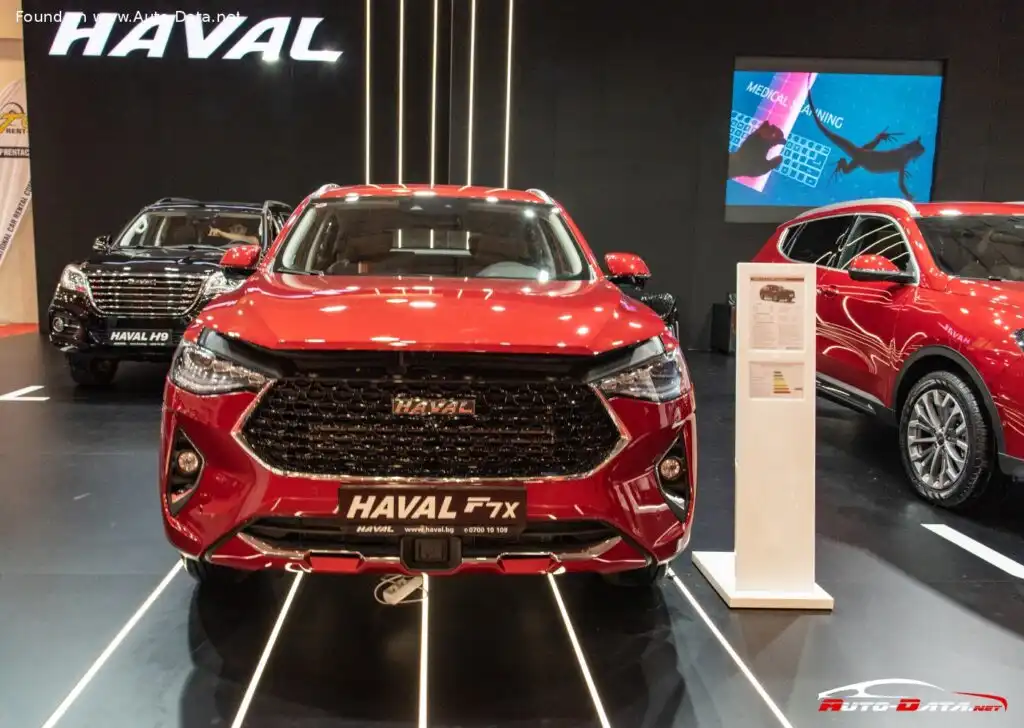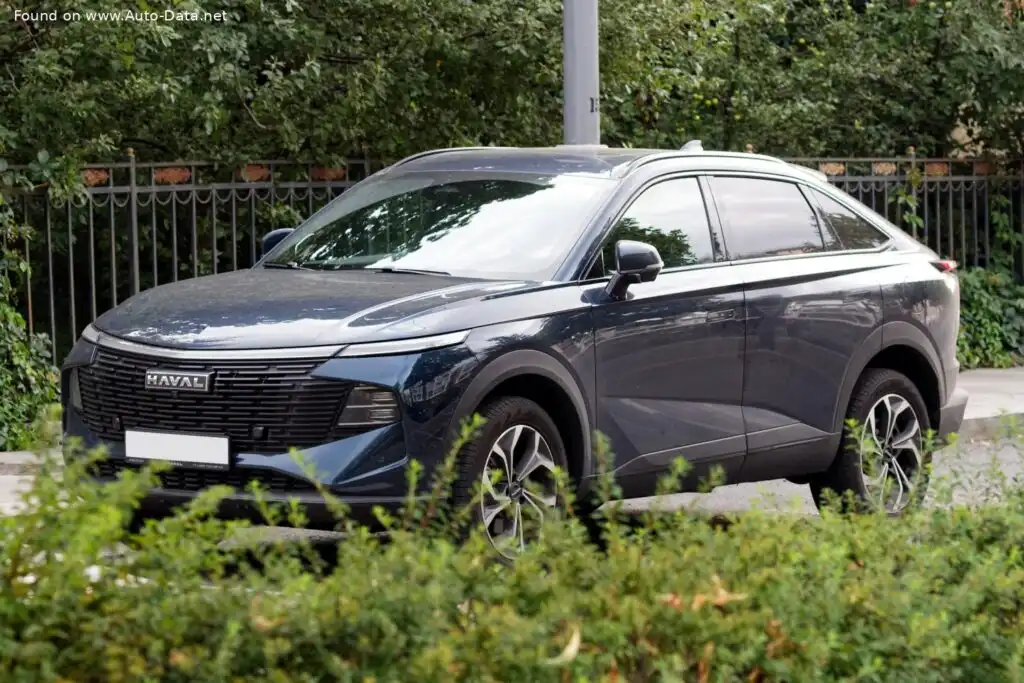
The Haval F7x II 2.0 GDIT (192 Hp) 4WD DCT is a compact crossover SUV produced by the Chinese manufacturer Haval, beginning in August 2024. Representing the second generation of the F7x, this variant occupies a mid-range position within the F7x II lineup, offering a balance of performance, features, and all-wheel-drive capability. It is primarily marketed towards consumers seeking a stylish and technologically advanced SUV with enhanced traction for varying road conditions. The F7x II is built upon Haval’s dedicated SUV platform and aims to compete with established players in the compact SUV segment, both domestically within China and increasingly in export markets.
Technical Specifications
| Brand | Haval |
| Model | F7x II |
| Type (Engine) | 2.0 GDIT (192 Hp) 4WD DCT |
| Start of production | August, 2024 |
| Powertrain Architecture | Internal Combustion engine |
| Body type | Coupe, Crossover |
| Seats | 5 |
| Doors | 5 |
| Fuel consumption (combined) | 8.6 l/100 km (27.4 US mpg, 32.8 UK mpg, 11.6 km/l) |
| Fuel Type | Petrol (Gasoline) |
| Acceleration 0 – 100 km/h | 9.4 sec |
| Acceleration 0 – 62 mph | 9.4 sec |
| Acceleration 0 – 60 mph | 8.9 sec |
| Maximum speed | 190 km/h (118.06 mph) |
| Weight-to-power ratio | 9.3 kg/Hp, 107 Hp/tonne |
| Weight-to-torque ratio | 5.6 kg/Nm, 178.3 Nm/tonne |
| Power | 192 Hp @ 5600-6300 rpm |
| Power per litre | 96.1 Hp/l |
| Torque | 320 Nm @ 1500-4000 rpm (236.02 lb.-ft. @ 1500-4000 rpm) |
| Engine layout | Front, Transverse |
| Engine Model/Code | GW4N20 |
| Engine displacement | 1998 cm3 (121.93 cu. in.) |
| Number of cylinders | 4 |
| Engine configuration | Inline |
| Cylinder Bore | 82 mm (3.23 in.) |
| Piston Stroke | 94.6 mm (3.72 in.) |
| Compression ratio | 12:1 |
| Number of valves per cylinder | 4 |
| Fuel injection system | Direct injection |
| Engine aspiration | Turbocharger, Intercooler |
| Valvetrain | DOHC |
| Engine systems | Start & Stop System |
| Kerb Weight | 1795-1830 kg (3957.3 – 4034.46 lbs.) |
| Trunk (boot) space – minimum | 376 l (13.28 cu. ft.) |
| Trunk (boot) space – maximum | 1278 l (45.13 cu. ft.) |
| Fuel tank capacity | 60 l (15.85 US gal | 13.2 UK gal) |
| Permitted trailer load with brakes (12%) | 1500 kg (3306.93 lbs.) |
| Permitted trailer load without brakes | 750 kg (1653.47 lbs.) |
| Length | 4780 mm (188.19 in.) |
| Width | 1890 mm (74.41 in.) |
| Height | 1707 mm (67.2 in.) |
| Wheelbase | 2800 mm (110.24 in.) |
| Ride height (ground clearance) | 191 mm (7.52 in.) |
| Drivetrain Architecture | All wheel drive (4×4). ICE drives front wheels, rear wheels engaged via clutch. |
| Number of gears and type of gearbox | 7 gears, automatic transmission DCT |
| Front suspension | Independent, McPherson with coil spring and anti-roll bar |
| Rear suspension | Independent multi-link spring suspension with stabilizer |
| Front brakes | Ventilated discs |
| Rear brakes | Disc |
| Assisting systems | ABS (Anti-lock braking system) |
| Steering type | Steering rack and pinion |
| Power steering | Electric Steering |
| Tires size | 235/55 R19 |
| Wheel rims size | 19 |
Powertrain & Engine Architecture
The Haval F7x II 2.0 GDIT 4WD DCT is powered by the GW4N20, a 1.998-liter (2.0L) inline-four cylinder gasoline engine. This engine utilizes direct injection and is turbocharged, incorporating an intercooler to enhance performance. The engine produces 192 horsepower at 5600-6300 rpm and 320 Nm (236 lb-ft) of torque between 1500 and 4000 rpm. The “GDIT” designation stands for Gasoline Direct Injection Turbocharger. The engine features a dual overhead camshaft (DOHC) valvetrain with four valves per cylinder, optimizing airflow for improved efficiency and power output. A Start & Stop system is included as standard, contributing to fuel savings in urban driving conditions. The engine is paired with a 7-speed dual-clutch transmission (DCT), offering quick and smooth gear changes. The DCT is crucial for delivering power efficiently and providing a more engaging driving experience compared to a traditional automatic transmission.
Driving Characteristics
The 2.0 GDIT engine, coupled with the 7-speed DCT and all-wheel-drive system, provides the F7x II with responsive acceleration and confident handling. The 0-60 mph time of approximately 8.9 seconds is respectable for the compact crossover segment. The DCT transmission contributes to a noticeable improvement in responsiveness compared to older automatic transmissions, allowing for quicker downshifts and more precise control. The all-wheel-drive system enhances traction, particularly in adverse weather conditions or on loose surfaces. While not a sports SUV, the F7x II offers a comfortable and capable driving experience. The gear ratios are tuned for a balance between fuel efficiency and performance, with the lower gears providing ample torque for quick acceleration and the higher gears optimizing fuel economy during highway cruising.
Equipment & Trim Levels
The F7x II 2.0 GDIT 4WD DCT typically comes well-equipped with standard features including automatic climate control, a touchscreen infotainment system with smartphone integration (Apple CarPlay and Android Auto), a rearview camera, and a suite of advanced driver-assistance systems (ADAS) such as adaptive cruise control, lane departure warning, and automatic emergency braking. Interior upholstery is generally a combination of leatherette and fabric, with higher trims offering full leather options. Optional extras may include a panoramic sunroof, heated and ventilated front seats, a premium sound system, and a 360-degree camera system. The dashboard layout is modern and driver-focused, with a digital instrument cluster providing key vehicle information.
Chassis & Braking
The Haval F7x II utilizes an independent suspension system on both the front and rear axles. The front suspension employs a McPherson strut design with coil springs and an anti-roll bar, while the rear suspension features a multi-link setup with a stabilizer bar. This configuration provides a comfortable ride quality and good handling characteristics. The braking system consists of ventilated discs on the front wheels and solid discs on the rear wheels. Anti-lock braking system (ABS) is standard, enhancing safety during emergency braking situations. The chassis is designed to provide a balance between rigidity and weight reduction, contributing to improved handling and fuel efficiency.
Market Reception & Comparison
The Haval F7x II has been generally well-received in the Chinese market, praised for its stylish design, spacious interior, and advanced technology. Critics have noted the competitive pricing and the comprehensive list of standard features. Compared to other trims in the F7x II lineup, the 2.0 GDIT 4WD DCT offers a significant performance upgrade over the lower-powered 1.5-liter engine options. Fuel economy is comparable to other turbocharged 2.0-liter SUVs in the segment. Reliability reports are still emerging, as the model is relatively new, but initial feedback suggests a reasonable level of dependability.
Legacy
As a relatively recent model, the long-term reliability of the Haval F7x II 2.0 GDIT 4WD DCT remains to be fully established. However, Haval has been steadily improving its build quality and reliability in recent years. The GW4N20 engine is a key component of Haval’s powertrain strategy, and its performance and durability will be crucial to the F7x II’s success in the used car market. The integration of advanced technologies, such as the DCT transmission and ADAS features, positions the F7x II as a modern and competitive SUV, potentially establishing a strong presence in the compact crossover segment.