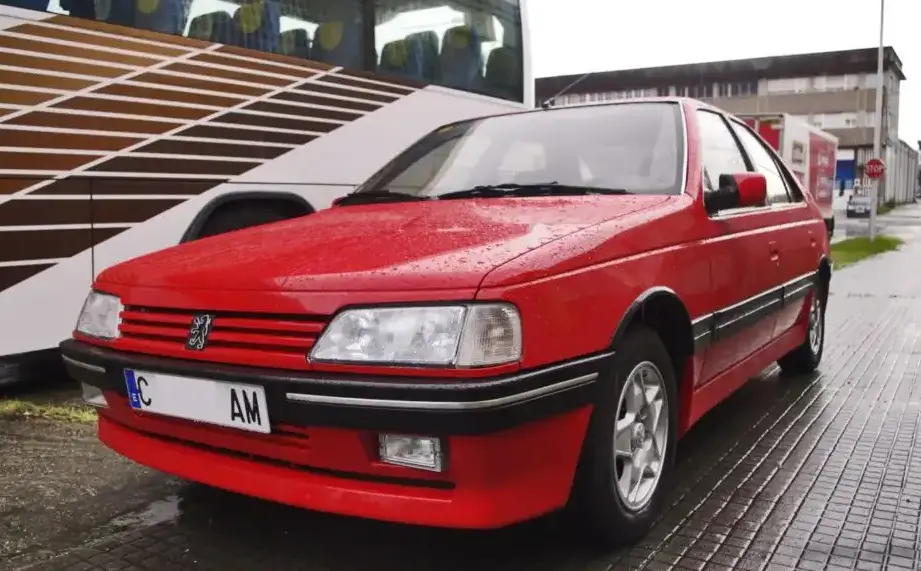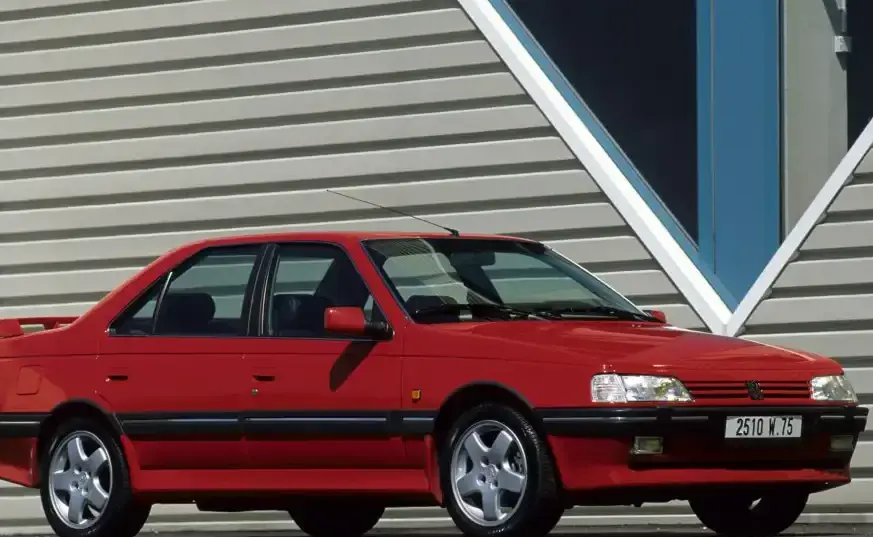
The Peugeot 405 2.0 MI-16, produced from 1992 to 1995, represents a high-performance variant within the 405 I (15B) facelift range. Positioned as a sporty offering, it aimed to provide enthusiasts with a more engaging driving experience compared to the standard 405 models. This version built upon the success of the earlier 1.9-liter MI-16 engine, offering increased power and refined handling. The 405 itself was a significant model for Peugeot, replacing the aging 505 and offering a more modern, aerodynamic design. It was a popular choice in Europe for its blend of practicality, comfort, and available performance.
Technical Specifications
| Brand | Peugeot |
| Model | 405 |
| Generation | 405 I (15B, facelift 1992) |
| Type (Engine) | 2.0 MI-16 (150 Hp) |
| Start of production | 1992 |
| End of production | 1995 |
| Powertrain Architecture | Internal Combustion engine |
| Body type | Sedan |
| Seats | 5 |
| Doors | 4 |
| Fuel consumption (urban) | 12 l/100 km (19.6 US mpg) |
| Fuel consumption (extra urban) | 6.9 l/100 km (34.1 US mpg) |
| Fuel Type | Petrol (Gasoline) |
| Acceleration 0 – 100 km/h | 9.8 sec |
| Acceleration 0 – 62 mph | 9.8 sec |
| Acceleration 0 – 60 mph | 9.3 sec |
| Maximum speed | 215 km/h (133.59 mph) |
| Weight-to-power ratio | 7.9 kg/Hp |
| Weight-to-torque ratio | 6.2 kg/Nm |
| Power | 150 Hp @ 6500 rpm |
| Power per litre | 75.1 Hp/l |
| Torque | 189 Nm @ 3500 rpm (139.4 lb.-ft. @ 3500 rpm) |
| Engine layout | Front, Transverse |
| Engine Model/Code | RFY XU10J4-Z |
| Engine displacement | 1998 cm3 (121.93 cu. in.) |
| Number of cylinders | 4 |
| Engine configuration | Inline |
| Number of valves per cylinder | 4 |
| Fuel injection system | Multi-port manifold injection |
| Engine aspiration | Naturally aspirated engine |
| Valvetrain | DOHC |
| Engine oil capacity | 5.2 l (5.49 US qt | 4.58 UK qt) |
| Coolant capacity | 7 l (7.4 US qt | 6.16 UK qt) |
| Kerb Weight | 1180 kg (2601.45 lbs.) |
| Max. weight | 1660 kg (3659.67 lbs.) |
| Max load | 480 kg (1058.22 lbs.) |
| Trunk (boot) space – minimum | 470 l (16.6 cu. ft.) |
| Fuel tank capacity | 70 l (18.49 US gal | 15.4 UK gal) |
| Permitted trailer load with brakes (12%) | 1200 kg (2645.55 lbs.) |
| Length | 4408 mm (173.54 in.) |
| Width | 1714 mm (67.48 in.) |
| Height | 1406 mm (55.35 in.) |
| Wheelbase | 2669 mm (105.08 in.) |
| Front track | 1450 mm (57.09 in.) |
| Rear (Back) track | 1443 mm (56.81 in.) |
| Front overhang | 817 mm (32.17 in.) |
| Rear overhang | 922 mm (36.3 in.) |
| Drivetrain Architecture | Front wheel drive |
| Number of gears and type of gearbox | 5 gears, manual transmission |
| Front suspension | Independent, type McPherson with coil spring and anti-roll bar |
| Rear suspension | Torsion |
| Front brakes | Ventilated discs |
| Rear brakes | Disc |
| Assisting systems | ABS (Anti-lock braking system) |
| Steering type | Steering rack and pinion |
| Power steering | Hydraulic Steering |
| Tires size | 195/55 R15 |
| Wheel rims size | 15 |
Powertrain & Engine Architecture
The heart of the 405 2.0 MI-16 is the XU10J4-Z engine, a 1998cc (121.93 cubic inches) inline-four cylinder powerplant. This engine is a derivative of Peugeot and Renault’s collaborative X-series engine family, renowned for its durability and tunability. The “MI-16” designation signifies “Multi-point Injection – 16 valves,” highlighting the engine’s advanced features for its time. It utilizes a Bosch Motronic MP1.3 engine control unit (ECU) managing multi-point fuel injection and ignition timing. The engine features a double overhead camshaft (DOHC) valvetrain, allowing for precise control of the four valves per cylinder, contributing to its high-revving nature and improved breathing. The engine’s redline is approximately 6800 rpm. The 5-speed manual transmission was the only transmission option available with this engine, providing a direct connection between the engine and the front wheels. The gearbox ratios were tuned to complement the engine’s powerband, offering responsive acceleration.
Driving Characteristics
The 405 2.0 MI-16 delivers a noticeably more spirited driving experience than the lower-spec 405 models. Its 150 horsepower and 139.4 lb-ft of torque provide brisk acceleration, achieving 0-60 mph in around 9.3 seconds and a top speed of 133.59 mph. The engine feels eager to rev, and the manual transmission allows for precise gear selection. Compared to the 1.6-liter or 1.9-liter diesel versions, the MI-16 offers significantly more power and a more engaging driving feel. While not as raw or focused as dedicated sports cars, the 405 MI-16 strikes a good balance between performance and everyday usability. The suspension, while comfortable, is firm enough to provide good body control during cornering. The steering is precise and well-weighted, contributing to a confident feel behind the wheel.
Equipment & Trim Levels
The 2.0 MI-16 typically came with a higher level of standard equipment than the base 405 models. This included features like central locking, electric windows, power steering, and an upgraded interior trim. Interior upholstery was often a combination of cloth and velour, with a sporty design. Optional extras included a sunroof, air conditioning, and upgraded audio systems. The dashboard featured a comprehensive instrument cluster with a tachometer, providing the driver with essential information about the engine’s performance. Alloy wheels were standard, further enhancing the car’s sporty appearance.
Chassis & Braking
The 405 2.0 MI-16 utilized an independent McPherson strut suspension at the front, providing good ride quality and handling. The rear suspension employed a torsion beam setup, which was a cost-effective and space-efficient solution. Braking duties were handled by ventilated discs at the front and solid discs at the rear. An Anti-lock Braking System (ABS) was standard, enhancing safety by preventing wheel lockup during hard braking. The chassis was reinforced compared to the lower-spec models to handle the increased power and torque of the 2.0 MI-16 engine.
Market Reception & Comparison
The Peugeot 405 2.0 MI-16 was generally well-received by automotive critics. It was praised for its performance, handling, and overall refinement. Compared to rivals like the Ford Sierra 2.0i and the Opel/Vauxhall Vectra 2.0, the 405 MI-16 offered a compelling combination of features and driving dynamics. Fuel economy was reasonable for a performance-oriented car of its era, averaging around 34.1 US mpg on the highway. Reliability was generally good, although some owners reported issues with the engine’s timing belt and cooling system. The MI-16 was positioned as a more premium offering within the 405 range, appealing to drivers who wanted a sporty and refined sedan.
Legacy
The Peugeot 405 2.0 MI-16 has gained a following among enthusiasts as a classic French performance car. The XU10J4 engine is known for its robustness and potential for modification. Today, well-maintained examples are becoming increasingly collectible. While parts availability can be a challenge, the engine’s simplicity and durability make it relatively easy to maintain. The 405 MI-16 represents a high point in Peugeot’s engineering history, offering a blend of performance, style, and practicality that remains appealing even today. Its influence can be seen in subsequent Peugeot models that prioritized driving enjoyment and technological innovation.