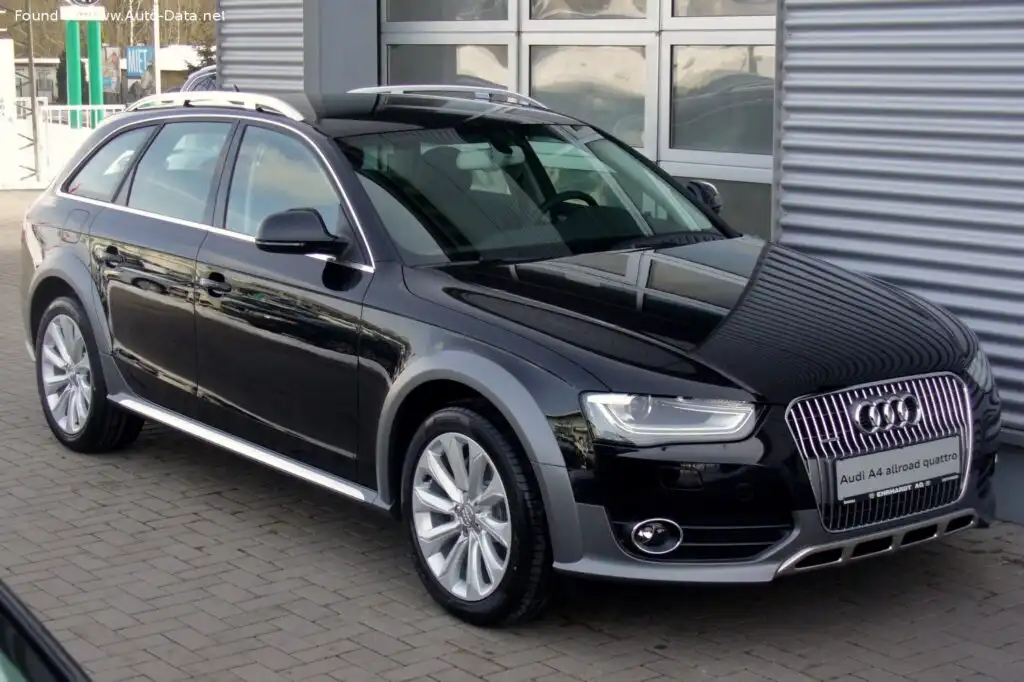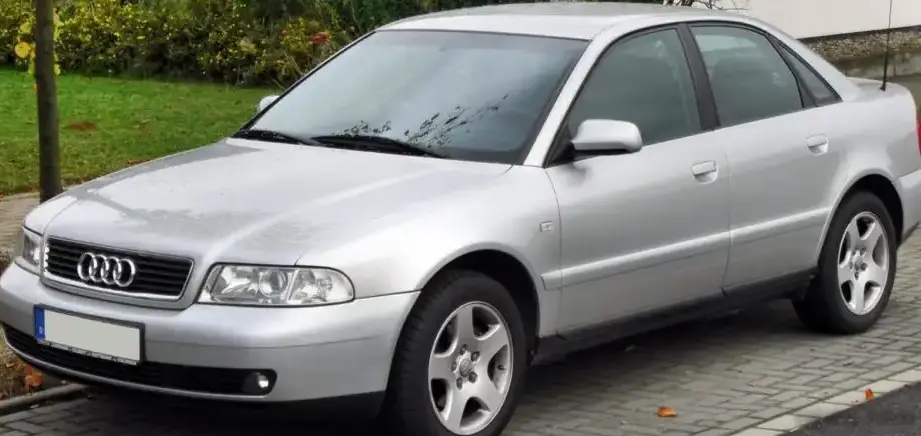
The Audi A4 (B5) 1.9 TDI with 110 horsepower, produced from 1999 to 2000, represents a significant iteration of Audi’s popular compact executive car. This variant, falling within the facelifted B5 generation (Typ 8D), was primarily aimed at the European market, offering a blend of fuel efficiency, practicality, and a relatively accessible price point. It occupied a middle ground in the A4 lineup, positioned below the more powerful petrol engines and the higher-output TDI models, but above the base-level petrol offerings. The 1.9 TDI 110 hp model was a popular choice for drivers prioritizing economy and torque for everyday driving and long-distance journeys.
Technical Specifications
| Brand | Audi |
| Model | A4 |
| Generation | A4 (B5, Typ 8D, facelift 1999) |
| Type (Engine) | 1.9 TDI (110 Hp) |
| Start of production | 1999 |
| End of production | 2000 |
| Powertrain Architecture | Internal Combustion engine |
| Body type | Sedan |
| Seats | 5 |
| Doors | 4 |
| Fuel consumption (urban) | 6.9 l/100 km (34.1 US mpg, 40.9 UK mpg, 14.5 km/l) |
| Fuel consumption (extra urban) | 4.3 l/100 km (54.7 US mpg, 65.7 UK mpg, 23.3 km/l) |
| Fuel consumption (combined) | 5.3 l/100 km (44.4 US mpg, 53.3 UK mpg, 18.9 km/l) |
| Fuel Type | Diesel |
| Acceleration 0 – 100 km/h | 11.3 sec |
| Acceleration 0 – 62 mph | 11.3 sec |
| Acceleration 0 – 60 mph | 10.7 sec |
| Maximum speed | 195 km/h (121.17 mph) |
| Weight-to-power ratio | 11.6 kg/Hp, 86.3 Hp/tonne |
| Weight-to-torque ratio | 5.4 kg/Nm, 184.3 Nm/tonne |
| Power | 110 Hp @ 4150 rpm |
| Power per litre | 58 Hp/l |
| Torque | 235 Nm @ 1900 rpm (173.33 lb.-ft. @ 1900 rpm) |
| Engine layout | Front, Longitudinal |
| Engine Model/Code | AVG |
| Engine displacement | 1896 cm3 (115.7 cu. in.) |
| Number of cylinders | 4 |
| Engine configuration | Inline |
| Cylinder Bore | 79.5 mm (3.13 in.) |
| Piston Stroke | 95.5 mm (3.76 in.) |
| Compression ratio | 19.5:1 |
| Number of valves per cylinder | 2 |
| Fuel injection system | Direct injection |
| Engine aspiration | Turbocharger |
| Valvetrain | OHC |
| Engine oil capacity | 3.8 l (4.02 US qt | 3.34 UK qt) |
| Coolant capacity | 6.5 l (6.87 US qt | 5.72 UK qt) |
| Kerb Weight | 1275 kg (2810.89 lbs.) |
| Max. weight | 1825 kg (4023.44 lbs.) |
| Max load | 550 kg (1212.54 lbs.) |
| Trunk (boot) space – minimum | 440 l (15.54 cu. ft.) |
| Fuel tank capacity | 62 l (16.38 US gal | 13.64 UK gal) |
| Length | 4479 mm (176.34 in.) |
| Width | 1733 mm (68.23 in.) |
| Height | 1415 mm (55.71 in.) |
| Wheelbase | 2617 mm (103.03 in.) |
| Front track | 1498 mm (58.98 in.) |
| Rear track | 1479 mm (58.23 in.) |
| Drag coefficient (Cd) | 0.31 |
| Minimum turning circle | 11.5 m (37.73 ft.) |
| Drivetrain Architecture | Front wheel drive |
| Number of gears | 5 |
| Gearbox type | Manual transmission |
| Front suspension | Wishbone |
| Rear suspension | Suspension with traction connecting levers |
| Front brakes | Disc |
| Rear brakes | Disc |
| Assisting systems | ABS (Anti-lock braking system) |
| Steering type | Steering rack and pinion |
| Power steering | Hydraulic Steering |
| Tires size | 195/65 R15 |
| Wheel rims size | 15 |
Powertrain & Engine Architecture
The heart of the A4 1.9 TDI 110 was the AVG engine code, a 1.9-liter inline-four cylinder diesel engine. This engine utilized direct injection technology, a key feature for maximizing fuel efficiency and reducing emissions. The direct injection system, coupled with a turbocharger and intercooler, allowed for a good balance of power and torque. The engine employed an overhead camshaft (OHC) valvetrain with two valves per cylinder. The turbocharger provided a noticeable boost in power, particularly at lower RPMs, contributing to the engine’s strong pulling capability. The 5-speed manual transmission was the standard offering, chosen for its efficiency and driver engagement. The engine’s robust construction and relatively simple design contributed to its reputation for reliability.
Driving Characteristics
The 110 hp 1.9 TDI offered a distinctly different driving experience compared to the more powerful petrol variants or the 130 hp TDI. Acceleration was respectable, with a 0-60 mph time of around 10.7 seconds, but it wasn’t designed for outright speed. Instead, the focus was on providing ample torque for effortless cruising and overtaking. The turbocharger provided a noticeable surge of power in the mid-range, making it easy to maintain highway speeds. The manual transmission allowed for precise control, and the gear ratios were well-suited for both city and highway driving. Compared to the 130 hp TDI, the 110 hp version felt less stressed at higher speeds and generally offered better fuel economy. The handling was typical of the B5 A4 – composed and predictable, but not particularly sporty.
Equipment & Trim Levels
The 1.9 TDI 110 hp typically came with a reasonably well-equipped standard package. This included power windows, central locking, and an anti-lock braking system (ABS). Interior upholstery was usually cloth, with a functional and straightforward dashboard layout. Optional extras included alloy wheels, a sunroof, climate control, and a premium audio system. Trim levels varied slightly depending on the market, but generally, this variant represented a mid-range offering, providing a good balance of features and affordability. It was often chosen by buyers who wanted a comfortable and practical car without the expense of the higher-spec models.
Chassis & Braking
The A4 B5 1.9 TDI 110 hp utilized a front-wheel-drive layout with independent wishbone suspension at the front and a semi-independent suspension with traction connecting levers at the rear. This suspension setup provided a comfortable ride and decent handling characteristics. Brakes were disc brakes all around, providing adequate stopping power for the car’s weight and performance. The hydraulic power steering offered a good balance of assistance and feedback. The chassis was well-engineered and provided a solid foundation for the car’s overall driving dynamics.
Market Reception & Comparison
The Audi A4 1.9 TDI 110 hp was well-received in the European market as a practical and economical choice. Critics praised its fuel efficiency, strong torque, and comfortable ride. It was often compared favorably to other diesel-powered compact executive cars, such as the Volkswagen Passat TDI and the Ford Mondeo TDI. While the 130 hp TDI offered more performance, the 110 hp version was considered a better value for buyers who didn’t need the extra power. Its reliability was also a key selling point, making it a popular choice for fleet operators and private buyers alike.
Legacy
The 1.9 TDI engine, in various iterations, became renowned for its durability and longevity. The AVG engine code, found in the A4 1.9 TDI 110 hp, is generally considered a robust and reliable unit. Today, well-maintained examples of this car can still be found on the used car market, often with high mileage but still running strong. While age and mileage inevitably take their toll, the 1.9 TDI engine remains a popular choice for those seeking a reliable and economical classic car. Parts availability is generally good, and the engine’s relatively simple design makes it relatively easy to maintain and repair.