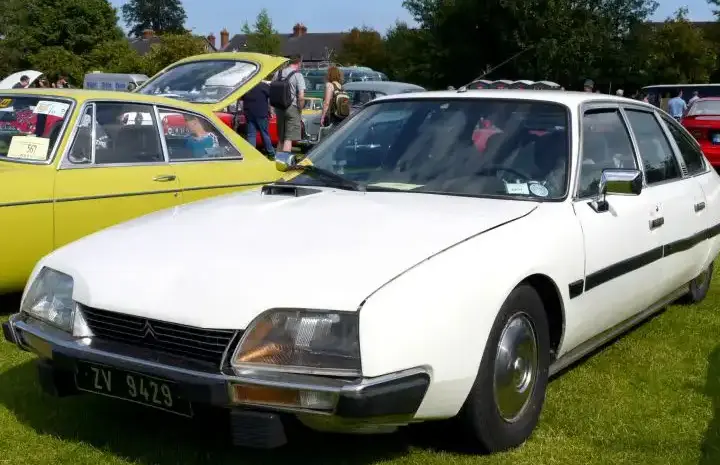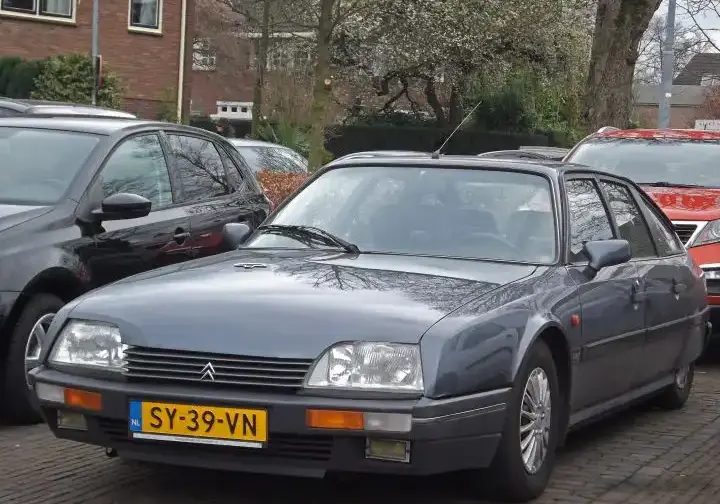
The Citroen CX II 20 RE, produced between 1987 and 1989, represented a mid-cycle update to the innovative CX series. Positioned as a mainstream offering within the CX II range, the 20 RE combined a 2.0-liter inline-four engine with a five-speed manual transmission, aiming to provide a balance of performance and fuel economy for the European market. It served as a more accessible alternative to the higher-performance 25 GTI Turbo and the more economical diesel variants. The CX series, known for its advanced hydropneumatic suspension, continued Citroen’s tradition of engineering distinct and comfortable vehicles.
Technical Specifications
| Brand | Citroen |
| Model | CX |
| Generation | CX II |
| Type (Engine) | 20 RE (102 Hp) |
| Start of production | 1987 |
| End of production | 1989 |
| Powertrain Architecture | Internal Combustion engine |
| Body type | Hatchback |
| Seats | 5 |
| Doors | 5 |
| Fuel consumption (urban) | 12 l/100 km (19.6 US mpg, 23.5 UK mpg, 8.3 km/l) |
| Fuel consumption (extra urban) | 6.9 l/100 km (34.1 US mpg, 40.9 UK mpg, 14.5 km/l) |
| Fuel consumption (combined) | 9.3 l/100 km (25.3 US mpg, 30.4 UK mpg, 10.8 km/l) |
| Fuel Type | Petrol (Gasoline) |
| Acceleration 0 – 100 km/h | 12.4 sec |
| Acceleration 0 – 62 mph | 12.4 sec |
| Acceleration 0 – 60 mph | 11.8 sec |
| Maximum speed | 175 km/h (108.74 mph) |
| Weight-to-power ratio | 12 kg/Hp, 83.6 Hp/tonne |
| Weight-to-torque ratio | 7.5 kg/Nm, 132.8 Nm/tonne |
| Power | 102 Hp @ 5500 rpm |
| Power per litre | 51.1 Hp/l |
| Torque | 162 Nm @ 3250 rpm (119.49 lb.-ft. @ 3250 rpm) |
| Engine layout | Front, Transverse |
| Engine displacement | 1995 cm3 (121.74 cu. in.) |
| Number of cylinders | 4 |
| Engine configuration | Inline |
| Cylinder Bore | 88 mm (3.46 in.) |
| Piston Stroke | 82 mm (3.23 in.) |
| Compression ratio | 9.2:1 |
| Number of valves per cylinder | 2 |
| Fuel injection system | Carburettor |
| Engine aspiration | Naturally aspirated |
| Engine oil capacity | 5.5 l (5.81 US qt | 4.84 UK qt) |
| Coolant capacity | 9.6 l (10.14 US qt | 8.45 UK qt) |
| Kerb Weight | 1220 kg (2689.64 lbs.) |
| Max. weight | 1780 kg (3924.23 lbs.) |
| Max load | 560 kg (1234.59 lbs.) |
| Trunk (boot) space – minimum | 485 l (17.13 cu. ft.) |
| Trunk (boot) space – maximum | 507 l (17.9 cu. ft.) |
| Fuel tank capacity | 68 l (17.96 US gal | 14.96 UK gal) |
| Max. roof load | 80 kg (176.37 lbs.) |
| Permitted towbar download | 100 kg (220.46 lbs.) |
| Length | 4650 mm (183.07 in.) |
| Width | 1770 mm (69.69 in.) |
| Height | 1360 mm (53.54 in.) |
| Wheelbase | 2845 mm (112.01 in.) |
| Front track | 1520 mm (59.84 in.) |
| Rear track | 1370 mm (53.94 in.) |
| Drag coefficient (Cd) | 0.35 |
| Minimum turning circle | 12.50 m (41.01 ft.) |
| Drivetrain Architecture | Front wheel drive |
| Number of gears | 5 gears, manual transmission |
| Front suspension | Hydro-pneumatic element |
| Rear suspension | Hydro-pneumatic element |
| Front brakes | Ventilated discs |
| Rear brakes | Disc |
| Steering type | Steering rack and pinion |
| Power steering | Hydraulic |
| Tires size | 195/70 R14; 185/70 R14 |
| Wheel rims size | 5.5J x 14 |
Powertrain & Engine Architecture
The Citroen CX II 20 RE was powered by the 1995cc (121.74 cu. in.) inline-four cylinder engine, designated as the XU9J1. This engine, a mainstay of Peugeot-Citroen group vehicles of the era, featured a cast iron block and an aluminum cylinder head. While later versions of this engine would adopt fuel injection, the 20 RE utilized a Solex C35 PHH carburetor, a relatively simple and cost-effective fuel delivery system for the time. The engine employed a single overhead camshaft (SOHC) operating two valves per cylinder. The five-speed manual transmission, a BE3 type, was chosen for its durability and relatively smooth operation. The transmission’s gear ratios were geared towards providing reasonable acceleration and fuel efficiency, rather than outright performance.
Driving Characteristics
The 20 RE offered a comfortable, if not particularly sporty, driving experience. With 102 horsepower and 119 lb-ft of torque, acceleration was adequate for everyday driving, with a 0-60 mph time of around 11.8 seconds. The carburetor did result in some throttle lag compared to fuel-injected counterparts. The CX’s signature hydropneumatic suspension provided an exceptionally smooth ride, absorbing bumps and imperfections in the road with ease. The steering, while hydraulic, lacked the directness of more modern systems. Compared to the more powerful 25 GTI Turbo, the 20 RE felt noticeably slower, but it offered better fuel economy and lower running costs. The manual transmission allowed for greater driver control than the optional automatic, and the gear ratios were well-suited to the engine’s torque curve.
Equipment & Trim Levels
The CX II 20 RE was generally well-equipped for its time, though it wasn’t the most luxurious variant. Standard features typically included cloth upholstery, central locking, electric front windows, and a basic stereo system. The dashboard layout was typical of Citroen designs of the period, with a focus on ergonomics and functionality. Optional extras included a sunroof, upgraded stereo systems, and leather upholstery. The interior trim was generally functional and durable, though the materials weren’t as high-quality as those found in more expensive vehicles.
Chassis & Braking
The CX II featured a monocoque chassis with independent suspension on all four wheels, utilizing Citroen’s renowned hydropneumatic system. This system allowed for self-leveling and adjustable ride height, contributing to the car’s exceptional ride comfort. The front suspension employed double wishbones, while the rear utilized trailing arms. Braking was provided by ventilated discs at the front and solid discs at the rear. The hydraulic braking system offered good stopping power, though it lacked the sophistication of ABS, which was not yet widely available on vehicles in this class.
Market Reception & Comparison
The CX II 20 RE was generally well-received by automotive critics as a practical and comfortable family car. It was praised for its ride quality, spacious interior, and relatively fuel-efficient engine. However, some critics noted its somewhat dated styling and the carburetor’s impact on performance. Compared to competitors like the Ford Sierra and Opel/Vauxhall Cavalier, the CX II offered a unique driving experience thanks to its hydropneumatic suspension. The 20 RE’s fuel economy was comparable to other 2.0-liter gasoline engines of the era, and its reliability was generally good, though the hydropneumatic suspension required periodic maintenance.
Legacy
The Citroen CX II 20 RE, while not the most iconic version of the CX, remains a fondly remembered vehicle among enthusiasts. The XU9J1 engine proved to be durable and relatively easy to maintain, and parts availability is still reasonable today. The hydropneumatic suspension, while requiring specialized knowledge for repairs, continues to provide a unique and comfortable ride experience. In the used car market, the 20 RE represents an affordable entry point into the world of classic Citroens, offering a taste of the brand’s innovative engineering and distinctive styling. Its relative simplicity compared to later, more complex Citroen models makes it a potentially rewarding project for home mechanics.