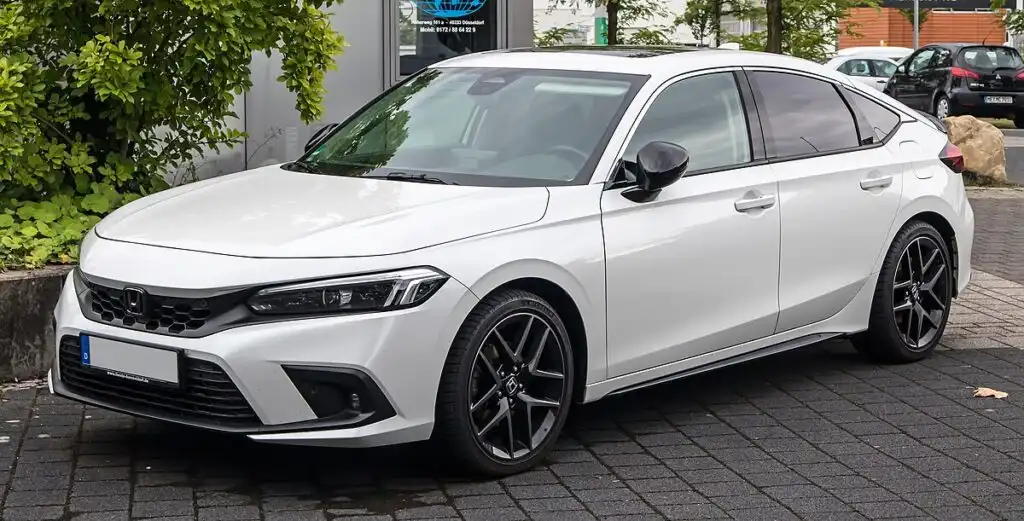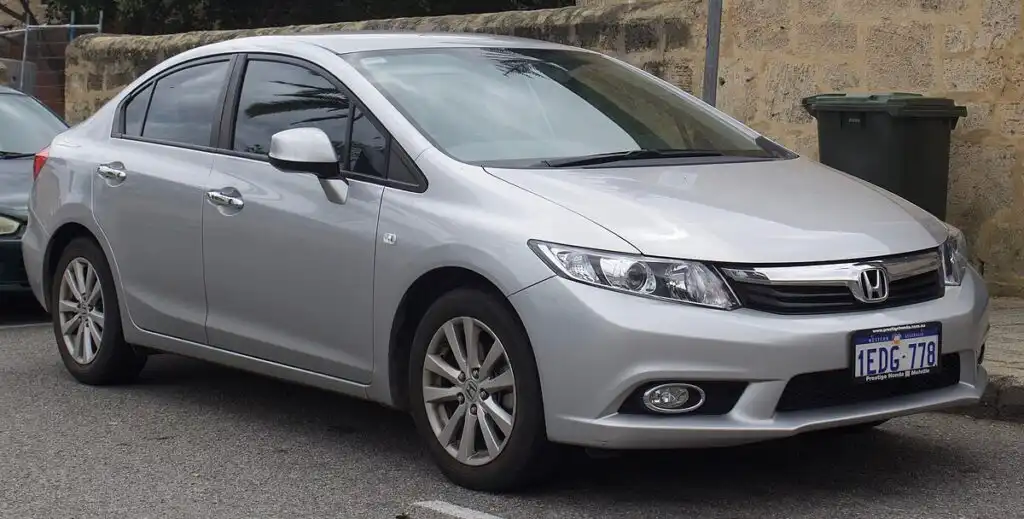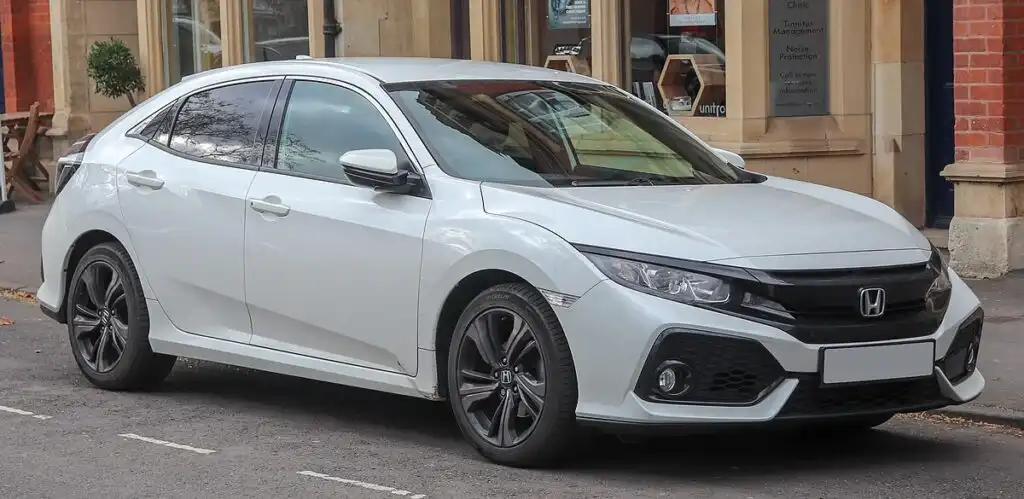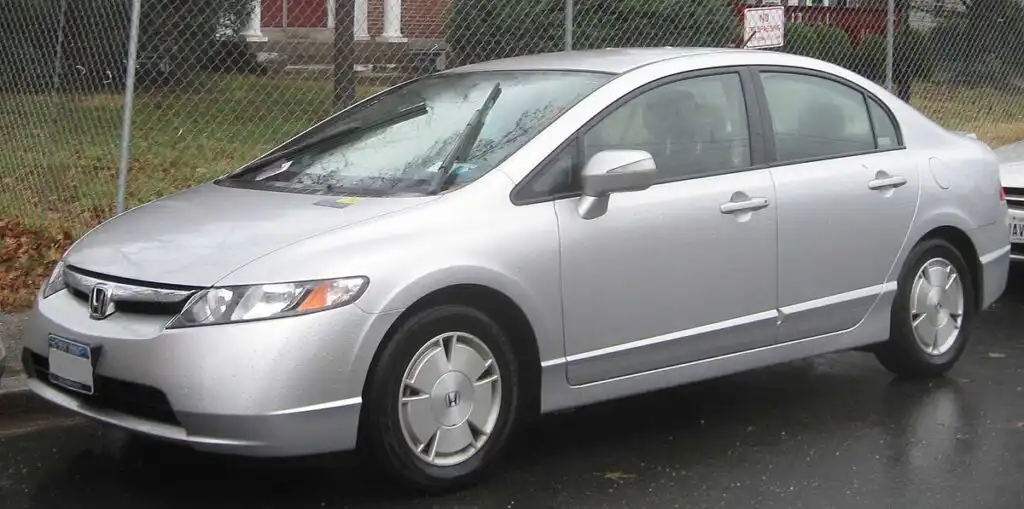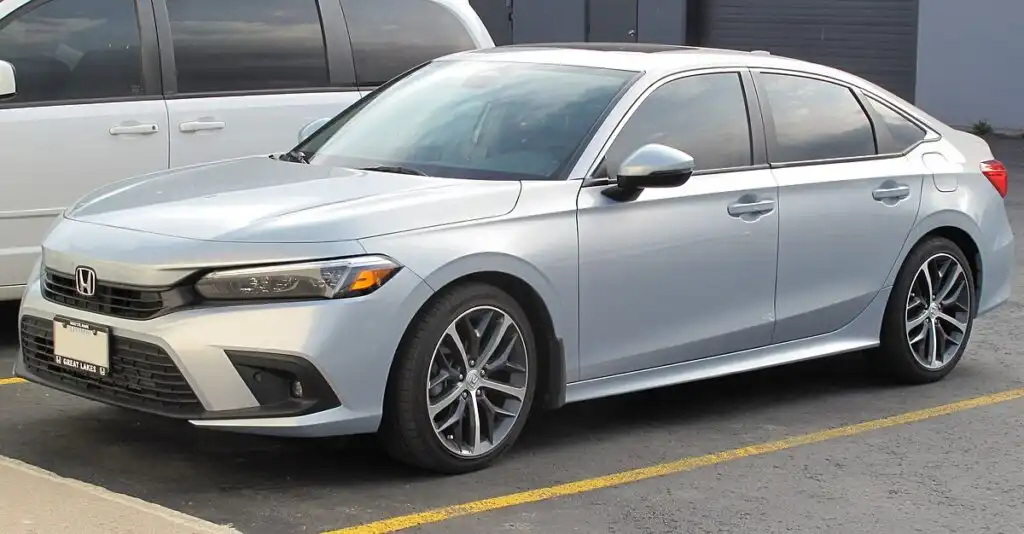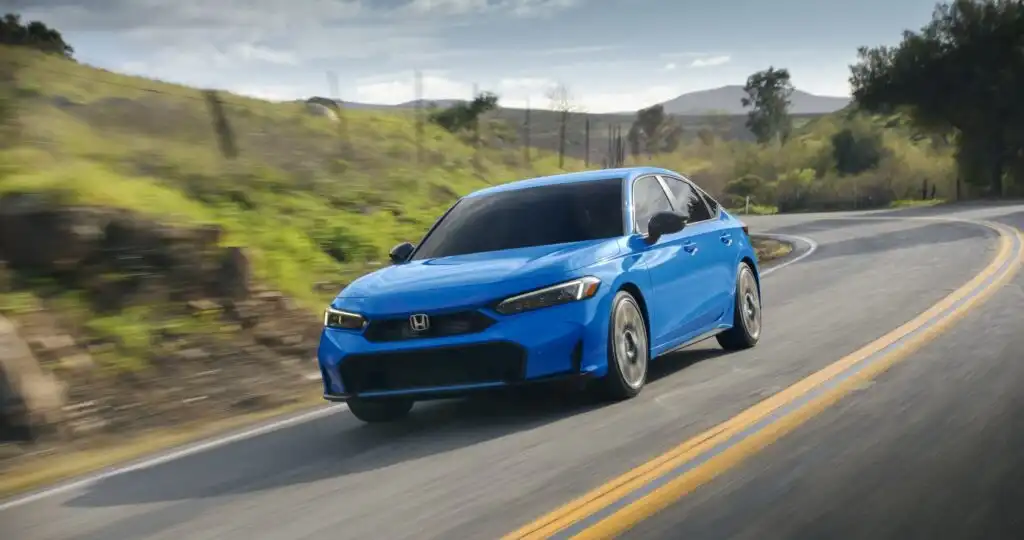
The Honda Civic XI, specifically the 2.0 i-VTEC (150 hp) CVT variant introduced with the 2024 facelift, represents a key offering in Honda’s compact car lineup. Production began in May 2024, and this model serves as a balance between affordability and performance within the eleventh-generation Civic range. Positioned as a step up from the base 2.0L engine with a manual transmission, the CVT-equipped version aims to provide a more refined and fuel-efficient driving experience, appealing to a broader customer base. It slots below the more powerful turbocharged 1.5L engine options in terms of outright performance, but offers a compelling package for everyday commuting and general use.
Technical Specifications
| Brand | Honda |
| Model | Civic |
| Generation | Civic XI (facelift 2024) |
| Type (Engine) | 2.0 i-VTEC (150 Hp) CVT |
| Start of production | May, 2024 |
| Powertrain Architecture | Internal Combustion engine |
| Body type | Liftback |
| Seats | 5 |
| Doors | 5 |
| Fuel Type | Petrol (Gasoline) |
| Power | 150 Hp @ 6400 rpm |
| Power per litre | 75.3 Hp/l |
| Torque | 180 Nm @ 4000-5000 rpm |
| Torque (lb-ft) | 132.76 lb.-ft. @ 4000-5000 rpm |
| Maximum engine speed | 6700 rpm |
| Engine layout | Front, Transverse |
| Engine displacement | 1993 cm3 |
| Engine displacement (cu. in.) | 121.62 cu. in. |
| Number of cylinders | 4 |
| Engine configuration | Inline |
| Cylinder Bore | 81 mm |
| Cylinder Bore (in.) | 3.19 in. |
| Piston Stroke | 96.7 mm |
| Piston Stroke (in.) | 3.81 in. |
| Compression ratio | 13:1 |
| Number of valves per cylinder | 4 |
| Fuel injection system | Direct injection |
| Engine aspiration | Naturally aspirated engine |
| Valvetrain | DOHC, i-VTEC |
| Engine systems | Start & Stop System |
| Max. weight | 1790 kg |
| Max. weight (lbs.) | 3946.27 lbs. |
| Fuel tank capacity | 46.9 l |
| Fuel tank capacity (US gal) | 12.39 US gal |
| Fuel tank capacity (UK gal) | 10.32 UK gal |
| Drivetrain Architecture | The Internal combustion engine (ICE) drives the front wheels of the vehicle. |
| Drive wheel | Front wheel drive |
| Number of gears and type of gearbox | automatic transmission CVT |
| Front suspension | Independent, type McPherson with coil spring and anti-roll bar |
| Rear suspension | Independent multi-link spring suspension with stabilizer |
| Front brakes | Ventilated discs |
| Rear brakes | Disc |
| Assisting systems | ABS (Anti-lock braking system) |
| Steering type | Steering rack and pinion |
| Power steering | Electric Steering |
| Tires size | 235/40 R18 |
| Wheel rims size | 18 |
Powertrain & Engine Architecture
At the heart of this Civic variant lies Honda’s 2.0-liter inline-four cylinder i-VTEC engine. This naturally aspirated engine, designated as part of the K20 family, benefits from direct injection technology, contributing to improved fuel efficiency and responsiveness. The i-VTEC (Intelligent Variable Timing and Lift Electronic Control) system is a hallmark of Honda engines, optimizing valve timing and lift based on engine speed and load, resulting in a broad and usable powerband. The engine produces 150 horsepower at 6,400 rpm and 180 Nm (132.76 lb-ft) of torque between 4,000 and 5,000 rpm. This power is then sent to the front wheels via a Continuously Variable Transmission (CVT). Honda’s CVT is programmed to simulate stepped gear changes, offering a more engaging driving experience than some traditional CVTs. The engine also incorporates a Start & Stop system to further enhance fuel economy during city driving.
Driving Characteristics
The 2.0L i-VTEC with CVT delivers a smooth and comfortable driving experience. While not as quick as the turbocharged 1.5L models, it provides adequate acceleration for everyday driving situations. The CVT effectively keeps the engine in its optimal power range, resulting in linear power delivery. The simulated gear changes are generally well-executed, minimizing the “rubber band” feel often associated with CVTs. Compared to a manual transmission equipped 2.0L Civic, the CVT prioritizes fuel efficiency and ease of use over outright performance. The CVT’s gear ratios are optimized for fuel economy, which can result in slightly slower acceleration times. However, the CVT’s ability to maintain the engine at its most efficient rpm range contributes to improved gas mileage.
Equipment & Trim Levels
The 2.0 i-VTEC CVT trim typically includes standard features such as Honda Sensing suite of safety and driver-assistive technologies (including adaptive cruise control, lane keeping assist, and automatic emergency braking), a 7-inch touchscreen infotainment system with Apple CarPlay and Android Auto compatibility, and LED headlights. Interior upholstery is typically cloth, with options for upgraded materials available. Higher trim levels within the 2.0L range may add features like a larger touchscreen display, heated front seats, and a premium audio system. The specific standard equipment can vary depending on the region and package options selected.
Chassis & Braking
The Civic XI utilizes a MacPherson strut front suspension and a multi-link rear suspension, providing a comfortable and controlled ride. The suspension is tuned to balance handling and ride quality, making it suitable for both city driving and highway cruising. The 2.0 i-VTEC CVT variant is equipped with ventilated front disc brakes and solid rear disc brakes. Anti-lock Braking System (ABS) is standard, enhancing braking performance and stability. The electric power steering provides light and precise steering feel, making it easy to maneuver in tight spaces.
Market Reception & Comparison
The 2.0 i-VTEC CVT Civic has been generally well-received by automotive critics as a practical and efficient option. While it doesn’t offer the same level of performance as the turbocharged models, it provides a good balance of fuel economy, comfort, and features. Compared to the 1.5L turbocharged engine, the 2.0L CVT typically achieves slightly better fuel economy in real-world driving conditions, but offers less horsepower and torque. The 2.0L CVT is often seen as a more affordable entry point into the Civic lineup, making it an attractive option for budget-conscious buyers. Reliability is a strong point for Honda, and the 2.0L i-VTEC engine has a proven track record of durability.
Legacy
The K20 engine family, of which this 2.0L i-VTEC is a part, has a long-standing reputation for reliability and longevity. The CVT transmission, while sometimes criticized for its driving feel, has also proven to be relatively durable with proper maintenance. In the used car market, the 2024 Civic 2.0 i-VTEC CVT is expected to hold its value well due to Honda’s strong brand reputation and the vehicle’s overall reliability. Regular maintenance, including fluid changes for both the engine and transmission, will be crucial to ensuring the long-term health of this powertrain. This variant represents a solid choice for buyers seeking a dependable and fuel-efficient compact car.