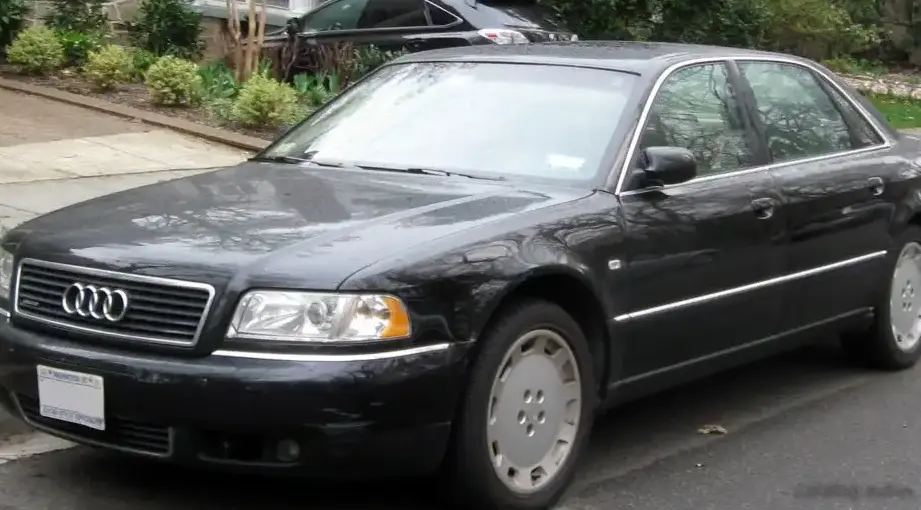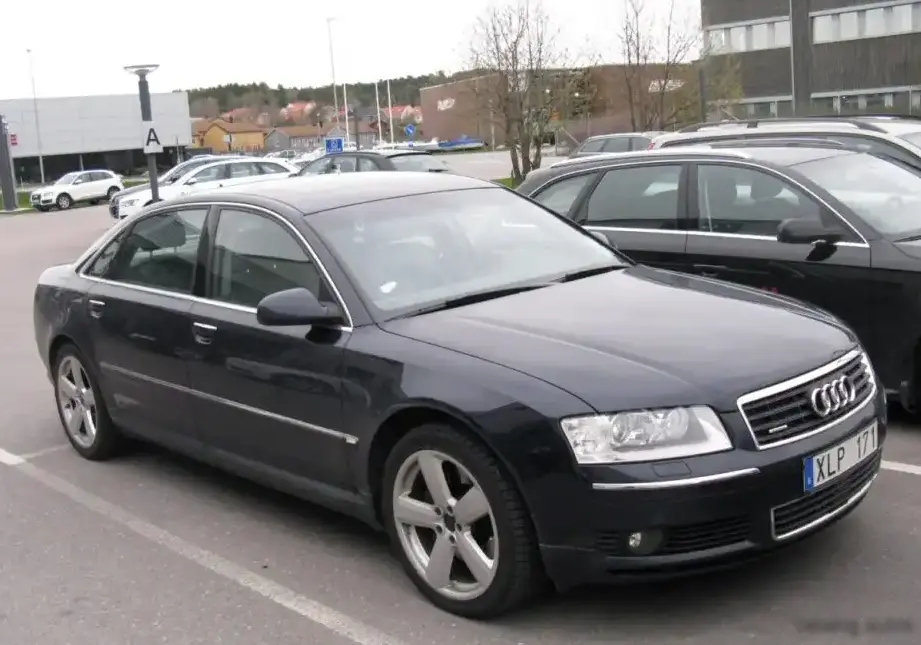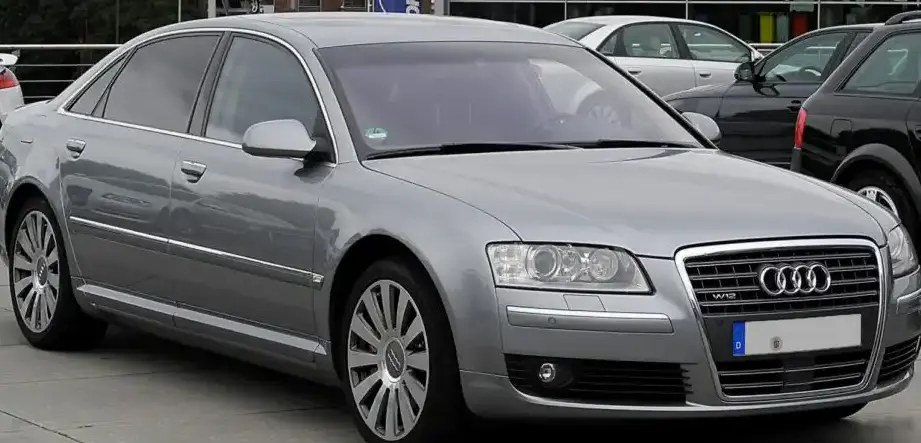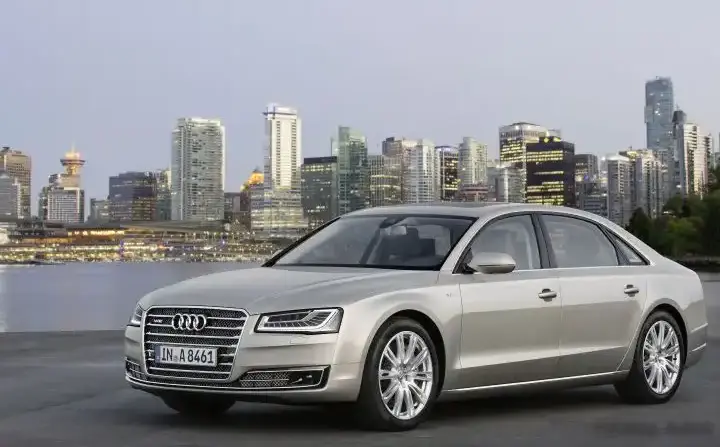
The Audi A8 L (D4, 4H facelift) 3.0 TFSI V6 quattro Tiptronic, produced from 2014 to 2017, represents a significant iteration of Audi’s flagship luxury sedan. This variant, part of the fourth generation (D4) A8 family, was positioned as a high-performance, technologically advanced offering within the A8 lineup, bridging the gap between the base 3.0-liter models and the more exclusive 4.0-liter V8 and W12 options. The “L” designation signifies the long-wheelbase version, prioritizing rear passenger comfort and space. This model was primarily aimed at the North American and Asian markets, where larger luxury sedans are particularly favored.
Technical Specifications
| Brand | Audi |
| Model | A8 |
| Generation | A8L (D4,4H facelift 2013) |
| Type (Engine) | 3.0 TFSI V6 (333 Hp) quattro Tiptronic |
| Start of production | 2014 |
| End of production | 2017 |
| Powertrain Architecture | Internal Combustion engine |
| Body type | Sedan |
| Seats | 5 |
| Doors | 4 |
| Fuel consumption (economy) – urban (EPA) | 12.4 l/100 km (19 US mpg, 22.8 UK mpg, 8.1 km/l) |
| Fuel consumption (economy) – extra urban (EPA) | 8.1 l/100 km (29 US mpg, 34.9 UK mpg, 12.3 km/l) |
| Fuel consumption (economy) – combined (EPA) | 10.7 l/100 km (22 US mpg, 26.4 UK mpg, 9.3 km/l) |
| Fuel Type | Petrol (Gasoline) |
| Acceleration 0 – 60 mph | 5.5 sec |
| Maximum speed | 210 km/h (130.49 mph), Electronically limited |
| Emission standard | ULEV 2 |
| Weight-to-power ratio | 6.1 kg/Hp, 164.4 Hp/tonne |
| Weight-to-torque ratio | 4.6 kg/Nm, 217.3 Nm/tonne |
| Power | 333 Hp @ 5300 rpm |
| Power per litre | 111.2 Hp/l |
| Torque | 440 Nm @ 2900 rpm (324.53 lb.-ft. @ 2900 rpm) |
| Engine layout | Front, Longitudinal |
| Engine Model/Code | EA837 evo / CREC |
| Engine displacement | 2995 cm3 (182.77 cu. in.) |
| Number of cylinders | 6 |
| Engine configuration | V-engine |
| Cylinder Bore | 84.5 mm (3.33 in.) |
| Piston Stroke | 89 mm (3.5 in.) |
| Compression ratio | 10.3:1 |
| Number of valves per cylinder | 4 |
| Fuel injection system | Direct injection and Multi-port manifold injection |
| Engine aspiration | Supercharger, Intercooler |
| Valvetrain | DOHC |
| Engine oil capacity | 6.8 l (7.19 US qt | 5.98 UK qt) |
| Coolant | 13 l (13.74 US qt | 11.44 UK qt) |
| Kerb Weight | 2025 kg (4464.36 lbs.) |
| Trunk (boot) space – minimum | 520 l (18.36 cu. ft.) |
| Fuel tank capacity | 82 l (21.66 US gal | 18.04 UK gal) |
| Length | 5267 mm (207.36 in.) |
| Width | 1949 mm (76.73 in.) |
| Width including mirrors | 2111 mm (83.11 in.) |
| Height | 1471 mm (57.91 in.) |
| Wheelbase | 3122 mm (122.91 in.) |
| Front track | 1644 mm (64.72 in.) |
| Rear (Back) track | 1635 mm (64.37 in.) |
| Front overhang | 1003 mm (39.49 in.) |
| Rear overhang | 1142 mm (44.96 in.) |
| Drag coefficient (Cd) | 0.26 |
| Minimum turning circle (turning diameter) | 12.7 m (41.67 ft.) |
| Drivetrain Architecture | The Internal combustion engine (ICE) drives permanently the four wheels of the vehicle. |
| Drive wheel | All wheel drive (4×4) |
| Number of gears and type of gearbox | 8 gears, automatic transmission Tiptronic |
| Front suspension | Independent multi-link suspension, Transverse stabilizer, Air suspension |
| Rear suspension | Independent on trapezoidal lever, Air suspension, Transverse stabilizer |
| Front brakes | Ventilated discs, 380 mm |
| Rear brakes | Ventilated discs, 356 mm |
| Assisting systems | ABS (Anti-lock braking system) |
| Steering type | Steering rack and pinion |
| Power steering | Electric Steering |
| Tires size | 255/45 R19; 265/40 R20; 275/35 R21 |
| Wheel rims size | 9J x 19; 9J x 20; 9J x 21 |
INTRODUCTION
The Audi A8 L 3.0 TFSI quattro Tiptronic, launched in 2014 as part of the D4 facelift, offered a compelling blend of performance, luxury, and technology. Built on the Volkswagen Group’s D4 platform (also underpinning the Porsche Panamera), the A8 L aimed to compete with the BMW 7 Series and Mercedes-Benz S-Class. The 3.0 TFSI variant served as a sweet spot in the range, providing ample power for comfortable highway cruising and spirited driving without the higher price tag of the V8 or W12 models. The “L” designation denotes the extended wheelbase, adding approximately 130mm to the overall length, resulting in significantly increased rear legroom.
Powertrain & Engine Architecture
At the heart of the A8 L 3.0 TFSI lies the EA837 evo 3.0-liter V6 engine. This engine utilizes a supercharger in conjunction with direct fuel injection and multi-port manifold injection, delivering a robust 333 horsepower at 5300 rpm and 440 Nm (324.53 lb-ft) of torque from 2900 rpm. The supercharger provides immediate boost at lower engine speeds, eliminating turbo lag and contributing to a responsive driving experience. The engine features a double overhead camshaft (DOHC) valvetrain with four valves per cylinder. Paired with this engine is Audi’s eight-speed Tiptronic automatic transmission. This transmission offers smooth and quick shifts, and includes a manual shift mode for greater driver control. The quattro all-wheel-drive system distributes power between the front and rear axles as needed, enhancing traction and stability in all weather conditions.
Driving Characteristics
The A8 L 3.0 TFSI delivers a refined and comfortable driving experience. The supercharged V6 provides ample power for effortless acceleration, achieving 0-60 mph in approximately 5.5 seconds. While not as overtly sporty as some of its competitors, the A8 L offers a composed and confident ride. The Tiptronic transmission is well-tuned, providing smooth gear changes and responsive downshifts. The quattro all-wheel-drive system inspires confidence, particularly in inclement weather. Compared to the higher-output V8 and W12 models, the 3.0 TFSI offers a slightly less aggressive driving experience, but it compensates with improved fuel economy and a more manageable overall weight. The long wheelbase contributes to a smooth and stable ride, absorbing bumps and imperfections in the road surface effectively.
Equipment & Trim Levels
The A8 L 3.0 TFSI came standard with a comprehensive array of luxury features, including leather upholstery, heated and ventilated front seats, a premium sound system, a navigation system, and a sunroof. Optional extras included massaging seats, a rear-seat entertainment system, adaptive cruise control, and a head-up display. Interior trim options ranged from wood veneers to aluminum accents, allowing buyers to personalize the cabin to their preferences. The dashboard layout is clean and modern, with a focus on intuitive controls and a high-resolution infotainment screen.
Chassis & Braking
The A8 L features an independent multi-link suspension at all four corners, enhanced by an adaptive air suspension system. This system automatically adjusts the ride height and damping characteristics based on road conditions and driving style, providing a comfortable and controlled ride. The car is equipped with ventilated disc brakes on all four wheels, providing ample stopping power. ABS (Anti-lock Braking System) is standard, along with electronic stability control and traction control. The A8 L’s chassis is designed to minimize noise, vibration, and harshness, creating a serene and refined cabin environment.
Market Reception & Comparison
The Audi A8 L 3.0 TFSI was generally well-received by automotive critics. It was praised for its comfortable ride, refined interior, and strong performance. Fuel economy was considered respectable for a vehicle of its size and class, achieving around 22 mpg combined. Compared to the V8 and W12 models, the 3.0 TFSI offered a more affordable entry point into the A8 L range without sacrificing too much in terms of performance or luxury. Some critics noted that the A8 L’s styling was somewhat conservative compared to its rivals, but its overall refinement and technological sophistication were highly regarded.
Legacy
The EA837 engine, in its various iterations, has proven to be a reliable and durable powerplant. The eight-speed Tiptronic transmission is also known for its longevity. However, as with any complex luxury vehicle, the A8 L can be susceptible to age-related issues, such as air suspension problems and electronic component failures. On the used car market, the A8 L 3.0 TFSI represents a good value proposition, offering a high level of luxury and performance at a relatively affordable price. Regular maintenance and adherence to recommended service intervals are crucial for ensuring the long-term reliability of this vehicle.