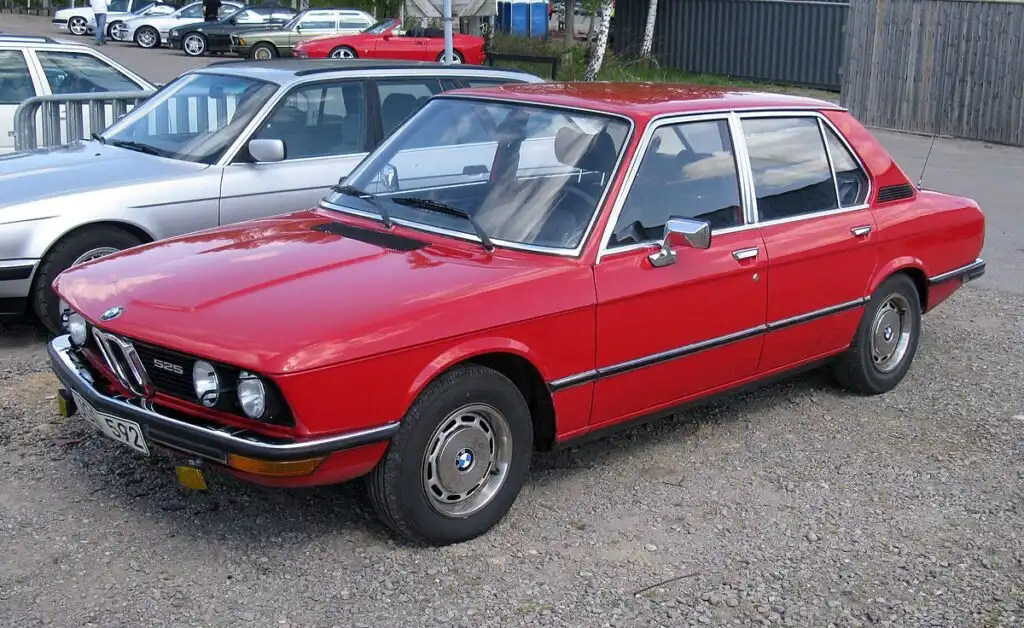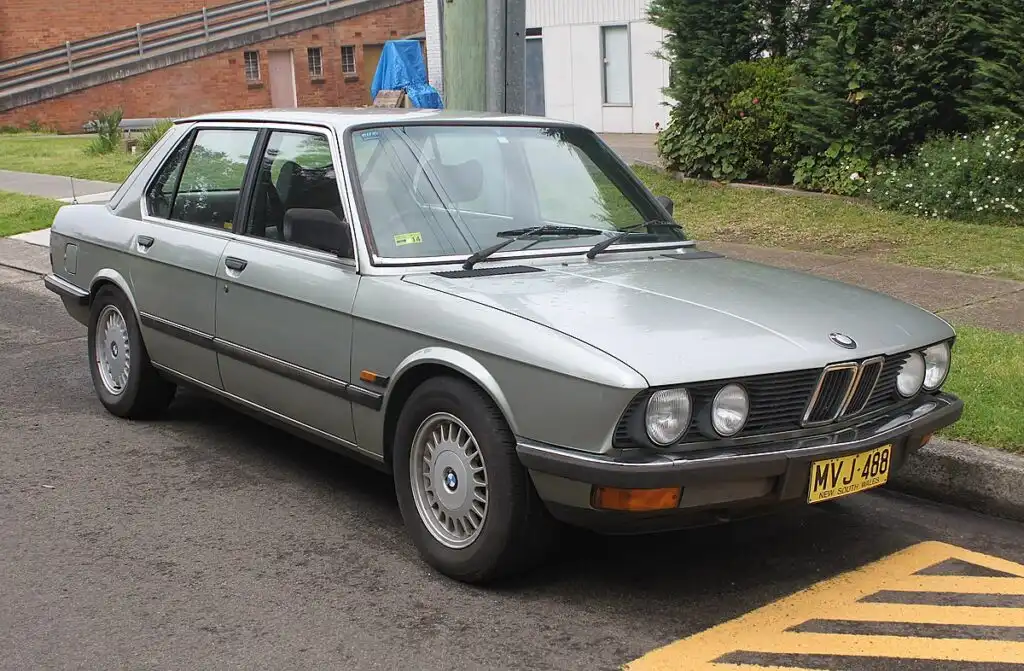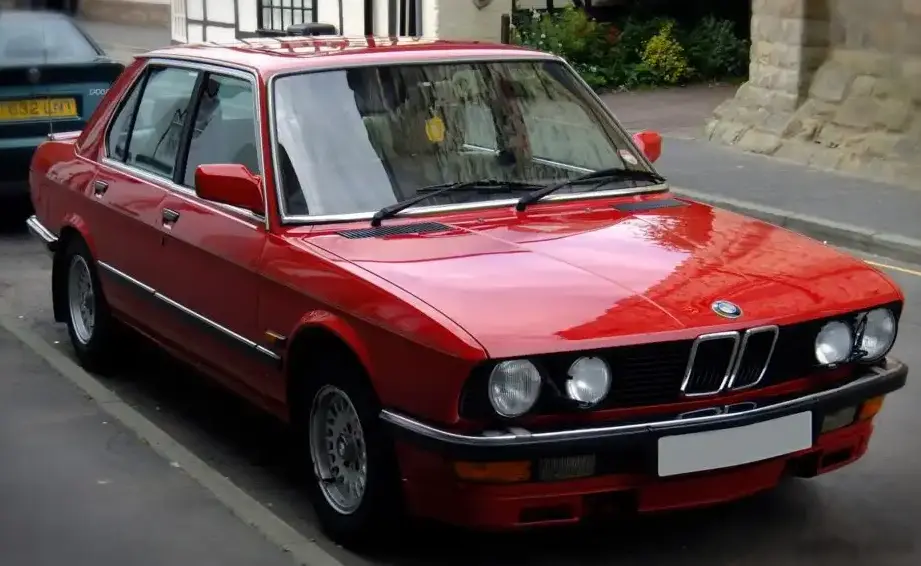
The BMW 5 Series E28 520i Automatic, produced between 1981 and 1987, represented the entry point into the second generation of BMW’s mid-size executive car. Positioned below the 525i and 535i, the 520i offered a blend of BMW’s renowned driving dynamics with a more economical engine and the convenience of an automatic transmission. It served as a popular choice for buyers seeking a comfortable and reliable saloon, particularly in markets where fuel efficiency and lower running costs were prioritized. The E28 generation as a whole was a significant step forward for BMW, establishing many of the design and engineering hallmarks that would define the 5 Series for decades to come.
Technical Specifications
| Brand | BMW |
| Model | 5 Series |
| Generation | 5 Series (E28) |
| Type | 520i (125 Hp) Automatic |
| Start of production | 1981 |
| End of production | 1987 |
| Powertrain Architecture | Internal Combustion engine |
| Body type | Sedan |
| Seats | 5 |
| Doors | 4 |
| Fuel Type | Petrol (Gasoline) |
| Power | 125 Hp @ 5800 rpm |
| Power per litre | 62.8 Hp/l |
| Torque | 170 Nm @ 4000 rpm / 125.39 lb.-ft. @ 4000 rpm |
| Engine layout | Front, Longitudinal |
| Engine Model/Code | M20B20 |
| Engine displacement | 1990 cm3 / 121.44 cu. in. |
| Number of cylinders | 6 |
| Engine configuration | Inline |
| Cylinder Bore | 80 mm / 3.15 in. |
| Piston Stroke | 66 mm / 2.6 in. |
| Number of valves per cylinder | 2 |
| Fuel injection system | Multi-port manifold injection |
| Engine aspiration | Naturally aspirated engine |
| Engine oil capacity | 4.25 l / 4.49 US qt | 3.74 UK qt |
| Coolant | 10.5 l / 11.1 US qt | 9.24 UK qt |
| Trunk (boot) space – minimum | 460 l / 16.24 cu. ft. |
| Fuel tank capacity | 70 l / 18.49 US gal | 15.4 UK gal |
| Length | 4620 mm / 181.89 in. |
| Width | 1700 mm / 66.93 in. |
| Height | 1415 mm / 55.71 in. |
| Wheelbase | 2625 mm / 103.35 in. |
| Front track | 1430 mm / 56.3 in. |
| Rear (Back) track | 1470 mm / 57.87 in. |
| Ride height (ground clearance) | 140 mm / 5.51 in. |
| Drivetrain Architecture | The Internal combustion engine (ICE) drives the rear wheels of the vehicle. |
| Drive wheel | Rear wheel drive |
| Number of gears and type of gearbox | 4 gears, automatic transmission |
| Front brakes | Disc |
| Rear brakes | Drum |
Powertrain & Engine Architecture
The heart of the 520i Automatic was the M20B20 engine, a 2.0-liter inline-six cylinder powerplant. This engine was a key component of BMW’s “New Six” family, known for its smooth operation and relatively high specific output. The M20B20 featured a cast iron block and an aluminum cylinder head, employing a single overhead camshaft (SOHC) design with two valves per cylinder. Fuel delivery was handled by Bosch Motronic fuel injection, a system that optimized fuel mixture based on engine speed, load, and other parameters. This system was a significant improvement over earlier carbureted BMW engines, offering better fuel economy and reduced emissions. The automatic transmission was a four-speed unit, providing smooth but not particularly sporty shifts. It was geared towards comfort and ease of use, rather than outright performance.
Driving Characteristics
The 520i Automatic offered a comfortable and refined driving experience. While the 125 horsepower output wasn’t overwhelming, the engine delivered a usable amount of torque throughout the rev range. Acceleration was adequate for everyday driving, but it wasn’t a particularly quick car. Compared to the 525i and 535i, the 520i felt noticeably slower, especially when attempting to overtake or merge onto highways. The automatic transmission, while convenient, did detract from the sporty feel that BMWs were known for. The gear ratios were optimized for fuel economy and smooth cruising, rather than aggressive acceleration. The rear-wheel drive configuration provided balanced handling, but the relatively narrow tires and softer suspension setup of the 520i meant it wasn’t as sharp or responsive as its higher-performance siblings.
Equipment & Trim Levels
The 520i Automatic typically came with a fairly standard level of equipment. Standard features included power steering, central locking, and cloth upholstery. Options included a sunroof, air conditioning, power windows, and upgraded audio systems. The interior was functional and well-built, reflecting BMW’s commitment to quality. The dashboard layout was straightforward and easy to use, with clearly marked gauges and controls. The 520i was often seen as a more affordable entry point into the 5 Series range, and as such, it often lacked some of the more luxurious features found on the higher-end models.
Chassis & Braking
The E28 5 Series featured a robust chassis with independent suspension at all four wheels. The front suspension utilized MacPherson struts, while the rear employed a semi-trailing arm design. This setup provided a good balance of ride comfort and handling. The 520i Automatic typically came equipped with disc brakes at the front and drum brakes at the rear. While adequate for most driving situations, the drum brakes on the rear were a cost-saving measure and didn’t offer the same stopping power as disc brakes. A stabilizer bar was fitted to both the front and rear suspension to reduce body roll during cornering.
Market Reception & Comparison
The 520i Automatic was generally well-received by critics as a practical and comfortable executive car. It was praised for its smooth engine, refined ride, and solid build quality. However, it was often criticized for its lack of outright performance compared to the 525i and 535i. Fuel economy was a strong point, making it an attractive option for buyers concerned about running costs. In terms of reliability, the M20B20 engine proved to be a durable and long-lasting unit, although regular maintenance was essential. Compared to other cars in its class, such as the Mercedes-Benz W123 and the Audi 100, the 520i offered a more engaging driving experience.
Legacy
The E28 520i Automatic has become a sought-after classic car among BMW enthusiasts. The M20B20 engine is known for its reliability and relatively simple mechanics, making it a popular choice for restoration projects. While not the fastest or most luxurious version of the E28, the 520i offers a unique blend of comfort, practicality, and BMW’s signature driving dynamics. Today, well-maintained examples command a respectable price in the used car market, and the E28 5 Series as a whole is widely regarded as one of the best BMWs ever made. The 520i Automatic, in particular, represents a significant chapter in the evolution of the 5 Series, offering a glimpse into the past of one of the world’s most iconic automotive brands.