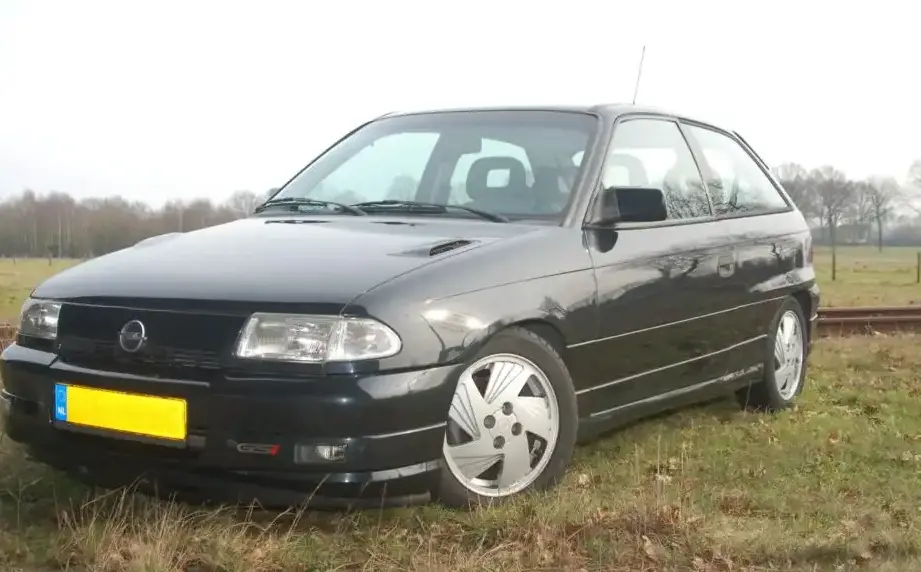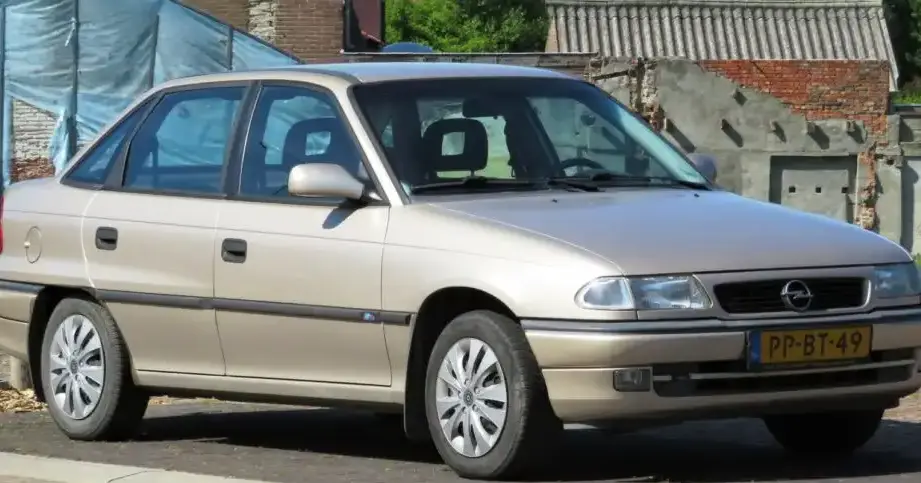
The Opel Astra F Classic 1.6i Ecotec Automatic, produced from August 1994 to April 1995, represented an entry-level offering within the facelifted Astra F range. This variant, a four-door sedan, was aimed at buyers prioritizing affordability and ease of use over outright performance. It occupied the lower end of the spectrum within the Astra F lineup, positioned below the more powerful 1.8 and 2.0-liter engine options, as well as the diesel variants. The Astra F, launched in 1991, was a significant model for Opel, representing a move towards more modern design and engineering. The 1994 facelift brought subtle styling updates and refinements to the existing platform, designated 1HX0.
Technical Specifications
| Brand | Opel |
| Model | Astra |
| Generation | Astra F Classic (facelift 1994) |
| Type (Engine) | 1.6i Ecotec (71 Hp) Automatic |
| Start of production | August, 1994 |
| End of production | April, 1995 |
| Powertrain Architecture | Internal Combustion engine |
| Body type | Sedan |
| Seats | 5 |
| Doors | 4 |
| Fuel consumption (urban) | 9.3 l/100 km (25.3 US mpg) |
| Fuel consumption (extra urban) | 6.5 l/100 km (36.2 US mpg) |
| Fuel consumption (combined) | 8.3 l/100 km (28.3 US mpg) |
| Fuel Type | Petrol (Gasoline) |
| Acceleration 0 – 100 km/h | 17 sec |
| Acceleration 0 – 62 mph | 17 sec |
| Acceleration 0 – 60 mph | 16.2 sec |
| Maximum speed | 163 km/h (101.28 mph) |
| Weight-to-power ratio | 14.6 kg/Hp |
| Weight-to-torque ratio | 8.1 kg/Nm |
| Power | 71 Hp @ 5000 rpm |
| Power per litre | 44.4 Hp/l |
| Torque | 128 Nm @ 2800 rpm (94.41 lb.-ft. @ 2800 rpm) |
| Engine layout | Front, Transverse |
| Engine Model/Code | X16SZ |
| Engine displacement | 1598 cm3 (97.52 cu. in.) |
| Number of cylinders | 4 |
| Engine configuration | Inline |
| Cylinder Bore | 79 mm (3.11 in.) |
| Piston Stroke | 81.5 mm (3.21 in.) |
| Compression ratio | 10:1 |
| Number of valves per cylinder | 2 |
| Fuel injection system | Single-point injection |
| Engine aspiration | Naturally aspirated engine |
| Valvetrain | SOHC |
| Engine oil capacity | 3.5 l (3.7 US qt | 3.08 UK qt) |
| Coolant | 5.6 l (5.92 US qt | 4.93 UK qt) |
| Kerb Weight | 1040 kg (2292.81 lbs.) |
| Max. weight | 1515 kg (3340 lbs.) |
| Max load | 475 kg (1047.2 lbs.) |
| Trunk (boot) space – minimum | 500 l (17.66 cu. ft.) |
| Trunk (boot) space – maximum | 1200 l (42.38 cu. ft.) |
| Fuel tank capacity | 52 l (13.74 US gal | 11.44 UK gal) |
| Length | 4239 mm (166.89 in.) |
| Width | 1696 mm (66.77 in.) |
| Width including mirrors | 1852 mm (72.91 in.) |
| Height | 1410 mm (55.51 in.) |
| Wheelbase | 2517 mm (99.09 in.) |
| Front track | 1430 mm (56.3 in.) |
| Rear (Back) track | 1429 mm (56.26 in.) |
| Ride height (ground clearance) | 135 mm (5.31 in.) |
| Drag coefficient (Cd) | 0.31 |
| Minimum turning circle | 10.5 m (34.45 ft.) |
| Drivetrain Architecture | ICE to Front Wheels |
| Drive wheel | Front wheel drive |
| Number of gears | 4 |
| Gearbox type | automatic transmission |
| Front brakes | Disc |
| Rear brakes | Drum |
| Steering type | Steering rack and pinion |
| Tires size | 175/70 R13 82T |
| Wheel rims size | 5.5J x 13 ET49 |
Powertrain & Engine Architecture
The heart of this Astra variant was the X16SZ, a 1.6-liter inline-four cylinder engine belonging to Opel’s ‘Ecotec’ family. This engine featured a single overhead camshaft (SOHC) valvetrain with two valves per cylinder. The X16SZ utilized a single-point fuel injection system, a relatively simple and cost-effective technology for the time. While not as sophisticated as multi-point injection, it provided adequate fuel delivery for the engine’s modest power output. The engine produced 71 horsepower at 5000 rpm and 128 Nm (94.41 lb-ft) of torque at 2800 rpm. This power was transferred to the front wheels through a four-speed automatic transmission. This transmission was a conventional hydraulic automatic, prioritizing smooth shifts over outright performance.
Driving Characteristics
The 1.6i Ecotec Automatic Astra F offered a comfortable, but uninspiring, driving experience. Acceleration was leisurely, taking approximately 17 seconds to reach 62 mph (100 km/h). The automatic transmission, while providing convenience, contributed to a noticeable lack of responsiveness. Gear ratios were optimized for fuel economy rather than performance, resulting in a somewhat sluggish feel during overtaking maneuvers. Compared to the manual transmission versions of the 1.6, the automatic suffered a slight performance penalty. The higher-output 1.8 and 2.0-liter models, and even the diesel variants, offered significantly more engaging driving dynamics. However, the automatic’s smooth operation and ease of use appealed to drivers prioritizing comfort and convenience.
Equipment & Trim Levels
The 1.6i Ecotec Automatic typically came with a basic level of equipment. Standard features generally included power steering, central locking, and a basic stereo system. Interior upholstery was typically cloth, and the dashboard featured a functional, if somewhat plain, design. Optional extras included air conditioning, electric windows, and upgraded audio systems. The trim level was generally considered the base trim, focusing on providing essential features at an affordable price point.
Chassis & Braking
The Astra F Classic featured a MacPherson strut front suspension and a torsion beam rear suspension. The suspension setup was tuned for comfort, providing a relatively smooth ride over uneven surfaces. Braking was handled by disc brakes on the front wheels and drum brakes on the rear. This configuration was typical for vehicles in this price range during the mid-1990s. The braking system provided adequate stopping power for normal driving conditions, but lacked the stopping performance of models equipped with rear disc brakes.
Market Reception & Comparison
The 1.6i Ecotec Automatic Astra F was generally well-received as an affordable and practical family car. Critics acknowledged its fuel efficiency and comfortable ride, but often noted its lack of performance. Compared to the manual transmission versions, the automatic offered slightly worse fuel economy. The 1.8-liter and 2.0-liter models were praised for their superior performance, while the diesel variants were favored for their exceptional fuel economy. The 1.6i Automatic filled a niche for buyers seeking a no-frills, easy-to-drive sedan.
Legacy
The X16SZ engine, while not known for its longevity or high performance, proved to be reasonably reliable with proper maintenance. The four-speed automatic transmission, while simple in design, also demonstrated acceptable durability. Today, the Astra F Classic 1.6i Ecotec Automatic is a relatively affordable classic car. Parts availability is generally good, and the simple mechanical design makes it relatively easy to maintain for DIY mechanics. However, potential buyers should be aware of potential issues such as corrosion and wear and tear on suspension components. The car represents a snapshot of 1990s European automotive engineering, offering a blend of practicality, affordability, and reasonable reliability.