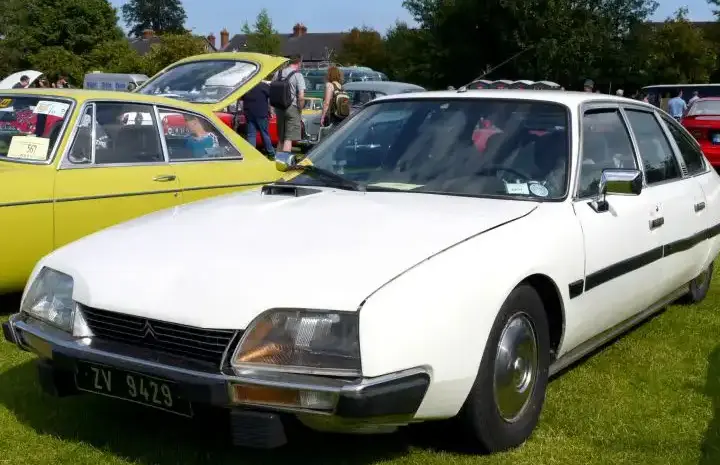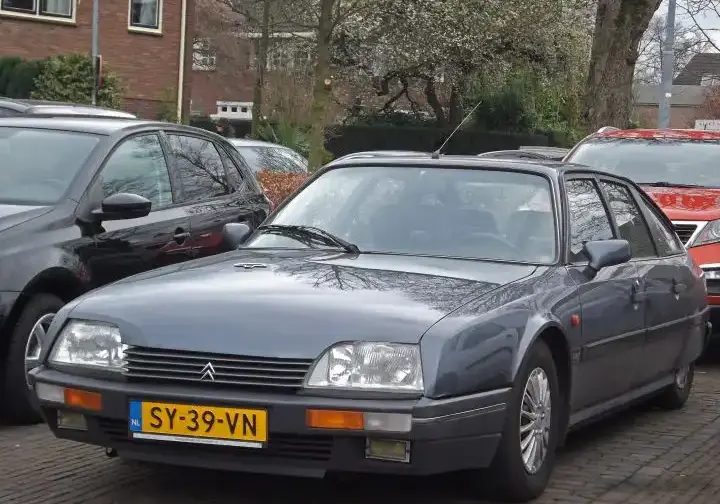
The Citroën CX II 20 RE, produced between 1985 and 1987, represents a mid-cycle refinement of the iconic CX series. Positioned as a mid-range offering within the CX II generation (built upon the CX platform), the 20 RE combined a 2.0-liter inline-four engine with a five-speed manual transmission. This configuration aimed to balance performance and fuel economy, appealing to buyers seeking a comfortable and capable grand tourer. The CX series, known for its innovative hydropneumatic suspension, continued Citroën’s tradition of engineering excellence and distinctive styling, though it faced increasing competition from more conventional designs.
Technical Specifications
| Brand | Citroen |
| Model | CX |
| Generation | CX II |
| Type (Engine) | 20 RE (106 Hp) Manual 5-speed |
| Start of production | 1985 year |
| End of production | 1987 year |
| Powertrain Architecture | Internal Combustion engine |
| Body type | Hatchback |
| Seats | 5 |
| Doors | 5 |
| Fuel consumption (economy) – urban | 12.2 l/100 km (19.3 US mpg, 23.2 UK mpg, 8.2 km/l) |
| Fuel consumption (economy) – combined | 9.4 l/100 km (25 US mpg, 30.1 UK mpg, 10.6 km/l) |
| Fuel Type | Petrol (Gasoline) |
| Acceleration 0 – 100 km/h | 11.7 sec |
| Acceleration 0 – 62 mph | 11.7 sec |
| Acceleration 0 – 60 mph | 11.1 sec |
| Maximum speed | 177 km/h (109.98 mph) |
| Weight-to-power ratio | 11.7 kg/Hp, 85.8 Hp/tonne |
| Weight-to-torque ratio | 7.4 kg/Nm, 134.4 Nm/tonne |
| Power | 106 Hp @ 5500 rpm |
| Power per litre | 53.1 Hp/l |
| Torque | 166 Nm @ 3250 rpm (122.44 lb.-ft. @ 3250 rpm) |
| Engine layout | Front, Transverse |
| Engine Model/Code | 829.A5 |
| Engine displacement | 1995 cm3 (121.74 cu. in.) |
| Number of cylinders | 4 |
| Engine configuration | Inline |
| Cylinder Bore | 88 mm (3.46 in.) |
| Piston Stroke | 82 mm (3.23 in.) |
| Compression ratio | 9.2:1 |
| Number of valves per cylinder | 2 |
| Fuel injection system | Carburettor |
| Engine aspiration | Naturally aspirated engine |
| Valvetrain | OHV |
| Engine oil capacity | 5.5 l (5.81 US qt, 4.84 UK qt) |
| Coolant | 9.5 l (10.04 US qt, 8.36 UK qt) |
| Kerb Weight | 1235 kg (2722.71 lbs.) |
| Max. weight | 1780 kg (3924.23 lbs.) |
| Max load | 545 kg (1201.52 lbs.) |
| Trunk (boot) space – minimum | 485 l (17.13 cu. ft.) |
| Trunk (boot) space – maximum | 507 l (17.9 cu. ft.) |
| Fuel tank capacity | 68 l (17.96 US gal, 14.96 UK gal) |
| Max. roof load | 80 kg (176.37 lbs.) |
| Permitted trailer load with brakes (12%) | 1300 kg (2866.01 lbs.) |
| Permitted trailer load without brakes | 675 kg (1488.12 lbs.) |
| Permitted towbar download | 100 kg (220.46 lbs.) |
| Length | 4650 mm (183.07 in.) |
| Width | 1770 mm (69.69 in.) |
| Height | 1360 mm (53.54 in.) |
| Wheelbase | 2845 mm (112.01 in.) |
| Front track | 1520 mm (59.84 in.) |
| Rear (Back) track | 1370 mm (53.94 in.) |
| Ride height (ground clearance) | 157 mm (6.18 in.) |
| Drag coefficient (Cd) | 0.37 |
| Minimum turning circle (turning diameter) | 12.50 m (41.01 ft.) |
| Drivetrain Architecture | The Internal combustion engine (ICE) drives the front wheels of the vehicle. |
| Drive wheel | Front wheel drive |
| Number of gears and type of gearbox | 5 gears, manual transmission |
| Front suspension | Hydro-pneumatic element |
| Rear suspension | Hydro-pneumatic element |
| Front brakes | Ventilated discs |
| Rear brakes | Disc |
| Assisting systems | ABS (Anti-lock braking system) |
| Steering type | Steering rack and pinion |
| Power steering | Hydraulic Steering |
| Tires size | 195/70 R14; 185/70 R14 |
| Wheel rims size | 5.5J x 14 |
Powertrain & Engine Architecture
The heart of the CX II 20 RE is the 829.A5 engine, a 1995cc inline-four cylinder petrol engine. Unlike later Citroën engines which embraced fuel injection, the 20 RE utilized a carburetor for fuel delivery. This was a cost-saving measure, and while it offered simplicity, it also meant less precise fuel control compared to injection systems. The engine features an overhead valve (OHV) valvetrain, with two valves per cylinder. The 9.2:1 compression ratio was typical for the era, balancing performance and fuel efficiency. The five-speed manual transmission, a BE3 type, provided a good spread of gears for both cruising and acceleration. The transmission was known for its relatively light and precise shift action, contributing to a pleasant driving experience.
Driving Characteristics
The 106 horsepower and 166 Nm (122 lb-ft) of torque delivered by the 20 RE powertrain provided adequate, but not exhilarating, performance. Acceleration from 0-60 mph took around 11.1 seconds, and top speed was approximately 109.98 mph. Compared to the more powerful CX 25 GTI or the diesel-powered CX 25 RD, the 20 RE felt noticeably slower. However, the five-speed manual transmission allowed the driver to keep the engine in its optimal power band. The gear ratios were well-chosen for both highway cruising and spirited driving. The CX’s signature hydropneumatic suspension provided a remarkably smooth and comfortable ride, absorbing bumps and imperfections in the road with ease. This made the 20 RE an excellent long-distance cruiser, despite its modest power output.
Equipment & Trim Levels
The CX II 20 RE typically came equipped with features considered standard for a mid-range vehicle in the mid-1980s. This included cloth upholstery, a basic stereo system, and power-assisted steering. Optional extras included air conditioning, electric windows, and a more advanced stereo system. The interior design was functional and comfortable, though it lacked the luxurious appointments of the higher-end CX models. The dashboard featured a combination of analog gauges and warning lights, providing the driver with essential information. The CX’s unique steering wheel design, with its multiple satellite controls, was a distinctive feature.
Chassis & Braking
The CX II utilized a front-wheel-drive layout with independent hydropneumatic suspension on all four wheels. This suspension system, a Citroën hallmark, provided exceptional ride quality and handling. The front suspension featured a complex arrangement of spheres and dampers, while the rear suspension utilized a similar system. Braking duties were handled by ventilated discs at the front and solid discs at the rear. An anti-lock braking system (ABS) was included as standard, enhancing safety. The steering was a rack-and-pinion system with hydraulic power assistance, providing light and precise steering feel.
Market Reception & Comparison
The CX II 20 RE was generally well-received by automotive critics, who praised its comfortable ride, distinctive styling, and capable handling. However, some critics noted its relatively modest performance and the complexity of its hydropneumatic suspension. Compared to the CX 25 GTI, the 20 RE offered less power and performance, but it was also more affordable and fuel-efficient. The CX 25 RD diesel offered even better fuel economy, but it lacked the refinement and responsiveness of the 20 RE. The 20 RE appealed to buyers who prioritized comfort and practicality over outright performance.
Legacy
The Citroën CX II 20 RE, while not the most powerful or technologically advanced version of the CX, remains a fondly remembered classic. The 829.A5 engine, while simple, proved to be relatively reliable if properly maintained. The hydropneumatic suspension, however, requires regular attention and can be expensive to repair. Today, the CX II 20 RE is a sought-after vehicle among Citroën enthusiasts and classic car collectors. Its unique styling, comfortable ride, and distinctive character continue to appeal to those who appreciate a truly different driving experience. Finding well-maintained examples is becoming increasingly difficult, making them a valuable piece of automotive history.