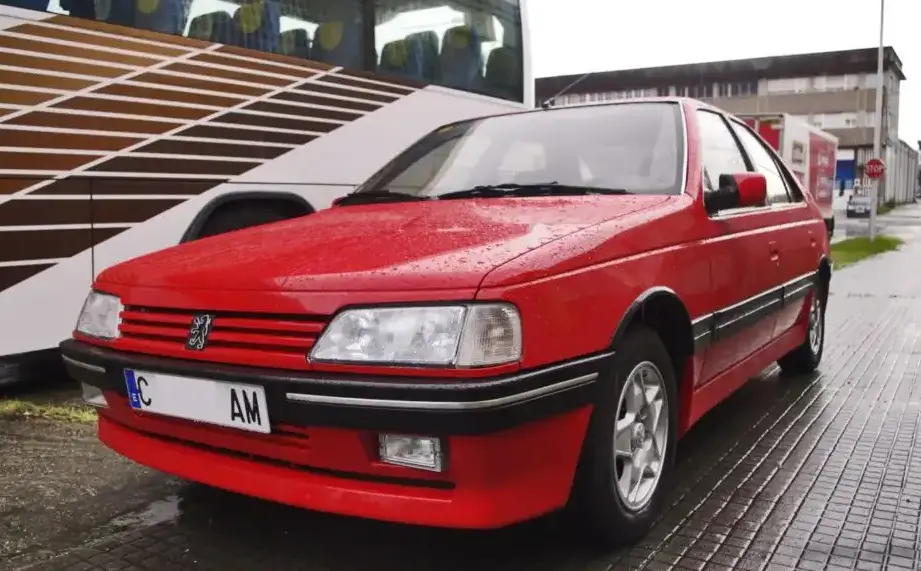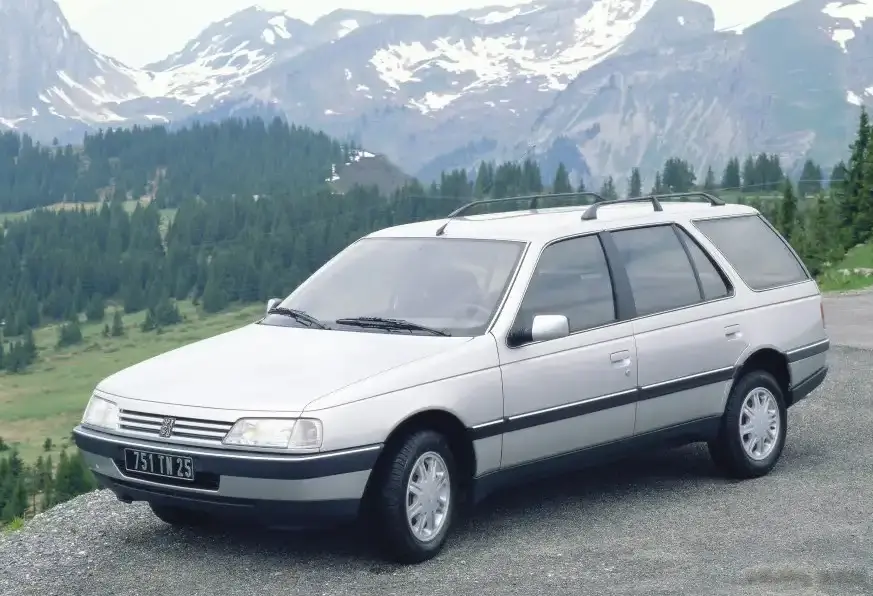
The Peugeot 405 Break 1.6, produced between 1988 and 1992, represents a practical and accessible variant within the broader 405 range. Positioned as an entry-level option in the Break (estate/station wagon) body style, it offered family-oriented functionality with a focus on affordability and fuel economy. The 405 itself was a significant model for Peugeot, replacing the aging 505 and representing a move towards more modern design and engineering. The Break version, and specifically this 1.6L engine, aimed to provide a spacious and versatile vehicle for everyday use, particularly in European markets where station wagons were highly popular.
Technical Specifications
| Brand | Peugeot |
| Model | 405 |
| Generation | 405 I Break (15E) |
| Type (Engine) | 1.6 (88 Hp) |
| Start of production | 1988 |
| End of production | 1992 |
| Powertrain Architecture | Internal Combustion engine |
| Body type | Station wagon (estate) |
| Seats | 5 |
| Doors | 5 |
| Fuel consumption (extra urban) | 6 l/100 km (39.2 US mpg, 47.1 UK mpg, 16.7 km/l) |
| Fuel Type | Petrol (Gasoline) |
| Acceleration 0 – 100 km/h | 13.2 sec |
| Acceleration 0 – 62 mph | 13.2 sec |
| Acceleration 0 – 60 mph | 12.5 sec |
| Maximum speed | 178 km/h (110.6 mph) |
| Weight-to-power ratio | 12.3 kg/Hp, 81.5 Hp/tonne |
| Weight-to-torque ratio | 8.4 kg/Nm, 118.5 Nm/tonne |
| Power | 88 Hp @ 6400 rpm |
| Power per litre | 55.7 Hp/l |
| Torque | 128 Nm @ 3000 rpm (94.41 lb.-ft. @ 3000 rpm) |
| Engine layout | Front, Transverse |
| Engine Model/Code | BDY XU5M2Z |
| Engine displacement | 1580 cm3 (96.42 cu. in.) |
| Number of cylinders | 4 |
| Engine configuration | Inline |
| Cylinder Bore | 83 mm (3.27 in.) |
| Piston Stroke | 73 mm (2.87 in.) |
| Compression ratio | 8.95:1 |
| Number of valves per cylinder | 2 |
| Fuel injection system | Multi-port manifold injection |
| Engine aspiration | Naturally aspirated engine |
| Valvetrain | OHC |
| Engine oil capacity | 4.8 l (5.07 US qt | 4.22 UK qt) |
| Coolant | 6.6 l (6.97 US qt | 5.81 UK qt) |
| Kerb Weight | 1080 kg (2380.99 lbs.) |
| Max. weight | 1580 kg (3483.3 lbs.) |
| Max load | 500 kg (1102.31 lbs.) |
| Trunk (boot) space – minimum | 814 l (28.75 cu. ft.) |
| Trunk (boot) space – maximum | 1640 l (57.92 cu. ft.) |
| Fuel tank capacity | 70 l (18.49 US gal | 15.4 UK gal) |
| Length | 4398 mm (173.15 in.) |
| Width | 1714 mm (67.48 in.) |
| Height | 1445 mm (56.89 in.) |
| Wheelbase | 2669 mm (105.08 in.) |
| Front track | 1450 mm (57.09 in.) |
| Rear (Back) track | 1443 mm (56.81 in.) |
| Front overhang | 817 mm (32.17 in.) |
| Rear overhang | 912 mm (35.91 in.) |
| Minimum turning circle | 10.55 m (34.61 ft.) |
| Drivetrain Architecture | The Internal combustion engine (ICE) drives the front wheels of the vehicle. |
| Drive wheel | Front wheel drive |
| Number of gears and type of gearbox | 5 gears, manual transmission |
| Front suspension | Independent, type McPherson with coil spring and anti-roll bar |
| Rear suspension | Torsion |
| Front brakes | Ventilated discs |
| Rear brakes | Disc |
| Steering type | Steering rack and pinion |
| Power steering | Hydraulic Steering |
| Tires size | 175/70 R14 |
| Wheel rims size | 14 |
Powertrain & Engine Architecture
The heart of the 405 Break 1.6 was the BDY (and sometimes ADZ) XU5M2Z engine, a 1.6-liter inline-four cylinder petrol engine. This engine was a mainstay of Peugeot and Citroën vehicles throughout the 1980s and 90s. It featured a single overhead camshaft (OHC) design and utilized multi-port fuel injection. The XU series engines were known for their relative simplicity and durability, though they weren’t particularly high-performance. The 88 horsepower output was achieved at 6400 rpm, with a torque figure of 128 Nm (94.41 lb-ft) available at 3000 rpm. The engine’s compression ratio was 8.95:1. The 405 Break 1.6 was exclusively offered with a five-speed manual transmission, designed to maximize fuel efficiency and provide adequate performance for everyday driving. The transmission was front-wheel drive, a common configuration for European family cars of this era.
Driving Characteristics
The 405 Break 1.6 offered a comfortable, if not particularly exciting, driving experience. Acceleration was modest, with a 0-60 mph time of around 12.5 seconds. The engine felt somewhat strained at higher speeds, and overtaking required careful planning. The five-speed manual transmission was well-matched to the engine’s characteristics, allowing drivers to keep the engine in its optimal power band. Compared to the more powerful 1.9 and 2.0-liter versions of the 405, the 1.6 felt noticeably slower. However, it offered a smoother and more relaxed driving experience, particularly in urban environments. The gear ratios were tuned for economy rather than outright performance.
Equipment & Trim Levels
The 405 Break 1.6 typically came with a fairly basic level of equipment, reflecting its position as an entry-level model. Standard features generally included cloth upholstery, a basic stereo system, and manual windows and door locks. Power steering was often included, but air conditioning was typically an optional extra. The interior design was functional and straightforward, prioritizing practicality over luxury. Optional extras could include upgraded stereo systems, central locking, and electric windows. The dashboard layout was typical of the era, with clearly labeled controls and a relatively simple instrument cluster.
Chassis & Braking
The 405 Break featured independent front suspension with McPherson struts and a coil spring/anti-roll bar setup. The rear suspension utilized a torsion beam, a cost-effective and space-saving design. The front brakes were ventilated discs, providing adequate stopping power, while the rear brakes were solid discs. The steering was a rack and pinion system with hydraulic power assistance, offering a reasonable level of precision and ease of use. The 175/70 R14 tires provided a good balance of grip and ride comfort. The suspension was tuned for comfort, resulting in a relatively soft ride quality.
Market Reception & Comparison
The 405 Break 1.6 was generally well-received as a practical and affordable family car. Critics praised its spacious interior, comfortable ride, and fuel efficiency. However, it was often criticized for its lack of power and somewhat dated interior design. Compared to other station wagons in its class, such as the Ford Mondeo and Vauxhall/Opel Vectra, the 405 Break 1.6 offered a more characterful driving experience but lacked the refinement and performance of some of its rivals. Fuel economy was a strong point, making it an attractive option for budget-conscious buyers. Reliability was generally good, although routine maintenance was essential to keep the engine running smoothly.
Legacy
The Peugeot 405 Break 1.6, while not the most powerful or luxurious version of the 405, remains a popular choice among classic car enthusiasts and those seeking a reliable and affordable estate car. The XU5M2Z engine is known for its durability, and parts availability is generally good. Today, well-maintained examples of the 405 Break 1.6 can be found for relatively low prices, making them an attractive option for those looking for a classic French car with a practical and versatile body style. The 405, in general, is remembered as a significant model in Peugeot’s history, representing a step forward in design, engineering, and overall quality.