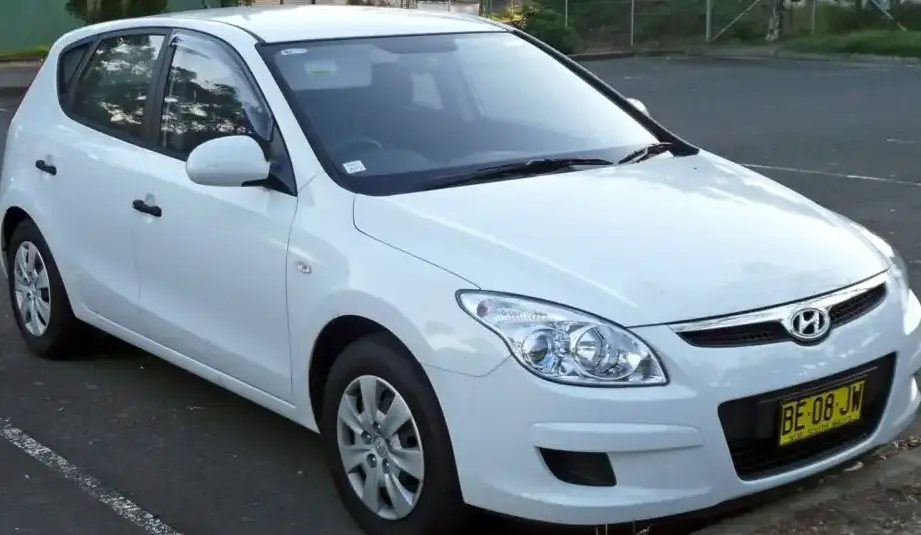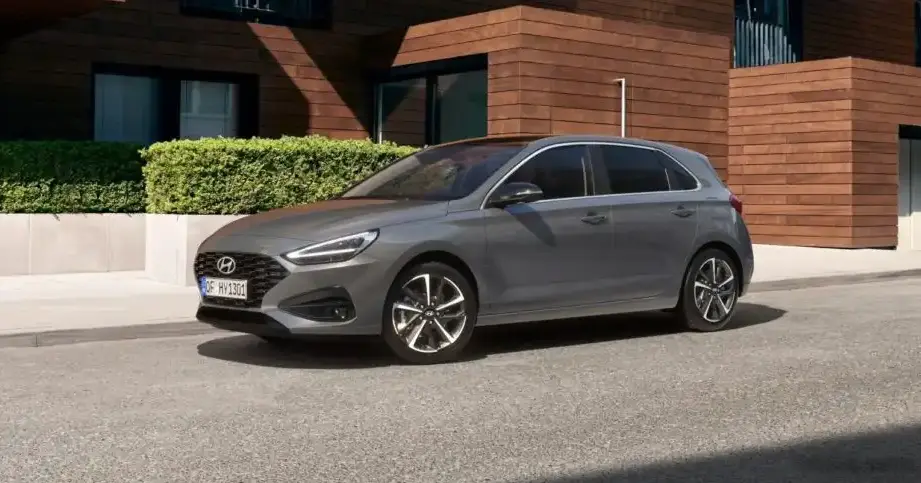
The Hyundai i30 III (facelift, introduced in June 2024) 1.5 MPI, producing 96 horsepower, represents an entry-level offering within the third generation i30 range. Positioned as a practical and economical hatchback, this variant caters to buyers prioritizing fuel efficiency and affordability over outright performance. It builds upon the foundation of the PD (i30 III) platform, offering a refreshed design and updated technology compared to pre-facelift models. The i30 has become a significant model for Hyundai in the European market, offering a compelling alternative to established competitors like the Volkswagen Golf and Ford Focus, and this facelift aimed to further solidify its position.
Technical Specifications
| Brand | Hyundai |
| Model | i30 |
| Generation | i30 III (facelift 2024) |
| Type (Engine) | 1.5 MPI (96 Hp) |
| Start of production | June, 2024 |
| Powertrain Architecture | Internal Combustion engine |
| Body type | Hatchback |
| Seats | 5 |
| Doors | 5 |
| Fuel consumption at Low speed (WLTP) | 8.1 l/100 km (29 US mpg, 34.9 UK mpg, 12.3 km/l) |
| Fuel consumption at Medium speed (WLTP) | 6.0 l/100 km (39.2 US mpg, 47.1 UK mpg, 16.7 km/l) |
| Fuel consumption at high speed (WLTP) | 5.4 l/100 km (43.6 US mpg, 52.3 UK mpg, 18.5 km/l) |
| Fuel consumption at very high speed (WLTP) | 6.6 l/100 km (35.6 US mpg, 42.8 UK mpg, 15.2 km/l) |
| Combined fuel consumption (WLTP) | 6.3 l/100 km (37.3 US mpg, 44.8 UK mpg, 15.9 km/l) |
| CO2 emissions (WLTP) | 142 g/km |
| Fuel Type | Petrol (Gasoline) |
| Acceleration 0 – 100 km/h | 13.4 sec |
| Acceleration 0 – 62 mph | 13.4 sec |
| Acceleration 0 – 60 mph | 12.7 sec |
| Maximum speed | 178 km/h (110.6 mph) |
| Emission standard | Euro 6e |
| Weight-to-power ratio | 12.3 kg/Hp, 81.6 Hp/tonne |
| Weight-to-torque ratio | 8.4 kg/Nm, 119 Nm/tonne |
| Power | 96 Hp @ 6000 rpm |
| Power per litre | 64.1 Hp/l |
| Torque | 140 Nm @ 3500 rpm (103.26 lb.-ft. @ 3500 rpm) |
| Engine layout | Front, Transverse |
| Engine Model/Code | G4LG |
| Engine displacement | 1498 cm3 (91.41 cu. in.) |
| Number of cylinders | 4 |
| Engine configuration | Inline |
| Cylinder Bore | 72 mm (2.83 in.) |
| Piston Stroke | 92 mm (3.62 in.) |
| Compression ratio | 11:1 |
| Number of valves per cylinder | 4 |
| Fuel injection system | Multi-port manifold injection |
| Engine aspiration | Naturally aspirated engine |
| Valvetrain | DOHC |
| Engine oil capacity | 3.4 l (3.59 US qt, 2.99 UK qt) |
| Coolant | 5.8 l (6.13 US qt, 5.1 UK qt) |
| Kerb Weight | 1176-1325 kg (2592.64 – 2921.12 lbs.) |
| Max. weight | 1750 kg (3858.09 lbs.) |
| Max load | 425-574 kg (936.96 – 1265.45 lbs.) |
| Trunk (boot) space – minimum | 395 l (13.95 cu. ft.) |
| Trunk (boot) space – maximum | 1301 l (45.94 cu. ft.) |
| Fuel tank capacity | 50 l (13.21 US gal, 11 UK gal) |
| Max. roof load | 80 kg (176.37 lbs.) |
| Permitted trailer load with brakes (12%) | 1010 kg (2226.67 lbs.) |
| Permitted trailer load without brakes | 610 kg (1344.82 lbs.) |
| Length | 4340 mm (170.87 in.) |
| Width | 1795 mm (70.67 in.) |
| Height | 1465 mm (57.68 in.) |
| Wheelbase | 2650 mm (104.33 in.) |
| Front track | 1559-1573 mm (61.38 – 61.93 in.) |
| Rear (Back) track | 1567-1581 mm (61.69 – 62.24 in.) |
| Front overhang | 905 mm (35.63 in.) |
| Rear overhang | 785 mm (30.91 in.) |
| Ride height (ground clearance) | 150 mm (5.91 in.) |
| Minimum turning circle (turning diameter) | 10.6 m (34.78 ft.) |
| Drivetrain Architecture | The Internal combustion engine (ICE) drives the front wheels of the vehicle. |
| Drive wheel | Front wheel drive |
| Number of gears and type of gearbox | 6 gears, manual transmission |
| Front suspension | Independent type McPherson |
| Rear suspension | Independent multi-link suspension |
| Front brakes | Ventilated discs |
| Rear brakes | Disc |
| Assisting systems | ABS (Anti-lock braking system) |
| Steering type | Steering rack and pinion |
| Power steering | Electric Steering |
| Tires size | 195/65 R15; 205/55 R16; 225/45 R17 |
| Wheel rims size | 6.0J x 15; 6.5J x 16; 7.0J x 17 |
Powertrain & Engine Architecture
The i30 1.5 MPI utilizes Hyundai’s G4LG engine, a naturally aspirated 1.5-liter inline-four cylinder gasoline engine. This engine is part of Hyundai-Kia’s Smartstream family, designed for improved efficiency and reduced emissions. It employs multi-point fuel injection, delivering fuel directly into the intake ports. The engine features a double overhead camshaft (DOHC) valvetrain with four valves per cylinder, optimizing airflow for improved combustion. The compression ratio is set at 11:1. The engine is transversely mounted at the front of the vehicle, driving the front wheels. The 6-speed manual transmission is standard, providing a balance between fuel economy and drivability. The transmission’s gear ratios are tuned for everyday driving, prioritizing smooth shifts and reasonable acceleration.
Driving Characteristics
The 96 horsepower output and 140 Nm (103 lb-ft) of torque result in a 0-60 mph time of around 12.7 seconds, and a top speed of 110.6 mph. While not particularly sporty, the 1.5 MPI offers adequate performance for urban and highway driving. The engine feels responsive at lower RPMs, making it suitable for city commutes. However, acceleration becomes noticeably slower when overtaking or climbing hills. The manual transmission provides a more engaging driving experience than an automatic would, allowing drivers to maintain control over the engine’s power band. The relatively lightweight construction of the i30 helps to mitigate the effects of the modest power output.
Equipment & Trim Levels
The 1.5 MPI typically serves as the entry-level trim in the i30 lineup. Standard equipment generally includes air conditioning, a touchscreen infotainment system with Apple CarPlay and Android Auto compatibility, Bluetooth connectivity, and a suite of safety features such as ABS, ESC (Electronic Stability Control), and multiple airbags. Higher trim levels add features like alloy wheels, a larger touchscreen display, a rearview camera, and advanced driver-assistance systems (ADAS) such as lane keeping assist and automatic emergency braking. Interior upholstery is typically cloth, with options for upgraded materials in higher trims.
Chassis & Braking
The i30 utilizes a McPherson strut front suspension and a multi-link rear suspension, providing a comfortable and controlled ride. The suspension is tuned to prioritize comfort over sporty handling. The braking system consists of ventilated discs at the front and solid discs at the rear. ABS (Anti-lock Braking System) is standard, enhancing braking performance and stability. The steering is electrically assisted, providing light and precise steering feel.
Market Reception & Comparison
The i30 1.5 MPI was generally well-received by automotive critics as a practical and affordable option. Its fuel efficiency was a key selling point, with combined fuel consumption figures around 37.3 US mpg. Compared to higher-output i30 variants, such as the 1.0 T-GDi turbo engine, the 1.5 MPI offers less performance but greater simplicity and potentially lower maintenance costs. Against competitors like the Volkswagen Golf 1.0 TSI, the i30 1.5 MPI often offered a more competitive price point, although the Golf typically provided a more refined driving experience.
Legacy
The G4LG 1.5 MPI engine has proven to be a reliable and durable powertrain. While not known for exceptional performance, it is generally considered a low-maintenance engine. On the used car market, the i30 1.5 MPI represents a good value proposition for buyers seeking an economical and practical hatchback. Its simplicity and proven reliability make it an attractive option for those prioritizing affordability and dependability over outright performance.