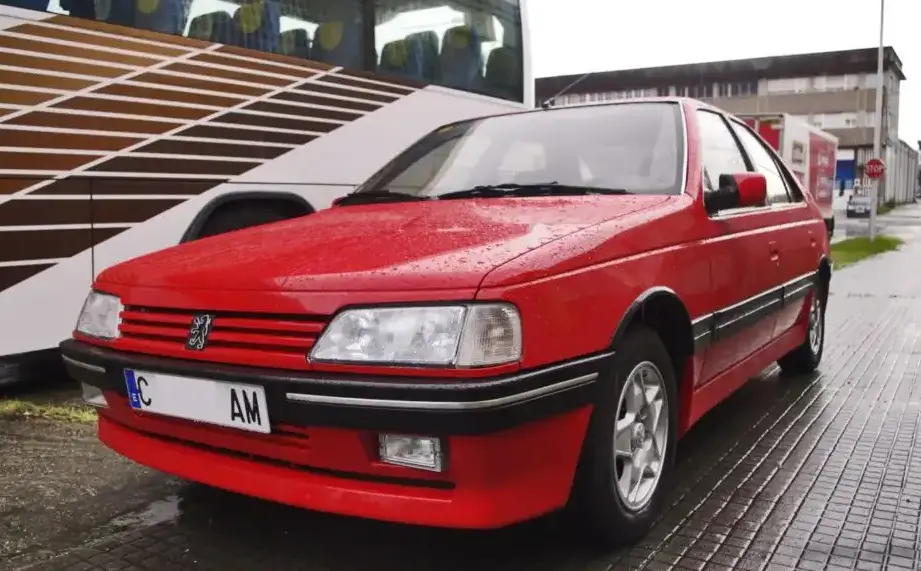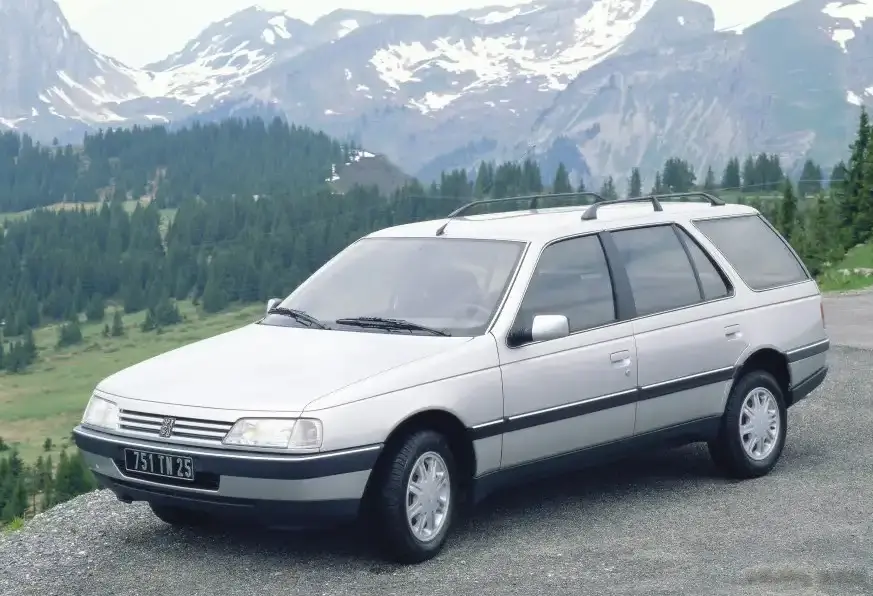
The Peugeot 405 I Break 1.8 TD (90 hp) was a station wagon variant produced between 1988 and 1992, representing a practical and economical option within the broader 405 range. Positioned as a mid-range offering, it catered to buyers needing a spacious vehicle for family or work purposes, prioritizing fuel efficiency and durability over outright performance. The 405 series, launched in 1987, was Peugeot’s replacement for the aging 505, and the Break (estate) body style offered increased cargo capacity. This particular diesel variant, powered by the XUD engine family, was popular in European markets where diesel fuel was more affordable and offered superior economy compared to gasoline alternatives.
Technical Specifications
| Brand | Peugeot |
| Model | 405 |
| Generation | 405 I Break (15E) |
| Type (Engine) | 1.8 TD (90 Hp) |
| Start of production | 1988 |
| End of production | 1992 |
| Powertrain Architecture | Internal Combustion engine |
| Body type | Station wagon (estate) |
| Seats | 5 |
| Doors | 5 |
| Fuel consumption (extra urban) | 4.9 l/100 km (48 US mpg, 57.6 UK mpg, 20.4 km/l) |
| Fuel Type | Diesel |
| Acceleration 0 – 100 km/h | 12.8 sec |
| Acceleration 0 – 62 mph | 12.8 sec |
| Acceleration 0 – 60 mph | 12.2 sec |
| Maximum speed | 175 km/h (108.74 mph) |
| Weight-to-power ratio | 12.6 kg/Hp, 79.6 Hp/tonne |
| Weight-to-torque ratio | 6.2 kg/Nm, 160.2 Nm/tonne |
| Power | 90 Hp @ 4300 rpm |
| Power per litre | 50.9 Hp/l |
| Torque | 181 Nm @ 2100 rpm (133.5 lb.-ft. @ 2100 rpm) |
| Engine layout | Front, Transverse |
| Engine Model/Code | AJZ XUD7TEY |
| Engine displacement | 1768 cm3 (107.89 cu. in.) |
| Number of cylinders | 4 |
| Engine configuration | Inline-4 |
| Cylinder Bore | 80 mm (3.15 in.) |
| Piston Stroke | 88 mm (3.46 in.) |
| Compression ratio | 22:1 |
| Number of valves per cylinder | 2 |
| Fuel injection system | Precombustion chamber injection |
| Engine aspiration | Turbocharger, Intercooler |
| Valvetrain | OHC |
| Engine oil capacity | 4.5 l (4.76 US qt | 3.96 UK qt) |
| Coolant capacity | 7.8 l (8.24 US qt | 6.86 UK qt) |
| Kerb Weight | 1130 kg (2491.22 lbs.) |
| Max. weight | 1620 kg (3571.49 lbs.) |
| Max load | 490 kg (1080.27 lbs.) |
| Trunk (boot) space – minimum | 814 l (28.75 cu. ft.) |
| Trunk (boot) space – maximum | 1640 l (57.92 cu. ft.) |
| Fuel tank capacity | 70 l (18.49 US gal | 15.4 UK gal) |
| Permitted trailer load with brakes (12%) | 1200 kg (2645.55 lbs.) |
| Length | 4398 mm (173.15 in.) |
| Width | 1714 mm (67.48 in.) |
| Height | 1445 mm (56.89 in.) |
| Wheelbase | 2669 mm (105.08 in.) |
| Front track | 1450 mm (57.09 in.) |
| Rear track | 1443 mm (56.81 in.) |
| Front overhang | 817 mm (32.17 in.) |
| Rear overhang | 912 mm (35.91 in.) |
| Minimum turning circle | 10.55 m (34.61 ft.) |
| Drivetrain Architecture | Front wheel drive |
| Number of gears and type of gearbox | 5 gears, manual transmission |
| Front suspension | Independent, type McPherson with coil spring and anti-roll bar |
| Rear suspension | Torsion |
| Front brakes | Ventilated discs |
| Rear brakes | Disc |
| Assisting systems | ABS (Anti-lock braking system) |
| Steering type | Steering rack and pinion |
| Power steering | Hydraulic |
| Tires size | 185/65 R14 |
| Wheel rims size | 14 |
Powertrain & Engine Architecture
The heart of the 405 I Break 1.8 TD was the XUD7TEY engine, a 1.8-liter inline-four diesel. This engine belonged to the XUD family, renowned for its robustness and longevity. The ‘TEY’ suffix indicated a turbocharged and intercooled version, boosting power output to 90 hp at 4300 rpm and 181 Nm (133.5 lb-ft) of torque at 2100 rpm. The engine utilized precombustion chamber injection, a common diesel technology of the era, where fuel was injected into a pre-chamber before entering the main combustion chamber, aiding in more complete combustion. The turbocharger and intercooler significantly improved power and efficiency compared to naturally aspirated diesel engines. The engine was transversely mounted, driving the front wheels. The standard transmission was a five-speed manual gearbox, optimized for fuel economy and providing adequate acceleration for everyday driving.
Driving Characteristics
The 1.8 TD automatic version of the 405 Break offered a comfortable, if not particularly sporty, driving experience. Acceleration was modest, taking around 12.8 seconds to reach 62 mph, but the engine’s strong low-end torque made it well-suited for hauling loads or navigating hilly terrain. The automatic transmission, while providing convenience, did detract from the engine’s efficiency and responsiveness compared to the manual version. Gear changes were not particularly quick or refined by modern standards. The suspension, tuned for comfort, provided a reasonably smooth ride, although body roll was noticeable during cornering. The steering was light and easy to use, making it suitable for urban driving.
Equipment & Trim Levels
The 1.8 TD Break typically came with a reasonable level of standard equipment. This included central locking, power steering, and a basic stereo system. Interior upholstery was typically cloth, with a durable and practical design. Optional extras included electric windows, a sunroof, and upgraded audio systems. The dashboard layout was functional and straightforward, prioritizing ease of use over aesthetic flair. Trim levels varied slightly depending on the market, but generally, the 1.8 TD Break occupied a mid-range position in the 405 lineup, offering a good balance of features and affordability.
Chassis & Braking
The 405 Break featured an independent McPherson strut front suspension with coil springs and an anti-roll bar, providing decent handling and ride comfort. The rear suspension utilized a torsion beam setup, which was cost-effective and space-efficient. Braking was handled by ventilated discs at the front and discs at the rear, offering adequate stopping power for the vehicle’s weight and performance. An anti-lock braking system (ABS) was often included as standard or an optional extra, enhancing safety. The 14-inch wheels were typically fitted with 185/65 R14 tires.
Market Reception & Comparison
The Peugeot 405 I Break 1.8 TD was generally well-received in European markets as a practical and economical family vehicle. Critics praised its spacious interior, fuel efficiency, and robust engine. However, the diesel engine was noted for being somewhat noisy and lacking the refinement of gasoline alternatives. Compared to the higher-performance 2.0-liter gasoline versions, the 1.8 TD offered significantly less power and acceleration, but it compensated with superior fuel economy and lower running costs. Compared to other diesel estate cars of the era, such as the Ford Sierra Estate or the Vauxhall/Opel Astra Estate, the 405 Break offered a stylish design and a comfortable driving experience.
Legacy
The XUD engine family, including the XUD7TEY, gained a reputation for exceptional durability and reliability. Many examples of the 405 Break 1.8 TD continue to be seen on the roads today, testament to the engine’s longevity. While the automatic transmission can be prone to wear and tear with high mileage, the engine itself is generally considered to be very robust. In the used car market, these vehicles are often sought after by enthusiasts and those looking for a reliable and affordable classic estate car. The 405 Break, particularly the diesel variants, represents a significant chapter in Peugeot’s history, showcasing the brand’s commitment to practicality, efficiency, and durability.