Technical Specifications
| Brand | Audi |
| Model | A4 |
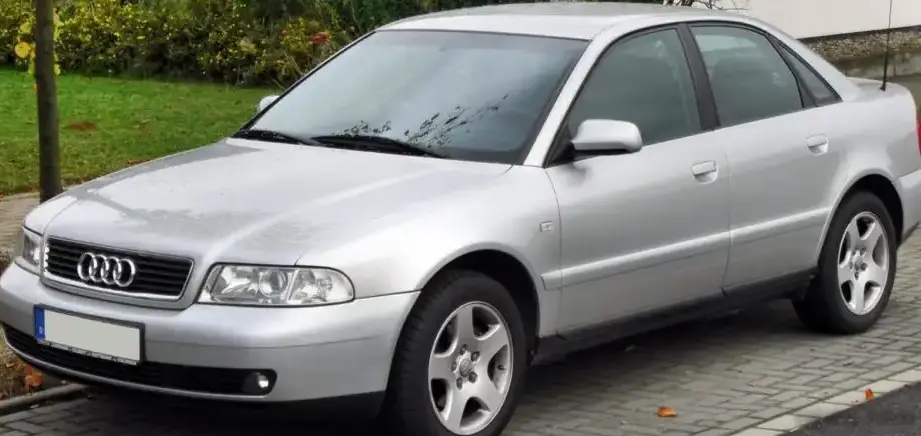
| Generation | A4 (B5, Typ 8D, facelift 1999) |
| Type (Engine) | 2.4 V6 30V (165 Hp) |
| Start of production | 1999 |
| End of production | 2000 |
| Powertrain Architecture | Internal Combustion engine |
| Body type | Sedan |
| Seats | 5 |
| Doors | 4 |
| Fuel consumption (urban) | 13.5 l/100 km (17.4 US mpg, 20.9 UK mpg) |
| Fuel consumption (extra urban) | 7 l/100 km (33.6 US mpg, 40.4 UK mpg) |
| Fuel consumption (combined) | 9.4 l/100 km (25 US mpg, 30.1 UK mpg) |
| Fuel Type | Petrol (Gasoline) |
| Acceleration 0 – 100 km/h | 8.4 sec |
| Acceleration 0 – 62 mph | 8.4 sec |
| Acceleration 0 – 60 mph | 8 sec |
| Maximum speed | 226 km/h (140.43 mph) |
| Weight-to-power ratio | 8 kg/Hp, 125.5 Hp/tonne |
| Weight-to-torque ratio | 5.7 kg/Nm, 174.9 Nm/tonne |
| Power | 165 Hp @ 6000 rpm |
| Power per litre | 69 Hp/l |
| Torque | 230 Nm @ 3200 rpm (169.64 lb.-ft. @ 3200 rpm) |
| Engine layout | Front, Longitudinal |
| Engine Model/Code | AML, APS, ARJ |
| Engine displacement | 2393 cm3 (146.03 cu. in.) |
| Number of cylinders | 6 |
| Engine configuration | V-engine |
| Cylinder Bore | 81 mm (3.19 in.) |
| Piston Stroke | 77.4 mm (3.05 in.) |
| Compression ratio | 10.5:1 |
| Number of valves per cylinder | 5 |
| Fuel injection system | Multi-port manifold injection |
| Engine aspiration | Naturally aspirated engine |
| Valvetrain | DOHC |
| Engine oil capacity | 5.7 l (6.02 US qt | 5.02 UK qt) |
| Coolant | 8 l (8.45 US qt | 7.04 UK qt) |
| Kerb Weight | 1315 kg (2899.08 lbs.) |
| Max. weight | 1865 kg (4111.62 lbs.) |
| Max load | 550 kg (1212.54 lbs.) |
| Trunk (boot) space – minimum | 440 l (15.54 cu. ft.) |
| Fuel tank capacity | 62 l (16.38 US gal | 13.64 UK gal) |
| Length | 4479 mm (176.34 in.) |
| Width | 1733 mm (68.23 in.) |
| Height | 1415 mm (55.71 in.) |
| Wheelbase | 2617 mm (103.03 in.) |
| Front track | 1498 mm (58.98 in.) |
| Rear (Back) track | 1479 mm (58.23 in.) |
| Drag coefficient (Cd) | 0.31 |
| Minimum turning circle | 11.1 m (36.42 ft.) |
| Drivetrain Architecture | The Internal combustion engine (ICE) drives the front wheels of the vehicle. |
| Drive wheel | Front wheel drive |
| Number of gears | 5 |
| Gearbox type | Manual transmission |
| Front suspension | Wishbone |
| Rear suspension | Suspension with traction connecting levers |
| Front brakes | Ventilated discs |
| Rear brakes | Disc |
| Assisting systems | ABS (Anti-lock braking system) |
| Steering type | Steering rack and pinion |
| Power steering | Hydraulic Steering |
| Tires size | 195/65 R15 |
| Wheel rims size | 15 |
The Audi A4 (B5) facelift, produced between 1999 and 2000, represented a notable mid-cycle refresh of Audi’s popular compact executive car. The 2.4-liter V6 30V variant, generating 165 horsepower, positioned itself within the A4 lineup above the base 1.8T models, yet below the more powerful and expensive S4. This iteration of the A4, internally designated Typ 8D, aimed to strike a balance between performance and a degree of luxury, appealing to buyers seeking an upgrade from mainstream vehicles. While primarily marketed in Europe, it saw limited availability in North America, where the 1.8T and 2.8L V6 models were more prevalent.
Powertrain & Engine Architecture
The 2.4 V6 A4’s engine, identified by codes AML, APS, and ARJ depending on the market and production year, is a naturally aspirated, 30-valve (five valves per cylinder) V6. It employs a dual overhead camshaft (DOHC) configuration. Fuel delivery is handled by a multi-port fuel injection system, ensuring precise fuel metering for efficient combustion. The engine is mounted longitudinally within the engine bay, powering the front wheels. A 5-speed manual transmission was standard, providing a direct connection between the engine and the drivetrain. The engine’s design emphasized smooth power delivery and refinement, aligning with Audi’s reputation for building luxurious vehicles.
Driving Characteristics
The 2.4 V6 A4 offered a more relaxed driving experience compared to the turbocharged 1.8T models. While its 165 horsepower wasn’t exceptional, the V6’s torque curve delivered sufficient power for everyday driving and overtaking. Acceleration from 0 to 60 mph took approximately 8 seconds, a respectable figure for the time. The 5-speed manual transmission provided good control, though the gear ratios were optimized for fuel efficiency and comfort rather than aggressive performance. Compared to the more potent 2.8 V6, the 2.4 felt less urgent, but offered a better balance between performance and fuel economy. The front-wheel-drive configuration provided predictable handling, but lacked the all-weather capability of Audi’s quattro all-wheel-drive system, available on other A4 variants.
Equipment & Trim Levels
The 2.4 V6 A4 typically included a solid set of standard features, such as power windows, power locks, air conditioning, and an upgraded audio system compared to the base models. Interior upholstery was generally cloth, with leather options available. Popular optional extras included a sunroof, heated front seats, automatic climate control, and upgraded alloy wheels. The dashboard layout was characteristic of the B5 A4, featuring a functional and understated design. Trim levels varied by market, but the 2.4 V6 generally occupied the mid-range position, offering a step up in luxury and performance without the higher price tag of the S4.
Chassis & Braking
The A4 B5 utilized a MacPherson strut front suspension and a semi-independent rear suspension with trailing arms. This setup provided a comfortable ride, effectively absorbing road imperfections. The 2.4 V6 models typically featured ventilated disc brakes at the front and solid disc brakes at the rear, offering adequate stopping power for the vehicle’s weight and performance. An anti-lock braking system (ABS) was standard, enhancing safety during emergency braking. The steering system was a rack-and-pinion design with hydraulic power assistance, providing precise and responsive steering feel.
Market Reception & Comparison
The 2.4 V6 A4 received generally positive reviews from automotive critics. It was praised for its smooth engine, comfortable ride, and refined interior. However, some reviewers noted a lack of the sporty character found in competitors like the BMW 3 Series. Compared to the 1.8T models, the 2.4 V6 offered more power and a more refined driving experience, but at a higher cost and with slightly reduced fuel economy. Against the 2.8 V6, it presented a more affordable option, sacrificing some performance for improved efficiency. Reliability was generally good, though, like many European cars of the era, it required consistent maintenance to prevent potential issues.
Legacy
The 2.4 V6 B5 A4 has earned a reputation as a reliable and relatively affordable used car. The engine is known for its durability when properly maintained. Common issues include oil leaks and occasional sensor failures, but these are typically minor concerns. Today, these cars are appreciated by enthusiasts who value their classic Audi styling and smooth driving experience. While not as highly sought after as the S4, the 2.4 V6 A4 remains a viable choice for those seeking a comfortable and dependable European sedan.