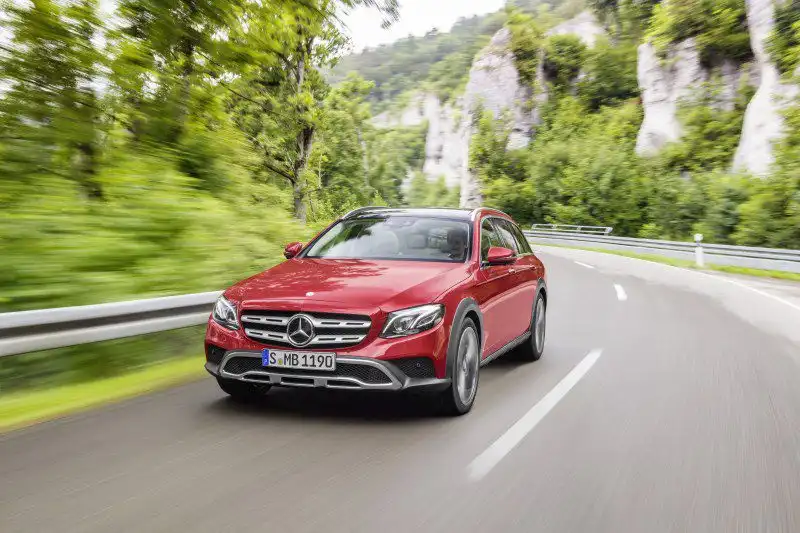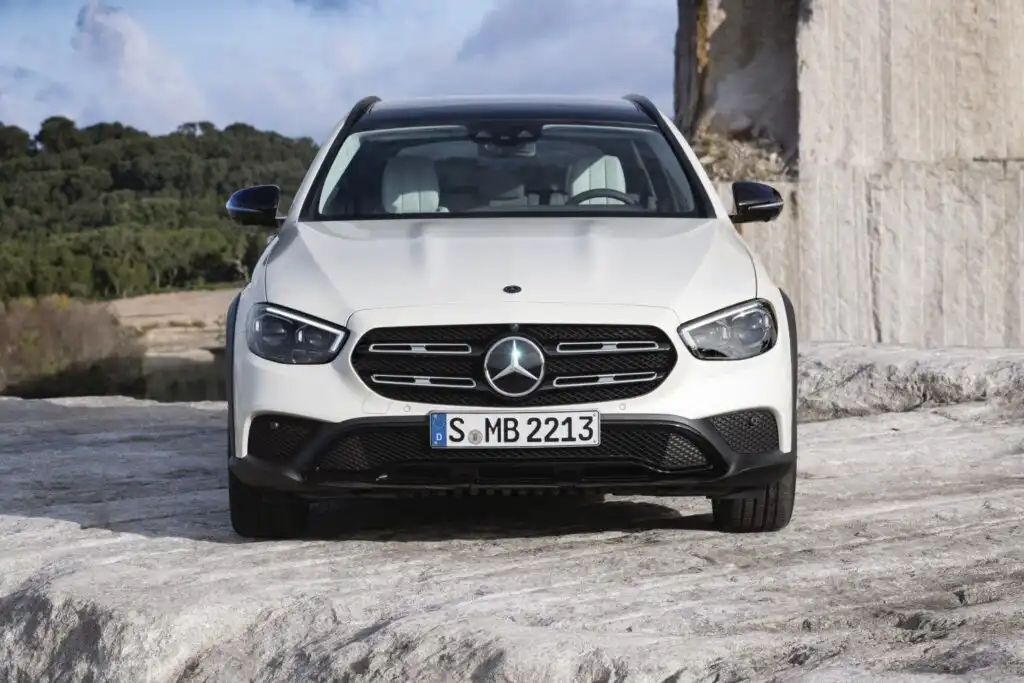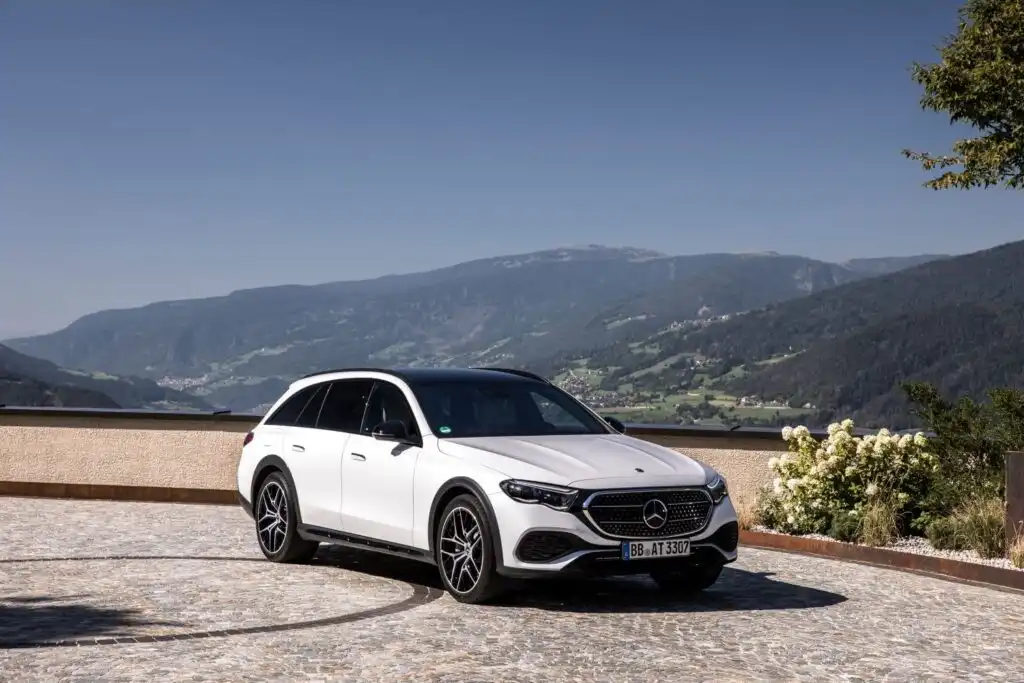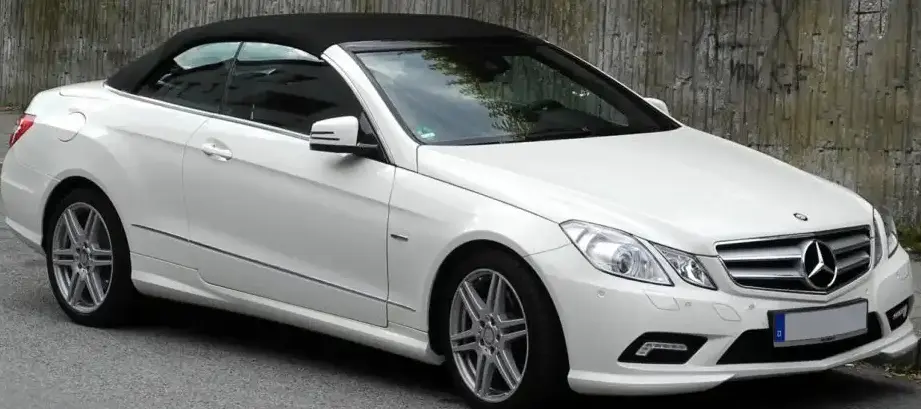
The Mercedes-Benz E-Class Cabriolet (A207) E 250 CDI BlueEFFICIENCY, produced from March 2010 to April 2011, represented a compelling blend of luxury, efficiency, and open-air motoring within the broader E-Class Cabrio range. Positioned as a mid-range offering, it provided a more economical alternative to the higher-performance gasoline variants while still delivering a refined driving experience. This model was primarily aimed at the European market, where diesel engines held significant popularity due to their fuel efficiency and torque characteristics. It slotted into the A207 generation, which itself was based on the W212 sedan platform, offering a convertible body style with the premium appointments expected of the E-Class nameplate.
Technical Specifications
| Brand | Mercedes-Benz |
| Model | E-Class |
| Generation | E-Class Cabrio (A207) |
| Type (Engine) | E 250 CDI BlueEFFICIENCY (204 Hp) 5G-TRONIC |
| Start of production | March, 2010 |
| End of production | April, 2011 |
| Powertrain Architecture | Internal Combustion engine |
| Body type | Cabriolet |
| Seats | 4 |
| Doors | 2 |
| Fuel consumption (economy) – urban (NEDC) | 8.3-8.5 l/100 km (28.3 – 27.7 US mpg, 34 – 33.2 UK mpg, 12 – 11.8 km/l) |
| Fuel consumption (economy) – extra urban (NEDC) | 4.7-5 l/100 km (50 – 47 US mpg, 60.1 – 56.5 UK mpg, 21.3 – 20 km/l) |
| Fuel consumption (economy) – combined (NEDC) | 6.1-6.3 l/100 km (38.6 – 37.3 US mpg, 46.3 – 44.8 UK mpg, 16.4 – 15.9 km/l) |
| CO2 emissions (NEDC) | 159-165 g/km |
| Fuel Type | Diesel |
| Acceleration 0 – 100 km/h | 7.8 sec |
| Acceleration 0 – 62 mph | 7.8 sec |
| Acceleration 0 – 60 mph | 7.4 sec |
| Maximum speed | 245 km/h (152.24 mph) |
| Emission standard | Euro 5 |
| Weight-to-power ratio | 8.5 kg/Hp, 117.6 Hp/tonne |
| Weight-to-torque ratio | 3.5 kg/Nm, 288.2 Nm/tonne |
| Power | 204 Hp @ 4200 rpm |
| Power per litre | 95.2 Hp/l |
| Torque | 500 Nm @ 1600-1800 rpm (368.78 lb.-ft. @ 1600-1800 rpm) |
| Engine layout | Front, Longitudinal |
| Engine Model/Code | OM 651.911 |
| Engine displacement | 2143 cm3 (130.77 cu. in.) |
| Number of cylinders | 4 |
| Engine configuration | Inline |
| Cylinder Bore | 83 mm (3.27 in.) |
| Piston Stroke | 99 mm (3.9 in.) |
| Compression ratio | 16.2:1 |
| Fuel injection system | Diesel Commonrail |
| Engine aspiration | Turbocharger, Intercooler |
| Valvetrain | DOHC |
| Engine oil capacity | 6.5 l (6.87 US qt | 5.72 UK qt) |
| Kerb Weight | 1735 kg (3825.02 lbs.) |
| Max. weight | 2280 kg (5026.54 lbs.) |
| Max load | 545 kg (1201.52 lbs.) |
| Trunk (boot) space – minimum | 300 l (10.59 cu. ft.) |
| Trunk (boot) space – maximum | 390 l (13.77 cu. ft.) |
| Fuel tank capacity | 66 l (17.44 US gal | 14.52 UK gal) |
| Permitted trailer load with brakes (12%) | 1800 kg (3968.32 lbs.) |
| Permitted trailer load without brakes | 750 kg (1653.47 lbs.) |
| Permitted towbar download | 75 kg (165.35 lbs.) |
| Length | 4698 mm (184.96 in.) |
| Width | 1786 mm (70.31 in.) |
| Width including mirrors | 2015 mm (79.33 in.) |
| Height | 1398 mm (55.04 in.) |
| Wheelbase | 2760 mm (108.66 in.) |
| Front track | 1538 mm (60.55 in.) |
| Rear (Back) track | 1544 mm (60.79 in.) |
| Front overhang | 855 mm (33.66 in.) |
| Rear overhang | 1083 mm (42.64 in.) |
| Drag coefficient (Cd) | 0.29 |
| Minimum turning circle (turning diameter) | 11 m (36.09 ft.) |
| Drivetrain Architecture | The Internal combustion engine (ICE) drives the rear wheels of the vehicle. |
| Drive wheel | Rear wheel drive |
| Number of gears and type of gearbox | 5 gears, automatic transmission G-TRONIC |
| Front suspension | Coil spring, Independent multi-link suspension, Transverse stabilizer |
| Rear suspension | Independent multi-link spring suspension with stabilizer |
| Front brakes | Ventilated discs, 295 mm |
| Rear brakes | Disc, 300 mm |
| Assisting systems | ABS (Anti-lock braking system) |
| Steering type | Steering rack and pinion |
| Power steering | Hydraulic Steering |
| Tires size | Front wheel tires: 235/45 R17; 235/40 R18; 235/35 R19Rear wheel tires: 235/45 R17; 255/40 R17; 255/35 R18; 255/30 R19 |
| Wheel rims size | Front wheel rims: 7.5J x 17; 8J x 18; 8J x 19; 8.5J x 19Rear wheel rims: 7.5J x 17; 8.5J x 17; 8.5J x 18; 8.5J x 19 |
Powertrain & Engine Architecture
The E 250 CDI BlueEFFICIENCY was powered by the OM651.911 2.1-liter inline-four diesel engine. This engine was a cornerstone of Mercedes-Benz’s diesel offerings, known for its robust construction and efficiency. It featured a common-rail direct injection system, delivering fuel at extremely high pressure for optimized combustion. A turbocharger with an intercooler further enhanced performance, boosting power and torque. The engine utilized a double overhead camshaft (DOHC) valvetrain, contributing to its efficient operation. The ‘BlueEFFICIENCY’ designation indicated the inclusion of various fuel-saving technologies, including optimized engine management and reduced internal friction. The engine was longitudinally mounted in the front of the vehicle, driving the rear wheels. Paired with the engine was the 5G-TRONIC automatic transmission, a five-speed torque converter automatic known for its smooth shifts and reliability. This transmission was specifically tuned to complement the diesel engine’s torque curve, providing responsive acceleration and comfortable cruising.
Driving Characteristics
The E 250 CDI Cabriolet offered a relaxed and refined driving experience. The 204 horsepower and substantial 368 lb-ft of torque provided ample power for everyday driving and overtaking maneuvers. While not a sports car, the engine delivered strong acceleration, achieving 0-60 mph in approximately 7.4 seconds. The 5G-TRONIC transmission contributed to smooth gear changes, although it lacked the responsiveness of more modern transmissions with a greater number of gears. Compared to the E 350 Cabriolet with its V6 gasoline engine, the E 250 CDI offered significantly better fuel economy but less outright performance. The diesel’s torque advantage, however, made it feel surprisingly capable in real-world driving situations. The rear-wheel drive configuration provided a balanced feel, and the suspension offered a comfortable ride, even on less-than-perfect road surfaces.
Equipment & Trim Levels
The E 250 CDI BlueEFFICIENCY Cabriolet came standard with a comprehensive list of features, befitting its position in the E-Class range. Standard equipment included leather upholstery, automatic climate control, a multi-function steering wheel, and a high-quality audio system. Safety features such as ABS, traction control, and multiple airbags were also standard. Optional extras included features like a premium sound system, navigation system, heated seats, and a wind deflector to reduce turbulence when the top was down. Interior trim options allowed for some personalization, with a range of wood and aluminum finishes available. The dashboard layout was typical of the W212 E-Class, characterized by its elegant design and high-quality materials.
Chassis & Braking
The A207 E-Class Cabriolet utilized a robust chassis designed to provide both comfort and handling. The front suspension featured coil springs and an independent multi-link setup with a transverse stabilizer bar. The rear suspension also employed an independent multi-link design with a stabilizer bar. The braking system consisted of ventilated discs at the front and solid discs at the rear. ABS (Anti-lock Braking System) was standard, enhancing braking performance and stability. The steering was a hydraulic rack and pinion system, providing precise and responsive control. The car’s weight distribution was carefully balanced to optimize handling characteristics.
Market Reception & Comparison
The E 250 CDI BlueEFFICIENCY Cabriolet was generally well-received by automotive critics. It was praised for its fuel efficiency, comfortable ride, and refined interior. However, some reviewers noted that the 5G-TRONIC transmission felt dated compared to newer automatic transmissions. Compared to the gasoline-powered E 350 Cabriolet, the E 250 CDI offered a more economical option, appealing to buyers who prioritized fuel efficiency and torque over outright performance. Its reliability was generally considered good, typical of Mercedes-Benz diesel engines. The E 250 CDI was a popular choice in Europe, where diesel fuel was more readily available and affordable than gasoline.
Legacy
The OM651 engine, found in the E 250 CDI, has proven to be a remarkably durable and reliable powertrain. Well-maintained examples continue to provide dependable service today. The 5G-TRONIC transmission, while not as sophisticated as modern automatics, is also generally reliable. In the used car market, the E 250 CDI Cabriolet represents a good value proposition, offering a luxurious and comfortable open-air driving experience at a relatively affordable price. However, potential buyers should be aware of the potential for diesel particulate filter (DPF) issues, particularly if the vehicle has been primarily used for short trips. Overall, the E 250 CDI BlueEFFICIENCY Cabriolet remains a desirable and well-regarded vehicle, representing a sweet spot in the E-Class Cabriolet range.