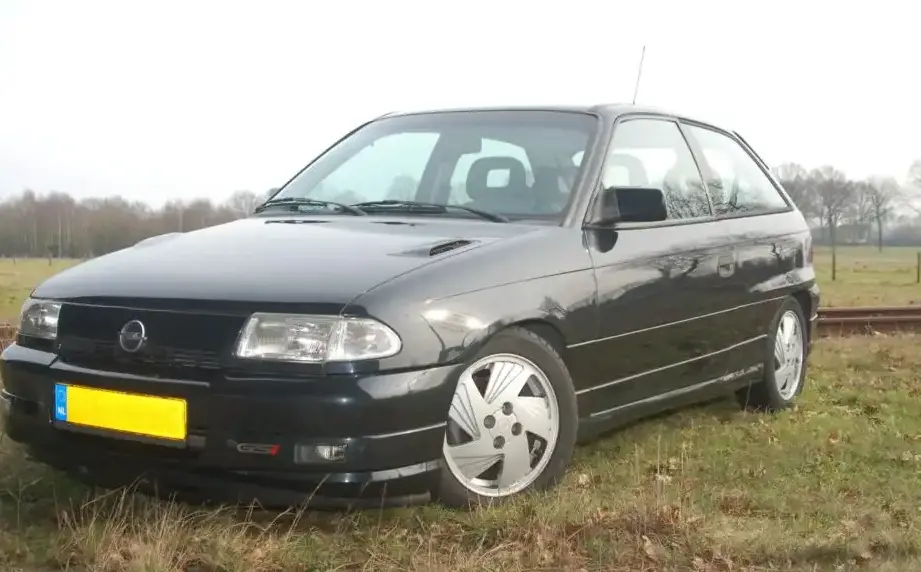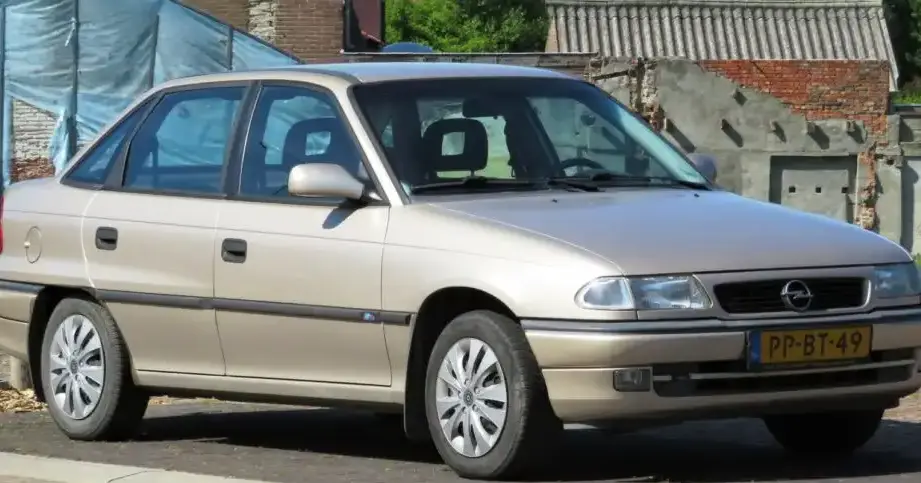
The Opel Astra F Classic 2.0i Ecotec 16V Automatic, produced from 1995 to 1997, represented a mid-range offering within the facelifted Astra F lineup. Introduced after the 1994 refresh of the original Astra F (launched in 1991), this variant aimed to provide a balance of performance and convenience for buyers seeking a comfortable and relatively powerful family sedan. It occupied a position above the base 1.4 and 1.6-liter models, but below the more performance-oriented, and often more expensive, options like the GSi. The Astra F Classic, particularly in its sedan (saloon) body style, was a significant model for Opel, contributing to the brand’s strong presence in the European compact car segment.
Technical Specifications
| Brand | Opel |
| Model | Astra |
| Generation | Astra F Classic (facelift 1994) |
| Type (Engine) | 2.0i Ecotec 16V (136 Hp) Automatic |
| Start of production | 1995 |
| End of production | December, 1997 |
| Powertrain Architecture | Internal Combustion engine |
| Body type | Sedan |
| Seats | 5 |
| Doors | 4 |
| Fuel consumption (urban) | 11.4 l/100 km (20.6 US mpg, 24.8 UK mpg, 8.8 km/l) |
| Fuel consumption (extra urban) | 7.3 l/100 km (32.2 US mpg, 38.7 UK mpg, 13.7 km/l) |
| Fuel consumption (combined) | 9.7 l/100 km (24.2 US mpg, 29.1 UK mpg, 10.3 km/l) |
| Fuel Type | Petrol (Gasoline) |
| Acceleration 0 – 100 km/h | 10.5 sec |
| Acceleration 0 – 62 mph | 10.5 sec |
| Acceleration 0 – 60 mph | 10 sec |
| Maximum speed | 200 km/h (124.27 mph) |
| Weight-to-power ratio | 8.9 kg/Hp, 112.9 Hp/tonne |
| Weight-to-torque ratio | 6.5 kg/Nm, 153.5 Nm/tonne |
| Power | 136 Hp @ 6000 rpm |
| Power per litre | 68.1 Hp/l |
| Torque | 185 Nm @ 4000 rpm (136.45 lb.-ft. @ 4000 rpm) |
| Engine layout | Front, Transverse |
| Engine Model/Code | X20XEV |
| Engine displacement | 1998 cm3 (121.93 cu. in.) |
| Number of cylinders | 4 |
| Engine configuration | Inline |
| Cylinder Bore | 86 mm (3.39 in.) |
| Piston Stroke | 86 mm (3.39 in.) |
| Compression ratio | 10.8:1 |
| Number of valves per cylinder | 4 |
| Fuel injection system | Multi-port manifold injection |
| Engine aspiration | Naturally aspirated engine |
| Valvetrain | DOHC |
| Engine oil capacity | 4 l (4.23 US qt | 3.52 UK qt) |
| Coolant capacity | 6.6 l (6.97 US qt | 5.81 UK qt) |
| Kerb Weight | 1205 kg (2656.57 lbs.) |
| Max. weight | 1680 kg (3703.77 lbs.) |
| Max load | 475 kg (1047.2 lbs.) |
| Trunk (boot) space – minimum | 500 l (17.66 cu. ft.) |
| Trunk (boot) space – maximum | 1200 l (42.38 cu. ft.) |
| Fuel tank capacity | 52 l (13.74 US gal | 11.44 UK gal) |
| Length | 4239 mm (166.89 in.) |
| Width | 1696 mm (66.77 in.) |
| Width including mirrors | 1852 mm (72.91 in.) |
| Height | 1410 mm (55.51 in.) |
| Wheelbase | 2517 mm (99.09 in.) |
| Front track | 1430 mm (56.3 in.) |
| Rear (Back) track | 1423 mm (56.02 in.) |
| Ride height (ground clearance) | 135 mm (5.31 in.) |
| Drag coefficient (Cd) | 0.31 |
| Minimum turning circle | 10.5 m (34.45 ft.) |
| Drivetrain Architecture | ICE to Front Wheels |
| Drive wheel | Front wheel drive |
| Number of gears | 4 |
| Gearbox type | automatic transmission |
| Front brakes | Ventilated discs |
| Rear brakes | Disc |
| Steering type | Steering rack and pinion |
| Tires size | 195/60 R15 |
| Wheel rims size | 6.0J x 15 |
Powertrain & Engine Architecture
The heart of this Astra variant was the X20XEV, a 1998cc (121.93 cu. in.) inline-four cylinder engine belonging to Opel’s Ecotec family. This engine featured a dual overhead camshaft (DOHC) valvetrain with four valves per cylinder, contributing to its relatively high output for its displacement. The X20XEV utilized multi-port fuel injection, a common setup for the time, delivering fuel directly into the intake ports. The engine produced 136 horsepower at 6000 rpm and 185 Nm (136.45 lb-ft) of torque at 4000 rpm. Paired with this engine was a four-speed automatic transmission. While not known for its sportiness, this transmission provided smooth shifts and ease of use, appealing to drivers prioritizing comfort over performance. The automatic transmission’s gear ratios were geared towards fuel efficiency and relaxed cruising rather than rapid acceleration.
Driving Characteristics
The 2.0i Ecotec Automatic Astra F offered a comfortable and predictable driving experience. Acceleration from 0-100 km/h (0-62 mph) took around 10.5 seconds, which was adequate for everyday driving but noticeably slower than the manual transmission versions or the higher-output GSi models. The automatic transmission, while convenient, did sap some power, resulting in a less engaging driving experience. The power delivery was relatively linear, with usable torque available from mid-range revs. The suspension was tuned for comfort, providing a reasonably smooth ride over most road surfaces. However, it wasn’t particularly sporty, with noticeable body roll during cornering.
Equipment & Trim Levels
The Astra F Classic 2.0i Ecotec Automatic typically came with a reasonable level of standard equipment. This included central locking, power steering, electric front windows, and an adjustable steering column. Interior upholstery was usually cloth, with a relatively simple dashboard layout. Optional extras could include air conditioning, a sunroof, alloy wheels, and upgraded audio systems. The trim level often dictated the quality of the interior materials and the availability of certain features.
Chassis & Braking
The Astra F Classic utilized a MacPherson strut front suspension and a torsion beam rear suspension. The front brakes were ventilated discs, providing adequate stopping power, while the rear brakes were solid discs. The chassis was relatively lightweight, contributing to the car’s decent handling characteristics. Stabilizer bars were fitted to both the front and rear axles to reduce body roll, but their effectiveness was limited by the suspension’s overall comfort-oriented tuning.
Market Reception & Comparison
The Astra F Classic 2.0i Ecotec Automatic was generally well-received as a practical and comfortable family car. Critics praised its spacious interior, decent fuel economy (around 24.2 US mpg combined), and relatively smooth ride. However, the automatic transmission was often criticized for its lack of responsiveness and its impact on fuel consumption compared to the manual gearbox. Compared to the 1.8-liter versions, the 2.0i offered a noticeable performance boost, but at a higher price point. The GSi models, with their more powerful engines and sportier suspension, were aimed at a different type of buyer.
Legacy
The X20XEV engine, while generally reliable, is known to be susceptible to certain issues, such as oil leaks and occasional coolant loss. The automatic transmission, if not regularly serviced, can experience wear and tear over time. Today, the Astra F Classic 2.0i Ecotec Automatic is a relatively affordable classic car. Well-maintained examples are sought after by enthusiasts and collectors, particularly those who appreciate the car’s simplicity and practicality. Its status as a representative of 1990s European automotive design and engineering ensures its continued appeal in the used car market.