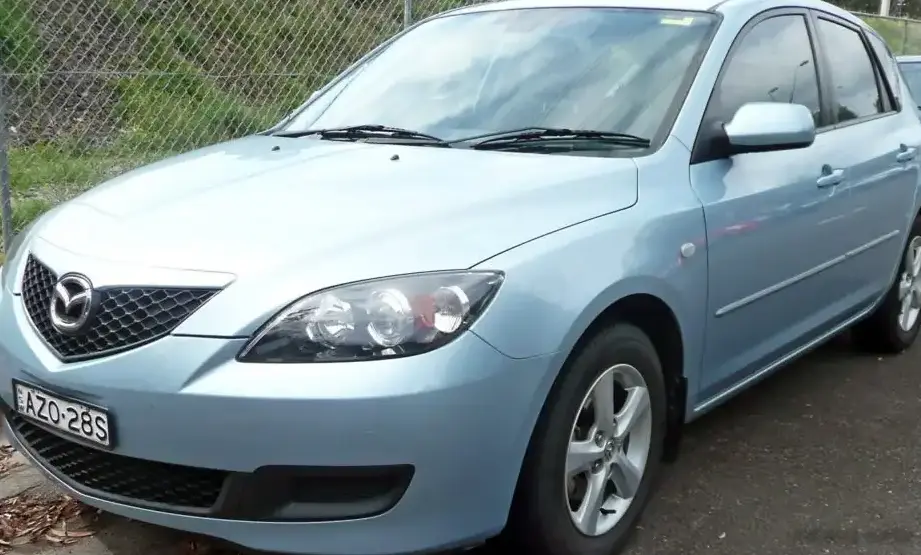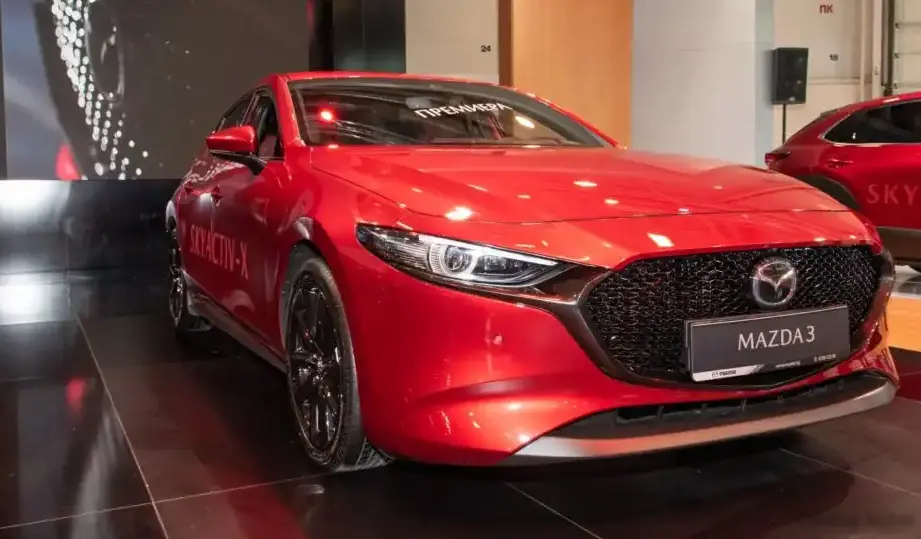
The Mazda 3 IV Hatchback 2.0 e-SkyActiv-X (186 Hp) Skyactiv-Drive, launched in 2021, represents a significant evolution in Mazda’s compact car lineup. This variant is part of the fourth generation (BP) Mazda 3, which debuted in 2019, and utilizes Mazda’s innovative Skyactiv-X engine technology paired with a six-speed automatic transmission. Positioned as a mid-range offering within the broader Mazda 3 range, it aimed to deliver a balance of performance, fuel efficiency, and refinement. The vehicle is built on the 1HX0 platform, shared with other Mazda models, and is primarily marketed in Europe and Asia, though it is also available in select North American markets.
Technical Specifications
| Brand | Mazda |
| Model | 3 |
| Generation | IV Hatchback |
| Type (Engine) | 2.0 e-SkyActiv-X (186 Hp) Skyactiv-Drive |
| Start of production | 2021 |
| Powertrain Architecture | MHEV (Mild Hybrid) |
| Body type | Hatchback |
| Seats | 5 |
| Doors | 5 |
| Fuel consumption at Low speed (WLTP) | 7.2 l/100 km (32.7 US mpg) |
| Fuel consumption at Medium speed (WLTP) | 5.6 l/100 km (42 US mpg) |
| Fuel consumption at high speed (WLTP) | 5.1-5.2 l/100 km (46.1 – 45.2 US mpg) |
| Fuel consumption at very high speed (WLTP) | 6.3-6.5 l/100 km (37.3 – 36.2 US mpg) |
| Combined fuel consumption (WLTP) | 5.9-6 l/100 km (39.9 – 39.2 US mpg) |
| CO2 emissions (WLTP) | 133-136 g/km |
| Fuel consumption (economy) – urban | 6.3 l/100 km (37.3 US mpg) |
| Fuel consumption (economy) – extra urban | 4.7-4.8 l/100 km (50 – 49 US mpg) |
| Fuel consumption (economy) – combined | 5.2-5.3 l/100 km (45.2 – 44.4 US mpg) |
| CO2 emissions | 119-120 g/km |
| Fuel Type | Petrol (Gasoline) |
| Acceleration 0 – 100 km/h | 8.1 sec |
| Acceleration 0 – 62 mph | 8.1 sec |
| Acceleration 0 – 60 mph | 7.7 sec |
| Maximum speed | 216 km/h (134.22 mph) |
| Emission standard | Euro 6d-ISC-FCM |
| Weight-to-power ratio | 7.3 kg/Hp |
| Weight-to-torque ratio | 5.6 kg/Nm |
| Power | 186 Hp @ 6000 rpm |
| Torque | 240 Nm @ 4000 rpm (177.01 lb.-ft. @ 4000 rpm) |
| Engine layout | Front, Transverse |
| Engine displacement | 1998 cm3 (121.93 cu. in.) |
| Number of cylinders | 4 |
| Engine configuration | Inline |
| Cylinder Bore | 83.5 mm (3.29 in.) |
| Piston Stroke | 91.2 mm (3.59 in.) |
| Compression ratio | 15:1 |
| Number of valves per cylinder | 4 |
| Fuel injection system | Direct injection |
| Engine aspiration | Naturally aspirated |
| Kerb Weight | 1349-1440 kg (2974.04 – 3174.66 lbs.) |
| Max. weight | 1952 kg (4303.42 lbs.) |
| Max load | 512-603 kg (1128.77 – 1329.39 lbs.) |
| Trunk (boot) space – minimum | 351 l (12.4 cu. ft.) |
| Trunk (boot) space – maximum | 1026 l (36.23 cu. ft.) |
| Fuel tank capacity | 51 l (13.47 US gal) |
| Max. roof load | 75 kg (165.35 lbs.) |
| Permitted trailer load with brakes (8%) | 1300 kg (2866.01 lbs.) |
| Permitted trailer load without brakes | 600 kg (1322.77 lbs.) |
| Length | 4460 mm (175.59 in.) |
| Width | 1795 mm (70.67 in.) |
| Height | 1435 mm (56.5 in.) |
| Wheelbase | 2725 mm (107.28 in.) |
| Front suspension | Independent type McPherson |
| Rear suspension | Torsion |
| Front brakes | Disc |
| Rear brakes | Disc |
| Gearbox | 6 gears, automatic transmission |
Powertrain & Engine Architecture
The heart of this Mazda 3 variant is the 2.0-liter e-SkyActiv-X engine, designated as the PE-VPH. This engine represents a departure from traditional gasoline engines, employing Spark Controlled Compression Ignition (SCCI). Unlike conventional engines that rely on spark plugs for combustion, the Skyactiv-X utilizes a lean-burn combustion process initiated by compression. A small spark assist is used during cold starts and high-load conditions. This technology aims to combine the benefits of both gasoline and diesel engines – high compression ratios for efficiency and reduced particulate emissions. The engine features direct injection and a high compression ratio of 15:1. The mild-hybrid system, utilizing a 24V electrical system, provides a small amount of electric assistance during acceleration and enables smoother start-stop functionality. The Skyactiv-Drive automatic transmission is a conventional six-speed torque converter automatic, tuned for smooth operation and efficiency. It doesn’t feature the rapid shifting characteristics of some dual-clutch transmissions, prioritizing comfort and refinement.
Driving Characteristics
The 186 hp and 177 lb-ft of torque delivered by the 2.0-liter Skyactiv-X engine, coupled with the six-speed automatic, provides adequate performance for everyday driving. Acceleration from 0-60 mph takes approximately 7.7-8.1 seconds. While not overtly sporty, the engine offers a linear power delivery, with a noticeable surge in torque around 4000 rpm. The automatic transmission is well-matched to the engine’s characteristics, providing smooth gear changes. Compared to the higher-output 2.5-liter engine option available in some markets, this variant feels less urgent in its acceleration. However, it offers significantly better fuel economy. Against diesel variants, the Skyactiv-X provides a similar driving experience with potentially lower NOx emissions, but may not achieve the same level of fuel efficiency in long-distance highway driving.
Equipment & Trim Levels
The 2.0 e-SkyActiv-X Skyactiv-Drive trim typically includes standard features such as Mazda’s infotainment system with an 8.8-inch display, Apple CarPlay and Android Auto integration, a rearview camera, and a suite of safety features including lane departure warning, lane keep assist, and automatic emergency braking. Interior upholstery is typically cloth, with options for leather upgrades. Higher trim levels within the Skyactiv-X range may add features like a premium sound system, heated front seats, and a sunroof. The dashboard layout is clean and modern, with a focus on driver ergonomics.
Chassis & Braking
The Mazda 3 IV utilizes a front-wheel-drive platform with independent McPherson strut suspension in the front and a torsion beam setup in the rear. This configuration provides a good balance of ride comfort and handling. The steering is precise and well-weighted, contributing to a confident driving experience. Braking duties are handled by disc brakes on all four wheels, providing adequate stopping power. The suspension is tuned for comfort, but the chassis remains relatively stable during cornering. Stabilizer bars are fitted front and rear to reduce body roll.
Market Reception & Comparison
The Mazda 3 IV, and specifically the Skyactiv-X engine, received generally positive reviews from automotive critics. The Skyactiv-X technology was praised for its innovative approach to combustion and its potential for improved fuel efficiency. However, some reviewers noted that the real-world fuel economy benefits weren’t always as significant as anticipated. Compared to other engines in the Mazda 3 lineup, the 2.0 e-SkyActiv-X offered a compelling balance between performance and economy. It was often seen as a more sensible choice for drivers prioritizing fuel efficiency and refinement over outright performance.
Legacy
The Skyactiv-X engine represents a significant technological step for Mazda, demonstrating the company’s commitment to innovative powertrain solutions. While the technology has faced some challenges in terms of achieving consistent real-world fuel economy gains, it remains a unique and intriguing offering in the automotive market. The 2.0 e-SkyActiv-X engine, when paired with the Skyactiv-Drive automatic transmission, has proven to be a relatively reliable powertrain. On the used car market, these models are generally well-regarded, with maintenance costs being comparable to other Mazda 3 variants. The long-term durability of the SCCI system remains a key area of interest for owners and mechanics alike.