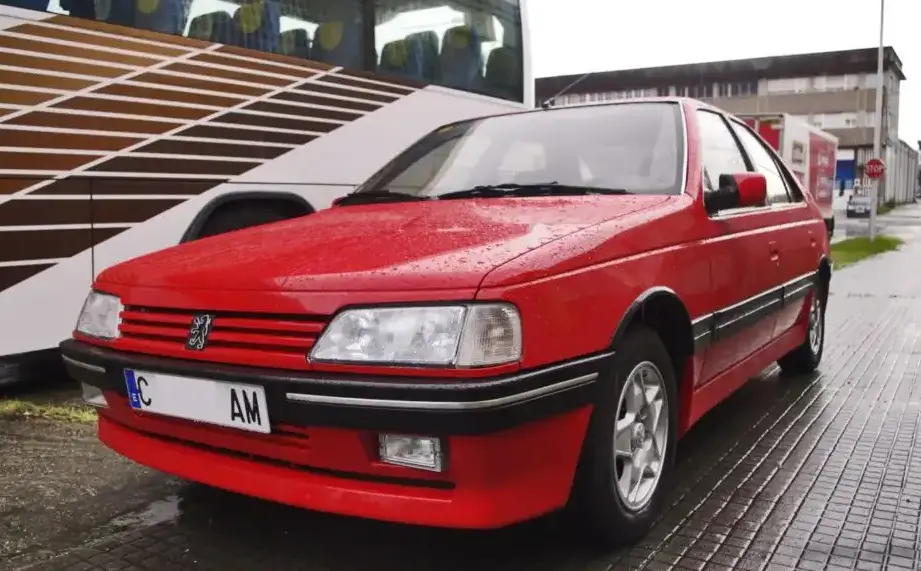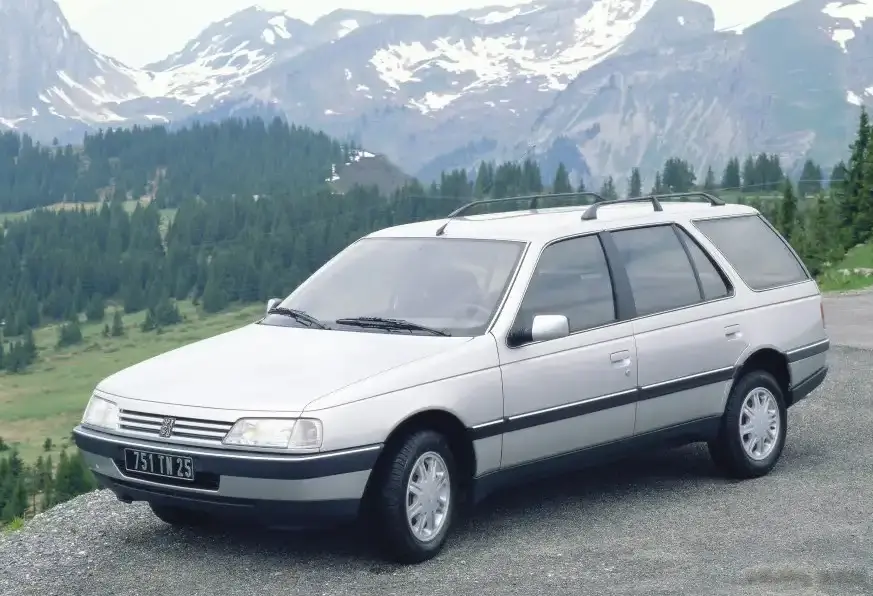
The Peugeot 405 Break, specifically the 15E variant powered by the 1.9-liter (120 horsepower) engine, represents a significant offering from Peugeot during its 1988-1992 production run. Positioned as a practical and stylish family vehicle, the 405 Break (estate/station wagon) aimed to combine the comfort and handling characteristics Peugeot was known for with the increased cargo capacity demanded by active families. This model falls within the first generation of the 405 (15E), built on the platform that established the 405 as a popular choice in the European market. The 1.9L engine offered a balance between performance and fuel economy, making it a common choice for those seeking a versatile vehicle.
Technical Specifications
| Brand | Peugeot |
| Model | 405 |
| Generation | 405 I Break (15E) |
| Type (Engine) | 1.9 (120 Hp) |
| Start of production | 1988 |
| End of production | 1992 |
| Powertrain Architecture | Internal Combustion engine |
| Body type | Station wagon (estate) |
| Seats | 5 |
| Doors | 5 |
| Fuel consumption (extra urban) | 6.6 l/100 km (35.6 US mpg, 42.8 UK mpg, 15.2 km/l) |
| Fuel Type | Petrol (Gasoline) |
| Acceleration 0 – 100 km/h | 10.7 sec |
| Acceleration 0 – 62 mph | 10.7 sec |
| Acceleration 0 – 60 mph | 10.2 sec |
| Maximum speed | 192 km/h (119.3 mph) |
| Weight-to-power ratio | 9 kg/Hp, 111.1 Hp/tonne |
| Weight-to-torque ratio | 7.3 kg/Nm, 136.1 Nm/tonne |
| Power | 120 Hp @ 6000 rpm |
| Power per litre | 63 Hp/l |
| Torque | 147 Nm @ 3000 rpm (108.42 lb.-ft. @ 3000 rpm) |
| Engine layout | Front, Transverse |
| Engine Model/Code | DKZ XU9JAZ |
| Engine displacement | 1905 cm3 (116.25 cu. in.) |
| Number of cylinders | 4 |
| Engine configuration | Inline |
| Cylinder Bore | 83 mm (3.27 in.) |
| Piston Stroke | 88 mm (3.46 in.) |
| Compression ratio | 9.2:1 |
| Number of valves per cylinder | 2 |
| Fuel injection system | Multi-port manifold injection |
| Engine aspiration | Naturally aspirated engine |
| Valvetrain | OHC |
| Engine oil capacity | 4.6 l (4.86 US qt | 4.05 UK qt) |
| Coolant | 6.6 l (6.97 US qt | 5.81 UK qt) |
| Kerb Weight | 1080 kg (2380.99 lbs.) |
| Max. weight | 1580 kg (3483.3 lbs.) |
| Max load | 500 kg (1102.31 lbs.) |
| Trunk (boot) space – minimum | 814 l (28.75 cu. ft.) |
| Trunk (boot) space – maximum | 1640 l (57.92 cu. ft.) |
| Fuel tank capacity | 70 l (18.49 US gal | 15.4 UK gal) |
| Permitted trailer load with brakes (12%) | 1200 kg (2645.55 lbs.) |
| Length | 4398 mm (173.15 in.) |
| Width | 1714 mm (67.48 in.) |
| Height | 1450 mm (57.09 in.) |
| Wheelbase | 2669 mm (105.08 in.) |
| Front track | 1450 mm (57.09 in.) |
| Rear (Back) track | 1443 mm (56.81 in.) |
| Front overhang | 817 mm (32.17 in.) |
| Rear overhang | 912 mm (35.91 in.) |
| Minimum turning circle | 10.55 m (34.61 ft.) |
| Drivetrain Architecture | The Internal combustion engine (ICE) drives the front wheels of the vehicle. |
| Drive wheel | Front wheel drive |
| Number of gears and type of gearbox | 5 gears, manual transmission |
| Front suspension | Independent, type McPherson with coil spring and anti-roll bar |
| Rear suspension | Torsion |
| Front brakes | Ventilated discs |
| Rear brakes | Disc |
| Steering type | Steering rack and pinion |
| Power steering | Hydraulic Steering |
| Tires size | 185/65 R14 |
| Wheel rims size | 14 |
Powertrain & Engine Architecture
The heart of the 405 Break 1.9 is the XU9JAZ engine, a 1.9-liter inline-four cylinder gasoline engine. This engine, part of Peugeot’s XU series, was known for its robustness and relatively simple design. It featured a single overhead camshaft (OHC) valvetrain operating two valves per cylinder. Fuel delivery was handled by a multi-port fuel injection system, contributing to improved efficiency and smoother operation compared to earlier carbureted designs. The engine produced 120 horsepower at 6000 rpm and 147 Nm (108 lb-ft) of torque at 3000 rpm. The engine’s transverse mounting and front-wheel-drive configuration were typical for European vehicles of this era, optimizing space utilization. The 405 Break 1.9 was exclusively offered with a five-speed manual transmission, providing drivers with good control over the engine’s power band.
Driving Characteristics
The 1.9-liter engine, paired with the five-speed manual transmission, provided a balanced driving experience. Acceleration to 60 mph took approximately 10.2 seconds, and the car had a top speed of around 119 mph. While not a performance-oriented variant, the 1.9 offered sufficient power for everyday driving and highway cruising. The gear ratios were well-chosen to provide good responsiveness in most situations. Compared to the more powerful 2.0-liter or V6 versions of the 405, the 1.9 felt less strained during acceleration, but lacked the outright punch of its larger-engined siblings. The manual transmission allowed for precise control, and the relatively light weight of the 405 Break contributed to decent handling characteristics.
Equipment & Trim Levels
The 15E trim level for the 405 Break was generally considered a mid-range offering. Standard equipment typically included power steering, central locking, and a basic stereo system. Interior upholstery was usually cloth, with a functional and durable design. Optional extras included a sunroof, upgraded stereo systems, and alloy wheels. The dashboard layout was typical of Peugeot designs of the period, with a clear and logical arrangement of controls. The Break’s defining feature, of course, was its spacious cargo area, accessible through a large rear tailgate. The rear seats could be folded down to further increase cargo capacity.
Chassis & Braking
The 405 Break featured an independent McPherson strut front suspension with coil springs and an anti-roll bar, providing a comfortable ride and good handling. The rear suspension utilized a torsion beam setup, which was a cost-effective and space-saving solution. Braking was handled by ventilated discs on the front wheels and discs on the rear, offering adequate stopping power for the vehicle’s weight and performance. The hydraulic power steering provided light and precise steering feel.
Market Reception & Comparison
The Peugeot 405 Break 1.9 was well-received in the European market as a practical and reliable family vehicle. Critics praised its comfortable ride, spacious interior, and fuel efficiency. Compared to other station wagons of the time, such as the Ford Mondeo Estate or the Renault 19 Estate, the 405 Break offered a distinctive French flair and a reputation for build quality. The 1.9-liter engine provided a good balance between performance and economy, making it a popular choice for those who didn’t require the extra power of the larger engines. However, some critics noted that the interior trim could feel somewhat basic compared to some of its competitors.
Legacy
The Peugeot 405 Break, particularly the 1.9-liter variant, has developed a loyal following among enthusiasts. The XU9JAZ engine is known for its durability and relatively simple maintenance requirements. While finding well-maintained examples can be challenging today, the 405 Break remains a popular choice for classic car collectors and those seeking a stylish and practical vintage vehicle. Parts availability can be an issue, but a dedicated community of owners and suppliers helps to keep these cars on the road. The 405 Break represents a high point in Peugeot’s design and engineering, and its enduring appeal is a testament to its quality and versatility.