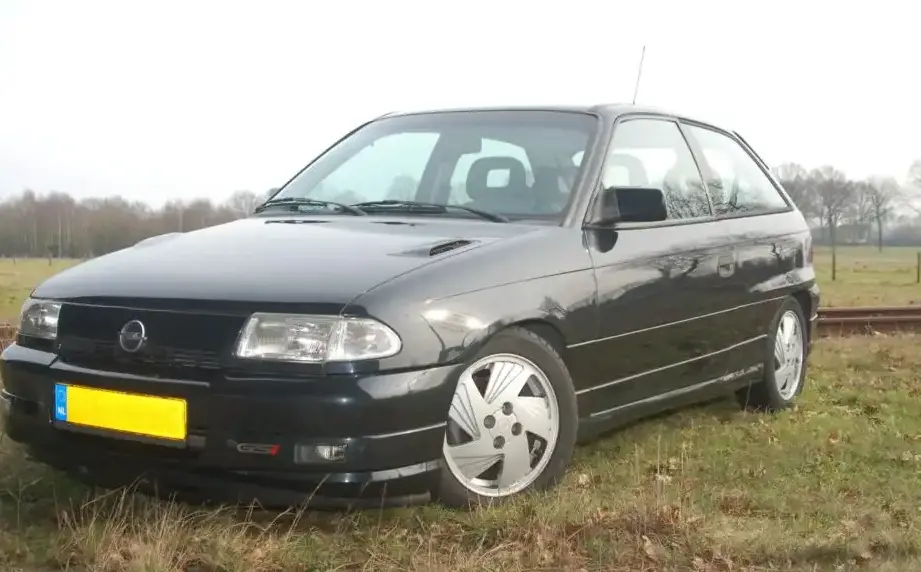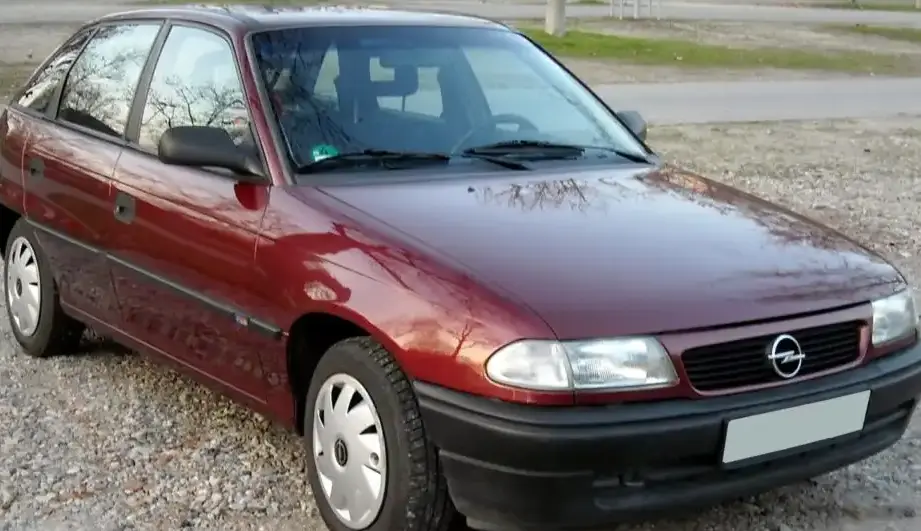
The Opel Astra F 1.4 Si (82 hp) was a popular entry-level variant of the Astra F series, produced from 1994 to 1996 following the facelift of the original Astra F. Positioned as an affordable and practical hatchback, it served as a gateway into the Astra range for many European buyers. This model occupied the lower end of the performance spectrum, prioritizing fuel efficiency and cost-effectiveness over outright speed. It was a key component of Opel’s strategy to offer a broad range of options within the compact car segment, appealing to a diverse customer base. The Astra F itself was a significant model for Opel, representing a substantial leap forward in design, safety, and technology compared to its predecessor, the Astra GTE.
Technical Specifications
| Brand | Opel |
| Model | Astra |
| Generation | Astra F (facelift 1994) |
| Type (Engine) | 1.4 Si (82 Hp) |
| Start of production | 1994 |
| End of production | 1996 |
| Powertrain Architecture | Internal Combustion engine |
| Body type | Hatchback |
| Seats | 5 |
| Doors | 3 |
| Fuel consumption (urban) | 8.9 l/100 km (26.4 US mpg, 31.7 UK mpg, 11.2 km/l) |
| Fuel consumption (extra urban) | 6.1 l/100 km (38.6 US mpg, 46.3 UK mpg, 16.4 km/l) |
| Fuel consumption (combined) | 7.8 l/100 km (30.2 US mpg, 36.2 UK mpg, 12.8 km/l) |
| Fuel Type | Petrol (Gasoline) |
| Acceleration 0 – 100 km/h | 13 sec |
| Acceleration 0 – 62 mph | 13 sec |
| Acceleration 0 – 60 mph | 12.4 sec |
| Maximum speed | 175 km/h (108.74 mph) |
| Emission standard | Euro 1 |
| Weight-to-power ratio | 11.9 kg/Hp, 84.1 Hp/tonne |
| Weight-to-torque ratio | 8.6 kg/Nm, 116.9 Nm/tonne |
| Power | 82 Hp @ 5800 rpm |
| Power per litre | 59 Hp/l |
| Torque | 114 Nm @ 3400 rpm (84.08 lb.-ft. @ 3400 rpm) |
| Engine layout | Front, Transverse |
| Engine Model/Code | C14SE |
| Engine displacement | 1389 cm3 (84.76 cu. in.) |
| Number of cylinders | 4 |
| Engine configuration | Inline |
| Cylinder Bore | 77.6 mm (3.06 in.) |
| Piston Stroke | 73.4 mm (2.89 in.) |
| Compression ratio | 9.8:1 |
| Number of valves per cylinder | 2 |
| Fuel injection system | Multi-port manifold injection |
| Engine aspiration | Naturally aspirated engine |
| Valvetrain | SOHC |
| Engine oil capacity | 3.5 l (3.7 US qt | 3.08 UK qt) |
| Coolant | 5.8 l (6.13 US qt | 5.1 UK qt) |
| Kerb Weight | 975/995 kg (2149.51 lbs.) |
| Max. weight | 1495 kg (3295.91 lbs.) |
| Max load | 500-520 kg (1102.31 – 1146.4 lbs.) |
| Trunk (boot) space – minimum | 360 l (12.71 cu. ft.) |
| Trunk (boot) space – maximum | 1200 l (42.38 cu. ft.) |
| Fuel tank capacity | 52 l (13.74 US gal | 11.44 UK gal) |
| Length | 4051 mm (159.49 in.) |
| Width | 1696 mm (66.77 in.) |
| Width including mirrors | 1852 mm (72.91 in.) |
| Height | 1410 mm (55.51 in.) |
| Wheelbase | 2517 mm (99.09 in.) |
| Front track | 1430/1424 mm (56.3 in.) |
| Rear (Back) track | 1429/1423 mm (56.26 in.) |
| Ride height (ground clearance) | 135 mm (5.31 in.) |
| Drag coefficient (Cd) | 0.32 |
| Minimum turning circle | 10.5 m (34.45 ft.) |
| Drivetrain Architecture | The Internal combustion engine (ICE) drives the front wheels of the vehicle. |
| Drive wheel | Front wheel drive |
| Number of gears and type of gearbox | 5 gears, manual transmission |
| Front brakes | Disc |
| Rear brakes | Drum |
| Assisting systems | ABS (Anti-lock braking system) |
| Steering type | Steering rack and pinion |
| Tires size | 175/70 R13 82T; 175/65 R14 82T |
| Wheel rims size | 5.5J x 13 ET49; 5.5J x 14 ET49 |
Powertrain & Engine Architecture
The heart of the Astra F 1.4 Si was the C14SE engine, a 1.4-liter inline-four cylinder gasoline engine. This engine featured a single overhead camshaft (SOHC) valvetrain with two valves per cylinder. It utilized a multi-port fuel injection system, which improved fuel atomization and combustion efficiency compared to earlier carburetor-based systems. The C14SE was known for its relative simplicity and durability, making it a cost-effective choice for Opel. The engine produced 82 horsepower at 5800 rpm and 114 Nm (84 lb-ft) of torque at 3400 rpm. This power was delivered to the front wheels through a five-speed manual transmission. While an automatic transmission was available on other Astra F models, the 1.4 Si was primarily offered with the manual gearbox to maximize fuel economy and responsiveness.
Driving Characteristics
The Astra F 1.4 Si offered modest performance. Acceleration from 0 to 60 mph took around 12.4 seconds, and the top speed was approximately 108.74 mph. The engine felt somewhat underpowered, especially when fully loaded or tackling steep inclines. However, the five-speed manual transmission allowed drivers to keep the engine in its optimal power band. The gear ratios were well-suited for everyday driving, providing adequate acceleration in most situations. Compared to the more powerful Astra F variants, such as the 1.6 or 2.0-liter models, the 1.4 Si felt noticeably slower. However, it offered a more forgiving and fuel-efficient driving experience, making it ideal for urban commuting and shorter journeys.
Equipment & Trim Levels
The 1.4 Si trim level was considered the base model in the Astra F range. Standard equipment typically included power steering, central locking, and a basic stereo system. Interior upholstery was usually cloth, and the dashboard featured a simple, functional design. Optional extras included electric windows, a sunroof, and upgraded audio systems. The 1.4 Si was designed to be a practical and affordable car, so luxury features were kept to a minimum. The focus was on providing essential comfort and convenience features without significantly increasing the price.
Chassis & Braking
The Astra F 1.4 Si featured a MacPherson strut front suspension and a torsion beam rear suspension. This setup provided a comfortable ride and predictable handling. The front brakes were disc brakes, while the rear brakes were drum brakes. ABS (Anti-lock Braking System) was available as an option, enhancing safety by preventing wheel lockup during hard braking. The suspension was tuned for comfort rather than sporty handling, making it well-suited for everyday driving conditions. The relatively light weight of the 1.4 Si helped to compensate for its lower power output, contributing to decent handling characteristics.
Market Reception & Comparison
The Astra F 1.4 Si was generally well-received by critics as a practical and affordable hatchback. It was praised for its fuel efficiency, reliability, and comfortable ride. However, it was also criticized for its lack of power and somewhat basic interior. Compared to other trims in the Astra F lineup, such as the 1.6 or 2.0-liter models, the 1.4 Si offered lower running costs but less exciting performance. It competed with other entry-level hatchbacks in the European market, such as the Ford Fiesta, Volkswagen Polo, and Renault Clio.
Legacy
The Opel Astra F 1.4 Si remains a relatively common sight on European roads today, testament to its durability and reliability. The C14SE engine is known for its longevity, and many examples are still running with high mileage. While not a particularly sought-after model by enthusiasts, the 1.4 Si represents a practical and affordable entry point into classic Opel ownership. Its simplicity and ease of maintenance make it a popular choice for first-time car owners and those seeking a reliable and economical vehicle.