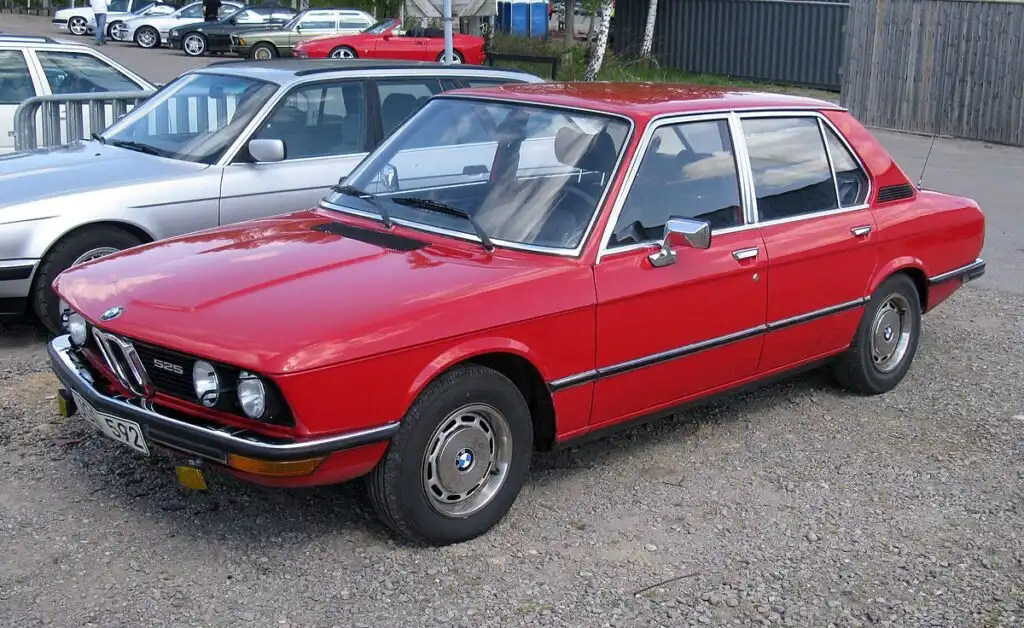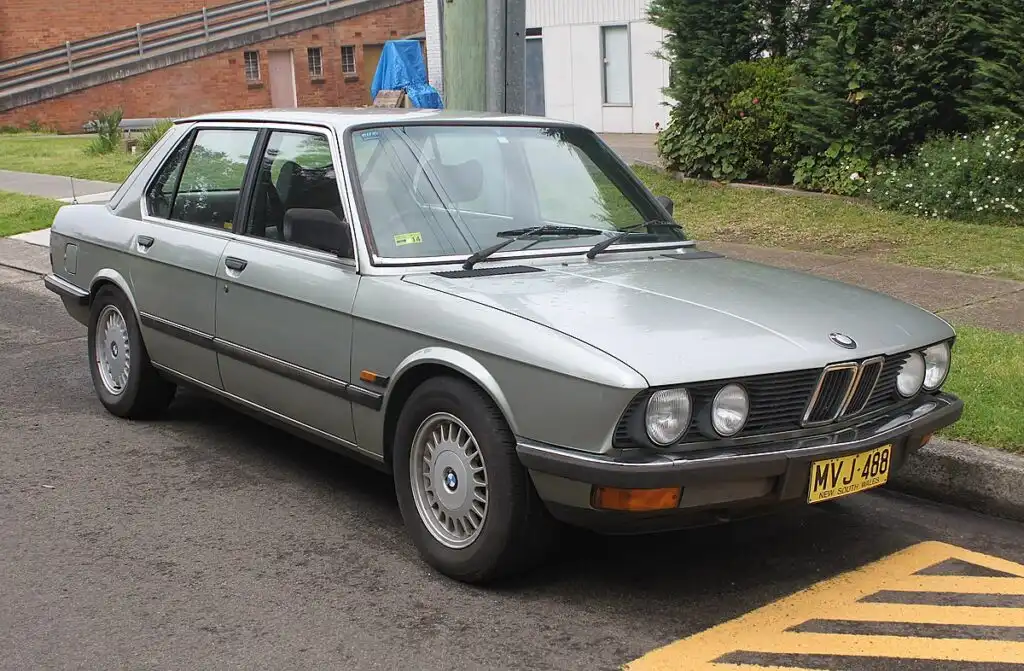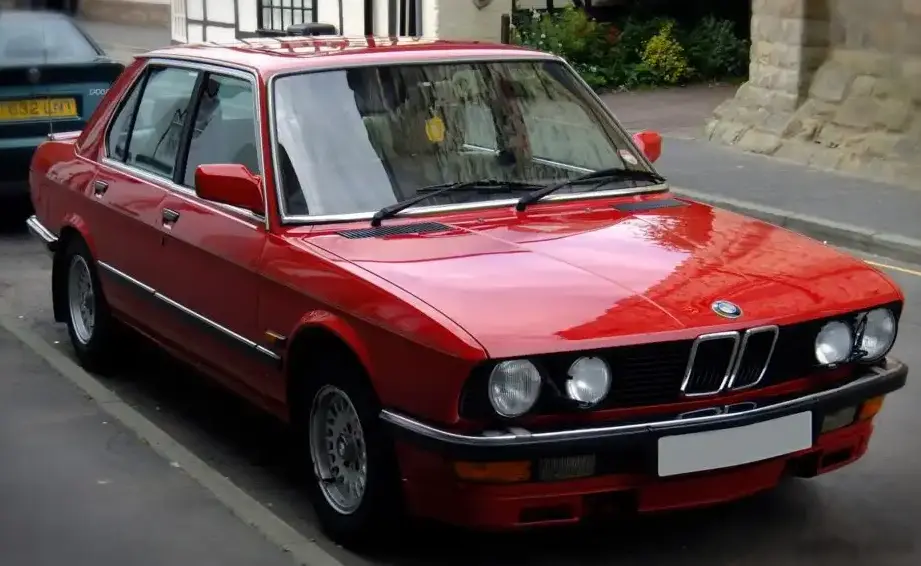
The BMW 5 Series E28 525e, produced from 1984 to 1987, represented a unique offering within the second generation of BMW’s mid-size executive car. Positioned as an economy-focused variant, the 525e aimed to balance BMW’s reputation for driving dynamics with increased fuel efficiency, particularly appealing to the American market where fuel economy regulations were becoming increasingly stringent. It was a key model in the E28 lineup, bridging the gap between the more performance-oriented 535i and the base 520i (not widely available in the US). The “e” designation signified “economy,” highlighting its intended purpose. This model utilized a modified version of BMW’s renowned inline-six engine, optimized for lower fuel consumption, and was primarily offered with a manual transmission, though an automatic option was available.
Technical Specifications
| Brand | BMW |
| Model | 5 Series |
| Generation | 5 Series (E28) |
| Type (Engine) | 525e 2.7 (129 Hp) |
| Start of production | 1984 |
| End of production | 1987 |
| Powertrain Architecture | Internal Combustion engine |
| Body type | Sedan |
| Seats | 5 |
| Doors | 4 |
| Fuel consumption (urban) | 12.2 l/100 km (19.3 US mpg) |
| Fuel consumption (extra urban) | 7 l/100 km (33.6 US mpg) |
| Fuel consumption (combined) | 8.9 l/100 km (26.4 US mpg) |
| Fuel Type | Petrol (Gasoline) |
| Acceleration 0 – 100 km/h | 10.8 sec |
| Acceleration 0 – 62 mph | 10.8 sec |
| Acceleration 0 – 60 mph | 10.3 sec |
| Maximum speed | 190 km/h (118.06 mph) |
| Weight-to-power ratio | 9.9 kg/Hp |
| Weight-to-torque ratio | 5.6 kg/Nm |
| Power | 129 Hp @ 4250 rpm |
| Torque | 230 Nm @ 3250 rpm (169.64 lb.-ft. @ 3250 rpm) |
| Engine layout | Front, Longitudinal |
| Engine Model/Code | M20B27 |
| Engine displacement | 2693 cm3 (164.34 cu. in.) |
| Number of cylinders | 6 |
| Engine configuration | Inline |
| Cylinder Bore | 84 mm (3.31 in.) |
| Piston Stroke | 81 mm (3.19 in.) |
| Compression ratio | 22:1 |
| Number of valves per cylinder | 2 |
| Fuel injection system | Carburettor |
| Engine aspiration | Naturally aspirated |
| Engine oil capacity | 4.25 l (4.49 US qt | 3.74 UK qt) |
| Coolant capacity | 12 l (12.68 US qt | 10.56 UK qt) |
| Kerb Weight | 1280 kg (2821.92 lbs.) |
| Trunk (boot) space (minimum) | 460 l (16.24 cu. ft.) |
| Fuel tank capacity | 70 l (18.49 US gal | 15.4 UK gal) |
| Length | 4620 mm (181.89 in.) |
| Width | 1700 mm (66.93 in.) |
| Height | 1415 mm (55.71 in.) |
| Wheelbase | 2625 mm (103.35 in.) |
| Front track | 1430 mm (56.3 in.) |
| Rear track | 1470 mm (57.87 in.) |
| Ride height (ground clearance) | 140 mm (5.51 in.) |
| Drivetrain Architecture | Rear wheel drive |
| Number of gears | 5 |
| Gearbox type | Manual transmission |
| Front brakes | Disc |
| Rear brakes | Disc |
Powertrain & Engine Architecture
The heart of the 525e was the M20B27 engine, a 2.7-liter inline-six cylinder powerplant. This engine was a derivative of the M20 family, but significantly modified to prioritize fuel economy. The most notable change was the implementation of a carburetor instead of the Bosch K-Jetronic fuel injection system found on the 535i. This, along with a lower compression ratio (22:1) and revised camshaft timing, reduced power output to 129 horsepower at 4250 rpm and 230 Nm (169.64 lb-ft) of torque at 3250 rpm. The engine featured a single overhead camshaft (SOHC) valvetrain with two valves per cylinder. The engine was mounted longitudinally in the front of the vehicle, driving the rear wheels. The standard transmission was a Getrag 265 five-speed manual, although a four-speed automatic transmission was also offered, albeit with a noticeable impact on performance.
Driving Characteristics
The 525e, particularly with the manual transmission, offered a reasonably engaging driving experience, albeit one distinctly different from the more potent 535i. The lower horsepower and torque figures meant acceleration was slower, taking approximately 10.8 seconds to reach 62 mph. The carburetor, while aiding fuel economy, sometimes resulted in a slight delay in throttle response compared to fuel injection. The automatic transmission further dulled performance, increasing acceleration times. However, the 525e still benefited from the E28’s well-regarded chassis and suspension, providing a comfortable ride and predictable handling. The gear ratios in the manual transmission were chosen to optimize fuel efficiency, meaning the engine often needed to be revved to extract maximum performance.
Equipment & Trim Levels
The 525e was generally equipped with a more modest level of standard features compared to the 535i. Standard equipment typically included cloth upholstery, manual windows and door locks, and a basic stereo system. Air conditioning was a common option. The interior design was functional and typical of BMW in the 1980s, with a focus on ergonomics. Optional extras included a sunroof, leather upholstery, power windows and locks, and a more advanced sound system. The trim level was relatively consistent, with limited customization options available.
Chassis & Braking
The 525e shared the E28’s robust chassis and suspension setup. It featured independent suspension at all four wheels, with MacPherson struts at the front and semi-trailing arms at the rear. The braking system consisted of disc brakes on all four wheels, providing adequate stopping power for the car’s weight and performance. Stabilizer bars were fitted front and rear to reduce body roll during cornering. The suspension tuning was generally softer than that of the 535i, prioritizing ride comfort over ultimate handling performance. The rear drums were not available on the 525e, all models came with disc brakes.
Market Reception & Comparison
The 525e received mixed reviews. Critics acknowledged its improved fuel economy compared to the 535i, but many lamented the loss of performance and the somewhat sluggish response of the carburetor. In the US market, where fuel economy was a major concern, the 525e found a reasonable level of success. However, it was often overshadowed by the more desirable 535i. Compared to the 535i, the 525e offered significantly lower running costs but a less exhilarating driving experience. Compared to the 520i (less common in the US), the 525e provided a noticeable power advantage.
Legacy
The BMW 525e E28, while not the most celebrated member of the E28 family, holds a unique place in BMW history. It represented an early attempt by the company to address growing concerns about fuel efficiency without completely sacrificing driving pleasure. Today, the 525e is a relatively affordable entry point into the classic BMW E28 world. The M20B27 engine, while less powerful than its counterparts, is known for its durability and relative simplicity. Finding well-maintained examples can be challenging, as many were used as daily drivers and may have suffered from deferred maintenance. However, for enthusiasts seeking a classic BMW with reasonable running costs, the 525e offers a compelling option.