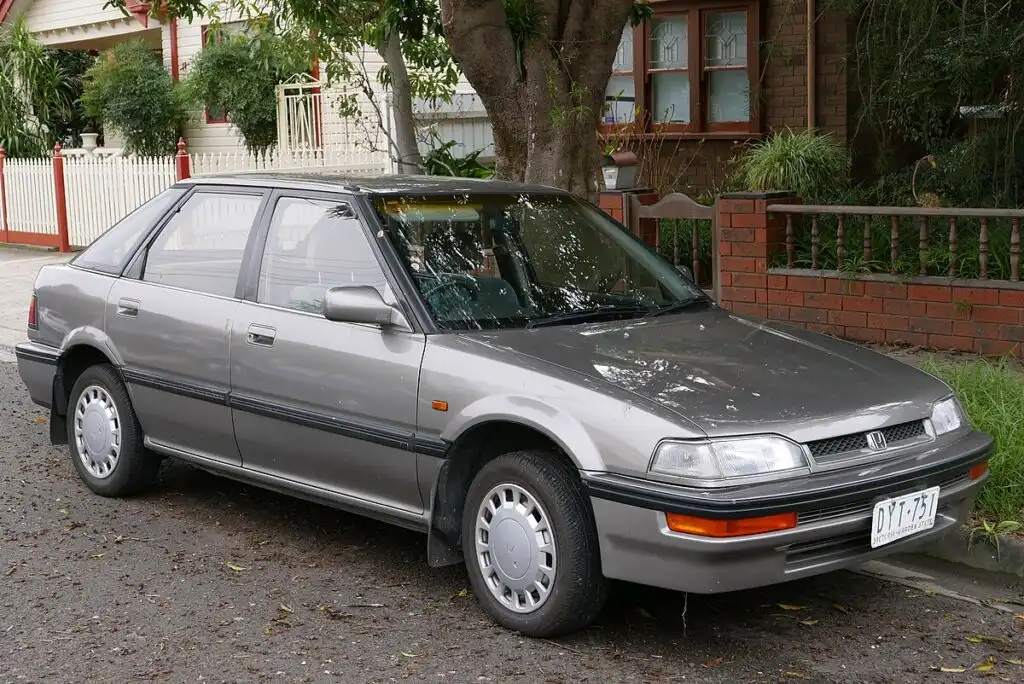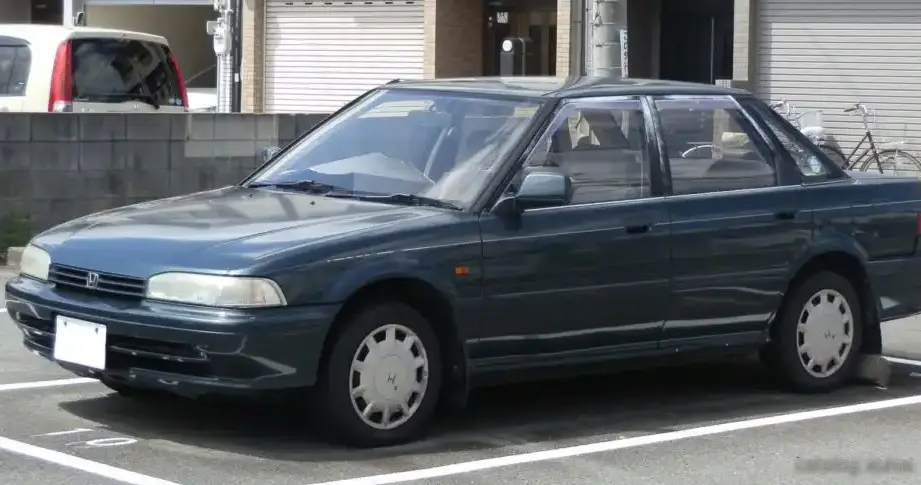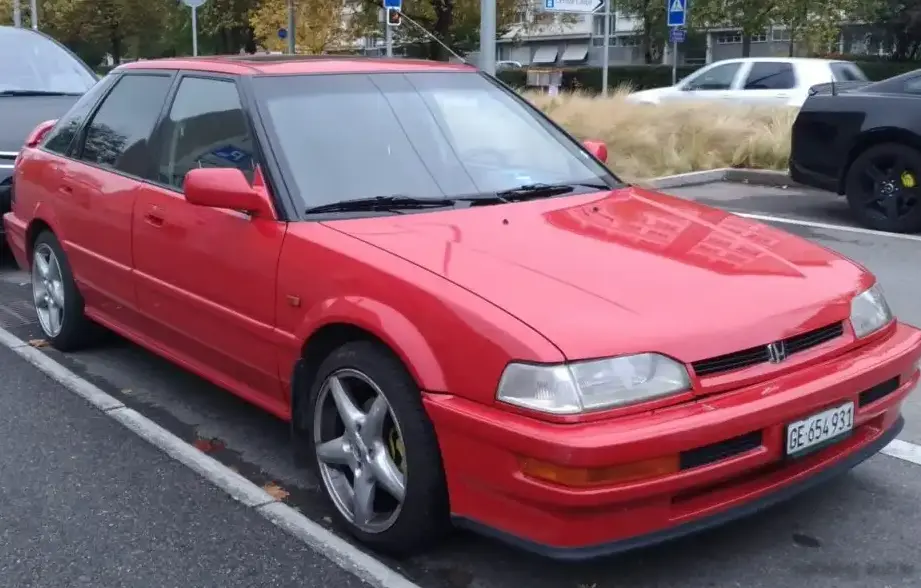
The Honda Concerto Hatch (HW) 1.5 16V, produced between 1989 and 1995, represented Honda’s entry into the competitive European small family car segment. Positioned as a practical and reliable hatchback, the Concerto aimed to offer a blend of affordability, fuel efficiency, and Honda’s renowned build quality. This particular 1.5-liter, 90 horsepower variant with a manual transmission served as a core model within the Concerto lineup, appealing to buyers seeking economical transportation without sacrificing essential features. It was part of the broader HW generation, which offered both hatchback and sedan body styles, and played a role in establishing Honda’s presence in the European market.
Technical Specifications
| Brand | Honda |
| Model | Concerto |
| Generation | Concerto Hatch (HW) |
| Type (Engine) | 1.5 16V (90 Hp) |
| Start of production | 1989 |
| End of production | 1995 |
| Powertrain Architecture | Internal Combustion engine |
| Body type | Hatchback |
| Seats | 5 |
| Doors | 5 |
| Fuel consumption (urban) | 8.7 l/100 km (27 US mpg, 32.5 UK mpg, 11.5 km/l) |
| Fuel consumption (extra urban) | 6.8 l/100 km (34.6 US mpg, 41.5 UK mpg, 14.7 km/l) |
| Fuel consumption (combined) | 8.3 l/100 km (28.3 US mpg, 34 UK mpg, 12 km/l) |
| Fuel Type | Petrol (Gasoline) |
| Maximum speed | 180 km/h (111.85 mph) |
| Weight-to-power ratio | 10.6 kg/Hp, 94.7 Hp/tonne |
| Weight-to-torque ratio | 8 kg/Nm, 125.3 Nm/tonne |
| Power | 90 Hp @ 6000 rpm |
| Power per litre | 60.3 Hp/l |
| Torque | 119 Nm @ 4500 rpm (87.77 lb.-ft. @ 4500 rpm) |
| Engine layout | Front, Transverse |
| Engine Model/Code | D15B2 |
| Engine displacement | 1493 cm3 (91.11 cu. in.) |
| Number of cylinders | 4 |
| Engine configuration | Inline |
| Cylinder Bore | 75 mm (2.95 in.) |
| Piston Stroke | 84.5 mm (3.33 in.) |
| Compression ratio | 9.2:1 |
| Number of valves per cylinder | 4 |
| Fuel injection system | Single-point injection |
| Engine aspiration | Naturally aspirated engine |
| Valvetrain | OHC |
| Engine oil capacity | 3.3 l (3.49 US qt | 2.9 UK qt) |
| Kerb Weight | 950 kg (2094.39 lbs.) |
| Trunk (boot) space – minimum | 370 l (13.07 cu. ft.) |
| Trunk (boot) space – maximum | 820 l (28.96 cu. ft.) |
| Fuel tank capacity | 55 l (14.53 US gal | 12.1 UK gal) |
| Length | 4265 mm (167.91 in.) |
| Width | 1690 mm (66.54 in.) |
| Height | 1395 mm (54.92 in.) |
| Wheelbase | 2550 mm (100.39 in.) |
| Front track | 1475 mm (58.07 in.) |
| Rear (Back) track | 1470 mm (57.87 in.) |
| Drivetrain Architecture | The Internal combustion engine (ICE) drives the front wheels of the vehicle. |
| Drive wheel | Front wheel drive |
| Number of gears and type of gearbox | 5 gears, manual transmission |
| Front suspension | Coil spring |
| Rear suspension | Coil spring |
| Front brakes | Ventilated discs |
| Rear brakes | Drum |
| Assisting systems | ABS (Anti-lock braking system) |
| Steering type | Steering rack and pinion |
| Power steering | Hydraulic Steering |
| Tires size | 175/70 R13 |
Powertrain & Engine Architecture
The heart of the Concerto 1.5 16V was the D15B2 engine, a 1.5-liter inline-four cylinder gasoline engine. This engine featured a single overhead camshaft (SOHC) valvetrain operating four valves per cylinder. The D15B2 utilized a single-point fuel injection system, a common technology for the time, which delivered fuel into the intake manifold rather than directly into the cylinders. This system, while less efficient than later multi-point injection systems, contributed to the engine’s affordability and relative simplicity. The engine produced 90 horsepower at 6000 rpm and 119 Nm (87.77 lb-ft) of torque at 4500 rpm. The engine’s design prioritized fuel economy and smooth operation over outright performance. The five-speed manual transmission was the standard offering for this trim, providing a reasonable balance between acceleration and fuel efficiency.
Driving Characteristics
The 1.5 16V Concerto offered a predictable and undemanding driving experience. With 90 horsepower propelling a relatively lightweight chassis (around 950 kg or 2094 lbs), acceleration was adequate for everyday driving, but not particularly brisk. The five-speed manual transmission allowed drivers to keep the engine in its optimal power band, though the engine lacked the low-end torque found in larger displacement engines. Compared to the more powerful (and expensive) Concerto variants, this 1.5L model felt less strained during highway cruising, but also lacked the responsiveness needed for quick overtaking maneuvers. The gear ratios were tuned for economy, resulting in a slightly higher engine speed at highway speeds. The hydraulic power steering provided light and easy steering, making it maneuverable in urban environments.
Equipment & Trim Levels
The Concerto 1.5 16V typically came equipped with a modest level of standard features. Interior appointments included cloth upholstery, a basic dashboard layout with analog gauges, and manual windows and door locks. Power steering was a standard feature, enhancing driver comfort. Optional extras included a sunroof, upgraded audio systems, and central locking. The trim level was generally considered entry-level to mid-range within the Concerto lineup, focusing on providing essential transportation at an affordable price point. The interior was functional and durable, prioritizing practicality over luxury.
Chassis & Braking
The Concerto’s chassis employed a relatively simple suspension setup, utilizing coil springs and a torsion beam rear axle. This configuration provided a comfortable ride quality, though it wasn’t particularly sporty. The front suspension featured MacPherson struts, offering decent handling characteristics. Braking duties were handled by ventilated discs at the front and drum brakes at the rear. An Anti-lock Braking System (ABS) was available, enhancing safety by preventing wheel lockup during hard braking. The relatively light weight of the vehicle helped to compensate for the less sophisticated braking system.
Market Reception & Comparison
The Honda Concerto 1.5 16V was generally well-received by automotive critics as a practical and reliable small family car. It was praised for its fuel efficiency, build quality, and comfortable ride. However, it was often criticized for its relatively modest performance and somewhat bland styling. Compared to other trims in the Concerto lineup, such as those equipped with larger engines, the 1.5L model offered a more affordable entry point but sacrificed performance. Against competitors like the Ford Escort, Opel Astra, and Volkswagen Golf, the Concerto offered a compelling alternative, particularly for buyers prioritizing reliability and fuel economy.
Legacy
The Honda Concerto, and specifically the 1.5 16V variant, has developed a reputation for long-term reliability. The D15B2 engine is known for its durability and relatively low maintenance costs. In the used car market today, Concerto models in good condition are sought after by enthusiasts and those seeking a dependable and affordable classic car. While not a performance icon, the Concerto 1.5 16V remains a testament to Honda’s commitment to building reliable and practical vehicles. Parts availability can be a challenge, but the engine’s simplicity and widespread use in other Honda models often make sourcing components manageable.