
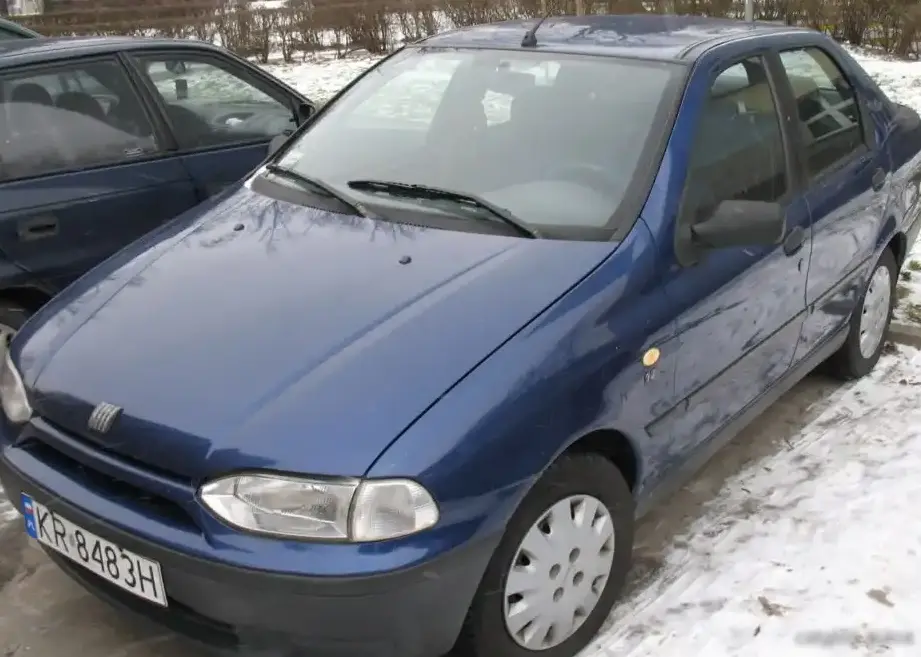
The Fiat Siena (178) 1.4 i EL, produced primarily for the Latin American market, represented an entry-level offering within the second generation of the Siena compact sedan. Introduced in 2002 and remaining in production for a limited time, this variant aimed to provide affordable and practical transportation. It was positioned as the base model, offering a balance between fuel efficiency and basic functionality. The 178 series Siena was a significant model for Fiat, particularly in Brazil and Argentina, where it competed with other locally produced compacts. This specific 1.4L engine and 5-speed manual transmission combination was designed to appeal to budget-conscious buyers seeking a reliable and economical vehicle.
Technical Specifications
| Brand | Fiat |
| Model | Siena |
| Generation | Siena (178) |
| Type (Engine) | 1.4 i EL (71 Hp) |
| Start of production | 2002 |
| End of production | 2002 |
| Powertrain Architecture | Internal Combustion engine |
| Body type | Sedan |
| Seats | 5 |
| Doors | 4 |
| Fuel Type | Petrol (Gasoline) |
| Acceleration 0 – 100 km/h | 12.9 sec |
| Acceleration 0 – 62 mph | 12.9 sec |
| Acceleration 0 – 60 mph | 12.3 sec |
| Maximum speed | 164 km/h (101.9 mph) |
| Weight-to-power ratio | 14.4 kg/Hp, 69.3 Hp/tonne |
| Weight-to-torque ratio | 9.5 kg/Nm, 105.4 Nm/tonne |
| Power | 71 Hp @ 6000 rpm |
| Power per litre | 51.7 Hp/l |
| Torque | 108 Nm @ 3000 rpm (79.66 lb.-ft. @ 3000 rpm) |
| Engine layout | Front, Transverse |
| Engine Model/Code | 178B2016 |
| Engine displacement | 1372 cm3 (83.72 cu. in.) |
| Number of cylinders | 4 |
| Engine configuration | Inline |
| Cylinder Bore | 80.5 mm (3.17 in.) |
| Piston Stroke | 67.4 mm (2.65 in.) |
| Compression ratio | 9.2:1 |
| Number of valves per cylinder | 2 |
| Fuel injection system | Single-point injection |
| Engine aspiration | Naturally aspirated engine |
| Engine oil capacity | 3.6 l (3.8 US qt | 3.17 UK qt) |
| Coolant | 6.9 l (7.29 US qt | 6.07 UK qt) |
| Kerb Weight | 1025 kg (2259.74 lbs.) |
| Max. weight | 1510 kg (3328.98 lbs.) |
| Max load | 485 kg (1069.24 lbs.) |
| Trunk (boot) space – minimum | 500 l (17.66 cu. ft.) |
| Trunk (boot) space – maximum | 850 l (30.02 cu. ft.) |
| Fuel tank capacity | 48 l (12.68 US gal | 10.56 UK gal) |
| Length | 4100 mm (161.42 in.) |
| Width | 1614 mm (63.54 in.) |
| Height | 1440 mm (56.69 in.) |
| Wheelbase | 2360 mm (92.91 in.) |
| Front track | 1388 mm (54.65 in.) |
| Rear (Back) track | 1378 mm (54.25 in.) |
| Drivetrain Architecture | The Internal combustion engine (ICE) drives the front wheels of the vehicle. |
| Drive wheel | Front wheel drive |
| Number of gears and type of gearbox | 5 gears, manual transmission |
| Front suspension | Coil spring |
| Rear suspension | Coil spring |
| Front brakes | Disc |
| Rear brakes | Drum |
| Assisting systems | ABS (Anti-lock braking system) |
| Steering type | Steering rack and pinion |
| Tires size | 175/65 R14 |
| Wheel rims size | 14 |
Introduction
The Fiat Siena (178) 1.4 i EL was a key component of Fiat’s strategy to offer affordable and practical vehicles in South America. Built on the 178 project platform, which also underpinned the Palio, the Siena aimed to provide a more traditional sedan body style compared to the Palio’s hatchback configuration. The 1.4 i EL trim level represented the entry point into the Siena range, focusing on value and efficiency. Production of this specific variant was concentrated in Brazil and Argentina, catering to the demands of a price-sensitive market. The Siena, in general, was designed to compete with established players like the Volkswagen Gol and Chevrolet Corsa, offering a compelling alternative with Italian styling and engineering.
Powertrain & Engine Architecture
At the heart of the 1.4 i EL was the 178B2016 engine, a 1.4-liter inline-four cylinder gasoline engine. This engine utilized a single-point fuel injection system, a relatively simple and cost-effective technology for the time. The engine produced 71 horsepower at 6000 rpm and 108 Nm (79.66 lb-ft) of torque at 3000 rpm. The engine featured a two-valve per cylinder configuration and a compression ratio of 9.2:1. The engine’s design prioritized fuel economy and reliability over outright performance. Paired with the engine was a five-speed manual transmission, chosen for its simplicity and efficiency. This transmission was a standard unit for Fiat’s small car range, offering smooth gear changes and a relatively direct driving experience.
Driving Characteristics
The Siena 1.4 i EL, with its 71 horsepower and 5-speed manual transmission, offered modest performance. Acceleration from 0 to 100 km/h (0-62 mph) took approximately 12.9 seconds, and top speed was around 164 km/h (101.9 mph). The engine’s torque delivery was relatively flat, providing adequate power for everyday driving situations. However, overtaking maneuvers required careful planning and downshifting. Compared to higher-spec Siena models equipped with larger engines, such as the 1.6 or 1.8-liter variants, the 1.4 i EL felt noticeably less powerful. The gear ratios in the five-speed manual transmission were geared towards fuel efficiency, resulting in a slightly less engaging driving experience than the more performance-oriented trims. The suspension, tuned for comfort, provided a reasonably smooth ride on typical road surfaces.
Equipment & Trim Levels
The 1.4 i EL trim level was characterized by its basic but functional equipment list. Standard features typically included power steering, a basic audio system, and cloth upholstery. Air conditioning was often an optional extra. The interior design was simple and utilitarian, focusing on durability and ease of use. The dashboard layout was straightforward, with clearly labeled controls. Safety features were limited, typically including only a driver’s airbag and ABS (Anti-lock Braking System) as standard equipment. Optional extras could include power windows, central locking, and upgraded audio systems.
Chassis & Braking
The Siena 1.4 i EL utilized a relatively simple chassis design. The front suspension consisted of coil springs, while the rear suspension also employed coil springs. The braking system featured disc brakes on the front wheels and drum brakes on the rear wheels. ABS was included as standard, providing improved braking performance in emergency situations. The steering system was a rack and pinion setup, offering reasonably precise steering feel. The relatively lightweight construction of the vehicle, with a kerb weight of 1025 kg (2259.74 lbs), helped to offset the modest engine power.
Market Reception & Comparison
The Siena 1.4 i EL was generally well-received in its target market as an affordable and reliable transportation option. Critics praised its fuel efficiency and practicality, but noted its lack of performance and limited features. Compared to other trims in the Siena lineup, the 1.4 i EL offered the lowest price point but also the least amount of power and equipment. The 1.6-liter and 1.8-liter variants provided significantly more performance, but at a higher cost. In terms of fuel economy, the 1.4 i EL was among the most efficient Siena models, making it an attractive option for budget-conscious buyers. Reliability was generally good, with the 1.4-liter engine proving to be durable and long-lasting.
Legacy
The Fiat Siena 1.4 i EL, while not a performance icon, played a significant role in establishing Fiat’s presence in the South American market. The 178B2016 engine proved to be a reliable and durable unit, and many examples are still on the road today. In the used car market, the Siena 1.4 i EL remains an affordable and practical option for those seeking a basic and dependable sedan. Maintenance costs are relatively low, and spare parts are readily available. While it may not offer the refinement or performance of more modern vehicles, the Siena 1.4 i EL represents a solid and dependable choice for those seeking a no-frills transportation solution.
