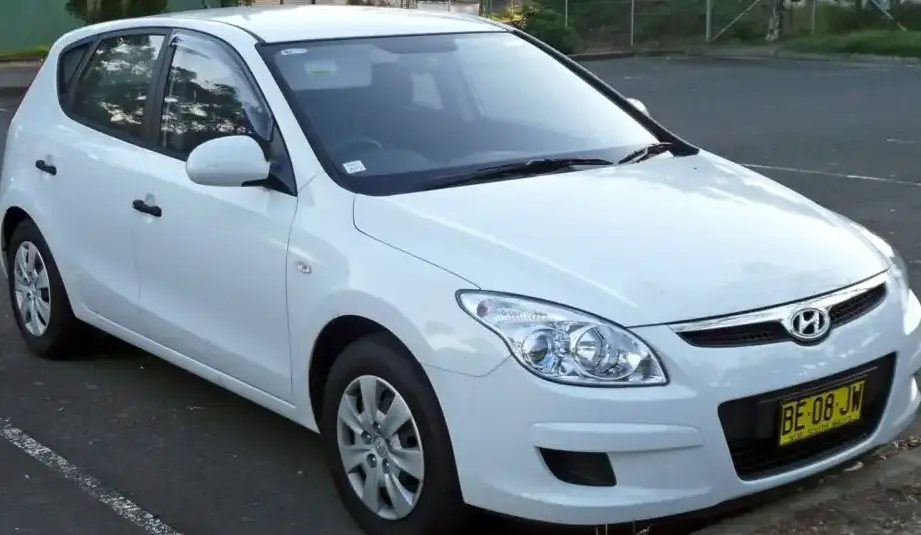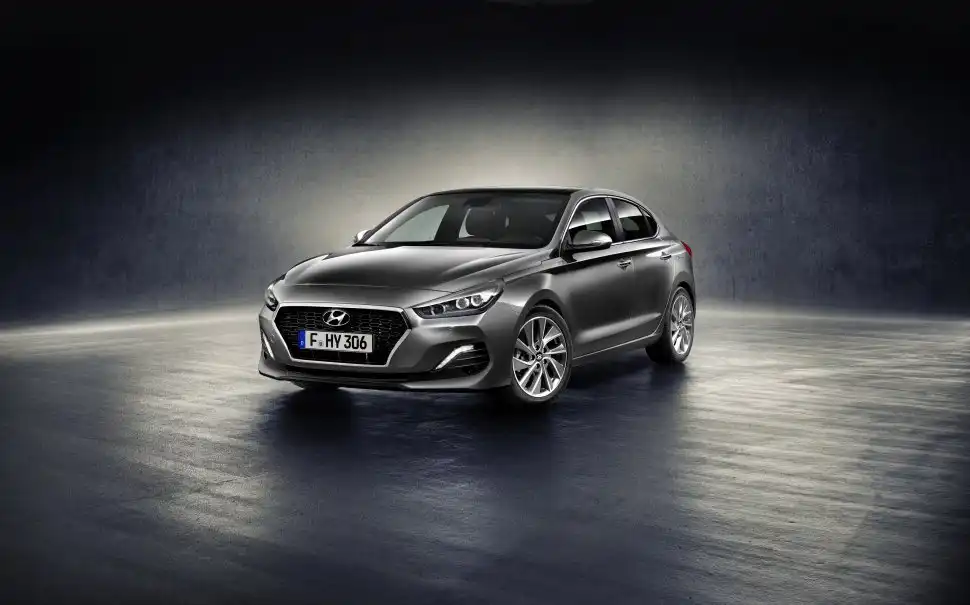
The Hyundai i30 III Fastback 1.6 CRDi (136 Hp) was a front-wheel-drive compact car produced by the South Korean manufacturer Hyundai between 2018 and 2020. It represented a stylish, practical offering within the broader third-generation i30 (PD) range, which also included hatchback and wagon body styles. The Fastback, distinguished by its sloping roofline, aimed to appeal to buyers seeking a more dynamic and coupe-like aesthetic without sacrificing the functionality of a five-door hatchback. This particular 1.6 CRDi variant occupied a mid-range position in the i30 lineup, balancing fuel efficiency with reasonable performance, and was targeted towards drivers prioritizing economy and refinement.
Technical Specifications
| Brand | Hyundai |
| Model | i30 |
| Generation | i30 III Fastback |
| Type (Engine) | 1.6 CRDi (136 Hp) |
| Start of production | 2018 |
| End of production | 2020 |
| Powertrain Architecture | Internal Combustion engine |
| Body type | Fastback |
| Seats | 5 |
| Doors | 5 |
| Fuel consumption (urban) | 4.9 l/100 km (48 US mpg, 57.6 UK mpg, 20.4 km/l) |
| Fuel consumption (extra urban) | 4.2 l/100 km (56 US mpg, 67.3 UK mpg, 23.8 km/l) |
| Fuel consumption (combined) | 4.4 l/100 km (53.5 US mpg, 64.2 UK mpg, 22.7 km/l) |
| CO2 emissions | 116 g/km |
| Fuel Type | Diesel |
| Acceleration 0 – 100 km/h | 10.4 sec |
| Acceleration 0 – 62 mph | 10.4 sec |
| Acceleration 0 – 60 mph | 9.9 sec |
| Maximum speed | 200 km/h (124.27 mph) |
| Emission standard | Euro 6d – TEMP |
| Weight-to-power ratio | 9.8 kg/Hp, 101.9 Hp/tonne |
| Weight-to-torque ratio | 4.8 kg/Nm, 209.7 Nm/tonne |
| Power | 136 Hp @ 4000 rpm |
| Power per litre | 85.1 Hp/l |
| Torque | 280 Nm @ 1500-3000 rpm (206.52 lb.-ft. @ 1500-3000 rpm) |
| Engine layout | Front, Transverse |
| Engine Model/Code | D4FE |
| Engine displacement | 1598 cm3 (97.52 cu. in.) |
| Number of cylinders | 4 |
| Engine configuration | Inline |
| Cylinder Bore | 77 mm (3.03 in.) |
| Piston Stroke | 85.8 mm (3.38 in.) |
| Number of valves per cylinder | 4 |
| Fuel injection system | Diesel Commonrail |
| Engine aspiration | Turbocharger, Intercooler |
| Engine oil capacity | 4.4 l (4.65 US qt | 3.87 UK qt) |
| Coolant | 7 l (7.4 US qt | 6.16 UK qt) |
| Kerb Weight | 1335-1487 kg (2943.17 – 3278.27 lbs.) |
| Max. weight | 1900 kg (4188.78 lbs.) |
| Max load | 413-565 kg (910.51 – 1245.61 lbs.) |
| Trunk (boot) space – minimum | 450 l (15.89 cu. ft.) |
| Trunk (boot) space – maximum | 1351 l (47.71 cu. ft.) |
| Fuel tank capacity | 50 l (13.21 US gal | 11 UK gal) |
| Max. roof load | 80 kg (176.37 lbs.) |
| Permitted trailer load with brakes (12%) | 1500 kg (3306.93 lbs.) |
| Permitted towbar download | 80 kg (176.37 lbs.) |
| Length | 4455 mm (175.39 in.) |
| Width | 1795 mm (70.67 in.) |
| Height | 1425 mm (56.1 in.) |
| Wheelbase | 2650 mm (104.33 in.) |
| Front track | 1559-1555 mm (61.38 – 61.22 in.) |
| Rear (Back) track | 1567-1563 mm (61.69 – 61.54 in.) |
| Front overhang | 905 mm (35.63 in.) |
| Rear overhang | 900 mm (35.43 in.) |
| Ride height (ground clearance) | 135 mm (5.31 in.) |
| Drivetrain Architecture | The Internal combustion engine (ICE) drives the front wheels of the vehicle. |
| Drive wheel | Front wheel drive |
| Number of gears and type of gearbox | 6 gears, manual transmission |
| Front brakes | Ventilated discs |
| Rear brakes | Disc |
| Assisting systems | ABS (Anti-lock braking system) |
| Steering type | Steering rack and pinion |
| Power steering | Electric Steering |
INTRODUCTION
The Hyundai i30 III Fastback 1.6 CRDi (136 Hp) was introduced as part of the PD generation i30, launched in 2017. Hyundai aimed to broaden the i30’s appeal with the Fastback variant, offering a more emotionally styled alternative to the traditional hatchback. The 1.6 CRDi engine, a mainstay in Hyundai’s European lineup, provided a balance between fuel economy and performance, making it a popular choice for drivers covering significant distances. This model was primarily sold in the European market, where compact diesel cars remained highly sought after due to favorable taxation and fuel costs. The Fastback body style, with its extended roofline and integrated spoiler, distinguished it from the standard i30 hatchback and offered a more sophisticated appearance.
Powertrain & Engine Architecture
The heart of the i30 III Fastback 1.6 CRDi is the D4FE engine, a 1.6-liter inline-four cylinder diesel engine. This engine utilizes a second-generation common-rail direct injection system, delivering fuel at extremely high pressure for optimized combustion. The engine is turbocharged with a variable geometry turbocharger (VGT) and intercooled, enhancing both power and torque output. The D4FE engine is known for its relatively quiet operation and good refinement for a diesel unit. The 136 horsepower output is achieved at 4,000 rpm, while the peak torque of 280 Nm (206.52 lb-ft) is available between 1500 and 3000 rpm, providing strong pulling power at lower engine speeds. The engine is paired with a six-speed manual transmission, which provides precise gear changes and contributes to the car’s overall efficiency. The engine also incorporates a diesel particulate filter (DPF) to meet stringent Euro 6d-TEMP emission standards.
Driving Characteristics
The 1.6 CRDi engine in the i30 Fastback delivers adequate performance for everyday driving. Acceleration from 0 to 60 mph takes approximately 9.9 seconds, and the top speed is 124.27 mph. While not a particularly sporty setup, the engine provides sufficient torque for comfortable overtaking and cruising on highways. The six-speed manual transmission is well-matched to the engine’s characteristics, allowing drivers to keep the engine in its optimal torque band. Compared to higher-powered i30 variants, such as those with the 1.4 T-GDi gasoline engine, the 1.6 CRDi feels less responsive but offers significantly better fuel economy. The suspension is tuned for comfort, providing a smooth ride over most road surfaces, although it may exhibit some body roll during spirited cornering. The steering is light and precise, making it easy to maneuver in urban environments.
Equipment & Trim Levels
The i30 III Fastback 1.6 CRDi typically came equipped with a reasonable level of standard features. These included air conditioning, a touchscreen infotainment system with Apple CarPlay and Android Auto compatibility, Bluetooth connectivity, and a suite of safety features such as ABS, ESC (Electronic Stability Control), and multiple airbags. Higher trim levels offered additional features such as a larger touchscreen display, navigation system, rear parking sensors, a reversing camera, and automatic climate control. Interior upholstery was typically cloth, with options for leather available on higher-spec models. The dashboard layout was modern and functional, with a focus on user-friendliness. Optional extras included a panoramic sunroof, heated seats, and a premium sound system.
Chassis & Braking
The i30 Fastback utilizes a front-wheel-drive platform with a MacPherson strut front suspension and a multi-link rear suspension. This setup provides a good balance between ride comfort and handling. The front brakes are ventilated discs, while the rear brakes are solid discs, providing adequate stopping power for the car’s weight and performance. The car is equipped with ABS (Anti-lock Braking System) and ESC (Electronic Stability Control) as standard, enhancing safety and stability. The steering is a rack-and-pinion system with electric power assistance, providing light and precise steering feel.
Market Reception & Comparison
The Hyundai i30 III Fastback 1.6 CRDi was generally well-received by automotive critics. It was praised for its stylish design, comfortable ride, and fuel efficiency. However, some critics noted that the engine could feel a bit underpowered, especially when fully loaded or driving uphill. Compared to other diesel-powered compact cars in the European market, such as the Volkswagen Golf, the i30 Fastback offered a competitive level of equipment and value for money. The i30’s five-year warranty also provided peace of mind for buyers. Fuel economy was a strong point, with combined figures of around 53.5 US mpg, making it an attractive option for drivers covering long distances.
Legacy
The Hyundai i30 III Fastback 1.6 CRDi has proven to be a relatively reliable car in the used car market. The D4FE engine is generally robust, although regular servicing and maintenance are essential to ensure its longevity. The diesel particulate filter (DPF) can be a potential issue if the car is primarily used for short journeys, as it may not have enough opportunity to regenerate. However, with proper care, the 1.6 CRDi engine can provide many years of reliable service. The i30 Fastback remains a popular choice for buyers seeking a stylish, fuel-efficient, and practical compact car.