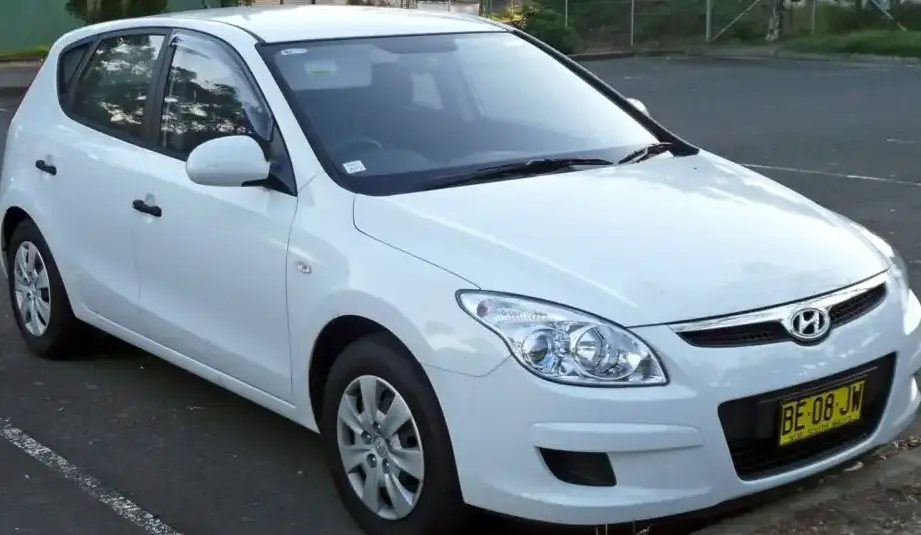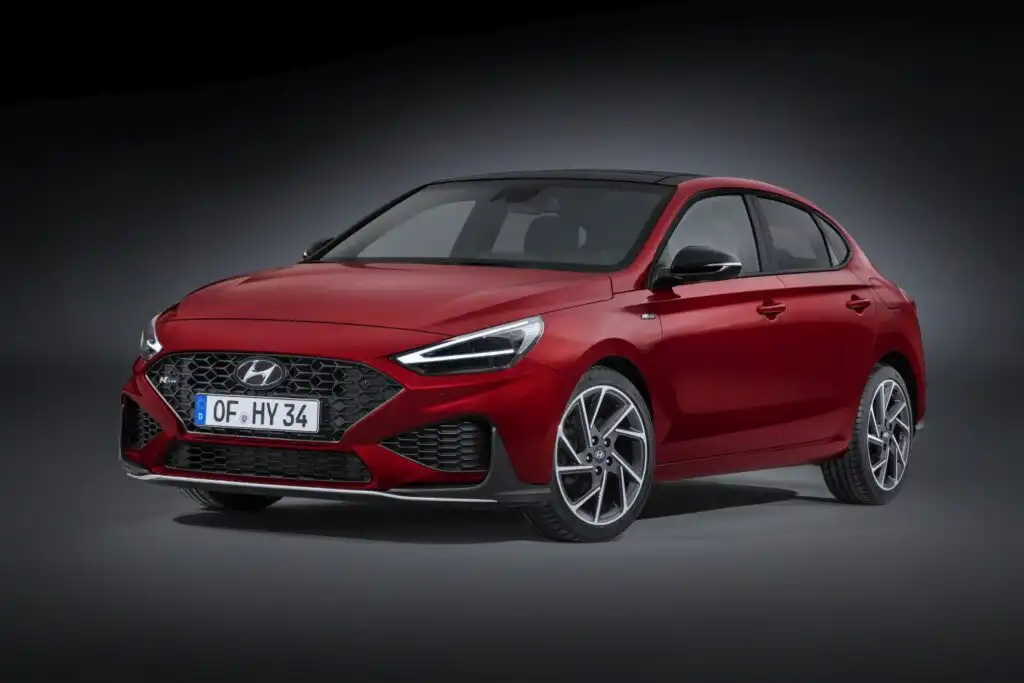
The Hyundai i30 III Fastback, specifically the 1.0 T-GDi (120 hp) Mild Hybrid variant produced from May 2020 to June 2024, represents a key offering in Hyundai’s European C-segment lineup. Positioned as an entry-level to mid-range option within the Fastback body style, this model aimed to provide a balance of fuel efficiency, modern technology, and practicality. It falls within the third generation of the i30 (codenamed PD), which underwent a significant facelift in 2020, incorporating revised styling and updated powertrain options. The Fastback body style itself, introduced with the third generation, offered a more coupe-like profile compared to the traditional hatchback, appealing to buyers seeking a more dynamic aesthetic.
Technical Specifications
| Brand | Hyundai |
| Model | i30 |
| Generation | i30 III Fastback (facelift 2020) |
| Type (Engine) | 1.0 T-GDi (120 Hp) Mild Hybrid |
| Start of production | May, 2020 |
| End of production | June, 2024 |
| Powertrain Architecture | MHEV (Mild Hybrid Electric Vehicle) |
| Body type | Fastback |
| Seats | 5 |
| Doors | 5 |
| Fuel Type | Petrol (Gasoline) |
| Acceleration 0 – 100 km/h | 11.2 sec |
| Acceleration 0 – 62 mph | 11.2 sec |
| Acceleration 0 – 60 mph | 10.6 sec |
| Maximum speed | 196 km/h (121.79 mph) |
| Emission standard | Euro 6d |
| Weight-to-power ratio | 10.4 kg/Hp |
| Weight-to-torque ratio | 7.3 kg/Nm |
| Power | 120 Hp @ 6000 rpm |
| Torque | 172 Nm @ 1500-4000 rpm (126.86 lb.-ft. @ 1500-4000 rpm) |
| Engine layout | Front, Transverse |
| Engine Model/Code | Kappa II / G3LC |
| Engine displacement | 998 cm3 (60.9 cu. in.) |
| Number of cylinders | 3 |
| Engine configuration | Inline |
| Number of valves per cylinder | 4 |
| Fuel injection system | Direct injection |
| Engine aspiration | Turbocharger, Intercooler |
| Engine oil capacity | 3.6 l (3.8 US qt | 3.17 UK qt) |
| Coolant capacity | 6 l (6.34 US qt | 5.28 UK qt) |
| Kerb Weight | 1252 kg (2760.19 lbs.) |
| Max. weight | 1820 kg (4012.41 lbs.) |
| Max load | 568 kg (1252.23 lbs.) |
| Trunk (boot) space – minimum | 450 l (15.89 cu. ft.) |
| Trunk (boot) space – maximum | 1351 l (47.71 cu. ft.) |
| Max. roof load | 80 kg (176.37 lbs.) |
| Permitted trailer load with brakes (12%) | 1200 kg (2645.55 lbs.) |
| Permitted trailer load without brakes | 600 kg (1322.77 lbs.) |
| Length | 4455 mm (175.39 in.) |
| Width | 1795 mm (70.67 in.) |
| Height | 1425 mm (56.1 in.) |
| Wheelbase | 2650 mm (104.33 in.) |
| Number of gears | 6 |
| Type of gearbox | Manual transmission |
Powertrain & Engine Architecture
The heart of this i30 variant is Hyundai’s Kappa II 1.0 T-GDi engine, bearing the internal code G3LC. This is a three-cylinder, turbocharged gasoline engine featuring direct fuel injection. The engine utilizes a single scroll turbocharger and an intercooler to enhance performance and efficiency. The mild hybrid system incorporates a 48V lithium-ion battery and a belt-driven starter generator (BSG). The BSG allows for features like extended start-stop operation, regenerative braking (capturing energy during deceleration), and a slight power assist during acceleration. The engine produces 120 horsepower at 6000 rpm and 172 Nm (126.86 lb-ft) of torque between 1500 and 4000 rpm. This engine is paired with a six-speed manual transmission, delivering power to the front wheels. The transmission’s gear ratios are tuned for a balance of fuel economy and acceptable acceleration.
Driving Characteristics
The 1.0 T-GDi engine, while offering decent fuel economy, provides modest performance in the i30 Fastback. Acceleration from 0-60 mph takes approximately 10.6 seconds, making it slower than higher-powered i30 variants like those equipped with the 1.6 T-GDi engine. The turbocharger does provide a noticeable boost in power, but the three-cylinder configuration results in some inherent vibrations and a slightly coarser engine note compared to four-cylinder engines. The six-speed manual transmission is generally well-matched to the engine, offering smooth shifts and a reasonable spread of gears. However, drivers seeking more spirited performance may find themselves frequently downshifting to maintain momentum, particularly when overtaking. The mild hybrid system contributes to improved fuel efficiency, especially in urban driving conditions.
Equipment & Trim Levels
The 1.0 T-GDi Mild Hybrid trim typically came standard with features such as air conditioning, a touchscreen infotainment system with Apple CarPlay and Android Auto compatibility, Bluetooth connectivity, and a suite of safety features including lane keeping assist, forward collision avoidance assist, and automatic emergency braking. Higher trim levels added features like a larger touchscreen display, navigation system, heated seats, a rearview camera, and parking sensors. Interior upholstery was typically cloth, with options for leather upgrades on higher trims. The dashboard layout was modern and functional, with a focus on ease of use.
Chassis & Braking
The i30 Fastback utilizes a front-wheel-drive platform with independent suspension at all four corners. The front suspension employs a McPherson strut design with coil springs and an anti-roll bar, while the rear suspension features a multi-link setup. This configuration provides a comfortable ride quality and reasonably controlled handling. Braking duties are handled by disc brakes on the front wheels and drum brakes on the rear wheels in many configurations, although some higher trims featured rear disc brakes. The steering system is a rack and pinion type, providing precise and responsive steering feel.
Market Reception & Comparison
The 1.0 T-GDi Mild Hybrid i30 Fastback was generally well-received by automotive critics as a practical and fuel-efficient option. It was praised for its modern styling, comfortable interior, and comprehensive list of standard features. However, some reviewers noted that the engine lacked the outright performance of its larger counterparts. Compared to the 1.6 T-GDi variants, the 1.0 T-GDi offered significantly better fuel economy but at the expense of acceleration. The 1.6 diesel models provided similar torque but with a different driving experience. The mild hybrid system was seen as a positive step towards improving fuel efficiency and reducing emissions.
Legacy
The Kappa II 1.0 T-GDi engine has proven to be a relatively reliable powertrain, although some owners have reported minor issues with the turbocharger and fuel injectors. The mild hybrid system has also demonstrated good long-term durability. In the used car market, the 1.0 T-GDi Mild Hybrid i30 Fastback represents a good value proposition for buyers seeking a fuel-efficient and well-equipped compact car. Its combination of practicality, technology, and affordability has made it a popular choice among budget-conscious consumers. The i30 Fastback, in general, helped Hyundai solidify its position as a major player in the European C-segment market.