Technical Specifications
| Brand | Opel |
| Model | Astra |
| Generation | Astra F (facelift 1994) |
| Type (Engine) | 1.6i Ecotec 16V (101 Hp) Automatic |
| Start of production | August, 1994 |
| End of production | December, 1997 |
| Powertrain Architecture | Internal Combustion engine |
| Body type | Hatchback |
| Seats | 5 |
| Doors | 3 |
| Fuel consumption (urban) | 10.3 l/100 km (22.8 US mpg, 27.4 UK mpg, 9.7 km/l) |
| Fuel consumption (extra urban) | 7.1 l/100 km (33.1 US mpg, 39.8 UK mpg, 14.1 km/l) |
| Fuel consumption (combined) | 9.1 l/100 km (25.8 US mpg, 31 UK mpg, 11 km/l) |
| Fuel Type | Petrol (Gasoline) |
| Acceleration 0 – 100 km/h | 13.5 sec |
| Acceleration 0 – 62 mph | 13.5 sec |
| Acceleration 0 – 60 mph | 12.8 sec |
| Maximum speed | 183 km/h (113.71 mph) |
| Weight-to-power ratio | 10.5 kg/Hp, 94.8 Hp/tonne |
| Weight-to-torque ratio | 7.2 kg/Nm, 139 Nm/tonne |
| Power | 101 Hp @ 6200 rpm |
| Power per litre | 63.2 Hp/l |
| Torque | 148 Nm @ 3500 rpm (109.16 lb.-ft. @ 3500 rpm) |
| Engine layout | Front, Transverse |
| Engine Model/Code | X16XEL |
| Engine displacement | 1598 cm3 (97.52 cu. in.) |
| Number of cylinders | 4 |
| Engine configuration | Inline |
| Cylinder Bore | 79 mm (3.11 in.) |
| Piston Stroke | 81.5 mm (3.21 in.) |
| Compression ratio | 10.5:1 |
| Number of valves per cylinder | 4 |
| Fuel injection system | Multi-port manifold injection |
| Engine aspiration | Naturally aspirated engine |
| Valvetrain | DOHC |
| Engine oil capacity | 3.5 l (3.7 US qt | 3.08 UK qt) |
| Coolant capacity | 5.9 l (6.23 US qt | 5.19 UK qt) |
| Kerb Weight | 1065/1085 kg (2347.92 lbs.) |
| Max. weight | 1570 kg (3461.26 lbs.) |
| Max load | 485-505 kg (1069.24 – 1113.33 lbs.) |
| Trunk (boot) space – minimum | 360 l (12.71 cu. ft.) |
| Trunk (boot) space – maximum | 1200 l (42.38 cu. ft.) |
| Fuel tank capacity | 52 l (13.74 US gal | 11.44 UK gal) |
| Length | 4051 mm (159.49 in.) |
| Width | 1696 mm (66.77 in.) |
| Width including mirrors | 1852 mm (72.91 in.) |
| Height | 1410 mm (55.51 in.) |
| Wheelbase | 2517 mm (99.09 in.) |
| Front track | 1424 mm (56.06 in.) |
| Rear (Back) track | 1423 mm (56.02 in.) |
| Ride height (ground clearance) | 135 mm (5.31 in.) |
| Drag coefficient (Cd) | 0.32 |
| Minimum turning circle | 10.5 m (34.45 ft.) |
| Drivetrain Architecture | ICE drives front wheels |
| Drive wheel | Front wheel drive |
| Number of gears | 4 |
| Gearbox type | automatic transmission |
| Front suspension | Wishbone |
| Rear suspension | Suspension with traction connecting levers |
| Front brakes | Disc |
| Rear brakes | Drum |
| Steering type | Steering rack and pinion |
| Tires size | 175/65 R14 82H |
| Wheel rims size | 5.5J x 14 |
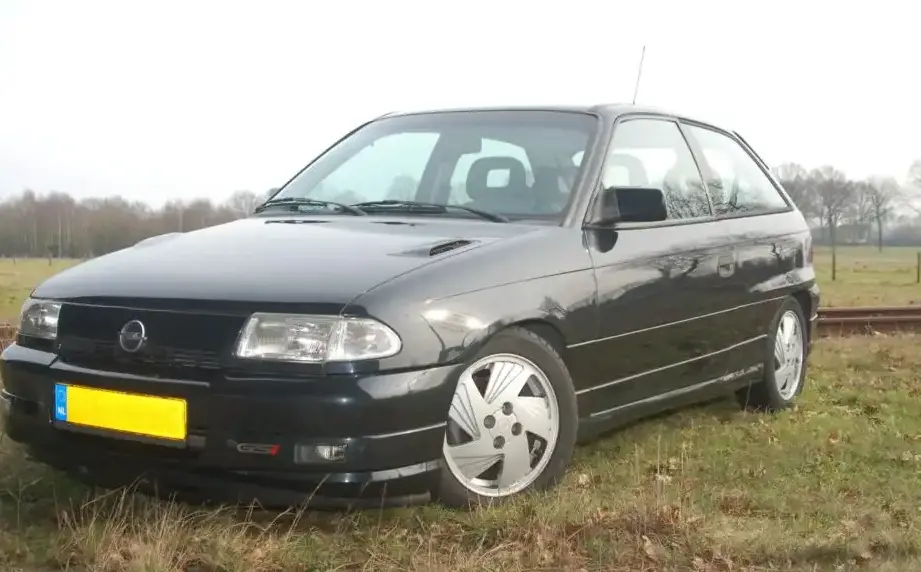
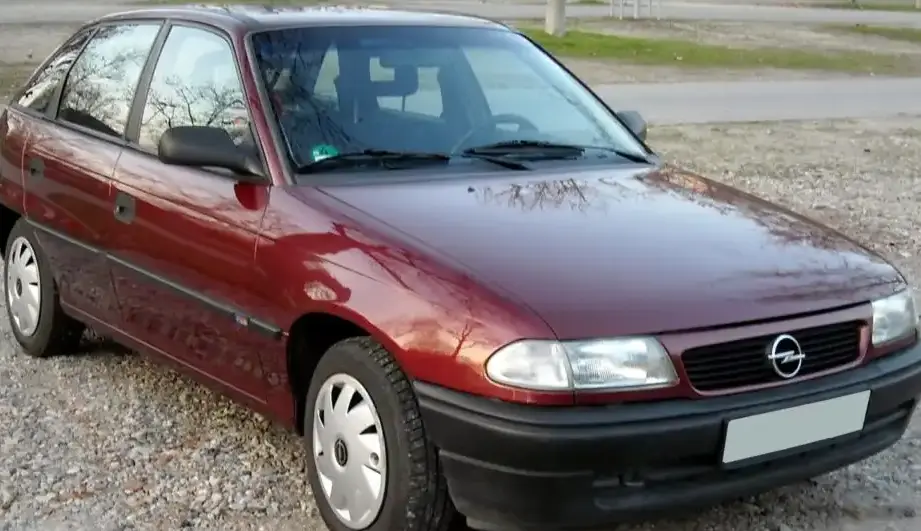
The Opel Astra F facelift, introduced in August 1994 and produced through December 1997, included the 1.6i Ecotec 16V Automatic as a key variant. Positioned as a mid-range offering, it aimed to balance affordability, fuel efficiency, and a comfortable driving experience. This model was primarily marketed in Europe, where the Astra F was a significant competitor in the compact hatchback segment. The facelift brought updated styling and refinements to the original Astra F, broadening its appeal. This specific configuration – the 1.6-liter engine paired with a four-speed automatic transmission – was designed for drivers who valued ease of use over outright performance.
Powertrain & Engine Architecture
The heart of this Astra variant is the X16XEL engine, a 1.6-liter inline-four cylinder powerplant belonging to Opel’s Ecotec family. This engine featured multi-port fuel injection and a double overhead camshaft (DOHC) valvetrain, contributing to its relatively efficient operation and respectable power output for its displacement. The X16XEL was known for its durability and relatively simple design, making it a popular choice for fleet vehicles and everyday drivers. The four-speed automatic transmission, while not offering the most modern gear ratios, provided smooth and convenient shifting. This transmission was designed for comfort rather than performance, with wider gear spacing prioritizing fuel economy and ease of driving in urban environments. The engine’s 101 horsepower and 148 Nm (109 lb-ft) of torque were adequate for typical driving conditions, but it wasn’t designed for rapid acceleration.
Driving Characteristics
The 1.6i Ecotec Automatic Astra F offered a comfortable and predictable driving experience. Acceleration from 0 to 100 km/h (0-62 mph) took around 13.5 seconds, which was noticeably slower than the manual transmission versions or those equipped with larger engines. The automatic transmission’s shift points were programmed for fuel efficiency, meaning the engine often operated at lower RPMs, resulting in a less engaging driving experience. However, this also contributed to quieter operation and reduced fuel consumption. The steering was light and easy, making it well-suited for city driving. Compared to the more powerful Astra variants, such as those with the 2.0-liter 16V engine, this model prioritized fuel economy and ease of use over outright performance.
Equipment & Trim Levels
The 1.6i Ecotec Automatic typically came with a reasonable level of standard equipment. This included central locking, power steering, and an adjustable steering column. Interior upholstery was typically cloth, with a functional and durable design. Optional extras included air conditioning, electric windows, and a radio/cassette player. The trim level often dictated the quality of the interior materials and the availability of additional features. While not as lavishly equipped as higher-spec Astra models, the 1.6i Automatic provided a comfortable and practical interior for everyday use.
Chassis & Braking
The Astra F utilized a relatively simple chassis design. Front suspension consisted of wishbones, while the rear employed a torsion beam setup with traction connecting levers. This configuration provided a good balance between ride comfort and handling. Braking was handled by disc brakes on the front wheels and drum brakes on the rear. This configuration was common for vehicles in this price range during the 1990s. The braking system was adequate for normal driving conditions, but lacked the stopping power of more advanced systems found on higher-performance vehicles.
Market Reception & Comparison
The 1.6i Ecotec Automatic Astra F was generally well-received by critics as a practical and affordable family car. It was praised for its fuel efficiency and comfortable ride. However, its relatively slow acceleration and lack of sporty handling were often noted. Compared to the manual transmission versions, the automatic offered less driver engagement but greater convenience. Compared to the higher-output Astra variants, it represented a more budget-friendly option, appealing to drivers who prioritized practicality over performance. Fuel economy figures of around 9.1 l/100 km (25.8 US mpg) were competitive for its class.
Legacy
The X16XEL engine and the four-speed automatic transmission used in this Astra variant proved to be relatively reliable. While not without their potential issues (such as occasional coolant leaks or sensor failures), these components generally held up well over time with proper maintenance. Today, the 1.6i Ecotec Automatic Astra F is a relatively affordable classic car. It’s often sought after by enthusiasts looking for a simple, reliable, and inexpensive vehicle. Parts availability is generally good, making it relatively easy to maintain and repair. While not a performance icon, this Astra variant represents a significant piece of automotive history, embodying the practical and affordable compact car ethos of the 1990s.