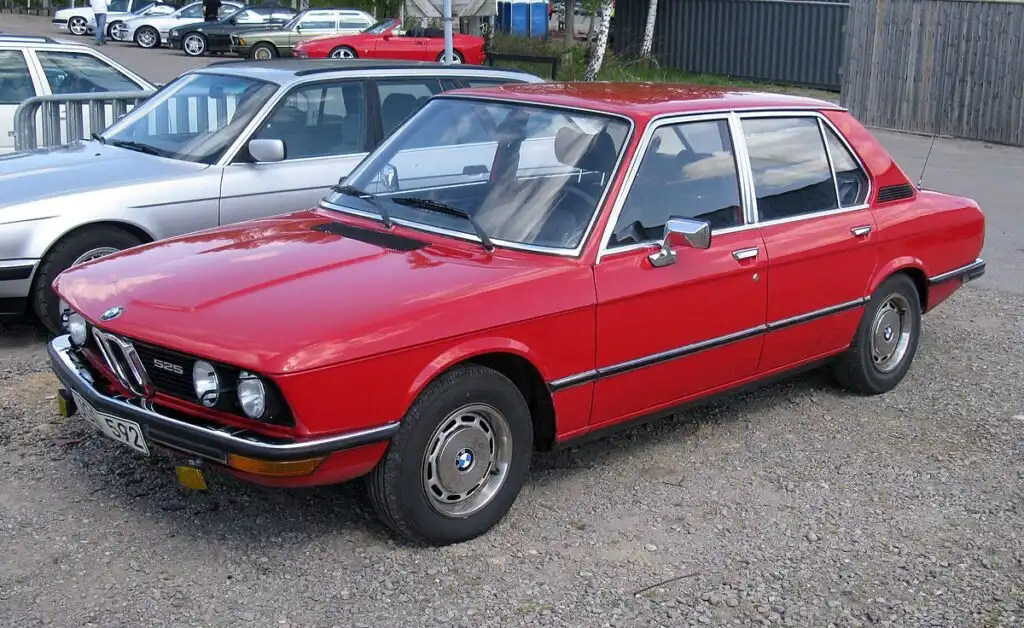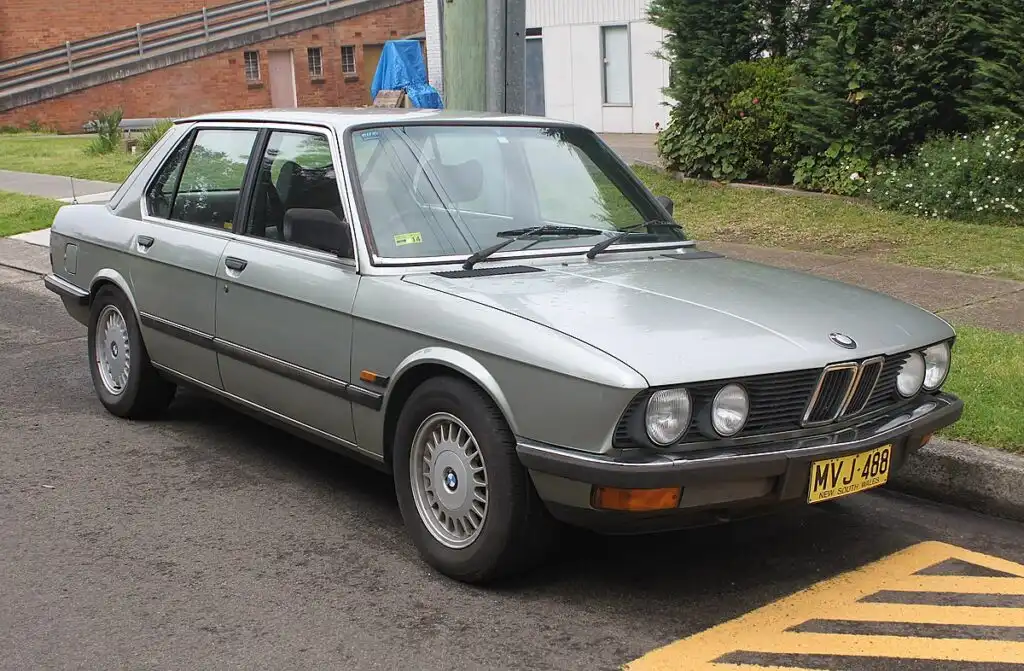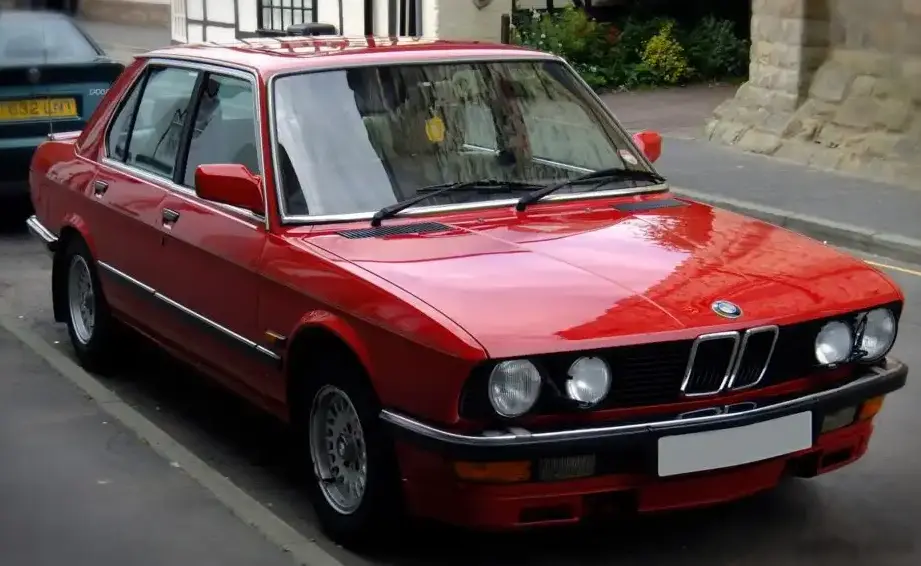
The BMW 5 Series E28 535i, produced between 1984 and 1987, represents a pivotal point in the evolution of BMW’s mid-size executive car. Positioned as the performance variant of the E28 generation, it bridged the gap between the more economical 525e and the flagship M5. The 535i was primarily aimed at the North American and European markets, offering a blend of luxury, handling, and a significantly more powerful engine than its siblings. It was the first 5-Series to be offered with a six-cylinder engine in North America, establishing a tradition that continues today.
Technical Specifications
| Brand | BMW |
| Model | 5 Series |
| Generation | 5 Series (E28) |
| Type (Engine) | 535i (218 Hp) |
| Start of production | 1984 |
| End of production | 1987 |
| Powertrain Architecture | Internal Combustion engine |
| Body type | Sedan |
| Seats | 5 |
| Doors | 4 |
| Fuel consumption (urban) | 15 l/100 km (15.7 US mpg, 18.8 UK mpg, 6.7 km/l) |
| Fuel consumption (extra urban) | 7.3 l/100 km (32.2 US mpg, 38.7 UK mpg, 13.7 km/l) |
| Fuel consumption (combined) | 9.3 l/100 km (25.3 US mpg, 30.4 UK mpg, 10.8 km/l) |
| Fuel Type | Petrol (Gasoline) |
| Acceleration 0 – 100 km/h | 7.2 sec |
| Acceleration 0 – 62 mph | 7.2 sec |
| Acceleration 0 – 60 mph | 6.8 sec |
| Maximum speed | 225 km/h (139.81 mph) |
| Weight-to-power ratio | 6.3 kg/Hp, 159.1 Hp/tonne |
| Weight-to-torque ratio | 4.4 kg/Nm, 226.3 Nm/tonne |
| Power | 218 Hp @ 5500 rpm |
| Power per litre | 63.6 Hp/l |
| Torque | 310 Nm @ 4000 rpm (228.64 lb.-ft. @ 4000 rpm) |
| Engine layout | Front, Longitudinal |
| Engine Model/Code | M30B34 |
| Engine displacement | 3430 cm3 (209.31 cu. in.) |
| Number of cylinders | 6 |
| Engine configuration | Inline |
| Cylinder Bore | 92 mm (3.62 in.) |
| Piston Stroke | 86 mm (3.39 in.) |
| Compression ratio | 9:1 |
| Number of valves per cylinder | 2 |
| Fuel injection system | Multi-port manifold injection |
| Engine aspiration | Naturally aspirated engine |
| Engine oil capacity | 5.75 l (6.08 US qt, 5.06 UK qt) |
| Coolant | 12 l (12.68 US qt, 10.56 UK qt) |
| Kerb Weight | 1370 kg (3020.33 lbs.) |
| Trunk (boot) space – minimum | 460 l (16.24 cu. ft.) |
| Fuel tank capacity | 70 l (18.49 US gal, 15.4 UK gal) |
| Length | 4620 mm (181.89 in.) |
| Width | 1700 mm (66.93 in.) |
| Height | 1415 mm (55.71 in.) |
| Wheelbase | 2625 mm (103.35 in.) |
| Front track | 1430 mm (56.3 in.) |
| Rear (Back) track | 1470 mm (57.87 in.) |
| Ride height (ground clearance) | 152 mm (5.98 in.) |
| Drivetrain Architecture | Rear wheel drive |
| Number of gears and type of gearbox | 5 gears, manual transmission |
| Front brakes | Disc |
| Rear brakes | Disc |
Powertrain & Engine Architecture
The heart of the 535i is the M30B34 engine, a 3.4-liter inline-six cylinder powerplant. This engine was a significant upgrade over the 525e’s 2.7-liter ‘eta’ engine, featuring a larger displacement and a higher compression ratio. The M30B34 utilized Bosch Motronic fuel injection, a sophisticated system for its time, which precisely controlled fuel delivery and ignition timing. The engine’s valvetrain employed a single overhead camshaft (SOHC) design with two valves per cylinder. The 535i was exclusively offered with a Getrag 265 five-speed manual transmission, known for its robust construction and precise shift feel. This transmission was geared to take full advantage of the engine’s powerband, providing quick acceleration and responsive driving.
Driving Characteristics
The 535i offered a noticeably more engaging driving experience than the 525e. The increased horsepower and torque resulted in significantly quicker acceleration – a 0-60 mph time of around 6.8 seconds was achievable. The manual transmission allowed for precise control, and the rear-wheel-drive layout contributed to balanced handling. While not as raw or focused as the M5, the 535i provided a comfortable yet sporty ride, making it suitable for both daily commuting and spirited driving. The gear ratios were well-matched to the engine’s characteristics, providing strong pull throughout the rev range.
Equipment & Trim Levels
The 535i was generally well-equipped, reflecting its position as a premium model. Standard features included power windows, power locks, a sunroof, and air conditioning. Interior upholstery was typically cloth, but leather was available as an option. The dashboard featured a comprehensive instrument cluster with gauges for speed, tachometer, fuel level, coolant temperature, and oil pressure. Optional extras included a premium sound system, heated seats, and a limited-slip differential, enhancing both comfort and performance.
Chassis & Braking
The E28 535i utilized a MacPherson strut front suspension and a semi-trailing arm rear suspension. The suspension was tuned to provide a balance between comfort and handling. Brakes were disc brakes on all four wheels, providing ample stopping power. The 535i typically featured a thicker stabilizer bar compared to the 525e, further improving handling stability. The chassis was reinforced in key areas to handle the increased power output of the M30B34 engine.
Market Reception & Comparison
The 535i was well-received by automotive critics, who praised its performance, handling, and overall refinement. It was often compared favorably to its competitors, such as the Mercedes-Benz 190E and the Audi 80. Compared to the 525e, the 535i offered a substantial performance upgrade, but at a higher price point. The 535i was also more expensive to maintain than the 525e, due to the more complex engine and higher-performance components. Fuel economy, while respectable for the time, was lower than that of the 525e.
Legacy
The E28 535i has become a sought-after classic among BMW enthusiasts. The M30B34 engine is known for its durability and smooth power delivery, although regular maintenance is essential to prevent issues such as oil leaks and cooling system failures. Well-maintained examples command a premium in the used car market. The 535i’s blend of performance, luxury, and classic BMW styling has cemented its place as a significant model in the 5 Series lineage, and a favorite among those seeking a rewarding and engaging driving experience.