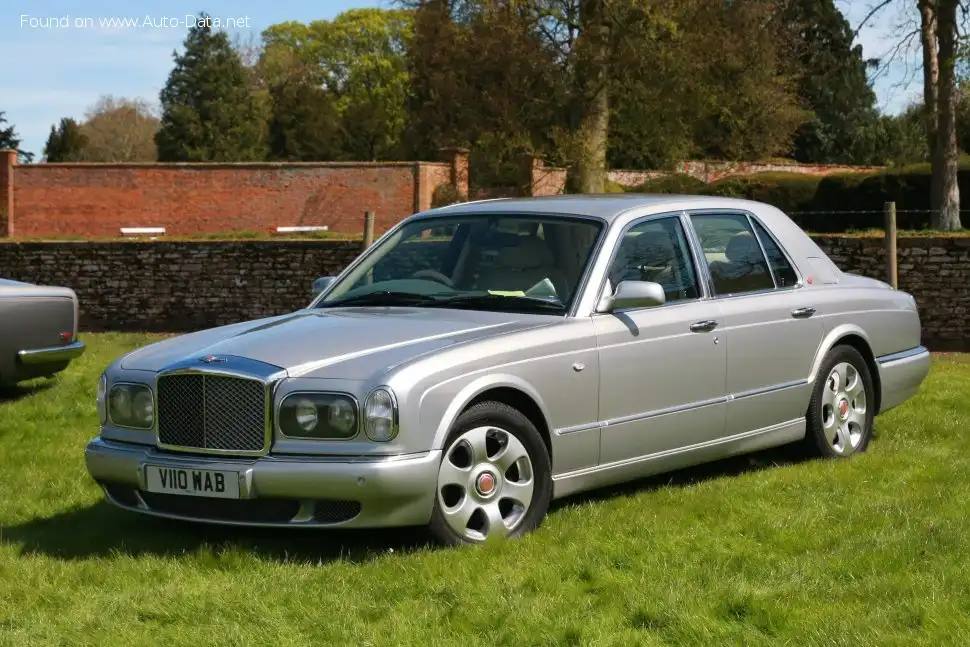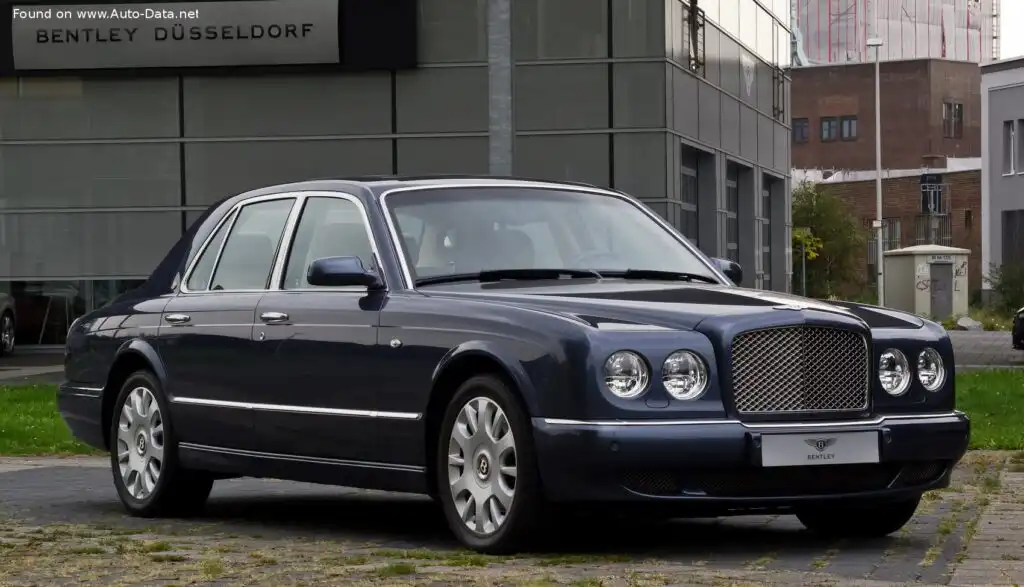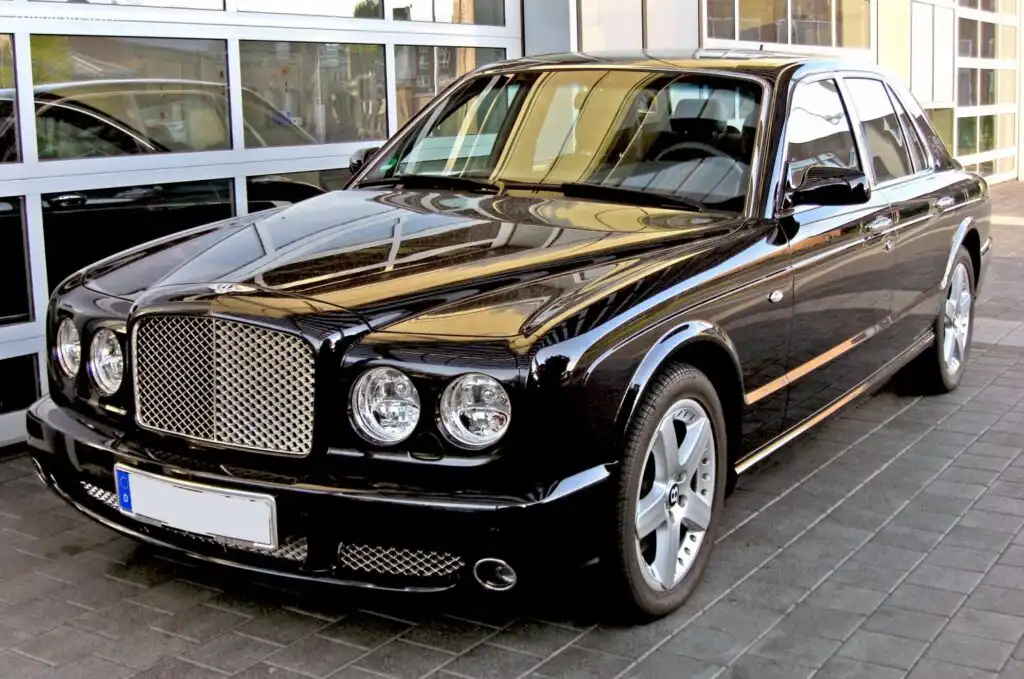
The Bentley Arnage T, produced between 2006 and 2009, represents the ultimate evolution of Bentley’s iconic luxury sedan. This specific iteration, powered by a monumental 6.8-litre (6,761 cc) V8 Biturbo engine, delivered an astounding 507 horsepower and solidified the Arnage’s reputation as a gentleman’s express—a vehicle that masterfully combined opulent, handcrafted luxury with the earth-shattering performance of a super-saloon. As the final and most powerful version of the Arnage line, it served as a fitting tribute to the legendary 6.75-litre L-Series V8 engine, a powerplant whose history stretches back to 1959. The Bentley Arnage T was more than just a car; it was a statement of engineering prowess and uncompromising British craftsmanship, a final, thunderous roar from an era of analogue automotive magnificence before the brand transitioned to its next generation of vehicles.
History and Development
The Bentley Arnage was first introduced in 1998, a product of the complex corporate relationship between Vickers (then-owner of Rolls-Royce and Bentley), BMW, and Volkswagen. Initially launched with a BMW-sourced 4.4-litre twin-turbo V8, Bentley purists yearned for the return of the brand’s traditional six-and-three-quarter litre V8, known for its immense, low-revving torque. Under Volkswagen’s new ownership, this return was green-lit. The engine, extensively re-engineered by Cosworth Technology with a single large Garrett turbocharger, was reintroduced in the Arnage Red Label in 1999.
This decision set the stage for the Arnage’s future development. Throughout the early 2000s, Bentley continued to refine and enhance the platform. The introduction of the Arnage T in 2002 marked a significant step forward, as engineers replaced the single turbo with a modern twin-turbocharger system. This T designation firmly established the model as the performance-focused variant in the Arnage lineup, initially producing a formidable 450 horsepower and 875 Nm (645 lb-ft) of torque, making it the fastest and most powerful four-door saloon in the world at the time.
The push for greater performance and refinement did not stop there. In a comprehensive update for the 2007 model year (which began production in late 2006), Bentley’s engineers undertook a final, definitive overhaul of the powertrain. This update, which is the focus of this specification, elevated the Bentley Arnage T to its ultimate form, cementing its legacy as a high-water mark for the brand.
Powertrain and Performance of the Bentley Arnage T
The heart of the 2007-2009 Bentley Arnage T is its thoroughly re-engineered 6.75-litre V8 engine, model L410MT22. While sharing its fundamental architecture with its predecessors, nearly 50% of its components were redesigned for this final iteration. The most significant change was the move from Garrett T3 turbochargers to new, low-inertia Mitsubishi units. These smaller, more responsive turbos were designed to spool up much faster, drastically reducing turbo lag and providing a more linear and immediate power delivery across the rev range.
This new twin-turbocharging system, combined with a re-profiled camshaft and an improved compression ratio of 7.8:1, resulted in a monumental leap in output. Power increased from 450 hp to an impressive 507 hp (500 bhp) at a relaxed 4,200 rpm. Even more staggering was the increase in torque, which rose to a colossal 1,000 Nm (738 lb-ft) at just 3,200 rpm. This titanic wave of torque defined the car’s character, providing effortless, locomotive-like acceleration from any speed.
To manage this immense power, Bentley replaced the outdated four-speed automatic transmission with a modern, six-speed ZF 6HP26 automatic gearbox. This new transmission was a critical upgrade, offering faster, smoother shifts and a wider spread of gear ratios. It featured three distinct transmission modes: ‘Drive’ for smooth, effortless cruising; ‘Sport’ for more aggressive shift patterns and holding gears longer; and a ‘Semi-Automatic’ mode that allowed the driver to manually select gears via the gear lever for maximum engagement. The new gearbox not only improved acceleration but also enhanced fuel efficiency and cruising refinement, making the Arnage T a more capable grand tourer.
This combination of engine and transmission yielded breathtaking performance figures for a vehicle weighing over 2.5 tonnes. The Bentley Arnage T could accelerate from 0 to 100 km/h (0-62 mph) in just 5.5 seconds and achieve a top speed of 288 km/h (179 mph), figures that rivaled dedicated sports cars of the era.
Chassis, Suspension, and Handling
To ensure the chassis could cope with the engine’s prodigious output, the Arnage T featured a sophisticated independent double-wishbone suspension system for both the front and rear axles. This setup was complemented by an adaptive electro-hydraulic damping system, providing a dynamic balance between a supple, comfortable ride and taut, controlled handling.
A significant update for the 2007 model year was the recalibration of the Electronic Stability Programme (ESP). The new system was less intrusive, allowing the driver to exploit the car’s performance potential more fully before intervention. A Sport mode for the suspension and traction control was integrated, which, when activated via a switch on the dashboard, firmed up the dampers and relaxed the ESP’s parameters for a more dynamic driving experience. The steering, a rack-and-pinion system, was engineered to provide a satisfying weight and feel, communicating the road surface to the driver without sacrificing the sense of isolation expected in a luxury vehicle.
Braking was handled by large, ventilated discs at all four corners, equipped with ABS to ensure stable and controlled deceleration from high speeds. The car rode on distinctive 19-inch five-spoke alloy wheels, shod with 255/45 R19 tires developed to provide high levels of grip and stability.
Exterior and Interior Design
Externally, the 2007 Bentley Arnage T was distinguished by subtle yet effective styling updates. It featured a dark-tinted finish on both the upper and lower matrix grilles, giving it a more aggressive and sporting look. The front bumper was reprofiled for a cleaner appearance, while the rear featured smoked taillights and twin-rifled exhaust tailpipes. These elements, combined with its imposing dimensions—a length of 5.4 meters and a wheelbase over 3.1 meters—gave the Arnage T an undeniable road presence, a perfect blend of stately elegance and muscular intent.
Inside, the cabin was a masterclass in traditional British luxury. Every surface was swathed in the finest materials, from the hand-stitched Connolly leather upholstery to the mirror-matched, unbleached wood veneers. The dashboard featured classic chrome-bezelled instruments, while the switchgear was crafted from solid metal with a knurled finish, providing a satisfying tactile quality. Despite its old-world charm, the Arnage T was equipped with modern amenities, including a satellite navigation system, premium audio, and multi-zone climate control. The cabin offered generous space for five occupants, who were cosseted in deeply cushioned, armchair-like seats, making it an exceptionally comfortable long-distance cruiser.
The Bentley Arnage T was a car of duality: a serene and opulent limousine for relaxed journeys, yet a ferociously powerful super-saloon capable of crossing continents at incredible speed. It marked the end of an era for Bentley, being the last model to be largely engineered and built at the Crewe factory using traditional methods before the platform was retired in favour of the all-new Mulsanne in 2010.
Full Technical Specifications: Bentley Arnage T (2007-2009)
| Specification Category | Detail |
| —————————- | —————————————————- |
| General Information | |
| Brand | Bentley |
| Model | Arnage T |
| Years of Production | 2006 (for 2007 model year) – 2009 |
| Body Type | Sedan |
| Doors | 4 |
| Seats | 5 |
| Powertrain | |
| Engine Type | 6.8i (6761 cc) V8, Internal Combustion Engine |
| Engine Model Code | L410MT22 |
| Engine Aspiration | BiTurbo with Intercooler |
| Engine Layout | Front, Longitudinal |
| Valvetrain | Overhead Camshaft (OHC), 2 valves per cylinder |
| Fuel System | Multi-port Manifold Injection |
| Performance | |
| Maximum Power | 507 Hp (500 bhp) @ 4200 rpm |
| Maximum Torque | 1000 Nm (737.56 lb.-ft.) @ 3200 rpm |
| Power-to-Weight Ratio | 196.1 Hp/tonne |
| Acceleration 0-100 km/h | 5.5 seconds |
| Acceleration 0-60 mph | 5.2 seconds |
| Maximum Speed | 288 km/h (179 mph) |
| Fuel Economy & Emissions | |
| Fuel Type | Petrol (Gasoline) |
| Fuel Consumption (Urban) | 28.8 L/100 km (8.2 US mpg / 9.8 UK mpg) |
| Fuel Consumption (Extra-Urban) | 14.1 L/100 km (16.7 US mpg / 20.0 UK mpg) |
| Fuel Consumption (Combined) | 19.5 L/100 km (12.1 US mpg / 14.5 UK mpg) |
| CO₂ Emissions | 465 g/km |
| Emission Standard | Euro 4 |
| Drivetrain & Transmission| |
| Drivetrain Architecture | Rear-Wheel Drive (RWD) |
| Gearbox | 6-speed Automatic Transmission (ZF 6HP26) |
| Chassis & Suspension | |
| Front Suspension | Independent, Double Wishbone |
| Rear Suspension | Independent, Double Wishbone |
| Steering Type | Rack and Pinion |
| Brakes & Wheels | |
| Front Brakes | Ventilated Discs |
| Rear Brakes | Ventilated Discs |
| Assisting Systems | ABS, Electronic Stability Programme (ESP) |
| Tire Size | 255/45 R19 |
| Wheel Rim Size | 8J x 19 |
| Dimensions & Weights | |
| Length | 5400 mm (212.6 in) |
| Width (excluding mirrors) | 1900 mm (74.8 in) |
| Width (including mirrors) | 2125 mm (83.66 in) |
| Height | 1515 mm (59.65 in) |
| Wheelbase | 3116 mm (122.68 in) |
| Front/Rear Track | 1602 mm (63.07 in) |
| Kerb Weight | 2585 kg (5698.95 lbs) |
| Max. Gross Weight | 3065 kg (6757.17 lbs) |
| Max. Load Capacity | 480 kg (1058.22 lbs) |