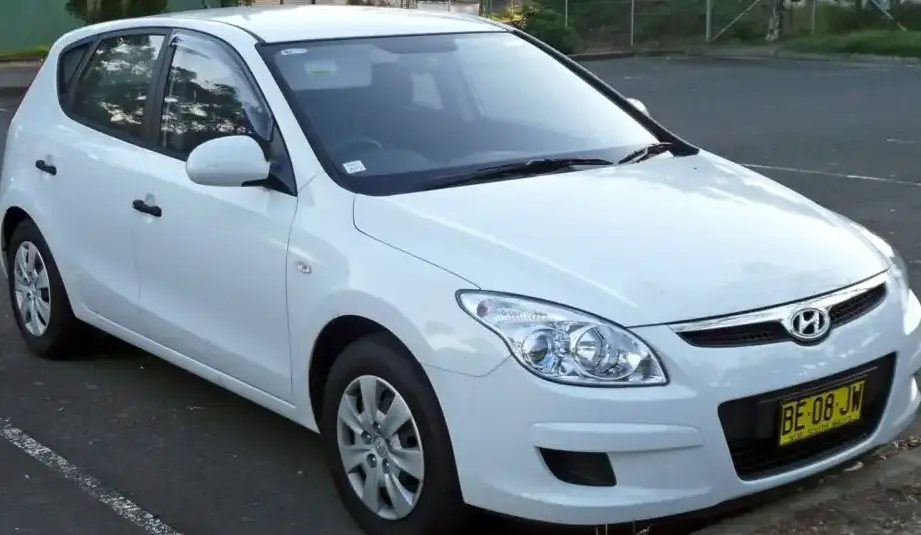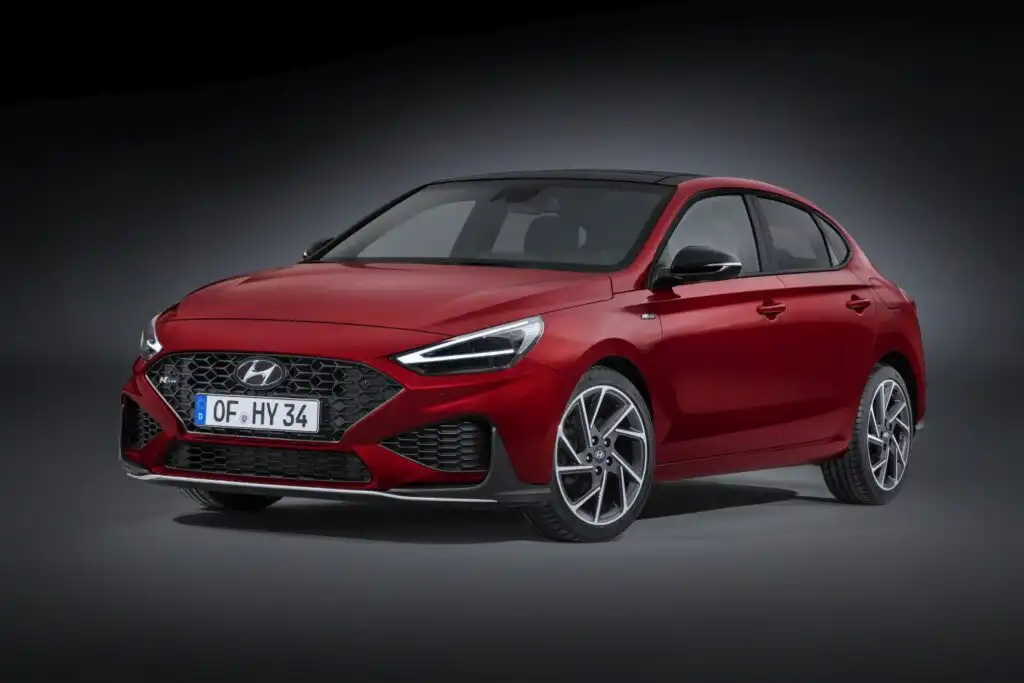
The Hyundai i30 III Fastback, specifically the facelifted version introduced in May 2020 and continuing through June 2024, represents Hyundai’s entry into the competitive compact car segment with a focus on style and efficiency. This variant, powered by a 1.5 T-GDi engine producing 160 horsepower and paired with a 7-speed Dual Clutch Transmission (DCT), incorporates mild hybrid technology. Positioned as a mid-range offering within the i30 Fastback lineup, it aimed to bridge the gap between more economical base models and higher-performance trims. The i30 Fastback itself is a four-door coupe derivative of the more conventional i30 hatchback, offering a sleeker profile and targeting buyers prioritizing aesthetics alongside practicality. It was primarily marketed in Europe and other global markets, with limited availability in the United States.
Technical Specifications
| Brand | Hyundai |
| Model | i30 |
| Generation | i30 III Fastback (facelift 2020) |
| Type (Engine) | 1.5 T-GDi (160 Hp) Mild Hybrid DCT |
| Start of production | May, 2020 |
| End of production | June, 2024 |
| Powertrain Architecture | MHEV (Mild Hybrid Electric Vehicle) |
| Body type | Fastback |
| Seats | 5 |
| Doors | 5 |
| Fuel Type | Petrol (Gasoline) |
| Acceleration 0 – 100 km/h | 8.6 sec |
| Acceleration 0 – 62 mph | 8.6 sec |
| Acceleration 0 – 60 mph | 8.2 sec |
| Maximum speed | 210 km/h (130.49 mph) |
| Emission standard | Euro 6d |
| Weight-to-power ratio | 8.1 kg/Hp |
| Weight-to-torque ratio | 5.1 kg/Nm |
| Power | 160 Hp @ 5500 rpm |
| Power per litre | 108 Hp/l |
| Torque | 253 Nm @ 1500-3500 rpm (186.6 lb.-ft. @ 1500-3500 rpm) |
| Engine layout | Front, Transverse |
| Engine Model/Code | G4LH |
| Engine displacement | 1482 cm3 (90.44 cu. in.) |
| Number of cylinders | 4 |
| Engine configuration | Inline |
| Number of valves per cylinder | 4 |
| Fuel injection system | Direct injection |
| Engine aspiration | Turbocharger, Intercooler |
| Engine oil capacity | 4.2 l (4.44 US qt | 3.7 UK qt) |
| Coolant capacity | 6.6 l (6.97 US qt | 5.81 UK qt) |
| Kerb Weight | 1302 kg (2870.42 lbs.) |
| Max. weight | 1870 kg (4122.64 lbs.) |
| Max load | 568 kg (1252.23 lbs.) |
| Trunk (boot) space – minimum | 450 l (15.89 cu. ft.) |
| Trunk (boot) space – maximum | 1351 l (47.71 cu. ft.) |
| Max. roof load | 80 kg (176.37 lbs.) |
| Permitted trailer load with brakes (12%) | 1200 kg (2645.55 lbs.) |
| Permitted trailer load without brakes | 600 kg (1322.77 lbs.) |
| Length | 4455 mm (175.39 in.) |
| Width | 1795 mm (70.67 in.) |
| Height | 1425 mm (56.1 in.) |
| Wheelbase | 2650 mm (104.33 in.) |
| Number of gears | 7 |
| Gearbox type | Automatic transmission DCT |
Powertrain & Engine Architecture
The heart of this i30 Fastback variant is the Hyundai-Kia G4LH 1.5-liter turbocharged four-cylinder engine. This engine utilizes direct fuel injection and a twin-scroll turbocharger to deliver a balance of power and efficiency. The engine’s architecture is a typical inline-four configuration with four valves per cylinder, contributing to its responsive nature. The mild hybrid system incorporates a 48V battery and a belt-driven starter generator (BSG). This BSG allows for features like extended start-stop operation, regenerative braking (capturing energy during deceleration), and a slight power assist during acceleration. The 7-speed Dual Clutch Transmission (DCT) is a key component, offering quick and smooth gear changes, enhancing both performance and fuel economy. The DCT’s programming is tuned for a balance between comfort and responsiveness, prioritizing smooth shifts in everyday driving while still allowing for manual control via paddle shifters or the gear selector.
Driving Characteristics
The 160 hp and 186.6 lb-ft of torque provided by the 1.5 T-GDi engine and DCT combination deliver respectable performance. The 0-60 mph time of around 8.2 seconds is adequate for everyday driving and highway merging. The DCT contributes to a more engaging driving experience compared to a traditional automatic transmission, with quicker shifts and a more direct feel. Compared to lower-powered i30 variants (like the 1.0 T-GDi), this version offers noticeably more punch, particularly during overtaking maneuvers. However, it doesn’t match the outright performance of the more expensive i30 N Line or N models. The mild hybrid system is largely transparent to the driver, providing a subtle boost during acceleration and contributing to improved fuel economy. The gear ratios in the 7-speed DCT are well-spaced, providing sufficient torque in most driving situations.
Equipment & Trim Levels
The 1.5 T-GDi Mild Hybrid DCT trim typically included a generous level of standard equipment. This often encompassed features such as an 8-inch touchscreen infotainment system with Apple CarPlay and Android Auto compatibility, a rearview camera, automatic climate control, and a suite of safety technologies including lane keeping assist, forward collision avoidance assist, and automatic emergency braking. Interior upholstery was typically cloth, with options for leather upgrades. Higher trim levels within the i30 Fastback range offered additional features like a larger touchscreen, premium audio systems, heated seats, and a panoramic sunroof. The specific equipment levels varied depending on the market and optional packages selected.
Chassis & Braking
The i30 Fastback utilizes a McPherson strut front suspension and a multi-link rear suspension, providing a comfortable and controlled ride. The suspension tuning is geared towards everyday usability, prioritizing comfort over outright sportiness. The braking system typically consists of disc brakes on all four wheels, providing adequate stopping power. ABS (Anti-lock Braking System) is standard, along with Electronic Stability Control (ESC) and Traction Control. Stabilizer bars are fitted to both the front and rear axles to reduce body roll during cornering. The chassis is designed to balance rigidity and weight, contributing to the car’s overall handling characteristics.
Market Reception & Comparison
The Hyundai i30 III Fastback 1.5 T-GDi Mild Hybrid DCT was generally well-received by automotive critics. It was praised for its stylish design, comfortable ride, and efficient powertrain. The mild hybrid system was seen as a positive step towards improving fuel economy and reducing emissions. Compared to other compact cars in its class, the i30 Fastback offered a competitive level of equipment and value for money. However, some critics noted that the interior materials weren’t quite as premium as those found in some rival models. Fuel economy figures typically ranged from 40-50 mpg (combined cycle), depending on driving conditions and style. Reliability reports generally indicated good reliability, with the 1.5 T-GDi engine proving to be a robust and dependable unit.
Legacy
The Hyundai i30 III Fastback 1.5 T-GDi Mild Hybrid DCT represents a significant step forward in Hyundai’s efforts to offer stylish, efficient, and well-equipped compact cars. The combination of a turbocharged engine, DCT transmission, and mild hybrid technology provides a compelling package for buyers seeking a balance of performance and economy. On the used car market, these models are generally sought after for their reliability and fuel efficiency. The mild hybrid system, while not a full hybrid, adds a layer of future-proofing and contributes to lower running costs. As Hyundai continues to expand its presence in the global automotive market, the i30 Fastback serves as a testament to the brand’s commitment to innovation and quality.